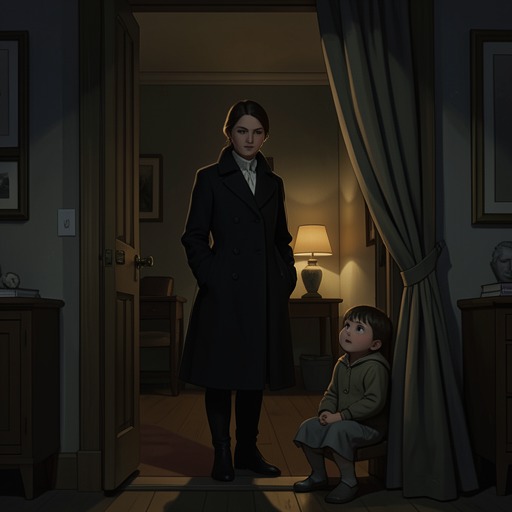
Tabitha Takes Lisa's Drug Evidence and Flees Home
RETabitha Takes Lisa's Drug Evidence and Flees Home is the decisive escape in which Tabitha Moore removes suspected heroin and drug paraphernalia from Lisa Moore’s possession and flees the family trailer with help from Karen Williams. The episode transforms Tabitha’s accumulated fear and helplessness into a dangerous act of evidence-gathering: she does not merely accuse Lisa of using drugs, but risks being caught in order to carry proof to someone who may be able to protect Lisa’s children and separate the woman from the family.
Causes and Background
The escape is prepared in an atmosphere of suffocating tension. Tabitha waits until Alan Moore and Mrs. Moore have gone to bed, then pretends to be asleep while listening for Lisa to turn on the shower. The timing matters because Lisa has kept her purse close, even sleeping with it tucked beneath her, making ordinary access impossible. Tabitha therefore chooses the brief interval when Lisa is distracted and the sound of running water may conceal the small noises of an intrusion.
Tabitha enters the attempt already physically compromised, with only one good hand available. She carries a flathead screwdriver from the kitchen’s junk drawer and uses it to work the locked bathroom doorknob. When the metal makes a small sound, she does not retreat; the shower spray masks the noise, and her decision has passed from preparation into commitment. The screwdriver is left on the floor because she needs her usable hand free, turning a household tool from an instrument of entry into an abandoned obstacle in the narrow escape route.
The immediate motive is not only suspicion about Lisa’s drug use but the danger that suspicion represents. Tabitha later explains to Karen Williams that Lisa was shooting up heroin in the bathroom and that she needed confirmation from people who could act. She connects the drug evidence to Lisa’s treatment of her children, especially the moment during the family’s early Thanksgiving dinner when Lisa struck her eight-year-old son across the face because he was trying to get her attention during an angry rant. That assault makes the situation, in Tabitha’s judgment, impossible to leave alone.
What Happens in the Bathroom
When Tabitha bursts into the bathroom, Lisa is still behind the shower curtain. The purse is open on the counter, and beside it lies a worn Batman thermos that appears to have been borrowed long ago from one of Lisa’s sons’ plastic lunch boxes. On the sink are a disposable lighter, a blackened spoon, and a syringe. These objects are significant because they turn a concealed and disputed danger into a visible arrangement of materials. The purse, once a private container Lisa refuses to surrender, becomes the place where Tabitha gathers the evidence against its owner.
Tabitha carefully lifts the syringe and drops it into the open purse as Lisa begins to call out from the shower. She then adds the spoon and lighter in rapid succession, followed by the Batman thermos. The thermos is already screwed shut, but Tabitha feels its contents shift and notices that they do not seem liquid; they resemble clumps of dirt. She believes the material is heroin, though she cannot verify that herself, and the uncertainty does not stop her because the evidence must first be removed from Lisa’s immediate control.
Lisa realizes what is happening before Tabitha can collect Lisa’s clothing to slow the pursuit. She yanks the vinyl curtain back hard enough to separate several curtain rings from the rod, then emerges naked, soaking wet, and visibly frenzied, lunging after Tabitha. The scene reverses the expected security of the bathroom. Water, the curtain, the locked door, and the purse all become unstable physical elements in a struggle over who controls the evidence and who can escape with it.
Tabitha bolts down the hallway with the purse pinched closed against her body. Terror freezes her movements, and Lisa’s heavy footsteps close the distance behind her. At the front door, Tabitha manages to wrench the door open despite the panic and her injured hand. Lisa is only feet away, but she hesitates in the doorway, naked and wet, unwilling to run outside into the November night. That brief pause supplies the margin Tabitha needs.
Escape and Immediate Rescue
A waiting car suddenly flashes its high beams as Tabitha reaches the outside. Karen Williams is behind the wheel of a Ford Taurus, and the lights expose the exit while Lisa’s continued hoarse screaming remains inside the trailer. Karen responds with anger and alarm rather than detached observation: she repeatedly sounds the horn to drown out Lisa’s shouting and urges Tabitha to get into the vehicle. The car thus becomes part of the escape itself, not merely transportation after the danger has ended.
Tabitha enters carrying the closed purse and confirms that she has the evidence and is unhurt. Karen immediately orders her to close the door, fasten her seatbelt, and leave. She accelerates past the trailer and puts Lisa out of sight. The movement away from the home is both literal flight and a temporary severing of Lisa’s reach; the evidence has crossed the threshold, and Lisa can no longer reclaim it by chasing Tabitha through the trailer.
The escape also exposes the limits of Tabitha’s confidence. In the car, she admits that she is not certain the substance is heroin because she has no way to verify it herself. Her conclusion rests on a puncture mark at Lisa’s vein, the syringe, the blackened spoon, the lighter, and the thermos containing a suspicious substance. Karen’s shock is so immediate that she brakes and stops in the deserted streets of Springton after hearing the word heroin. The pause gives the stolen objects a new status: they are no longer merely frightening things in a bathroom but potential evidence now held inside Karen’s car.
Evidence, Abuse, and Consequences
Tabitha’s account gives the theft its legal and moral stakes. She insists that the material must be confirmed by people capable of doing something about it, and she states that Lisa must be kept away from both her own family and her children. The objective is therefore larger than escape from a violent aunt. Tabitha is attempting to convert private knowledge into an intervention that can address drug use, child endangerment, and physical abuse.
The objects gathered from the sink and counter function as a material chain of proof. The syringe suggests injection; the spoon and lighter suggest preparation; the puncture mark supplies bodily corroboration; and the thermos may contain the suspected drug itself. None of these items alone gives Tabitha certainty, but together they explain why she is willing to break into the bathroom while Lisa is present. Their ordinary domestic surroundings intensify the danger: a child’s Batman thermos is repurposed as a possible drug container, while the bathroom of a family trailer becomes the site where addiction, secrecy, and violence are forcibly made visible.
The event’s immediate consequence is that Karen becomes a witness to both Tabitha’s fear and her evidence. Karen’s initial disbelief changes into alarm when Tabitha describes the heroin use and the assault on Lisa’s son. The escape therefore shifts the matter from an endangered girl’s private suspicion to an adult’s acknowledged crisis. Tabitha has not solved the danger, and the evidence still requires confirmation, but she has created the possibility of outside action by removing the materials Lisa was guarding.
Narrative Significance
The episode is structured as an escape and a discovery at once. Its suspense comes from the pursuit through the bathroom and hallway, but its deeper reversal is that Tabitha, a thirteen-year-old girl with one good hand, acts where the adults around Lisa have failed to secure safety. She is frightened, uncertain, and physically disadvantaged, yet she proceeds because Lisa’s violence toward her son has made passive endurance intolerable.
The scene also gives material objects an unusual narrative force. The screwdriver opens the door; the shower conceals the first intrusion; the curtain fails as a barrier; the purse becomes a container for incriminating evidence; and the Batman thermos carries the most uncertain but potentially decisive substance. Each object changes function under pressure. Household things that ordinarily disappear into the background become conspicuous agents in the movement from secrecy to exposure, and their altered roles reveal how thoroughly the domestic environment has been contaminated by Lisa’s drug use.
Most importantly, the escape establishes Tabitha’s objective in explicit terms: she wants Lisa away from the children and wants the suspected drug use confirmed by authorities or professionals who can intervene. The event ends not with Lisa’s arrest or the family’s restoration, but with Tabitha inside Karen’s accelerating car, clutching evidence and leaving the trailer behind. Its resolution is therefore provisional. Tabitha wins the immediate pursuit, while the larger conflict—whether the evidence will be verified and whether Lisa’s children will be protected—has only begun.