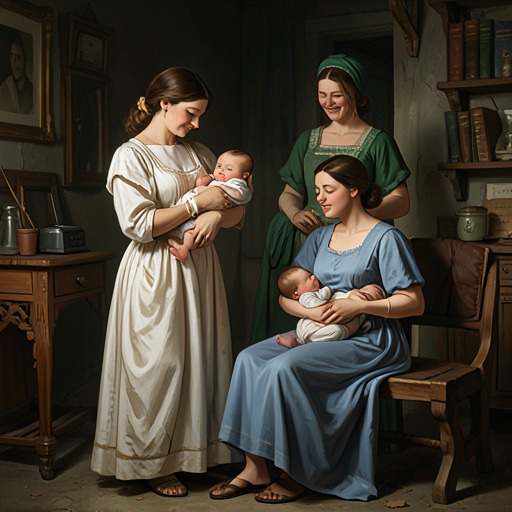
Tabitha left home and temporarily stayed at MacIntire's house
RETabitha Moore’s departure from her parents’ home and temporary move into the MacIntire household marks a decisive shift from endurance to self-protection. After the Moore family’s conflict exposes how little safety or understanding the home can provide, Tabitha chooses to leave, while Sandra MacIntire and Karen Williams offer practical shelter, adult supervision, and a place where Tabitha’s welfare is treated as an urgent responsibility rather than a private family matter.
The Crisis Behind the Departure
The decision follows a broader accumulation of danger and neglect. Tabitha has remembered that the Taylor sisters abused both her and Ashlee Taylor when they were children, and that one of those abusers has remained part of her high-school life. Her shock is intensified by the realization that she had forgotten Ashlee entirely, a memory failure that makes the earlier violence newly immediate. The household crisis therefore occurs against a background in which Tabitha is already confronting the buried consequences of childhood abuse and the failure of adults to protect her.
The Moore home also carries the pressure of recurring family disorder. At Thanksgiving, Lisa Moore threatens Aiden and the other boys over food, insisting that they eat what has been placed on their plates and using dessert as leverage. Tabitha experiences the scene not as ordinary discipline but as another expression of coercion and disregard: the boys had politely refused the ham, yet it was forced onto their plates by hand. Her anger reflects the widening gap between the family’s claims to authority and the care that authority actually provides.
The Offer of Another Home
Sandra MacIntire presents leaving as a genuine choice rather than an order. She tells Tabitha that returning to her parents is possible, provided that the damaging episode never happens again, but also says that she and Karen will make other arrangements if Tabitha does not want to go back. The offer recognizes that Tabitha’s immediate need is not merely transportation or a temporary hiding place; it is the restoration of agency after adults have repeatedly spoken over her and defined her circumstances for her.
The MacIntire proposal is concrete. Sandra has a spare bedroom and explains that Tabitha has withdrawn from school for the immediate future. She would like Tabitha to live with the family as a live-in nanny for Hannah MacIntire, while also remaining present in case Darren MacIntire, still recovering from being shot during a routine traffic stop, suffers an emergency. Sandra explicitly distinguishes this support from medical or intimate caretaking: Tabitha would not be expected to bathe Darren, change his urine bottle, or wait on him. Her role would be to help with Hannah and to ensure that someone is present who can call for assistance.
The proposal is also shaped by affection and practical strain. Hannah adores Tabitha, Sandra says that she loves her, and Darren imagines repairing Tabitha’s car, possibly getting it running before arranging a trade-in for a vehicle Tabitha actually wants. Sandra has already taken substantial time off work in Fairfield, and worries about finances approaching Christmas. The arrangement thus joins emotional attachment to household necessity: Tabitha is wanted as a person, but her presence would also help a family coping with injury, childcare, and money.
Leaving the Moore Home
When Tabitha returns with an overstuffed schoolbag, she tells her father that she is going to stay somewhere else for a while. Alan Moore immediately rejects the idea and orders her back to her room, insisting that she cannot run off again. His response preserves parental control at the very moment Tabitha is trying to establish a boundary. When he tells her that she will understand when she is grown up, the effect is devastating: the visible emotion drains from her face, and Sandra recognizes that the words have not reassured her but extinguished her remaining hope of being understood.
Tabitha then states that she is leaving and asks for permission to stay with the MacIntires for as long as necessary. Alan begins to object, but Shannon Moore interrupts him. In a breakdown of the household’s previous power arrangement, Shannon strikes her husband with both fists and gives Tabitha permission to go, crying that she is sorry. Her intervention does not resolve the family’s damage, but it changes the immediate outcome: Tabitha is no longer forced to remain in the home while the adults argue over whether she has the right to escape it.
Tabitha’s exit is controlled, almost numb. She apologizes, says that she loves her parents, and takes the remaining scalloped potatoes from the refrigerator. She tells her father that when he calls and apologizes, she will be where she needs to be and able to forgive him, then cautions him not to call too soon. The dish of potatoes becomes a small, concrete remnant of family life carried across the threshold, but the emotional movement is in the opposite direction: she is leaving the household while refusing to pretend that forgiveness can erase what happened.
Immediate Aftermath and Significance
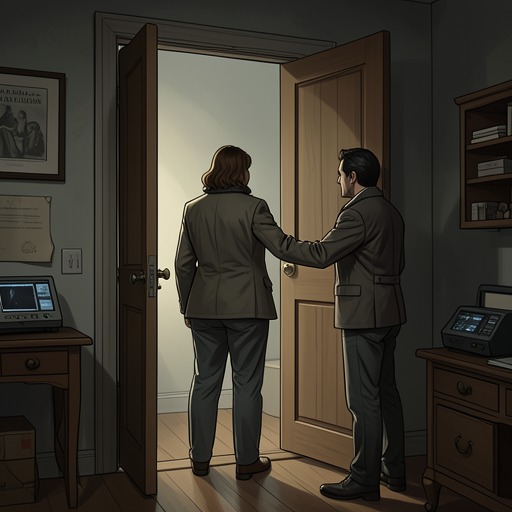
Sandra holds the door and leaves with Tabitha in silence, accepting the glass dish so that the girl does not have to struggle with her backpack and the food. Tabitha is not crying, shouting, or asking to be comforted; she appears psychologically far away. Sandra understands that the absence of visible distress does not mean that Tabitha is safe or recovered. Her decision to give Tabitha time and space establishes the MacIntire response as protective rather than intrusive.
The move also exposes the limits of the traditional family as the novel’s automatic refuge. Sandra and Karen do not claim legal or moral perfection, and Sandra says that criticizing Tabitha’s parents is not their place, yet she plainly concludes that the surrounding circumstances form an intolerable pattern. Their proposed household offers an alternative structure in which adults can acknowledge danger, negotiate care, and let a thirteen-year-old’s refusal carry weight.
As an event, the departure turns the value of home from positive to negative and then begins to rebuild it elsewhere. Tabitha leaves a place associated with coercion, humiliation, and emotional abandonment, carrying only a schoolbag and a dish of potatoes, while the MacIntire family opens a spare room and assumes responsibility for her immediate safety. The temporary nature of the arrangement preserves uncertainty, but the choice itself is permanent in significance: Tabitha has learned that protection may come not from unquestioned blood ties but from people willing to make room, listen, and act.