
Rapunzel
Work and publication
“Rapunzel” is a German folktale best known in the version collected and edited by Jacob and Wilhelm Grimm. It appeared as tale number 12 in the first volume of their Children’s and Household Tales, published in 1812. The story is commonly classified as a fairy tale and grouped with the “Maiden in the Tower” type of folktale. The Grimms did not originate the tale: they recorded and reshaped material belonging to a wider European storytelling tradition. Their collection grew through successive editions, so the familiar printed story is both a record of traditional narrative and a literary work formed through editorial choices. Although the collection’s title names children and households, its early purpose was not simply to provide a set of modern children’s stories; many tales retain stark and unsettling material.
Story
A couple longs for a child. During her pregnancy, the wife sees rapunzel, or rampion, growing in a garden enclosed by a high wall and becomes consumed by a desire to eat it. Her husband enters the garden to gather some, but the garden’s owner, a powerful enchantress, catches him. She permits him to take the plant on the condition that the couple surrender their child when she is born. The enchantress names the girl Rapunzel and, as she grows, shuts her in a tower with no door. To enter, the enchantress calls from below, and Rapunzel lets down her long hair for her to climb.
A prince hears Rapunzel singing and discovers the tower. He learns the enchantress’s method of entry, visits Rapunzel, and the two fall in love and plan to escape. When the enchantress discovers their secret, she cuts Rapunzel’s hair and banishes her to the wilderness. The prince arrives and is punished; his fall leaves him blind, and he wanders for a long time. At last he finds Rapunzel again. Her tears restore his sight, and the lovers are reunited. Retellings vary in detail, but the tower, the hair that becomes a ladder, the enchantress, and the lovers’ separation and reunion remain the story’s defining images.
Themes and legacy
The tale links desire to consequence: the mother’s craving leads to a bargain, and that bargain determines Rapunzel’s captivity. The tower is at once a place of shelter and a mechanism of control, cutting its occupant off from ordinary life. Rapunzel’s hair, initially a feature by which the enchantress keeps access to her, also makes contact with the world outside possible. The prince’s visits bring love and the prospect of choice, but discovery turns escape into exile and suffering. Blindness, wandering, and the eventual restoration of sight give the reunion a hard-won quality. The ending offers recovery without making the earlier confinement and punishment disappear.
The Grimms’ broader project was to collect and edit tales as part of an interest in folklore, language, and cultural history. Children’s and Household Tales was revised repeatedly between its first publication in 1812 and its final lifetime edition in 1857; the changing collection cautions against treating any one printed version as a transparent transcript of an unchanged oral original. “Rapunzel” nevertheless became one of the most recognizable stories associated with the Grimms. Its concentrated imagery has made it especially adaptable to illustration, performance, and retelling, while inviting continuing discussion of isolation, authority, desire, love, and self-determination. It remains a familiar work of European fairy-tale tradition and a lasting part of the Grimms’ influence on storytelling around the world.
About the Author
Origins and education
Jacob Grimm and his younger brother Wilhelm were German scholars, linguists, folklorists, and editors, remembered together as the Brothers Grimm. Jacob was born on January 4, 1785, and Wilhelm on February 24, 1786, in Hanau. The family later lived in Steinau. Their father, Philipp Wilhelm Grimm, worked in law and public administration; his death in 1796 left the family in difficult circumstances. The brothers received schooling in Kassel and went on to study law at the University of Marburg. There they developed interests in medieval literature, German history, language, and cultural traditions. Close in age and closely attached throughout their lives, they made scholarship a shared undertaking, even as their individual temperaments and research emphases differed.
Scholarship and major works
The Grimms’ collection of tales grew from a broader effort to preserve and study traditional culture, not simply to entertain children. The first volume of Children’s and Household Tales appeared in 1812, followed by a second volume in 1815. Jacob and Wilhelm revised and enlarged the collection over the following decades; it went through seven editions in their lifetimes, with the final edition published in 1857. The collection helped carry stories such as “Rapunzel,” “Cinderella,” and “Snow White” to readers across the world. Their two-volume German Legends, published in 1816–18, reflected a related interest in traditional narrative.
Their work also helped shape the academic study of language. Jacob’s German Grammar appeared in 1819 and became an important work in the study of Germanic languages. He published German Mythology in 1835. Wilhelm’s scholarship included research on German heroic legend, published in 1829. In 1838 the brothers began work on the ambitious German Dictionary, intended to document German vocabulary and its historical use. They did not live to complete it; later scholars continued the project. Their achievements thus reach well beyond the fairy tales for which they are most widely known, extending into historical linguistics, literature, and folklore studies.
Public life and reputation
The brothers worked in libraries in Kassel and later held academic posts at the University of Göttingen. In 1837 they joined five other professors in protesting the Hanoverian king’s abolition of the constitution. Known as the Göttingen Seven, the professors were dismissed, and the episode established the Grimms’ reputation as scholars willing to defend constitutional principles. In 1840 they moved to Berlin, where they continued their research and writing and took part in the work of the Prussian Academy of Sciences.
Wilhelm died on December 16, 1859, and Jacob on September 20, 1863. Their lasting standing rests on the combination of close collaborative scholarship, influential research into language and the past, and the wide circulation of the tales they edited. Their collection helped establish folklore as a serious field of study while becoming one of the best-known bodies of European storytelling. Translated, retold, illustrated, and adapted across generations, the Grimms’ work continues to shape how readers around the world encounter fairy tales.
StoryFlow
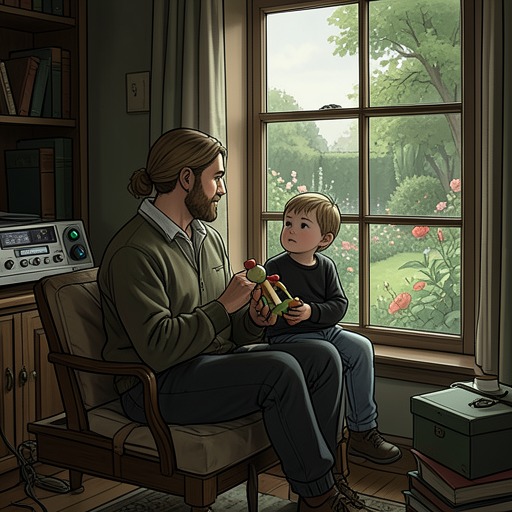
The Couple’s Longing for a Child
This flow traces the couple’s years of longing into the pregnancy that makes the theft of lettuce and its terrible price possible.
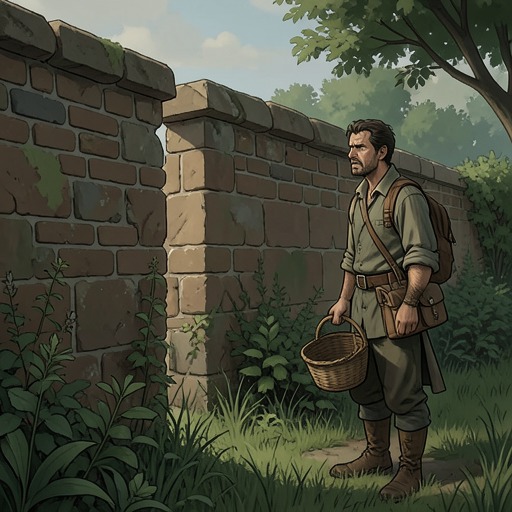
The Forbidden Garden Bargain
This flow follows the garden trespass from a desperate harvest through an agreement that transfers the newborn Rapunzel to Mãe Gothel.
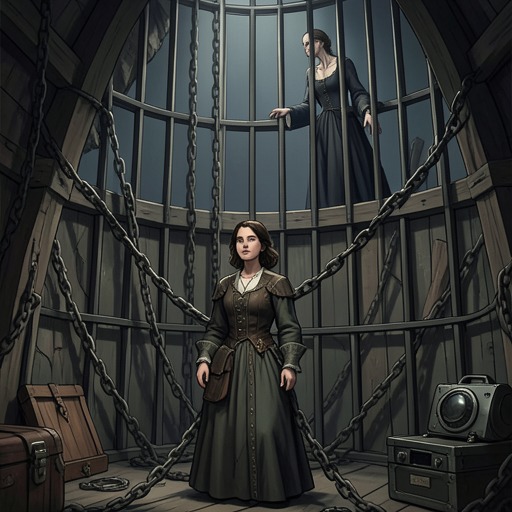
Rapunzel’s Confinement
This flow traces Rapunzel’s passage from a stolen child to an isolated young woman whose tower life is controlled by Mãe Gothel.
