February 1932
The Newcomer Arrives
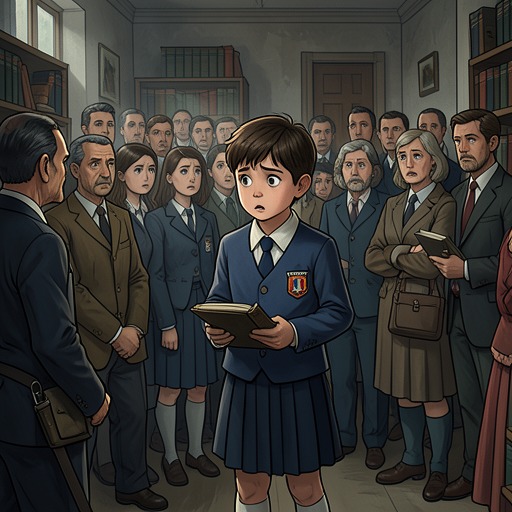
Two days after his sixteenth birthday, [Hans Schwarz](entity:character-recall-character-hans-schwarz-45312f0769af) saw [Konradin von Hohenfels](entity:character-recall-character-b21e8d767d4a) enter their classroom at the [Karl Alexander Gymnasium](entity:location-recall-location-karl-alexander-gymna-1e45244c72e4) in [Stuttgart](entity:location-recall-location-stuttgart-3438e738c404). The new boy’s composure and carefully chosen clothes set him apart from the other pupils, and his name seemed to carry the weight of centuries of Swabian history.
Hans, the son of [Dr. Schwarz](entity:character-recall-character-91403785eda9) and a Jewish family long settled in [Germany](entity:location-recall-location-germany-2e3723c2f347), felt both dazzled by Konradin and painfully conscious of the difference between them. The encounter planted the hope that this aristocratic stranger might become the friend Hans had never found.
The first days after Konradin’s arrival
The Hohenfels Legacy
Hans measured Konradin against the illustrious Hohenfels family, whose ancestors had fought beside emperors and died in famous battles. Unlike the other boys with noble titles, Konradin seemed to Hans like a living piece of the history he had read about.
The class, too, responded to him with awkward deference. Even the aristocratic pupils and the self-styled literary circle tried to draw him in, but he politely kept his distance, deepening Hans’s sense that Konradin belonged to a world apart.
The weeks after Konradin’s arrival
Hans Seeks Notice
Certain that Konradin must become his friend, Hans began trying to distinguish himself. He spoke up in lessons, arguing about literature and praising Hölderlin, and took a new interest in impressing his teachers and classmates.
During physical exercise, Hans volunteered to attempt the difficult horizontal-bar routine. He performed it imperfectly, landing with a thump, but saw that Konradin had watched him. The effort was less about sport than about making himself visible to the boy whose attention he longed for.
A few days after Hans’s gymnasium display
The Coins Bring Them Together
Hans brought several Greek coins to school and studied them through a magnifying glass where Konradin could see. Konradin’s curiosity overcame his reserve; he asked to examine them and revealed that he, too, collected ancient coins.
Their first conversation was brief, interrupted by the teacher and followed by Konradin’s departure without another word. For Hans, however, it was a breakthrough: the boy he had imagined from afar had shown a genuine interest in something they could share.
March 15, 1932
The First Walk Together
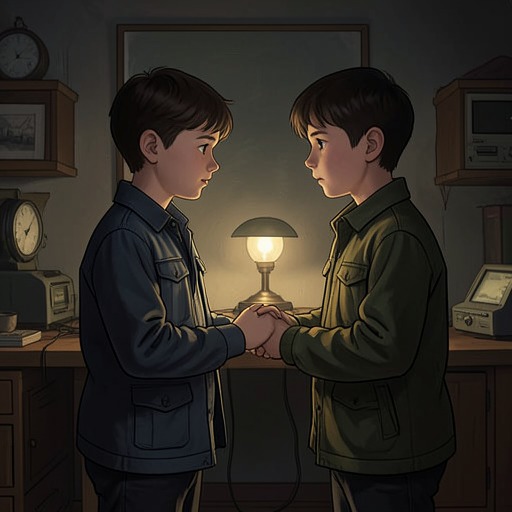
On the way home from school, Hans saw Konradin ahead of him and feared that he might pass without being noticed. Instead, Konradin turned, smiled, and shook Hans’s trembling hand. Hans suddenly understood that Konradin was shy, too, and wanted a friend as much as he did.
They walked together for an hour, nervous but already drawn to one another. Hans returned home elated, feeling that the emptiness of his life had given way to a new promise, though later that night he worried that he had revealed too much of his need for the friendship.
Spring 1932
An Inseparable Friendship
Konradin came straight to Hans at school the next morning, dispelling Hans’s fear that their first walk had been a mistake. From then on they waited for each other, left school together, and became inseparable despite the gossip of classmates and the displeasure of the Caviar circle.
They travelled through [Swabia](entity:location-recall-location-swabia-7fb258835650) on weekends, staying in old inns and wandering among forests, vineyards, castles, and rivers. Their shared journeys and love of books and poetry made friendship feel like a private country, sheltered from the ordinary divisions of class and background.
During the first months of the friendship
The Bauer Family House Fire
A neighbouring family’s wooden house burned while the parents were away and the maid had briefly left the children alone. By the time the fire engines arrived, the three children had died; Hans saw the blackened house, ruined dolls, and swing ropes hanging from the scorched tree the next day.
The deaths shattered Hans’s belief in a benevolent God. Unlike distant disasters he had known only as numbers, these were children he had seen and could imagine suffering, making the question of divine goodness immediate and unbearable.
Soon after the Bauer family fire
A Crisis of Faith
Hans told Konradin that either God did not exist or that a powerful God who allowed such suffering was monstrous. His father’s agnostic outlook and the tragedy had prepared him to abandon his childhood belief in a benevolent master of the universe.
Konradin, raised in a strict Protestant faith, sought guidance from his pastor and returned with an explanation about evil being necessary for the appreciation of good. Hans remained unconvinced. Their disagreement became part of a wider conversation about the meaning of life and how it should be spent in a vast, seemingly indifferent cosmos.
After their discussions about faith began
Hans Invites Konradin Home
One day outside his house, Hans realized Konradin had never seen his room or his collections and spontaneously invited him in. Hans had meant to lead his friend upstairs without meeting his mother, partly from possessiveness and partly from an embarrassing fear that his parents might not seem grand enough.
His mother greeted Konradin warmly and treated him as an honoured guest. In Hans’s room, he showed off his books and treasured objects, including ancient coins and Roman artifacts, while the visit made their friendship part of his family life.
During Konradin’s first visit to Hans’s home
Dr. Schwarz Performs for the Count
[Dr. Schwarz](entity:character-recall-character-91403785eda9) entered Hans’s room and greeted Konradin with formal deference, clicking his heels and addressing him as a count. He then entertained the boy with elaborate stories about military acquaintances and a comic episode involving a prince’s chimpanzee.
Hans was horrified to see his usually self-possessed father performing for the Hohenfels heir. He blamed Konradin’s presence for turning his father into a caricature, then recognized the same social insecurity in himself: both father and son had been caught by the glamour of aristocratic status.
The weeks after Konradin first visited Hans
The Closed Hohenfels Gate
Hans expected an invitation to Konradin’s home, but each walk ended at the imposing iron gate of the Hohenfels residence. The house became a symbol of the world from which Hans feared he was being excluded, and his imagination filled it with family treasures and history.
Too proud to ask why he was never invited in, Hans watched Konradin disappear through the gate again and again. The silence made him suspect that their friendship had boundaries he did not yet understand.
A few weeks after Hans’s first visit
The Hidden Collection
Konradin finally invited Hans into the Hohenfels residence. Hans followed him through its dark, trophy-filled halls, past family portraits and historical paintings, into a room where Konradin proudly displayed his own collection of ancient coins and precious objects.
Konradin’s pleasure in sharing the collection reassured Hans that their bond was genuine. Yet the visits continued to happen when Konradin’s parents were away, and Hans began to suspect that he was being kept separate from the family whose home seemed to guard the friendship’s limits.
About a fortnight after Hans first entered the Hohenfels residence
The Opera Rejection
At a performance of Fidelio, Hans saw Konradin arrive with his parents, the Count and Countess, in a blaze of aristocratic ceremony. When Konradin noticed Hans in the opera house, he gave no sign of recognition and let his family pass him by.
Hans waited in the foyer, torn between escaping humiliation and demanding the truth. The Hohenfels procession passed him without a greeting, leaving him to go home alone before the opera ended, wounded by what seemed an unmistakable public denial.
The day after the opera
The Reason for the Rejection
Hans and Konradin walked home together as if nothing had happened until Hans finally asked why Konradin had ignored him. Konradin admitted that his mother hated Jews and believed Hans threatened her son’s faith and the Hohenfels family’s standing.
Konradin insisted that he was not ashamed of Hans and that his father was less concerned about whom he befriended. But he confessed that he had concealed the truth because he feared hurting his friend. Hans accepted his explanation while understanding that the Hohenfels home would remain closed to him.
The months after the opera confrontation
The Friendship Begins to Fade
Konradin never invited Hans to his home again, and both boys knew their friendship could not return to its earlier innocence. Konradin still visited Hans’s family, but less often, while the unspoken division between their worlds grew harder to ignore.
For Hans, the exclusion marked more than a social slight: it signalled the end of their childhood’s protected space. Political hostility outside their friendship was soon to make that private wound part of a larger rupture.
September 1932
Politics Enters the Classroom
After the summer holidays, Hans returned to the [Karl Alexander Gymnasium](entity:location-recall-location-karl-alexander-gymna-1e45244c72e4) as political unrest became harder to ignore. Nazi and Communist symbols appeared around [Stuttgart](entity:location-recall-location-stuttgart-3438e738c404), the unemployed marched through the streets, and posters denounced Jews and the peace settlement, even as the school tried to preserve its old humanist routines.
A new history teacher, Pompetzki, used a lesson to promote racial myths about Aryan influence and insinuate that hidden forces were undermining [Germany](entity:location-recall-location-germany-2e3723c2f347). His lecture brought the ideology of [Nazism](entity:concept-recall-concept-nazism-c056e7cd3837) into the school and helped change the atmosphere among pupils who had previously shown little open racial hostility.
Autumn 1932
The Antisemitic Confrontation
One morning Hans entered his classroom during an argument about Jews. [Bollacher](entity:character-recall-character-bollacher-4adb1f07999f) taunted him to return to Palestine and stuck a leaflet on his desk declaring, [“The Jews have ruined Germany. People, awake!”](entity:expression-recall-expression-the-jews-have-ruin-c26b056e3292) When Hans demanded that he remove it, Bollacher threatened violence.
Hans struck Bollacher, and the two boys fought until their teacher arrived. Pompetzki dismissed the antisemitic insult as friendly advice and resumed his lesson. The school’s authority had turned against Hans, while the classmates’ hostility made clear that his place there was no longer secure.
Immediately after Hans’s fight with Bollacher
Konradin Is Absent
After the confrontation, Hans stayed behind hoping Konradin would wait for him, offer help, or at least share the moment’s danger. The street was empty when he left; Konradin had not come to his aid.
Hans began avoiding his friend, believing that being seen with him would only embarrass Konradin. Other pupils and teachers withdrew from Hans as well, and the school’s old lights of learning and belonging seemed to go dim.
Early December 1932
The Decision to Send Hans Away
[Dr. Schwarz](entity:character-recall-character-91403785eda9) took Hans into his surgery and explained that he and Hans’s mother had decided to send him to America, where relatives in New York would help him continue his education. He said the separation would be temporary and insisted that the family would remain in [Germany](entity:location-recall-location-germany-2e3723c2f347), their home and fatherland.
The decision reflected the growing danger surrounding Hans, though his parents still believed the political crisis would pass. Hans left school at Christmas, preparing to depart from the country he had always considered his own.
Two days before Hans’s departure
The Farewell Letters
Hans received a cruel farewell poem from [Bollacher](entity:character-recall-character-bollacher-4adb1f07999f) and Schulz, who mocked him for being Jewish and threatened him if he ever returned. Their verses reduced the hatred gathering around him to a direct personal taunt.
Konradin’s letter was more complicated. He mourned Hans’s departure but declared his belief in [Adolf Hitler](entity:character-recall-character-943a651bff95), whom he thought could save [Germany](entity:location-recall-location-germany-2e3723c2f347), and repeated his mother’s assurance that Hans’s parents would remain safe. He also credited Hans with teaching him to doubt and, through doubt, to find Christian faith.
January 19, 1933, Hans’s seventeenth birthday
Hans Leaves Germany
On his birthday, almost a year after Konradin entered his life, Hans left [Germany](entity:location-recall-location-germany-2e3723c2f347) for America. The departure severed him from his parents, his school, and the landscape he had understood as home, even as he carried the unresolved loss of his friendship with him.
His parents stayed behind, convinced that their belonging to Germany and their history there would protect them. Hans’s exile began as a temporary escape in their minds, but became the defining break of his life.
The years after 1933
A Life in America
Hans attended school in America and then studied law at [Harvard University](entity:location-recall-location-harvard-university-d445a91530d2), despite wanting to become a poet. His father’s cousin urged him toward a practical profession, and Hans followed that advice, becoming a lawyer and marrying a woman from Boston.
He acquired the outward signs of success, including a home overlooking Central Park, but believed he had failed to write the book and poem he had once imagined. He found some purpose in supporting racial equality, opposing capital punishment, and helping Jews build Israel and Arabs settle refugees.
After the Nazi regime began targeting Jewish businesses
Dr. Schwarz Defies the Boycott
A Nazi posted outside [Dr. Schwarz](entity:character-recall-character-91403785eda9)’s surgery a notice warning Germans to avoid Jews and calling anyone who dealt with them defiled. Dr. Schwarz put on his officer’s uniform and decorations, including the [Iron Cross, First Class](entity:object-recall-object-d5176034a1b6), and stood beside the Nazi in open defiance.
A crowd gathered, and its anger turned against the man with the notice until he left and was not replaced. The episode showed the courage and patriotism Dr. Schwarz had long associated with [Germany](entity:location-recall-location-germany-2e3723c2f347), but it could not make the country safe for his family.
After Dr. Schwarz’s public defiance
The Schwarz Couple’s Suicide
A few days after the boycott incident, [Dr. Schwarz](entity:character-recall-character-91403785eda9) turned on the gas while his wife slept, and the couple died together. Hans later learned that his parents had not ended in a concentration camp, but their deaths still marked the destruction of the home and future they had believed they could defend.
Their fate left Hans with wounds that remained unhealed. He avoided Germans and German books, even Hölderlin, because reminders of [Germany](entity:location-recall-location-germany-2e3723c2f347) brought back the loss of his parents and the country he had once claimed as his own.
During the Second World War
Stuttgart Lies in Ruins
The war devastated the region Hans had left: [Stuttgart](entity:location-recall-location-stuttgart-3438e738c404) was largely destroyed, the [Karl Alexander Gymnasium](entity:location-recall-location-karl-alexander-gymna-1e45244c72e4) reduced to rubble, and the [Palais Hohenfels](entity:location-recall-location-palais-hohenfels-d3f8f378cdbe) also gone. The medieval city of Ulm was ruined, and Heilbronn suffered catastrophic loss of life.
The destruction transformed the places that had once framed Hans and Konradin’s friendship into ruins. Hans later laughed when a man from Württemberg told him what had happened, though he could not explain why the report provoked laughter rather than grief.
The decades after the war
Hans Avoids German Memories
For years Hans avoided speaking German and kept his distance from Germans, even those who had resisted Hitler. He checked the histories of German acquaintances before trusting them, aware that a stranger might have taken part in the persecution of people he had loved.
His silence functioned as a protective façade, but it did not erase his memories. When he asked a visitor from Württemberg about [Stuttgart](entity:location-recall-location-stuttgart-3438e738c404) and learned that his old school and the Hohenfels palace were rubble, he laughed without understanding the reaction himself.
About thirty years after Hans settled in America
The Memorial Appeal Arrives
An appeal arrived from the [Karl Alexander Gymnasium](entity:location-recall-location-karl-alexander-gymna-1e45244c72e4) asking Hans to contribute to a memorial for pupils killed in the [Second World War](entity:event-recall-event-7e5722c923de). A small book of names accompanied it, and Hans’s first impulse was to reject the school’s claim on him: he had severed himself from that past and believed he had nothing to do with its dead.
He read that four hundred former pupils had been killed or were missing. The list drew him back into memories he had tried to suppress, and he began scanning the names while avoiding the letter H.
While Hans reads the memorial roll
The Names of the Fallen
Hans recognized some former classmates among the dead. Kurt Frank, once one of the Caviar boys, stirred sympathy; Hugo Muller returned only as the blurred image of a blond boy. The list made the old pupils seem briefly alive again, their lost futures contained in terse notices of death or disappearance.
When Hans reached [Bollacher](entity:character-recall-character-bollacher-4adb1f07999f)’s name, he felt that the former bully deserved his fate, then caught himself on the moral uncertainty of wishing anyone dead. He also remembered the cruel farewell poem written with Schulz and found that anger had survived alongside his grief.
At the end of the novel
The Name Under H
Hans finished the list and learned that twenty-six boys from his class of forty-six had died for [das 1000-jährige Reich](entity:expression-recall-expression-das-1000-j-hrige-r-7b3fe3a5bfe2). Still, he could not bring himself to look under H, where the name that haunted him might appear.
After trying to work and make calls, Hans took up the book again, nearly destroying it before he opened the page. He found that Konradin had been implicated in the plot to kill [Adolf Hitler](entity:character-recall-character-943a651bff95) and executed. The discovery closed the distance of decades in a single line: the friend who had once embraced Hitler’s promise had ultimately joined the resistance and died for opposing him.