May
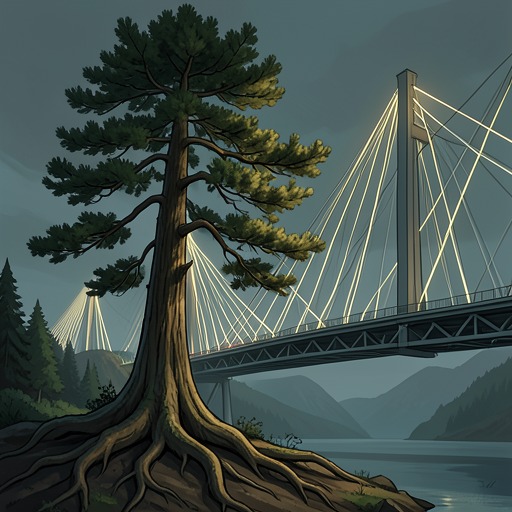
SanctuaryMay functions in the novel not merely as a calendar designation but as a charged seasonal environment. Its light, vegetation, roads, and promise of warmth create a surface of renewal against which coercion, secrecy, social decay, and violence become more sharply visible. The month’s recurring brightness does not heal the world; instead, it illuminates how fragile its apparent order is.
May as Setting and Atmosphere
The month first appears around the spring where Popeye watches Horace Benbow drink. The encounter occurs at about four o’clock on an afternoon in May, with the two men squatting across the water for two hours while a hidden bird intermittently repeats its song and automobiles pass on the highroad. May therefore establishes a deceptively peaceful temporal frame: water wells from the root of a beech tree, broken sunlight lies among cane, brier, cypress, and gum, and the surrounding landscape seems secluded. Yet the scene is organized by observation and concealed danger. Popeye’s silent presence enters Benbow’s view only as a shattered reflection in the spring, making the month’s clarity coexist with imperfect knowledge.
The same season surrounds the Old Frenchman place, the gutted plantation house where the rural past survives as a ruin. Built before the Civil War, the house stands amid cedar trees and land that has reverted to jungle; local people have dismantled it piecemeal for firewood while also searching for the gold supposedly buried there during Grant’s Vicksburg campaign. May’s living vegetation thus grows over a damaged historical structure. The month’s fecundity does not erase the Civil War’s residue or the social arrangements that continue to shape the house’s danger.
Movement Through a Spring Landscape
May repeatedly accompanies journeys whose apparent openness conceals vulnerability. After leaving the Old Frenchman place, Tommy and Horace Benbow descend in single file along an abandoned road, whose erosion has made it too deep to be a road and too straight to be a ditch. Ferns, rotted leaves, branches, and clay replace any reliable route, while the ruin rises behind them, lightless above the cedars. The season offers growth overhead but abandonment underfoot: an arching hedgerow thins against the sky even as the road remains a scar.
The month also frames Temple Drake’s forced journey toward Memphis. The morning is described as bright and soft, filled with May’s extraordinary radiance and the promise of noon and heat. High clouds drift like reflected masses, and lilac, wistaria, redbud, heaven-trees, and dogwood give the air a powerful scent. This abundance forms a cruel counterpoint to Temple’s bodily distress in Popeye’s car, where she repeats that she is still bleeding and eventually begins to scream. The landscape moves backward beneath the wheels while her freedom contracts; May’s vivid motion becomes the visual accompaniment to captivity rather than escape.
When the car reaches Memphis in midafternoon, the seasonal brightness gives way to smoke-grimed frame houses, grassless plots, shabby trees, garages, scrap heaps, and a trolley appearing and vanishing with mechanical violence. The transition from rural May to urban May does not produce safety. It enlarges the network through which Popeye can transport Temple, while the city’s traffic, galleries, cafés, and anonymous dwellings provide new forms of concealment.
Social Time and Public Order
May also marks recurring social routines. At the University of Mississippi, Temple’s nighttime departures occur on weeknights, while dances and formal balls take place on alternate Saturday evenings. Cars wait outside the women’s dormitory even though students are forbidden to keep them, and town boys watch the crossing between collegiate and local worlds with superiority, rage, and possessive attention. The season’s college sociability is therefore inseparable from rules governing mobility, gender, and class. May’s warm evenings support an elaborate public performance in which desire and surveillance operate together.
In Jefferson, seasonal time is bound to rural commerce and communal ritual. On a Saturday, Horace sees women arriving by wagon, preparing their clothes at the curb, and walking toward the square. Alleys are crowded with tethered wagons, the square is lined with cars, and merchants, farmers, and professionals move through stores amid radio and phonograph music. The town appears to function outside ordinary time, its people carried by the slow land of corn and cotton. Yet this apparently stable rhythm also supplies the audience that will judge Lee Goodwin and gather around the jail. May’s social world is not innocent continuity; it is the mechanism by which rumor, moral condemnation, and collective violence acquire force.
Renewal Against Violence
The novel’s most explicit seasonal reflection comes after Horace leaves town with his sister. Passing the jail, he sees the woman in the gray hat and veil standing where Lee Goodwin can see her through the window, carrying the child. Horace begins to cry, but the drive continues through young cotton and locust bloom. He remarks that spring lasts and that its persistence almost suggests a purpose. The thought gives May a temporary ethical resonance: continued growth seems to promise that the world might possess design or endurance.
That suggestion is immediately tested by fire. Horace later sees the jail standing in stark silhouette against a glare and runs toward a vacant lot where a blaze is fueled by gasoline. A man flees carrying a five-gallon coal-oil can that explodes while he runs; the central burning mass is silent, and the crowd restrains Horace as voices become inaudible. The season’s continuation offers no protection against public brutality. May’s bright promise and spring’s persistence remain real, but they are radically indifferent to the suffering imposed by human institutions and crowds.
Temporal Contrast and Significance
May links the novel’s spaces without making them harmonious: the hidden spring, the plantation ruin, the university grounds, Jefferson’s square, Memphis’s streets, and the jail all exist within a season of growth and light. The month repeatedly sets natural recurrence against historical persistence. Land once organized by plantation wealth has become jungle and ruin; college modernity is structured by restrictions and predatory observation; telephones, cars, radios, and urban traffic increase mobility while also extending danger; and spring vegetation continues beside imprisonment and fire.
Its significance lies in this unresolved contrast. May supplies images of return, fertility, and continuity, but the human world does not advance in step with the season. The month’s beauty can accompany a concealed gun, a flight from a house, a bleeding captive, a condemned prisoner, or a burning structure. When Horace asks whether spring’s persistence implies purpose, the narrative leaves the question suspended between hope and irony. May endures, but endurance alone is not redemption.