Alice Pagett—Molly Pagett: mother-daughter relationship
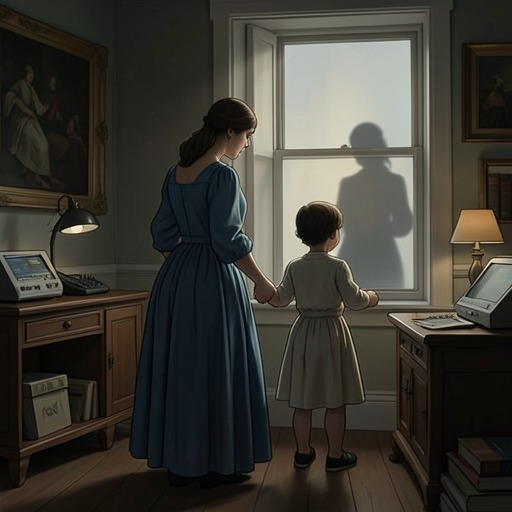
ShrineAlice Pagett and Molly Pagett’s mother-daughter relationship is a bond of vigilant care that becomes more exposed and complicated as Alice’s experiences draw the attention of the Church, doctors, and reporters. At the convent, Molly sleeps next door and listens through the night for her daughter; Alice wants to escape the same protective enclosure. Their closeness is genuine, but it unfolds under pressure from illness, bereavement, and the public interpretation of Alice’s condition as something holy.
Care and confinement
After the attention surrounding Alice’s experiences brings her to the convent for privacy and protection, Molly stays close. The convent is a large house enclosed by a high brick wall and heavy gates, but its defenses cannot keep reporters from filming over the wall from offices above a nearby garage. The sisters can do little but pray that the attention will not disturb Alice. Molly’s own anxious care is concentrated just next door: she has spent most nights awake, murmuring prayers and listening for any sound from her daughter’s room.
The contrast between their rooms makes the intimacy of that arrangement concrete. Alice’s spartan room contains a small bed, a chair, a straw rug, a sink, and a plain wooden crucifix; her two favorite dolls are found each morning thrown into a far corner. Molly sleeps close enough to listen, but she cannot make the room comforting to Alice. Alice hates the convent’s lack of comfort and the nuns’ gray habits, and she is frightened and exhausted by the doctors’ examinations and the repeated questions from doctors, priests, nuns, and others. She wants to return to the church and see the tree. Molly’s presence offers immediate protection, yet it cannot satisfy that longing or restore Alice’s former sense of ease.
Vigilance and mutual need
Molly’s watchfulness is not merely a response to the reporters outside the convent. When the possibility of leaving Alice overnight is raised, she explains that Alice might need her in the night, might call out, and would want her mother if she woke frightened. A nun could tend to the child, but Molly does not regard that as an equivalent comfort. Her insistence shows how she understands her maternal role: she is the person Alice would seek at a vulnerable moment, and she feels obliged to remain available.
The exchange also reveals the strain of that role. Molly’s eyes are red-rimmed from lack of sleep, and her face and bearing seem to have aged; she has become consumed by the events around Alice. Her concern that Alice might need her coexists with a burden of her own, which another character recognizes as compounded by the loss of her husband and the strange changes affecting her daughter. The relationship therefore carries mutual vulnerability, but not equal understanding: Molly can anticipate Alice’s need for comfort while remaining unable to explain what is happening to her.
Faith and bereavement
Molly interprets Alice’s experiences through her devotion to the Church. When she speaks about them, her eyes shine with an inward fervor, and she describes what is happening as wonderful and holy. She also contrasts her response with that of her late husband, Leonard Pagett, whom she says could not understand or appreciate the events because he did not believe in God. The distaste with which she speaks of him unsettles the listener. Her religious conviction gives her a framework for bearing the crisis, but it also sharpens the distance between her response and Leonard’s and risks making Alice’s condition primarily a source of religious meaning.
The tension is not that Molly stops caring for Alice; her sleepless vigil and fear for her daughter show the persistence of that care. Rather, motherly concern and religious interpretation become intertwined. Molly’s faith shapes what she hopes Alice’s experiences mean, while Alice’s visible discomfort and desire to leave the convent remain distinct from that interpretation. The narrative places Molly’s certainty beside Alice’s silence and restlessness, leaving a gap between a mother’s belief about her child and the child’s own expressed wishes.
Together before the congregation
At a convent service, Molly accompanies Alice into the chapel after Alice’s father arrives. Alice appears nervous and looks toward the garden windows; Molly follows with an uncertain smile, urging her onward. The scene places mother and daughter together within a gathering organized around Alice, but it also emphasizes how exposed the child is: the congregation watches her enter, while the convent’s protective setting has become a place of ceremony and public attention.
At a later open-air service, that exposure expands into a crowd gathered near the twisted oak. When Alice emerges through a newly made opening in the church boundary wall, Molly holds her daughter’s hand as the Reverend Mother leads them toward the seats before the altar. Apprehension is visible on Molly’s face, while Alice looks only at the tree and not at the watching crowd. The handholding is a small, practical gesture amid an event made into spectacle: Molly guides and accompanies Alice, but she cannot direct the child’s attention or shield her from the congregation’s gaze.
Significance of the bond
The relationship is marked by a recurring difference between shelter and freedom. Molly stays close, prays, and wants to be present if Alice wakes frightened; Alice longs to leave the convent and return to places associated with her own wishes. Neither detail cancels the other. Molly’s care is concrete, especially in the nights spent listening beside her daughter, while Alice’s resistance makes clear that protection can also feel like confinement.
That tension gives the mother-daughter bond its importance in the episodes surrounding Alice. Molly is both her closest family presence and a person whose devotion increasingly determines how the events are understood. In the chapel and the field, she remains physically beside Alice as attention gathers around the child. The closeness of their hands and rooms stands against the distance between their interpretations: Molly sees a holy occurrence, while Alice’s fear, fatigue, and desire to return to the church and tree are conveyed through her behavior. The relationship consequently holds together care and unease without resolving them into a simple story of either maternal reassurance or estrangement.