Banfield’s Pilgrimage Fervor
ShrineBanfield’s Pilgrimage Fervor is the rapidly intensifying public response to the reported cures associated with Alice Pagett and St. Joseph’s Church. What begins as a local story becomes a repeated gathering of believers, sick visitors, curious onlookers, journalists, clergy, and organizers. The crowds give the alleged miracles a visible social force, even as uncertainty about what happened—and who should control its meaning—remains unresolved.
From Local Report to Public Attraction
The fervor gathers momentum through competing forms of attention. Rodney Tucker first encounters the story in a newspaper account headed as a miracle cure and asking whether Alice Pagett had seen a vision of Our Lady. The comparison with Lourdes gives the report a ready-made pilgrimage frame. Tucker, who is not Catholic, recognizes the commercial opportunity in that comparison; the story excites him because a celebrated religious destination might bring new life to Banfield.
George Southworth presents a more conflicted case. He acknowledges that the town could benefit financially, but also says he believes something divine has happened and sees the possibility of Banfield’s economic renewal and its people’s renewed faith as intertwined. He asks Gerry Fenn to write further about what will become known as the Banfield Miracle. Fenn understands that Southworth is sincere while also recognizing the material interest behind the proposal. From the outset, therefore, the gathering is shaped both by religious expectation and by efforts to make the reported events matter to the town.
The Church’s leaders anticipate that the story will travel faster than any formal judgment. Bishop Caines points to five other alleged cures in addition to Alice Pagett’s recovery and expects that people will come in large numbers whether or not St. Joseph’s Church is declared a shrine. He wants the Church to take control of the situation early. His attention to Alice and her mother reflects the institutional stakes: the crowds may include Catholics, but the reports also reach people drawn by belief in divine power more broadly.
The First Crowds and Their Expectations
On Sunday the 28th, rumors that Alice Pagett would be taken to see the Lady again help draw people toward the church. The approach through Banfield is already unusually busy on a cold, wet Sunday, with traffic and pedestrians moving in the same direction. At the church entrance, Gerry Fenn, Sue, and Ben are caught in a dense crowd. The gathering includes the merely curious as well as people hoping to witness another miracle; some visitors are accompanied by relatives, and sick or disabled people are among those making their way toward the service.
The scale of the event is soon described in national broadcasts. Reports put the line of cars and coaches at two miles and say extra police have been called in to control the crowds. One account estimates that at least two thousand people came to St. Joseph’s that morning, with numbers doubling during the day. Alice’s arrival for the nine-twenty service, escorted by Molly Pagett and priests and policemen, makes access difficult and delays Mass by forty-five minutes. News of her father Leonard Pagett’s death adds to the public attention, while her grief is observed amid the crowd and press presence.
The first gathering is not described as the mass panic feared by the authorities. Instead, a later broadcast records fainting, weeping, and prayer, with a vigil continuing after the crowds have thinned. Visitors have arrived in hope of seeing Alice or the apparition she says she encountered; others bring sick relatives or come because they regard the place as holy. The range of motives is part of the fervor’s character: devotion, expectation of healing, curiosity, and the desire to be near an extraordinary event coexist without becoming identical.
A Field Made for Pilgrims
By the later open-air service, the adjoining field has been rearranged to receive a large congregation. A new entrance leads toward benches around a central altar and a scaffolded centerpiece, with seats reserved for church and non-church dignitaries and religious associations. People arrive well before Mass, seeking a place near the altar or hoping to be close to Alice Pagett. The soft, churned earth makes wheelchair access difficult; the ushers recognize that a separate area for invalids will be needed at future gatherings. The arrangements both accommodate the pilgrimage and make its growth visible.
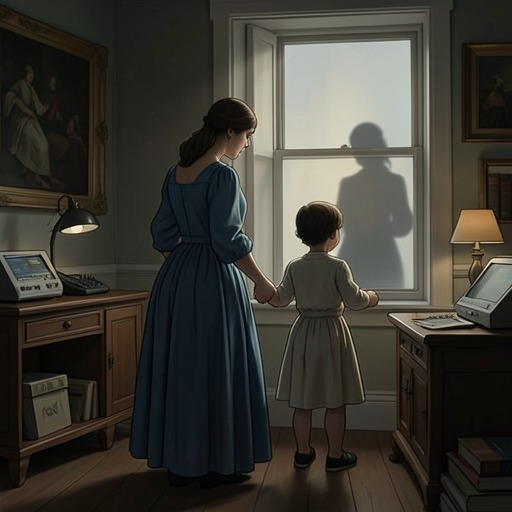
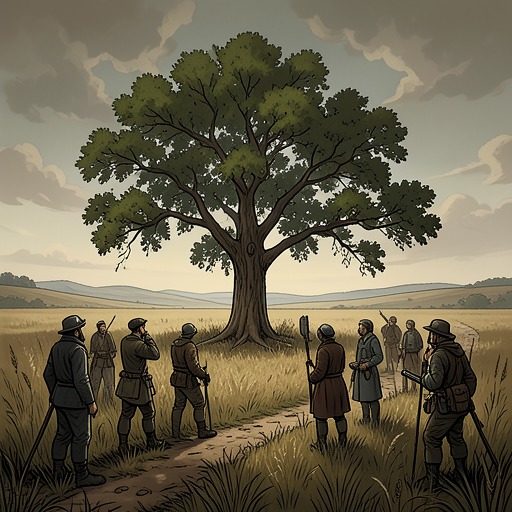
The congregation’s anticipation is not confined to the sick or the devout. Sue senses that the excitement is stronger than the previous week, and even Ben, usually bored by waiting, watches eagerly. When Alice emerges through a new opening in the church boundary wall with Molly Pagett and the Reverend Mother, the crowd falls silent. Alice looks toward the oak rather than toward the people watching her. Her expressionless attention and the crowd’s reverence set her apart from the ordinary social bustle that has brought everyone into the field.
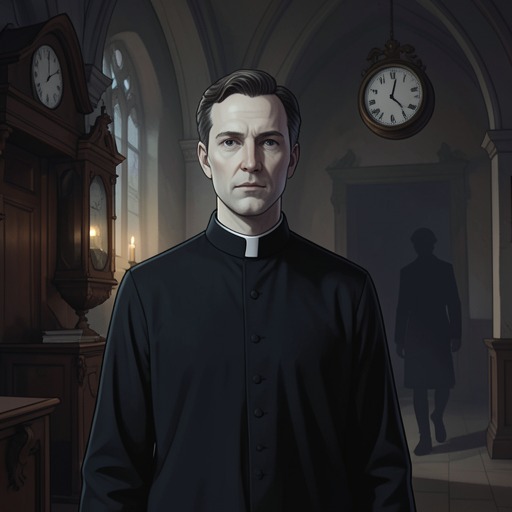
At the service, Monsignor Delgard looks across thousands of faces, including invalids who regard him with hope. He fears that disappointment may damage their faith and doubts that the earlier events can be repeated. Yet the atmosphere of the congregation reaches him as a force in its own right: he feels its directed energy even as he questions the Church’s participation in the spectacle. When Alice approaches the altar, silence gives way to a shared gasp. The crowd’s response becomes almost synchronized, while television cameras lose power and a policeman outside the gate encounters static on his radio. The narrative presents these failures alongside the assembly’s collective attention, without making them a settled explanation for what the crowd witnesses.
Public Meaning, Control, and Continuation
The fervor places competing claims on the same ground. For visitors, the site can promise healing, renewed belief, or the chance to see Alice. For local promoters, the attention offers Banfield a route out of decline. For the Church, the crowds make careful inquiry and public authority urgent: Bishop Caines insists that the alleged cures must be examined, while the institution reaches agreement to purchase the adjoining land and prepares a medical bureau to investigate the claims. The growing pilgrimage thus prompts administrative action before certainty about the miracles has been achieved.
Publicity further magnifies the gathering while exposing disagreement about its meaning. Reports describe extraordinary events but also preserve conflicting accounts of Alice’s appearance at a fire and the circumstances of the cures. The Church does not yet acknowledge the cures as miraculous, and a newspaper dispute later pits a reporter’s account of a curse against the Church’s rejection of that explanation. Meanwhile, the burial of Leonard Pagett attracts crowds of onlookers and pressmen, extending public attention beyond the services themselves and into the family’s bereavement.
The pilgrimage continues in organized form. Alice Pagett asks for a special service in memory of Father Andrew Hagan and Monsignor Delgard and for a candlelight procession through the village. Church authorities agree to hold the tribute despite not expecting a revelation. In a later broadcast, the procession approaches a field many people now call the Field of the Holy Virgin, led by Bishop Caines and followed by clergy, nuns, and Alice. Thousands have joined, including people who say that the events in Banfield have deepened their religious beliefs. The movement from newspaper story to crowded churchyard, planned service, and procession shows how the fervor becomes a communal practice as well as a response to alleged miracles. Its unity remains provisional: the crowd shares expectation, but faith, curiosity, commercial hope, and institutional caution continue to pull in different directions.