Event 1
Annie Ernaux’s affair with A
[Annie Ernaux’s affair with A](entity:event-recall-event-annie-ernaux-s-affair-w-f5a86ab9ca2f) becomes the measure by which the narrator experiences time, ordinary activity, and the distance between herself and other people. Its decisive significance lies not in a promised future together but in the way desire reorganizes her life—and, after [A](entity:character-recall-character-a-c4ec591a5c97) leaves [France](entity:location-recall-location-france-f5cafc8a8ad4), becomes the subject and condition of her writing.
## Identity and Circumstances
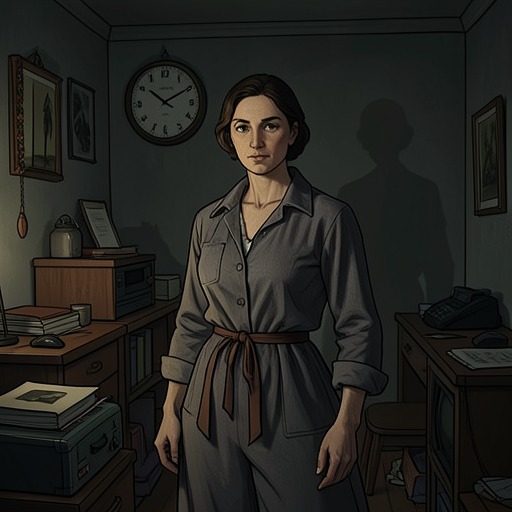
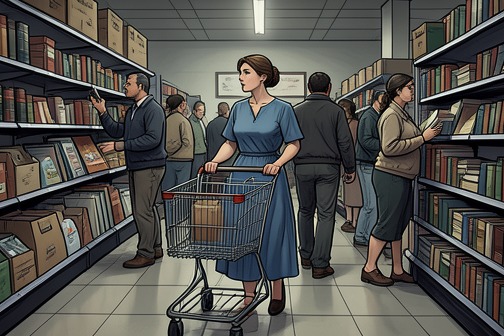
The affair is between the first-person narrator and A, a foreign man whose work and country become central to her attention. From September of the previous year, she says, her life has been dominated by waiting for his calls and visits. She continues to go to the supermarket and cinema, take clothes to the dry cleaner, read, and mark essays, but these familiar tasks no longer feel fully inhabited. They proceed almost instinctively; she remembers little of the films, conversations, and people around her. The deliberate choices she can still identify—reading about A’s country and selecting clothes and make-up—are directed toward him.
The affair is conducted in the intervals of ordinary life, but those intervals lose their former importance. In conversation, the narrator attends most closely to subjects that touch on A: his work, his country, and places he has visited. A description of a Havana nightclub catches her because A had once been sent to Havana and might have been there. In a book, she seizes on a line about lovers kissing with their eyes closed and treats A’s way of kissing as evidence that he loves her. Reading, like other activities, becomes a means of filling the time between meetings and searching for support for what she hopes to believe.
## [Waiting](entity:concept-recall-concept-waiting-d401efbc6f82) and the Organization of Daily Life
The telephone governs the narrator’s days. She tries not to leave home except for work, since A knows her working hours and might call while she is away. She avoids the vacuum cleaner and hairdryer so their noise will not mask the ring. Each call brings a brief surge of hope, usually followed by dejection when someone else is on the line. When she recognizes A’s voice, the long wait and jealousy disappear with startling speed; the voice itself seems slight beside the immense importance it has acquired in her life.
A call arranging a visit starts a more immediate, disordered wait. The narrator prepares herself and the house, yet even simple tasks become difficult to organize. Once ready, she cannot concentrate on reading or marking essays. She sometimes writes the date and time on a sheet of paper, notes that A is going to come, and records her fears that he may not arrive or may no longer desire her. Later, she adds that he came, leaving the anticipation and its aftermath on the same page. The written record makes visible the interval that ordinary chronology cannot: for her, the meeting outweighs the other events of a life, including having children, passing exams, and travelling far away.
The visit itself sharpens rather than resolves her awareness of time. She removes her watch before A arrives, while he keeps his on. Looking at the kitchen clock, she counts the hours remaining and wonders where the present has gone. As he dresses to leave, each piece of clothing marks the approach of the end. Afterwards she sits among the glasses, plates, clothes, and rumpled sheets, reluctant to put the room back in order because its objects recall moments of the meeting. She delays washing until the next day, treating the aftermath as a temporary way of keeping the encounter close.
The affair also makes desire feel like a finite resource. The narrator counts their meetings and believes that each adds something to the relationship, while suspecting that the accumulation of pleasure may eventually bring them apart. Physical intensity and time seem to work against one another: what is gained in intensity is lost in duration. After A leaves, fatigue gives way to apathy and renewed expectation; as the days pass without a call, she becomes convinced that he has left her.
## Jealousy, Imagination, and Unequal Attention
The narrator’s attention exceeds what she can know about A’s life. She imagines him spending a day without thinking of her, going through ordinary routines while she thinks of him from morning to night. The thought fills her with wonder, but she does not claim that her own absorption makes her more entitled to his attention. At moments, recognizing that he may be occupied chiefly with his career and his own life releases her from the belief that he is exceptional. Yet the detachment does not hold: shop windows displaying dresses and lingerie return her thoughts to a possible next meeting.
Jealousy takes shape through imagined scenes. A magazine article about Cuban dancers convinces her, without evidence, that A must have met the woman pictured. She imagines them together and finds the possibility more persuasive than its improbability. Even A’s call to meet cannot immediately relieve the anxiety; pleasure is shadowed by the anticipated pain of his departure. She wants to end the affair to escape dependence on the telephone, but understands that separation would leave her with days in which there was nothing to wait for. She would rather continue under the torment of jealousy than face that emptiness, while recognizing that the affair will end eventually, beyond her control.
Her strategies for managing uncertainty range from avoidance to elaborate acts of imagination. She declines a public event to which A has been invited because she cannot bear to see him socially, then becomes preoccupied with picturing him there. She tries to learn where he spends his free time, imagining him running in Fontainebleau forest or driving toward Deauville, and finds comfort in placing him at a particular location. In this imagined geography, knowing where he is seems to protect her from infidelity, although the knowledge cannot actually control his choices.
Waiting also becomes a physical and imaginative practice. In stations, the Metro, and waiting rooms, where she can sit without having to act, she deliberately drifts into thoughts of A and experiences a rush of pleasure. Repeated images and memories seem to make the mind itself bodily, capable of sexual intensity. This is not a resolution of the affair’s uncertainty; it is one way the narrator inhabits the time in which she has no access to A.
## Departure, Grief, and the Work of Memory
Six months after A leaves France for his own country, the narrator expects that she may never see him again. Her grief affects both body and routine. She wakes in the night in pain and, during the day, tries to keep from being idle because she fears becoming lost. She makes herself dress and put on make-up, though these small actions require effort. Ordinary media and shop displays become difficult to face because she sees the figure of a woman waiting for a man in advertisements and cannot look at lingerie in shop windows.
Memory supplies what the present no longer can. The narrator tries to reconstruct A in detail, recalling his green eyes, the lock of hair on his forehead, the shape of his shoulders and thighs, and the texture of his skin. She recognizes that such reconstruction comes close to hallucination, making it difficult to draw a firm line between remembering and madness. At another point, she gives herself pleasure while feeling that it belongs to him. The affair persists not as a shared present but as an inward experience assembled from bodily recollection and repeated images.
Writing begins about two months after A’s departure, with the account of waiting that opens the recollection. The narrator can tie memories of the affair to particular public and domestic events: the riots in Algeria, the weather on 14 July 1989, and the purchase of a blender in June, the day before a meeting. But she cannot link individual pages of writing to the rain or to world events during the months of composition, including the fall of the Berlin Wall and the execution of the Ceaușescus. The contrast marks a difference between living through passion, when events become attached to its chronology, and writing about it, when time is experienced otherwise.
The past tense of the account does not simply close the affair. It allows the narrator to remain, in writing, within the age when actions were directed toward one person, but it also reproduces the pain of waiting in a new form. Rereading the pages recalls the bathrobe A used at her home; unlike the written account, the garment may one day become only part of a bundle of rags. The narrator wonders whether writing can save such a private object from oblivion, even as she acknowledges that a book cannot restore the lived encounter.
## Writing, Exposure, and Significance
For the narrator, writing about the affair is not a straightforward explanation of what happened or a request for A to respond. A had said, “You won’t write a book about me.” She distinguishes the work from a book about him or a book about herself: it translates into words the effect his existence had on her life, an offering intended for others and probably never to be read by him. The account’s value lies in giving form to the experience without claiming to recover the relationship intact.
Publication changes the terms of that writing. While the pages remain private and handwritten, the narrator can regard them as nearly inconsequential. The prospect of readers brings the work closer to social judgment and the demand to justify intimate experience, including questions about whether it is an autobiography. She admits that continuing to write delays the trauma of handing the pages to others. Once the text appears in public characters, she expects to lose the innocence of writing without risk of being read.
The narrator nevertheless rejects the idea that exposure is the only purpose of writing about private life. She contrasts the writer with an exhibitionist, for whom being seen is the point, and explains that the distance between writing and eventual reading makes it possible to write without dwelling on consequences. The gap permits a kind of freedom, though it cannot guarantee that readers will never arrive. Her account’s frankness thus rests on a tension between privacy and address: the experience begins as something written for no audience, then becomes an offering to people whose judgments the narrator cannot control.
In retrospect, the affair has brought the narrator closer to experiences she had once considered absurd in other people: overwhelming desire, diminished dignity, and convictions altered by passion. She says it allowed her to approach the frontier separating her from others and sometimes believe she could cross it. She also redefines luxury: beyond material wealth or an intellectual life, it can mean being able to live out a passion for a man or a woman. The affair ends in absence, but its lasting consequence is a changed understanding of experience—and the words through which that change can be shared.
Event 2
1988 October Riots in Algeria

The [1988 October Riots in Algeria](entity:event-recall-event-1988-ef1830cd0258) are recalled as a precise landmark in the narrator’s affair with [A](entity:character-recall-character-a-c4ec591a5c97), but they resist becoming a simple date attached to the writing that follows. Their place in her memory shows how passion can make historical time vivid while leaving the time of composition indistinct. The riots also belong to a wider contrast in the narrative between events that can be located in a shared public chronology and experiences whose meaning remains intensely private.
## The riots as a marker of lived time
The narrator says she can clearly recall the October riots in Algeria as part of the period of her relationship with A. Alongside them, she remembers the heat and hazy sky on 14 July 1989 and an ordinary purchase: a blender acquired in June, the day before she and A were due to meet. Public history, weather, domestic errands, and the anticipation of an appointment coexist in one unusually sharp recollection. The riots do not receive a separate account of their causes or course; their significance here is as a date-bearing event within the narrator’s intimate chronology.
## The different times of passion and writing
About two months after A’s departure, the narrator began writing that she had done nothing but wait for a man since the previous September, though she could not remember the exact day she started. The contrast is telling: the events of the affair remain sharply placed, but she cannot attach any particular page to a rainstorm or to events in the world over the ensuing five months, including the [Fall of the Berlin Wall](entity:event-recall-event-da794ef99550) and the execution of Nicolae and Elena Ceaușescu. In her account, living through passion and writing about it produce fundamentally different perceptions of time. The riots belong to the former: remembered with precision as part of the lived relationship, not as a timestamp for the later act of composition.
## Historical events and private memory
The riots’ brief appearance helps establish the book’s method of placing intimate experience beside public history without turning either into an explanation of the other. A political event can register clearly in memory even when the narrator’s attention is organized around waiting, desire, and meetings; later, the world’s major events may remain impossible to connect to the pages she is producing. The resulting contrast is not that public history is absent, but that it does not provide a ready-made measure for the personal past.
A separate historical layer emerges when, during her grief after A’s departure, the narrator returns to the [Passage Cardinet](entity:location-recall-location-passage-cardinet-a6a5ace7f747), where she had undergone a clandestine abortion twenty years earlier. She asks a grocer for directions, finds the partly erased street plaque, enters the building through a door without a digital code, and sees that the former resident who accompanied her to the station has died or moved into a suburban care home. The neighborhood has changed, but recognizing the street and recalling the woman’s protective escort makes the past bodily and particular. The visit does not cancel her present grief; she is nevertheless glad to have revived an earlier experience of violation, also caused by a man. This episode is distinct from the Algerian riots, but its juxtaposition clarifies the narrative’s broader concern with how public chronology, private memory, and writing register different forms of time.
Event 3
Fall of the Berlin Wall

The [Fall of the Berlin Wall](entity:event-recall-event-da794ef99550) is recalled not through a scene of public change but as a measure of what the narrator cannot remember. Roughly two months after [A](entity:character-recall-character-a-c4ec591a5c97)’s departure, she began writing about having done nothing but wait for a man; yet she could not connect any page to the Wall’s fall or to other major events of the preceding months. The contrast reveals a divide between lived passion, which fixed even minor details in memory, and writing, whose passage of time resisted such markers.
## The Event as a Marker of Unremembered Time
The narrator groups the Fall of the Berlin Wall with the execution of Nicolae and Elena Ceaușescu as events that had occurred in the world during the five months before she reflected on her writing. She does not describe either event’s course or immediate effects. Instead, their scale makes the failure of personal recollection striking: despite their historical importance, neither can be assigned to the making of a particular page.
This absence is precise rather than general. The narrator remembers many details from her relationship with A, including the October riots in Algeria, the heat and hazy sky on 14 July 1989, and buying a blender in June on the day before they were due to meet. By comparison, the global events of the later period leave no corresponding trace in her memory of writing. Historical time is present as a list of public events, but not as a framework that organizes the private act of composition.
## Relationship to Memory and Writing
The Fall of the Berlin Wall marks the boundary between two modes of time in the narrator’s account. The relationship with A remains sharply dated and concrete, down to weather and an ordinary household purchase. Writing began after A’s departure, but its individual pages have no remembered weather or public event attached to them. The narrator explicitly sets living in passion beside writing and observes that each changes the perception of time in a different way.
The event therefore functions as a counterpoint, not as an episode in the affair. Its historical prominence cannot compete with the intimate details that passion preserved, and it cannot supply the missing chronology of the manuscript. By naming the Wall’s fall among events she cannot place, the narrator makes a limit of memory part of the subject: experience may leave a dense record, while the later work of writing remains difficult to date from the outside world.
## Narrative Frame and Significance
The reference is retrospective and belongs to the narrator’s reflection on composing her account after A’s departure. The Fall of the Berlin Wall is not represented as a remembered scene; it is mentioned precisely to indicate that no such scene or page-by-page association survives. That distinction keeps the event’s role formal and interpretive rather than turning it into an invented encounter between private life and public history.
Its significance lies in the mismatch between historical importance and personal imprint. The Wall’s fall serves as a clear public marker of time, yet it does not help the narrator recover when she wrote. In the same passage, the intimate past remains unusually legible. The contrast gives the event its literary force: it shows that the chronology of passion and the chronology of writing do not align simply with the calendar or with history’s most consequential dates.
Event 4
Outbreak of the Gulf War
The [Outbreak of the Gulf War](entity:event-recall-event-c987a8ddf1bb) enters the narrator’s unfinished account not merely as a historical interruption but as a sharp test of its private reality: the war’s unanswered threats recall the anxiety of waiting for [A](entity:character-recall-character-a-c4ec591a5c97), while its actual violence leaves no room for the fantasies that once filled that wait. On the war’s first Sunday, A calls and returns to her; their hurried reunion ends with the narrator recognizing that she can hope for nothing more.
## A manuscript reopened by events
In February 1991, the narrator considers ending the book as though nothing in the world or in her life could affect its text. But the pages are still personal and within her reach, so writing remains open to change. She decides that recent developments matter more than adjusting an adjective: the manuscript cannot honestly be treated as timeless while history is unfolding around it.
The interval she marks runs from the previous May, when she stopped writing, to 6 February 1991. In that time the expected conflict between [Iraq](entity:location-recall-location-iraq-57b030bc9041) and the [Western coalition](entity:organization-recall-organization-western-coalitio-c024ab907002) has broken out. The narration thus turns from the retrospective record of passion to a present tense of public uncertainty, making the act of writing answerable to events beyond the affair.
## War, information, and the limit of fantasy
The war is called “clean” by propagandists, but that description is set against the report that Iraq has already received “more bombs than the whole of Germany during the [Second World War](entity:time-recall-time-second-world-war-80275f3e28b5).” The narrator also relays eyewitness claims that children in [Baghdad](entity:location-recall-location-baghdad-aceafca6d718) stagger through the streets as if drunk, deafened by explosions. These contrasting accounts make the language of cleanliness collide with the reported bodily consequences of bombardment.
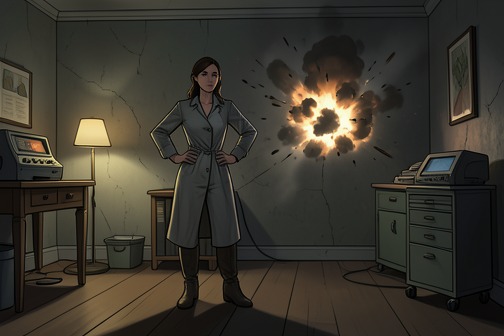
What follows is not certainty but anxious anticipation. The narrator waits for forecast disasters that have not yet occurred: a land offensive by the Western coalition, a chemical attack by Saddam Hussein, or a bomb outrage at the Galeries Lafayette department store. The prospect of events still to come produces the same anxiety and frustrated desire to know the truth that she experienced while living through her passion. Yet she draws a decisive boundary between the two states: in the war, there is no room for fantasy or imagination. Private longing could elaborate uncertainty into dreams; the threatened public violence cannot be transformed in that way.
## A’s call during the war
On the first Sunday of the war, A’s voice comes over the telephone in the evening. For a split second the narrator panics, then repeats his name and cries. He tells her slowly that it is him and says he wants to see her immediately; he will take a taxi. In the half-hour before his arrival, she dresses and puts on makeup in a frenzy, then waits in the hallway in a shawl he has never seen, staring at the door in disbelief.
A enters without knocking, as he used to. He appears to have been drinking: he sways as he embraces her and stumbles on the way upstairs to the bedroom. The scene briefly restores familiar gestures and physical closeness, but it is framed by the shock of his unexpected return and by the war’s unsettled present. The reunion is not presented as a renewal of their former relationship; its brevity and the narrator’s closing recognition give it the force of an ending.
## Aftermath and significance
Afterwards, A wants only coffee. He says that his life in the East is no different: he has the same job as in [France](entity:location-recall-location-france-f5cafc8a8ad4), and still no child, although his wife would like one. At thirty-eight he remains youthful in appearance, but looks more tired; his nails are less tidy and his hands less smooth, probably because of the cold climate where he lives. The narrator tells him off for not keeping in touch. He responds with amusement, questioning what a routine call to ask how she is would have led to. He has not received the postcard she sent from Denmark to his former workplace in [Paris](entity:location-recall-location-paris-c02b439ce220).
They dress, collecting their clothes tangled on the tiled floor, and the narrator drives him to his hotel near the Etoile. They kiss and touch at traffic lights between Nanterre and Pont-de-Neuilly. On her way back through the La Défense tunnel, she asks herself where her story is, then concludes that she can hope for nothing more. The war does not cause A’s return, but it supplies the historical present in which their last encounter occurs; the passage sets public danger beside private longing and refuses to let their resemblance erase the difference between imagined uncertainty and real violence.
Event 5
A于1991年1月重返法国并与叙述者重逢

[A](entity:character-recall-character-a-c4ec591a5c97)’s return to [France](entity:location-recall-location-france-f5cafc8a8ad4) in January 1991 brings the narrator face to face with the man whose absence has organized her memories and writing. Their reunion is brief and intimate, but it does not resume their former relationship: after he leaves again, she understands the visit as almost unreal, a date rather than a continuation of their story. Its decisive effect is paradoxical. The encounter offers no renewed future, yet clarifies the meaning of a passion whose intensity cannot be explained by what it ultimately provides.
## Background: Memory, [Waiting](entity:concept-recall-concept-waiting-d401efbc6f82), and Public Time
Before the reunion, the narrator has repeatedly tried to make the present yield to the past. Since A left, she has measured the time apart in weeks and aligned ordinary public events with the period when he was still with her. A shopping-mall opening, Mikhail Gorbachev’s visit to [Paris](entity:location-recall-location-paris-c02b439ce220), or Michael Chang’s victory at Roland-Garros becomes a cue for recalling a specific moment with A. Even incidental scenes—a visit to an archive room at La Sorbonne, a walk along Boulevard Voltaire, trying on a skirt—return with such precision that she wonders why memory cannot carry her back into the day itself.
Writing begins about two months after A’s departure, with the sentence, “From September last year, I did nothing else but wait for a man . . .” The narrator can attach the relationship to the [Algerian October Riots](entity:time-recall-time-algerian-october-riots-42a225beb242), the weather on 14 July 1989, and even the purchase of a blender before a planned meeting. By contrast, she cannot tie the writing of a particular page to the fall of the Berlin Wall or the execution of Nicolae and Elena Ceaușescu. Passion and writing, she concludes, produce fundamentally different experiences of time. Her use of the past tense makes the earlier period feel endlessly repeatable, but writing also creates a new pain, replacing the old distress of waiting for A’s calls and visits.
In February 1991, the expected conflict between [Iraq](entity:location-recall-location-iraq-57b030bc9041) and the [Western coalition](entity:organization-recall-organization-western-coalitio-c024ab907002) breaks out while the pages remain unfinished. Reports of bombing in [Baghdad](entity:location-recall-location-baghdad-aceafca6d718) and forecasts of further disasters leave the narrator waiting anxiously for news, in a condition she compares with the frustrated desire to know what would happen during the affair. The resemblance has a limit: this public crisis leaves no room for fantasy or imagination. The episode places the return within a world whose political events proceed independently of the narrator’s private chronology.
## The Call and the Reunion
On the first Sunday of the war, in the evening, the telephone rings and the narrator recognizes A’s voice. For an instant, panic overtakes her; she repeats his name and cries. He says, “It’s me, it’s me,” and wants to see her at once, saying he will take a taxi. With only half an hour before his arrival, she dresses and puts on makeup in a frenzy, then waits in the hallway wearing a shawl he has never seen. He enters without knocking, as he used to. He appears to have been drinking: he sways when he embraces her and stumbles on the way upstairs.
Afterward, A wants only coffee. The narrator learns that his life in the East resembles the one he had in France: he has the same job, and still has no child, although his wife would like one. At thirty-eight he retains a youthful appearance but looks wearier; his nails are less tidy and his hands less smooth, changes she associates with the cold climate where he lives. When she reproaches him for not keeping in touch, he jokes about the point of a casual call asking how she is. He never received the postcard she sent from Denmark to his former workplace in Paris.
They dress again, gathering their clothes from the tiled floor, and the narrator drives him to his hotel near the Etoile. At traffic lights between Nanterre and Pont-de-Neuilly, they kiss and touch. The drive carries the reunion back into ordinary geography, but it cannot settle what the encounter means. In the tunnel at La Défense on her return journey, she asks herself where her story has gone, then recognizes that she can hope for nothing more.
## The Visit’s Ending and Meaning
A leaves three days later without another meeting. On the phone before he goes, he says, “I’ll call you.” The narrator does not ask whether he means a call from his country or from Paris on a future visit. The promise therefore remains open but indefinite; it supplies no dependable plan and does not undo the separation.
She has the impression that the visit never happened. In her account it belongs not to the story she had carried through the year, but merely to a date: 20 January. The man who returned is not the man she had held within herself while he was in France and while she wrote about him. She believes she will never see that remembered man again. Yet the visit’s near-unreality gives the passion its true meaning: it does not need to culminate in an intelligible outcome, and for two years it has been the most violent and unaccountable reality of her life.
## Writing, Objects, and What Remains
The reunion takes place after the narrator has begun to see signs that A’s world is separating from hers. On the Metro, two girls mention a house in Barbizon; the name brings back A’s account of spending a Sunday there with his wife. The memory now sits beside other associations, including the name Brunoy, once linked to an old friend. She wonders whether the world is beginning to mean something outside A. The cat trainer at the Moscow Circus, the toweling bathrobe, Barbizon, and the accumulated words, images, and gestures of the affair are starting to come apart. The written book, she says, is only a minor trace of the living text of passion.
That trace is difficult to relinquish. Rereading the opening pages recalls the bathrobe A wore at her home, but the narrator distinguishes the durable meaning writing may have for her and for others from the private object, which may eventually become a bundle of rags. Writing has not relieved her grief: when she puts down her pen, she still longs for A’s voice, foreign accent, and touch, and imagines him living an unknown life in a cold city. She continues small acts that preserve hope, including playing patience, giving a ten-franc coin to a beggar at Auber Metro station, and wishing that A will call or come back. The fact that he does return once does not make that hope a future she can rely on.
The episode thus interrupts, rather than resolves, the narrator’s cycle of waiting and recollection. In the immediate aftermath, she asks where her story has gone; in retrospect, she makes the answer sharper: the visit cannot restore the remembered man or give the passion a conventional resolution. Its significance lies in the distance between the real encounter and the figure preserved in memory, and in the way writing keeps a remainder of an experience whose living signs are already beginning to fall apart.