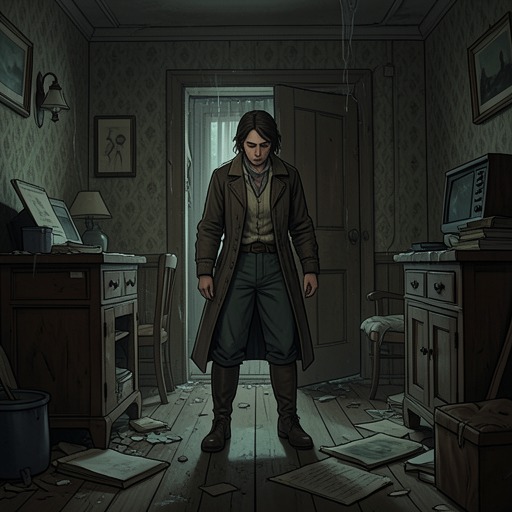
opening winter afternoon
Snowbound After Class
A blizzard interrupts Niru’s Global Literatures class at [Washington National Cathedral](entity:organization-recall-organization-61000d8673a6), and he and [Meredith](entity:character-recall-character-meredith-b0c48f69ebe0) decide to walk to her nearby house rather than wait for transportation. Their easy companionship, sharpened by the storm, establishes the intimacy and dependence at the center of the story.
At Meredith’s house, they eat sandwiches, make hot chocolate, and retreat upstairs while the city disappears beneath snow. The sheltered setting briefly makes their friendship feel like a private world apart from school, family, and social expectation.
the same blizzard evening
Meredith Asks For A Kiss
[Meredith](entity:character-recall-character-meredith-b0c48f69ebe0) confronts Niru about failing to kiss her at [Homecoming](entity:time-recall-time-homecoming-6af2bf751506), recalling their secluded encounter in the [Bishop’s Garden](entity:location-recall-location-15418d374252) and the moment when their teacher interrupted them. She makes clear that she has long expected their closeness to become romantic.
Niru yields and kisses her, allowing her hands to guide the encounter toward sex. The experience exposes the distance between what Meredith wants and what Niru can honestly desire.
later that blizzard evening
Niru Rejects Sex
As [Meredith](entity:character-recall-character-meredith-b0c48f69ebe0) undresses and begins touching him, Niru stops her. His hesitation is not ordinary uncertainty: memories of being objectified by white children, religious condemnation, and his own attraction to boys converge until the encounter becomes unbearable.
Meredith initially interprets his refusal as a judgment against her body and worth. Niru searches for language that will not wound her, but his inability to explain himself reveals how thoroughly shame has silenced him.
immediately after rejecting Meredith
Niru Comes Out
Unable to keep evading the question of what he wants, Niru tells [Meredith](entity:character-recall-character-meredith-b0c48f69ebe0) that he thinks he is gay. He recalls childhood feelings for Zhou, his mother’s warning that boys should not like boys, and years spent trying to force himself toward girls.
Meredith stops treating the moment as a failed seduction and wraps him in a blanket. Her attempt to calm him gives him his first immediate experience of being received rather than corrected, though it cannot protect him from the consequences of telling the truth.
the weeks after the blizzard
The Phone Goes Missing
After the confession, Niru’s routines collapse. He forgets chores, loses track of belongings, lies awake, and worries that classmates can somehow see that he has changed. [Meredith](entity:character-recall-character-meredith-b0c48f69ebe0) becomes his principal confidante and tries to persuade him that speaking aloud has not altered his identity in everyone else’s eyes.
She installs Grindr and Tinder on his misplaced phone, presenting dating applications as a possible outlet. The gesture is meant to help, but it pushes Niru toward an encounter for which he has little emotional preparation.
early spring
Ryan’s Coffee Invitation
[Meredith](entity:character-recall-character-meredith-b0c48f69ebe0) selects Ryan’s profile and Niru matches with him. Ryan proposes coffee followed by “whatever,” a word that triggers Niru’s memories of [Reverend Olumide](entity:character-recall-character-reverend-olumide-ec60b418820d)’s sermons about sexual sin and temptation.
Niru drives toward the meeting while repeatedly considering turning back. His desire and religious fear pull him in opposite directions, making even a coffee date feel like a referendum on his entire future.
the same spring evening
The Traffic Stop
Niru abandons the meeting before anything happens and speeds home. Police stop him, forcing him to keep his hands visible, surrender his keys, and retrieve his license under the officers’ scrutiny.
The encounter recalls [OJ](entity:character-recall-character-oj-84d810ee6663)’s earlier humiliation at gunpoint and makes Niru acutely aware that his black body is read as dangerous even when he is frightened and compliant. The officers release him without a ticket, but the fear follows him home.
that night
Obi Discovers The Phone
Niru’s father, Obi, finds the dating alerts on Niru’s phone and demands an explanation. His anger quickly becomes a declaration that homosexuality is filth, disgrace, and an intolerable threat to the family’s standing.
The discovery converts Niru’s private crisis into a family emergency. Obi’s obsession with reputation and control collides with Niru’s first attempt to name himself, while Ify remains absent until the confrontation becomes violent.
the same night
Obi Attacks Niru
Obi twists Niru’s ear, forces his face against the kitchen table, threatens to send him to [Nigeria](entity:location-recall-location-a4cb2d33a1b2) for spiritual rehabilitation, and finally chokes and beats him. Niru imagines blood and death as possible escapes from his father’s fury.
Ify intervenes after hearing the violence, physically separating them and reminding Obi that he nearly lost another child. Niru is left injured, terrified, and uncertain whether his mother’s protection will extend to accepting who he is.
the following days
Ify Watches Over Niru
Ify cleans Niru’s wounds and keeps watch outside his bedroom, remembering an earlier crisis in which she nearly collapsed after a teenage patient died by suicide. Niru assures her that he will not kill himself, but his withdrawal alarms her.
Obi argues that Niru must return to school so that the family can regain control of the situation. Ify threatens to kill Obi if he touches their son again, revealing the marriage’s hidden violence and her divided role as protector, wife, and believer.
the next Sunday
The Church Confrontation
Ify brings Niru to [Reverend Olumide](entity:character-recall-character-reverend-olumide-ec60b418820d)’s church, hoping prayer will stabilize the family. Olumide preaches repentance as the key to salvation and frames sin as an inevitable struggle that must be controlled.
Obi arrives and demands a cure for what he calls spiritual and psychological corruption. In Reverend Olumide’s office, the adults decide that Niru needs deliverance without meaningfully asking what he wants, making religion an instrument of parental authority.
shortly after the church meeting
Niru Is Sent To Nigeria
Obi announces that Niru will be taken to [Nigeria](entity:location-recall-location-a4cb2d33a1b2) for spiritual counseling. Niru protests that he is eighteen and capable of deciding his own life, but Obi treats his sexuality as evidence that he has forfeited the right to choose.
The decision separates Niru from school, track, [Meredith](entity:character-recall-character-meredith-b0c48f69ebe0), and the limited freedoms of Washington. It also turns the family’s private conflict into a forced journey toward the religious intervention Obi believes can restore order.
a few days later
Arrival In Nigeria
Obi and Niru land in [Nigeria](entity:location-recall-location-a4cb2d33a1b2), where Obi becomes energized by the heat, bureaucracy, and familiar national landscape. Niru experiences the country as overwhelming and alien, despite Obi’s insistence that it is home.
The journey exposes the generational and diasporic conflict between them. Obi’s return produces Nigeriatoma, a swelling of pride and authority, while Niru feels that his passport and father’s control have made him a prisoner.
the next day
The Village House
The pair travel to Obi’s village and reopen the neglected house where Obi’s father lived and is buried. Local boys clean the rooms, fetch water, and clear the compound while Niru joins them rather than accompany Obi on visits to relatives.
The house embodies Obi’s unresolved relationship with poverty, shame, and his dead father. Niru sees how strongly Obi wants to escape the world that formed him while still demanding that his sons claim it as home.
the following morning
Bishop Okereke’s Diagnosis
Obi takes Niru to [Bishop Okereke](entity:character-recall-character-bishop-okereke-b899f6849ac2), who asks whether he has engaged in “homosexualism.” When Niru refuses to confess to a stranger, Obi accuses him of lying and describes the material he found on his devices.
The bishop declares homosexuality a demonic influence intensified by America and promises that [Nigeria](entity:location-recall-location-a4cb2d33a1b2)’s stronger faith can combat it. He schedules Niru for a night vigil, replacing conversation and consent with spiritual diagnosis.
two nights later
The Deliverance Vigil
At [Bishop Okereke](entity:character-recall-character-bishop-okereke-b899f6849ac2)’s unfinished church, Niru joins a crowded all-night service saturated with heat, music, sweat, and prayer. Obi watches anxiously as the bishop leads him into a back room with two women and another prayer warrior.
They surround Niru, press him to the floor, and pray for the homosexual spirit to leave him. Niru’s anger and shame alternate with a desperate wish to become acceptable to Obi, making the ritual psychologically coercive rather than healing.
at the end of the vigil
Obi Reaches For Niru
The bishop’s hand throws Niru onto the concrete, leaving him disoriented beneath the blinding light. When his vision clears, he sees Obi crying and reaching for him.
Obi helps him up and takes him home. The gesture does not erase the violence or the religious coercion, but it reveals that Obi’s disgust is entangled with genuine fear and love he cannot express without control.
after returning to Washington
The Return To School
Back at school, Niru performs normality by repeating the masculine behavior [Reverend Olumide](entity:character-recall-character-reverend-olumide-ec60b418820d) approves. He jokes about women and sex with his classmates while feeling almost no desire, hoping that imitation will quiet the religious scrutiny inside him.
He resumes track and begins alternating between exhilarating good days and gray, breathless bad days. Running offers a temporary sense of control, while home remains a quiet prison governed by silence and surveillance.
early spring after his return
The Locker Room Humiliation
In the locker room, [Adam](entity:character-recall-character-adam-7e6d3c5ddcc8) and [Rowan](entity:character-recall-character-rowan-eaefb657d259) mock Niru’s relationship with [Meredith](entity:character-recall-character-meredith-b0c48f69ebe0) and imply that he prefers men. The jokes turn the bodies and banter of the locker room into a field of threat, especially now that Niru can no longer pretend not to know his own attraction.
Meredith watches from a party nearby, visibly changed and increasingly distant. Niru leaves the room shaken, carrying the humiliation into the championship preparations.
the same Friday night
The Track Party
After Niru places well in the first meet, [Adam](entity:character-recall-character-adam-7e6d3c5ddcc8) pressures him to drink vodka mixed with Coke. Niru accepts several cups, becomes intoxicated, and is absorbed into the team’s performative celebration of masculinity and imitation.
At the party he discovers that [Meredith](entity:character-recall-character-meredith-b0c48f69ebe0) was rejected by [Harvard University](entity:location-recall-location-2f0eae907965). Their shared disappointment should bring them together, but instead exposes the resentment created by months of silence and mutual misunderstanding.
later that night
The Accusation Against Meredith
Niru accuses [Meredith](entity:character-recall-character-meredith-b0c48f69ebe0) of telling [Rowan](entity:character-recall-character-rowan-eaefb657d259) that he is gay, while Meredith insists she never betrayed him. Their argument turns cruel when Niru mocks her rejection by [Harvard University](entity:location-recall-location-2f0eae907965) and blames her for setting his life’s turmoil in motion.
Meredith tries to leave, but Niru grabs her arm. Her fear changes the emotional meaning of their friendship: the person who once held him through a breakdown is now physically restrained by him.
immediately afterward
Niru Runs From The Party
[Meredith](entity:character-recall-character-meredith-b0c48f69ebe0) breaks free and Niru runs into the night, drunk, furious, and ashamed. He vomits on M Street and is helped by a warmhearted young man who gives him clean clothes and arranges an Uber.
The stranger is [Damien](entity:character-recall-character-damien-daa3ba4e1e7c), though Niru initially remembers him only through fragments of eyes, hands, voice, and shoes. The encounter opens a path toward connection outside school, church, and family, even as Niru remains unable to accept what he wants.
the following weeks
Damien’s Number
Niru repeatedly drives past the sporting-goods store where [Damien](entity:character-recall-character-damien-daa3ba4e1e7c) works, unable to approach him. He eventually returns to the store to buy running shoes and recognizes Damien as the stranger who helped him.
Damien gives Niru his number on the receipt. The small exchange becomes an act of possibility: Niru can pursue someone he desires, but he must do so covertly within a household and religious system that calls that desire evil.
shortly afterward
Coffee With Damien
Niru calls [Damien](entity:character-recall-character-damien-daa3ba4e1e7c) and meets him at [Tryst](entity:location-recall-location-fd212bbc4dbd). Damien describes leaving [Newport News, Virginia](entity:location-recall-location-f33217d7e31c), resisting his family’s expectations, and dreaming of dancing with [Alvin Ailey American Dance Theater](entity:organization-recall-organization-e71fe93bd762).
Their conversation gives Niru a model of escape and self-invention. Damien is not free of fear, but he has made distance from home part of his survival, while Niru still feels trapped between secrecy and obligation.
during their early meetings
The First Kiss
Niru and [Damien](entity:character-recall-character-damien-daa3ba4e1e7c) begin meeting during the hours between lunch and track. Their relationship develops through cookies, milk, nervous touches, and increasingly intimate conversations about freedom and family.
Damien kisses Niru in a secluded alley, and Niru experiences the kiss as both frightening and undeniable. He continues meeting Damien while hiding the relationship from his parents and [Reverend Olumide](entity:character-recall-character-reverend-olumide-ec60b418820d), creating a secret life that feels more real than his public one.
late spring
The Secret Relationship
Niru and [Damien](entity:character-recall-character-damien-daa3ba4e1e7c) make out in parks and hidden corners, and Damien assures him that the world is larger than the people who have rejected him. Niru’s running improves as the relationship gives him an outlet, even while he remains divided between pleasure and religious guilt.
[Meredith](entity:character-recall-character-meredith-b0c48f69ebe0) and Niru continue to avoid direct conversation, though each remains alert to the other. Niru’s private happiness grows alongside the unresolved damage of their friendship.
near the end of the school year
The Dormitory Retreat
[Damien](entity:character-recall-character-damien-daa3ba4e1e7c) invites Niru to his dorm room while packing to move. The room is messy and ordinary, contradicting Niru’s idealized fantasies of Damien’s life, but their physical closeness still intensifies rapidly.
When Damien moves beyond kissing, Niru panics and stops him. The encounter proves that desire does not automatically resolve fear, shame, or the inherited belief that intimacy must be punished.
immediately after Niru leaves the dorm
Damien’s Painful Confession
[Damien](entity:character-recall-character-damien-daa3ba4e1e7c) explains that his first sexual relationship was with a sailor who treated him as a sickness while reserving love for a girlfriend. He insists that he is not anyone’s disease and refuses to accept Niru’s attempt to retreat into moral panic.
Niru drives away in distress and heads to church, finding the doors locked despite the sign promising that all are welcome. The locked church becomes a concrete image of the exclusion he has been taught to call salvation.
the same day
The Kitchen Breakdown
Niru returns home and clashes with Ify while she prepares food. His frustration, fear, and exhaustion erupt into profanity and accusations that the house has become an unbearable place where everyone is always shouting or waiting for disaster.
Ify, overwhelmed by the months of crisis, tells him to leave and find whatever happiness he is seeking. Their argument damages the protective bond between them, leaving Niru more isolated just before the final track meet.
the final track championship
The Championship Race
At the championship meet, Niru runs a personal best and helps his team win. His parents watch from the stands, and Obi, unusually open, tells him that he is proud of him.
The triumph offers Niru a fleeting image of achievement outside his family’s expectations. Yet he has already decided that he will not continue running at [Harvard University](entity:location-recall-location-2f0eae907965), because he no longer wants a life organized around circles, performance, and obedience.
immediately after the championship
The Roadside Escape
Obi lets Niru drive the Range Rover, but his anxious instructions and attempts to control Niru’s phone make the drive impossible. Niru stops the car on the GW Parkway and tells his father that he cannot drive with him in the vehicle.
Obi insists that Niru get back in and tries to frame the crisis as another manageable problem. Niru refuses, leaves the car, and runs along the shoulder while Obi begs him to return. Their relationship reaches a point where physical distance is the only available form of speech.
six years later
Meredith Returns Home
[Meredith](entity:character-recall-character-meredith-b0c48f69ebe0) returns to Washington and walks from [Union Station](entity:location-recall-location-592ce374677d) through a city she no longer regards as home. Her parents are packing the house before moving to [Cambridge, Massachusetts](entity:location-recall-location-07e46a478d5d), and Meredith discovers Niru’s old blue-and-white windbreaker in her closet.
The jacket triggers the memory of the last night she saw him. Her adult life with a boyfriend, ambitions as a photojournalist, and carefully minimized attachments are all shown to have grown around the unresolved trauma of Niru’s death.
six years earlier, on the day of the championship
The Final Visit Before Death
[Meredith](entity:character-recall-character-meredith-b0c48f69ebe0) recalls waiting on her front steps for Niru after his championship race. He arrives exhausted and speaks about wanting to disappear, and she brings him inside, trying to redirect his despair toward food, conversation, and the possibility of a different night.
Niru reveals that the boy he had been seeing no longer wants him. Meredith suggests finding [Damien](entity:character-recall-character-damien-daa3ba4e1e7c) and going to Riverrun afterward, but Niru’s desperation and resentment make their plans unstable from the beginning.
that same night
The Fourteenth Street Club
Niru and [Meredith](entity:character-recall-character-meredith-b0c48f69ebe0) use false identification to enter a crowded club near [Damien](entity:character-recall-character-damien-daa3ba4e1e7c)’s neighborhood. Niru searches unsuccessfully for Damien while Meredith drinks and accepts attention from a young man who treats her as available.
The club’s racialized performance, sexual pressure, and alcohol-fueled confusion intensify both characters’ instability. Meredith wants to feel visible and desired, while Niru wants to recover the person who has become his emotional refuge.
later that night
The Alley Fight
Niru tries to pull [Meredith](entity:character-recall-character-meredith-b0c48f69ebe0) away from the club, but she resists, angry that he has abandoned and replaced her. She follows him into an alley and pushes him, prompting him to seize her and hold her against a wall.
Meredith fights back and screams while Niru, bleeding from the pavement, tells her to calm down. The scene is ambiguous in motive but unmistakably dangerous: their damaged friendship has become a physical confrontation in public space.
moments later
The Police Shooting
Police arrive and order Niru to step away from [Meredith](entity:character-recall-character-meredith-b0c48f69ebe0) with his hands raised. As his phone rings, he reaches reflexively toward it; the officers interpret the movement as a threat and fire four shots.
Niru collapses in the alley and dies while Meredith is left in shock. The shooting transforms a private conflict into a public racial and political crisis, linking Niru’s death to the dangers faced by black bodies under armed police scrutiny.
immediately after the shooting
Hospital Aftermath
[Meredith](entity:character-recall-character-meredith-b0c48f69ebe0) is taken to [George Washington University Hospital](entity:location-recall-location-dd2bd5e0222c), where nurses treat her physical injuries and shock. She cannot fully process that Niru is gone and repeatedly asks where he is.
Niru’s father calls her phone, unaware of what has happened, and Nurse Moyo tells him that Meredith is in the emergency room. When he arrives, his composure collapses into grief, and Meredith recognizes that Niru’s death has destroyed the father who had seemed most responsible for his suffering.
the weeks after the shooting
Meredith’s Trauma Treatment
[Meredith](entity:character-recall-character-meredith-b0c48f69ebe0) develops intrusive memories, nightmares, panic, and a persistent sense that Niru is watching her. [Dr. Blake](entity:character-recall-character-dr-blake-c77d74940ac8) helps her breathe through the episodes, but Meredith remains trapped between guilt, fear, and the knowledge that she initiated the chain of events.
Public coverage portrays her as an assault victim and Niru as a dangerous attacker. Meredith knows the story is false or radically incomplete, but the adults around her advise silence because a simpler narrative protects the family and manages public sympathy.
the days after Niru’s death
The Public Narrative
Television commentators debate whether the officer was a monster while police officials defend the shooting as appropriate intervention. Protesters gather in Washington with signs including “[White Lies Cost Black Lives](entity:expression-recall-expression-white-lies-cost-bl-d6a623c98b6a),” and Niru becomes a symbol to people who never knew him.
[Meredith](entity:character-recall-character-meredith-b0c48f69ebe0)’s parents hire a public-relations specialist who orders her not to post, message, or explain. Their strategy treats silence as protection, but it also erases Niru’s complexity and forces Meredith to live inside a lie that calls her the victim.
the morning of graduation
The Graduation Absence
[Meredith](entity:character-recall-character-meredith-b0c48f69ebe0) cannot leave bed and is barred from attending graduation. Her father carries and comforts her while her mother watches from the doorway, and Meredith tells [Dr. Blake](entity:character-recall-character-dr-blake-c77d74940ac8) that she feels blamed for ruining the family’s life.
The ceremony that should mark entry into adulthood becomes a scene of paralysis. Niru’s death has suspended Meredith between adolescence and adulthood, while her parents’ management of the scandal prevents honest mourning.
six years after the shooting
Meredith Faces The Truth
While her parents prepare to leave Washington, [Meredith](entity:character-recall-character-meredith-b0c48f69ebe0) revisits the places connected to Niru. She walks near [Fourteenth Street](entity:location-recall-location-c30dc1ac4af8) but cannot reach the alley, realizing that memory has preserved his death while the city has continued without him.
She understands that she did not pull the trigger, yet she also rejects the protective fiction that she was simply assaulted. Her guilt is not legal responsibility but moral responsibility: she knows her actions and silence helped determine how Niru was remembered.
six years after the shooting, before her parents’ move
Obi Confronts Meredith
Obi appears outside [Meredith](entity:character-recall-character-meredith-b0c48f69ebe0)’s house, visibly aged and broken, demanding that she tell the world his son was not a rapist. Meredith’s parents try to remove him and threaten to call the police, but Obi challenges the idea that the situation is equally painful for everyone when Niru is dead and their daughter is alive.
He asks Meredith to describe who Niru really was. She wants to recount his tenderness, habits, ambition, fear, and love, but at first can only say that they should tell the truth. The encounter forces the families’ private grief into direct contact.
the next day
Meredith Cleans Niru’s House
[Meredith](entity:character-recall-character-meredith-b0c48f69ebe0) returns to Niru’s abandoned house and enters after the door opens. She finds dirty dishes, stagnant water, flies, decay, and signs that Obi has withdrawn from ordinary life.
She cleans the kitchen, repeating the kind of practical work Niru once did before driving her home. The act cannot reverse anything, but it becomes a ritual of responsibility: she refuses to leave his home and memory untouched by the consequences of what happened.
the same night
The Windbreaker At The River
[Meredith](entity:character-recall-character-meredith-b0c48f69ebe0) runs to the [Potomac River](entity:location-recall-location-c5467179398c) wearing Niru’s windbreaker. She throws it into the water, then retrieves it when it refuses to drift away, recognizing that even her attempt at symbolic release cannot make him disappear.
The river recalls Riverrun, the ritual senior athletes never completed together. Meredith carries the wet jacket back through the sleeping city, choosing not to abandon the memory even though it remains painful.
near the ending, dawn
Obi Receives The Jacket
[Meredith](entity:character-recall-character-meredith-b0c48f69ebe0) returns to Niru’s house and presses the doorbell. Obi opens the door, intoxicated, unwashed, and barely recognizable beneath grief. She offers him Niru’s windbreaker instead of the apology she has rehearsed.
Obi recognizes that she has been there before and asks her to speak. The novel ends with Meredith facing the possibility of finally telling the complete truth, while Obi accepts the object that links his dead son, his own failure, and the friendship that survived him.