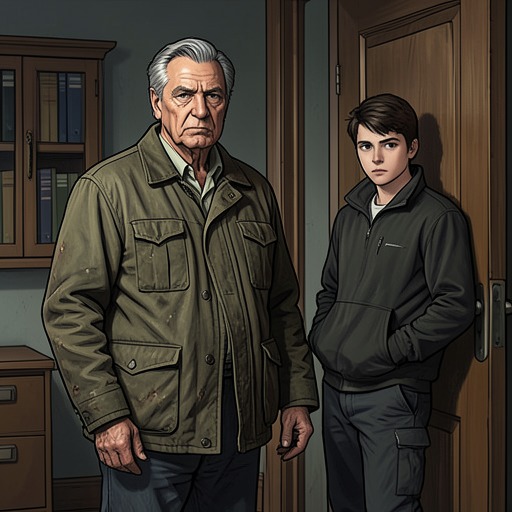
Duan Jeffries and Orin Jeffries
SpontaneousDuan Jeffries’s bond with Orin Jeffries is shaped by a sharp family rupture: after Duan’s mother left, Orin remained to raise their three children. Duan remembers the burdens that placed on his father and, as an adult, speaks of Orin with admiration and gratitude. His father’s example stands in contrast to the abandonment that marked Duan’s childhood and helps explain the value he places on loyalty and parental responsibility.
The parent who stayed
When Duan was twelve, his mother left Orin and their children: Duan, Terrence Jeffries, who was ten, and Olivia Jeffries Westmoreland, who was three. Duan recalls the departure as a lasting source of anger and disbelief. He was the oldest child, with Terrence and Olivia still young, and he saw the family’s upheaval from the position of a child expected to take responsibility for his younger siblings.
Duan credits Orin with stepping into both parental roles. He recognizes that raising the children alone could not have been easy, but remembers that Orin never complained. As an adult, Duan says he is unsure he could have done what his father did. That admission makes his admiration more than general praise: it acknowledges the sustained work of caring for the family after his wife’s departure.
Orin as an example
Orin’s conduct also shaped the standards Duan imposed on himself. As the eldest, Duan felt expected to set a good example for Terrence and Olivia. He understood that his mother had already brought scandal into the family and that Orin did not want his oldest son to follow in her footsteps. Duan responded by doing everything right: earning the best grades in school and entering law enforcement after college. He later worked as a private investigator, continuing to pursue work he valued for keeping wrongdoers off the street.
That disciplined path reflects the influence of the household Orin tried to hold together, though Duan’s adult perspective also recognizes the pressure of being the eldest child. He describes his younger brother as a handful even in childhood and remembers Olivia trying to take their mother’s place. His recollection thus links his regard for Orin’s parenting with his own early sense of responsibility within the family.
Adult gratitude and family contrast
At Terrence Jeffries and Sherri Griffin Jeffries’s wedding, Duan watches the couple move through the ballroom thanking their guests. The sight of several loving marriages in his family leads him to include Orin’s later marriage among them: a few months earlier, his father had married the administrative assistant who had been devoted to him. Duan believes Orin deserves the love of a good woman, especially after what he endured in his first marriage. The scene places his father’s later happiness beside the earlier family rupture without erasing either.
Duan’s gratitude is explicit when he reflects that he has a wonderful father and cannot tell him often enough how much he appreciates him. His words frame Orin not simply as the parent who remained, but as someone whose effort Duan continues to measure and honor in adulthood. That recognition is especially significant because Duan’s anger toward his absent mother remains unresolved: when he searched for her nearly eighteen years after she left, hoping for remorse and closure, he instead concluded that she did not deserve his forgiveness. In Duan’s account, the contrast between the parent who abandoned the family and the father who carried its responsibilities gives their relationship its enduring emotional weight.