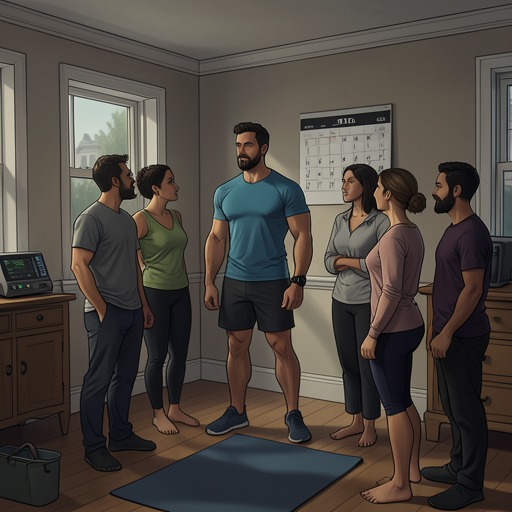
Event 1
Colton's Transfer to Ted House

[Colton](entity:character-recall-character-colton-b4acbe3e32b9)’s transfer to [Ted House](entity:location-recall-location-ted-house-fb2dc4b48c1a) is a pivotal change of placement, but not an instant passage from danger to belonging. Approved after two weeks in a group home, he arrives carrying the effects of his abuse, his distrust of adult promises, and the fear that this new home will prove as temporary and conditional as every other refuge. Ted House offers care shaped by people who know what it means to have been failed, while the approaching age limit ensures that safety and uncertainty remain entangled.
## Background and Approval
Before the move, Colton has been working with his caseworker and therapist after finally managing to disclose most of what happened at [Father Benson’s conversion camp](entity:organization-recall-organization-father-benson-927ff6cc76b2). In his first meeting with [Amit](entity:character-recall-character-amit-c907974af4b2), he struggles with the intimacy of addressing an adult by a first name, an expectation rooted in his upbringing that he is trying to undo. The conversation gives him room to identify himself as Mormon by background, say that he is unsure what he is now, and explain that his family had considered itself normal while he had always known he was different. When he admits that things became ugly after he was caught, Amit invites him to tell more; Colton agrees.
Exactly two weeks later, Colton is approved for Ted House. The transfer means leaving the school assigned to him at the group home and packing his few belongings, mostly cast-offs and hand-me-downs collected from charity bins and secondhand shops. Its practical details matter: this is not a child moving with a secure store of possessions, but a young person carrying what he has managed to acquire into another placement whose promises he has little reason to trust.
## Arrival and First Impressions
Among the teens, Ted House has acquired the dimensions of a fairy tale. Rumors describe an old, haunted Victorian home deep in the woods, with pizza and cake every night and no schoolwork. Colton already expects the story to collapse on contact. He anticipates strict rules, angry residents, and another place where he will feel out of place; after [Father Benson](entity:character-recall-character-father-benson-2cb0d40f4635) initially seemed kind, even reassurance from Amit that the transfer will make a difference cannot persuade him to lower his guard.
The actual destination is strikingly ordinary: a two-story ranch house surrounded by suburban neighbors and fresh lawns, not a remote Victorian mansion. From the back of Kimball’s SUV, Colton feels fear prickling through him and suspects that being made to relax might leave him vulnerable to another betrayal. A small sign at the front gate, reading Ted House, is the only obvious indication that the building is a group home rather than a family residence. The contrast between the whispered legend and the unremarkable house makes the arrival less like entering a promised refuge than facing one more unfamiliar test.
Kimball asks whether Colton is all right. When told that Ted House is for kids like him, Colton bitterly asks whether that means freaks. Kimball instead describes children who deserved better than they received, and points to [Sage](entity:character-recall-character-sage-dd58037f98b1) and [Derek](entity:character-recall-character-derek-bb513cb37f74), who have worked on the house because they know what it is like to be in Colton’s position. He asks Colton to give them a chance. Colton says the placement cannot be worse than the house in [Denver](entity:location-recall-location-denver-bd410fc030e8), but he does not hurry out of the SUV. He understands that the people inside intend to help; he also expects not to make that work easy for them.
## Care and the Limits of Placement
Ted House is meant to be different from the group home, not merely another stop governed by the same expectations. Its staff and family-like structure offer Colton the possibility of care from people who understand the circumstances that brought him there. Yet his guardedness is more than suspicion of this particular house. He is still gay, still feels alone, and does not believe that a change of address has changed the conditions of his life. Even a genuine chance of something better cannot erase what came before or guarantee that he will belong.
The placement also has a defined limit. As Colton approaches his eighteenth birthday, he experiences the ticking clock as a time bomb: turning eighteen and graduating high school will mean that Ted House is no longer his home. Sage repeatedly promises that he will not be dumped on the lawn with a backpack, but the assurance does not immediately reach Colton’s deeper fear. He has spent less time in foster care and group homes than many other young people he has encountered, yet even the support at Ted House cannot easily overcome his sense that he is only a temporary presence—someone who may be told he is family and still have to leave.
## Aftermath and Significance
The later consequences show both the value and the limits of the transfer. Colton does turn eighteen and graduate; Ted House’s staff work to prepare him rather than simply ejecting him, and he is set up with an apartment and keeps his café job. But the transition into adult life does not itself provide economic security or a clear future. A year into the same routine, Colton is lonely, exhausted, and struggling to see a way beyond low-paid work. His adult independence arrives alongside continuing precarity, not as proof that the earlier support was unnecessary.
That precarity becomes concrete when the university denies his financial aid. Although he has spent time in foster care, his parents have not legally lost custody, so he does not qualify as an independent student and their income is counted. A community-college payment plan later offers a cheaper route—$3,200 for full-time study, with a $250 deposit and nearly $1,000 due in each of the following three months—but even this alternative remains beyond what his finances readily allow. The gap between formal eligibility and lived circumstances extends the vulnerability that the transfer could address only in part.
Colton eventually tells [Marcel](entity:character-recall-character-marcel-9cdc35802b92) that his parents sent him to Father Benson’s camp after learning he was gay, where the priest used electricity in an attempt to cure him; Colton ran away because he feared he would be killed, lived on the streets, and was eventually sent to Ted House after police arrested him for vagrancy. The transfer is therefore a turning point in a longer movement from abuse and homelessness toward support, not a clean resolution. Its significance lies in the difference between being placed somewhere safer and being able to trust that safety will last: Sage, Derek, and the others can help Colton build a bridge out of the system, but the approaching age-out deadline and later barriers to education remain real.
Event 2
Colton Ages Out of Ted House
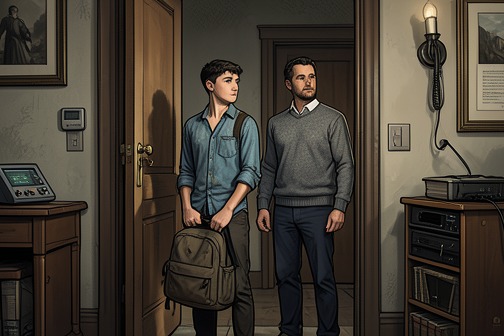
[Colton Ages Out of Ted House](entity:event-recall-event-colton-ages-out-of-ted-1511f8379b4a) is the turning point at which the support of a foster-care group home gives way to an uncertain and materially precarious adulthood. Turning eighteen and graduating do not resolve [Colton](entity:character-recall-character-colton-b4acbe3e32b9)’s vulnerability: he leaves with limited job prospects, little money, and a future constrained by rules that count his parents’ income even though he has been in care. The event links the age-out deadline to his later struggle to afford university and to the personal history he eventually shares with [Marcel](entity:character-recall-character-marcel-9cdc35802b92).
## The deadline and the fear of being left behind
As Colton’s eighteenth birthday approaches, time feels like a countdown with no intervention capable of stopping it. There are no wires to cut and no last-minute rescue; he turns eighteen, graduates from high school, and loses [Ted House](entity:location-recall-location-ted-house-fb2dc4b48c1a) as his home. The deadline makes adulthood feel less like a chosen milestone than an imposed change in status: the home is no longer available, and he expects to be left to manage the consequences alone.
[Sage](entity:character-recall-character-sage-dd58037f98b1) repeatedly promises that Colton will not be put out on the lawn with only his backpack, but reassurance cannot immediately undo the fear. Colton has spent less time in foster care than many other young people and has not been moved from family to family, yet the comparative stability of his placement does not make belonging feel secure. Ted House has supportive staff and a family-like structure, but he sees the arrangement as temporary. In his mind, its affection cannot cancel the fact that he is a young person who struggles academically and has almost no employment prospects.
The deadline is also connected to expectations about whether he can function independently. [James](entity:character-recall-character-james-b40e84036a54) explains that Colton has only a few months before he must leave, and that his caseworker needs to see enough progress from Sage and Silas to believe he will manage on his own. Leaving is not conditional on good behavior: Colton must age out because he is eighteen, with graduation providing only a brief grace period. Sage does not let young people simply walk out onto the street, and resources are available, but Colton still has to work to access them. Support therefore matters, but it does not remove the administrative deadline or the demand that he demonstrate readiness.
## A difficult path through care and into work
Colton’s difficulty meeting those expectations is not a simple lack of effort. His medication helps only to a degree, and he struggles with focus, hyperactivity, irritability, and confusion, alongside persistent inner turmoil. Even so, the adults at Ted House do not give up on him. Silas persuades the caseworker to grant him another chance, and Sage argues that Colton can contribute to the household—and does.
His contributions are practical and specific. He babysits the children, helps walk Apollo when Wyatt needs someone to take the dog out, tries several jobs, and develops useful skills in [Will](entity:character-recall-character-will-17d4ceb7f768)’s kitchen at [Masala](entity:location-recall-location-masala-68b6f4f61a1d). These responsibilities complicate the image of him as a young person simply unprepared for adulthood: he can care for children and animals, work, and build skills, even while remaining vulnerable and uncertain. The household’s support helps him reach the transition, but it cannot guarantee stable housing, adequate income, or access to further education.
After aging out, Colton is set up with a small apartment and keeps his job at the café. For a year, however, his routine barely changes. He sees no clear prospects beyond the work he already does, and he is too shy to date; people in town know him and know where he came from. The result is not merely being alone but feeling lonely. Fatigue feeds anger, which surfaces in small confrontations: he snaps at his boss, gets mouthy with customers, and tells debt collectors calling his phone what he thinks of them. The shift from group-home life to an apartment therefore brings a measure of independence without the sense of possibility that independence is supposed to promise.
## Earlier trauma and the limits of formal status
Colton’s experience before Ted House helps explain why aging out carries such a strong fear of being abandoned. At first, he tells [Amit](entity:character-recall-character-amit-c907974af4b2) that he is Mormon, then hesitates over whether he still belongs to that faith or whether his family would want him “Not like this.” He describes knowing from childhood that he was different, trying to hide it, and being discovered; after that, “Things got ugly.” The disclosure is halting, but it establishes the family and religious rupture behind his placement in care.
Later, Colton gives Marcel the fuller account. His parents did not lose custody through child-protection intervention: they sent him to a [conversion camp](entity:location-recall-location-27bfbe77abbc) after realizing he was gay. The camp, run by [Father Benson](entity:character-recall-character-father-benson-2cb0d40f4635), tried to make him stop being gay. Colton ran away because the treatment kept hurting and he feared that Father Benson might kill him. He lived on the streets for a time, was arrested for vagrancy, and was then sent to Ted House. In this sequence, aging out is not an isolated change of address. It follows rejection at home, abuse, escape, and homelessness, so Colton has substantial reason to doubt that an institution’s promise of care will last.
The distinction between being in foster care and being legally independent becomes decisive when Colton applies for financial aid. Despite having lived in the foster system during the last year of his life, he is denied aid because his parents have never legally been stripped of custody. He does not qualify as an independent student, so their income is counted in the assessment. The rule treats a continuing legal connection as evidence of available family resources, although his history shows that his parents sent him away and that his path to safety ran through the streets and Ted House. His past and his administrative classification do not match.
## Education, money, and the continuing aftermath
The aid denial turns Colton’s educational ambition into an immediate financial crisis. The letter from the university’s veterinary school arrives among a stack of bills, and he opens it expecting an award decision. He has barely begun to process the denial before water starts trickling from the ceiling and then bursts through the walls. He saves his laptop, phone, file folder, and backpack, but little else; his emergency set of dry clothes reflects a street habit he has never managed to lose. The flood compounds an already unstable moment, leaving him with a few salvaged possessions and a direction in which to walk.
A less expensive community-college route does not make enrollment affordable. The quoted cost is $3,200 for full-time study, with a $250 deposit followed by payments of just under $1,000 a month for three months. Grants and scholarships might become available later if he does well, but the immediate payments are beyond what he can readily produce. The numbers give concrete form to the distance between Colton’s desire to study veterinary medicine and his present means: a cheaper option still requires money he does not have.
Aging out thus initiates a longer struggle rather than a single moment of departure. Colton has reached adulthood in the eyes of the system, yet his available choices remain shaped by the circumstances that brought him into care, the custody status that governs his aid application, and the low-wage work that cannot cover university costs. The event’s significance lies in that contrast: Ted House helps him avoid being simply turned out, but the transition does not supply the durable resources or family support assumed by the rules he encounters. His later account to Marcel makes the personal history behind that gap known, while the rejected aid and unaffordable payment plan show its continuing material consequences.
Event 3
Marcel Moves to Colorado with Brad

[Marcel Moves to Colorado with Brad](entity:event-recall-event-marcel-moves-to-colorad-215a1309c69a) is the turning point at which [Marcel](entity:character-recall-character-marcel-9cdc35802b92) accepts a shared future he had not expected to want. [Brad](entity:character-recall-character-brad-0abd64e0fe0a)’s job offer in [Denver](entity:location-recall-location-denver-bd410fc030e8) carries them from a relationship Marcel had assumed would end into a new life in [Fairfield](entity:location-recall-location-fairfield-16d12e6e6e31), but the move does not erase their underlying distance. Instead, the practical realities of settling in together—work, access, and everyday accommodation—make that distance harder to ignore.
## The offer and Marcel’s decision
Brad raises the possibility of moving after being offered a position in Denver. He does not treat the opportunity as a decision already made: he tells Marcel about it and asks him to come along, describing the job as a major offer and the city as a fresh market for Marcel, who is still looking for work. The invitation is itself a change in their relationship. Marcel notes that Brad had not usually consulted him about career changes, and he is startled that Brad wants his opinion and company.
The offer lands against an uncomfortable history. Brad knows that Marcel has been rejected from jobs for which he was qualified because employers did not know how to accommodate him. He has also watched Marcel’s teaching hours at studios dwindle until Marcel was teaching only one class a week, partly because students were uncomfortable with his blindness. Brad understands that finding work is not simply a matter of Marcel trying harder; nonetheless, the difficulty has become a sore point between them. His proposal of a new city therefore contains both possibility and pressure: Denver might offer a fresh start, but Marcel would be entering it with the same access barriers and with Brad’s support already complicated by resentment.
Marcel considers what he might do in Denver, thinking of looking into yoga studios or starting one himself. He has savings, so the issue is not whether he can afford to move. It is whether he can commit to building a life around Brad. He is used to moving through unfamiliar places, but not without his brother and parents as a fallback. With Brad, he would be trusting a boyfriend whose role in his life he thought he already understood—and whose relationship he had privately treated as having an expiration date. After nearly a year of counting down, Brad’s invitation unsettles that expectation. Marcel says yes, wondering whether he has misread Brad and whether he can see their partnership differently.
## Arrival in [Colorado](entity:location-recall-location-colorado-e0fc68fd7477)
Colorado is both familiar and newly uncertain to Marcel. He had spent several months in Denver as a child while his father was guest-lecturing at a university, but those visits had not made the city an accessible playground. The art museum’s sculptures were behind barriers that prevented him from touching them, while the aquarium offered little beyond a tide pool he could enjoy. His mother took him shopping, and the family ate out because she disliked handling raw meat; [Antoine](entity:character-recall-character-antoine-d27fa2f26ec6) took up skiing, an activity Marcel did not feel safe attempting with low vision. He was already conscious of the ways other people might baby him, and did not want to add a serious injury to the reasons they might do so.
This time Marcel arrives as an adult with money in his bank account and independence within reach. Brad has signed a lease on a townhouse just outside Denver, in Fairfield, a small town with an old-world feel. Its narrow streets have thick grass along the pavement; six steps lead to the front door, and another ten lead to the living room. The house is on the main bus route, connecting it to the city center and its outskirts, yet it is far enough from traffic that Marcel can drink his morning coffee on the upstairs balcony without hearing the city’s noise. The setting gives him a home base and public transportation, while the stairs and unfamiliar interior make the work of adapting part of daily life from the beginning.
## The strain of shared domestic life
It takes Marcel weeks to get used to the townhouse. During that time, plates and coffee mugs are broken, and Brad grumbles quietly about them. The repeated mishap has a specific, avoidable cause: even after a year together, Brad continues leaving dark mugs on dark countertops where Marcel cannot see them. Marcel grows tired of apologizing for accidents Brad could help prevent. He does not think the argument is worth the energy, but his silence does not make the accommodation problem disappear.
The move thus shifts the couple from an abstract question about commitment to the intimate logistics of sharing a home. Brad has invited Marcel to accompany him, and Marcel has accepted, but the household does not automatically become considerate simply because they now live together. The countertop becomes a measure of the difference between accepting Marcel in principle and changing habits in practice. Marcel’s frustration gathers alongside the work of navigating an unfamiliar place, while Brad’s quiet complaints make the imbalance tangible rather than theoretical.
## A new home, an old distance
Marcel senses the emotional separation growing after their arrival. Brad remains sweet, but Marcel feels that the connection between them has loosened; the string that once joined them has so much slack that they seem barely connected. This recognition complicates the hope Marcel invested in the move. He had agreed because Brad’s request suggested he might have misunderstood their relationship, and because starting over together seemed possible. Yet a shared address and a job opportunity do not resolve the habits or resentments that already set them apart.
The move matters as both a commitment and a test. Marcel chooses to relocate with Brad, taking his own savings and hopes for work into a life organized around a partner he has not fully trusted. In Fairfield, his independence is real but shaped by accessibility, employment discrimination, and the accommodations Brad does—or does not—make. The first outcome is not a settled partnership but a sharper awareness of its distance: Colorado offers Marcel a fresh place to begin, while the everyday conditions of that beginning reveal how much remains unresolved between them.
Event 4
Marcel and Colton Meet at Ruby's

[Marcel and Colton Meet at Ruby's](entity:event-recall-event-marcel-and-colton-meet-03f294792b64) marks the beginning of [Marcel](entity:character-recall-character-marcel-9cdc35802b92) and [Colton](entity:character-recall-character-colton-b4acbe3e32b9)’s relationship, but its decisive turn is not simply their attraction: it is the moment their tentative hookup gives way to an offer of friendship and refuge. At [Ruby](entity:character-recall-character-ruby-d712cc61b93e)’s bar, Colton gathers the nerve to approach the stranger who has caught his attention. Their encounter becomes intimate, then changes course when Marcel learns that Colton is a virgin and cannot continue. Rather than leaving the younger man with only rejection, Marcel invites him to stay over and suggests they become friends, giving their connection a different beginning than either a casual encounter or an immediate romance.
## Setting and First Attraction
On a quiet Tuesday at Ruby’s bar, Ruby points out Colton’s new regular. Colton turns, sees Marcel, and finds himself unable to look away. When Marcel’s gaze meets his, Colton looks down, struck by the directness of a man who appears able to pursue what he wants. The sight unsettles him even as it draws him in; he feels anticipation and desire before he has decided what to do with them.
Colton’s hesitation is tied to a private hope. He has thought of his virginity as a word hanging over him, and approaches Marcel partly because he wants to stop feeling defined by it. He has already lived through enough rejection to tell himself that another would not be unbearable. Encouraged by Ruby’s confidence that the stranger is a sure prospect, he leaves his drink and crosses the room.
## The Approach and a Change of Terms
Colton opens with a greeting and admits that he saw Marcel looking at him. Marcel turns the ambiguity into a direct proposition, asking whether Colton had hoped for a fight or a sexual encounter. Colton answers that he wanted the latter. When Marcel shifts his hand so their fingers brush and gives his name, Colton responds with his own. The exchange moves quickly from looking to mutual recognition and explicit interest.
Marcel asks whether Colton wants to go somewhere private, and Colton agrees. The encounter is not presented as a decision Marcel makes on Colton’s behalf: Marcel checks whether he wants to proceed, and Colton says that he does. In the dark, however, Marcel asks Colton’s age. Because he cannot see well enough to verify identification, he explains that he has to trust Colton’s answer. The question interrupts the momentum long enough to make Marcel’s caution visible alongside his attraction.
## The Boundary and the Immediate Aftermath
After they have begun to be intimate, Marcel realizes that Colton is a virgin. Colton confirms that he has never had sex and admits that he had hoped this night would be his first time. Marcel stops and tells him that he cannot go further. The change is abrupt for Colton, who had wanted the encounter and experiences Marcel’s decision as rejection, but Marcel’s answer establishes a boundary rather than an accusation that Colton did not want him.
The embarrassment and hurt do not erase the connection. Colton recognizes that Marcel has had a difficult day and has nowhere to go, and offers a place to stay. Marcel accepts, proposing that they make the night a sleepover and be friends. Colton agrees, though the word friendship disappoints him because his feelings have already begun to exceed it. He nevertheless senses that Marcel is genuine and worth keeping in his life. Their first encounter therefore ends not with the sexual outcome Colton had hoped for, but with a practical act of shelter and the possibility of continued closeness.
## Significance to the Relationship
The scene establishes a pattern that remains important to Marcel and Colton’s developing relationship: desire is real, but it does not override a stated limit, and care can continue after a boundary changes the course of an encounter. Marcel’s decision not to proceed disappoints Colton, yet Marcel does not withdraw from him; Colton, in turn, responds to Marcel’s vulnerability with an offer of company and shelter. Attraction and mutual consideration arrive together, rather than one being treated as proof of the other.
The scene also places Colton’s wish to lose his virginity within a wider vulnerability. He is young, uncertain, and accustomed to rejection, and initially imagines the night as a chance to alter how he sees himself. Marcel’s discovery changes that expectation, but friendship leaves the meeting open-ended. The beginning of their bond is consequently marked by both an unmet hope and an act of support: what could have remained a brief bar encounter becomes the first step in a relationship built through continued presence.
Event 5
Marcel's Breakup with Brad

[Marcel](entity:character-recall-character-marcel-9cdc35802b92)'s breakup with [Brad](entity:character-recall-character-brad-0abd64e0fe0a) is the decisive break between a relationship Marcel had trusted and a future he chooses for himself. After discovering Brad's infidelity in their shared home, Marcel rejects Brad's attempts to excuse it, gives up the townhouse rather than remain among reminders of the betrayal, and leaves with his belongings. By the time he is safely on the road, the breakup has become more than an ending: Marcel recognizes that leaving is manageable, and that he can stay in [Fairfield](entity:location-recall-location-fairfield-16d12e6e6e31) without returning to his brother or relying on Brad.
## Causes and Background
The breakup follows only six weeks of living together before the relationship collapses. Marcel had already worried that trusting Brad's fidelity might be a mistake, but he had nevertheless accepted Brad's appeals to move and build a life as a couple. He had allowed himself to hope that this relationship would be different, making the discovery of Brad's betrayal painful not simply as a breach of an agreement but as the collapse of trust Marcel had rarely extended to anyone.
Brad responds with an account of their circumstances: he says he has been unhappy, points to Marcel's limited work and his own long hours, and claims he had not agreed to this life. Marcel refuses to treat those difficulties as a justification for Brad's conduct. He says that he had been fine with Brad working long hours and had thought they were building something together. Their conflict therefore centers on a sharp difference between the ordinary pressures of their shared life and Brad's decision to betray Marcel rather than address those pressures honestly.
## The Confrontation and Decision to Leave
Marcel cuts off Brad's attempt to tell him that the affair was not about him. He names Brad as responsible and rejects the suggestion that Brad's actions reflect a failing on Marcel's part. Though Marcel is hurt by the trust he had given Brad, he does not turn that hurt into a plea to repair the relationship. His response is instead to make the betrayal the basis of a firm boundary.
Brad offers to let Marcel stay in the townhouse until he can find somewhere else, then asks whether Marcel can afford it alone. Marcel hears pity in the question and understands that Brad does not know the full extent of his savings. But the financial question does not persuade him to keep the home. He wants neither the townhouse nor the bed nor a home associated with Brad's infidelity. He takes his phone, retrieves his cane from the coat stand, and tells Brad he will be out by the following week.
Brad laughs at the proposed timeline and addresses Marcel with a familiar term of endearment. Marcel tells him never to call him that again. The rebuke makes the separation concrete in language as well as action: a name associated with their intimacy no longer belongs in the conversation between them.
## The Final Separation
When Marcel later packs, Brad follows him into the room and challenges his plans, including the possibility that Marcel will live with a woman. Marcel keeps packing despite his shaking hands and dropped socks. He refuses to dignify Brad's accusation with an answer and says he will return for the rest of his belongings after the arrangements are signed and he has a move-in date. He also makes clear that the townhouse is Brad's, as Brad had said he wanted to keep it.
Marcel tells Brad he had been ready to let him go before they left California and should have trusted his own instincts. Yet he distinguishes regretting the relationship from rejecting the place he has come to live: he likes Fairfield, intends to find his own place, and plans to continue teaching his classes. This is not a retreat to his previous life or a return to his brother in [San Francisco](entity:location-recall-location-san-francisco-8a14902ce523). Marcel leaves Brad while keeping hold of the future he wants in Fairfield.
## Consequences and Significance
Marcel leaves with Holland, who is waiting at the bottom of the stairs. As they drive away, he recognizes that he is safe and out of the house, and that Brad now knows the relationship is over. He anticipates no begging, crying, or bargaining; there will be no negotiated return to what they had. The final emotional turn is from expecting departure to be terrifying to discovering that it is not. The relationship ends, but Marcel's decision also establishes his independence: he can relinquish the shared home, remain in Fairfield, and move forward without asking Brad to validate the choice.
Event 6
Colton's Apartment Flood

[Colton](entity:character-recall-character-colton-b4acbe3e32b9)’s Apartment Flood is a compound crisis: after a university denies Colton financial aid for veterinary school, water bursts into his apartment and strips away much of what he has. With his housing and educational plans suddenly uncertain, he has little choice but to take [Marcel](entity:character-recall-character-marcel-9cdc35802b92)’s offer of shelter. The flood thus transforms a precarious offer into immediate dependence, while the shared refuge brings the men closer amid Marcel’s own upheaval after discovering [Brad](entity:character-recall-character-brad-0abd64e0fe0a)’s infidelity.
## Causes and Background
The day had already been difficult before the water began. Colton arrived late at [Masala](entity:location-recall-location-masala-68b6f4f61a1d), where an oven started smoking because of fried wiring, ruining the pastry selection. [Will](entity:character-recall-character-will-17d4ceb7f768) did not blame him, but the disruption left Colton shaken; raised voices and sharp tones could trigger a visceral response, and Will was too stressed to notice his distress. Aaron recognized what was happening and persuaded Will to let Colton leave a few hours early.
At home, Colton opened the university’s financial-aid award letter. He learned that he had been denied independent status because, although he had spent the last year in foster care, his parents had never legally lost custody. The school therefore counted his parents’ income when assessing his eligibility. Their income was too high for the aid he needed, and the school was out of state, leaving Colton staring at a daunting cost with no time to make sense of possible alternatives. The rejection made Marcel’s offer of help difficult to refuse: Colton was grieving the loss of what he could call his own and had no backup.
## What Happens
After the letter, water first trickled from the ceiling’s edge. Then the walls burst, and the apartment flooded. Colton managed to save his laptop, phone, file folder, and backpack, but little else. He had one set of dry clothes, which he habitually kept for emergencies, a remnant of street life he had never been able to leave behind. With those belongings and a general direction, he set out on foot.
The flood also closes off the possibility of returning to Marcel’s home as a simple solution. Marcel is dealing with migraines from his glaucoma, but what keeps him from going home is not only the pain: Brad had slept with another man in the shared bed. To Marcel, the sheets and home have been tainted by infidelity and lies. He had wanted to be wrong, and the discovery sharpens a more intimate wound: the fear that he is never worth someone staying and loving only him.
## Shelter and Conversation
Marcel offers Colton a place to stay, but the offer feels almost casual to him at first; Colton’s reaction makes clear that it is not something he can simply accept or decline. He needs the shelter. In the aftermath, Marcel eases onto the sofa and thanks Colton when he turns off the lights to help with the migraine. Colton then puts a soft crocheted afghan across Marcel’s lap, explaining that [Sage](entity:character-recall-character-sage-dd58037f98b1) made it. These small acts of care establish the tenderness of their shared refuge without erasing either man’s crisis.
Their conversation turns to Marcel’s childhood interest in butterflies. His father, a wildlife biologist, moved the family frequently for environmental projects. When Marcel was eight, a three-month project in Mexico studying shrimp brought the family to a beach in an RV. A migration of orange-and-black butterflies filled the roads; after the family reached the campground, crushed wings covered the car’s grill. Marcel remembered the sight as tragic and beautiful: the delicate wings moved in the wind as if alive, then fell apart when touched. The experience drew him toward lepidopterology, and his father let him spend time with researchers collecting samples.
That early ambition ended when colleges rejected Marcel’s applications to biology programs. They cited inconsistent grades, which he connected to the family’s constant moves, but a counselor told him plainly that his blindness was also a reason: universities were reluctant to provide accommodations for a science major involving observational work. Colton stiffened at the news and called the discrimination unfair. Marcel explained that he had grown tired of being expected to do something grand to prove blindness could not stop him. He wanted the ordinary experience of pursuing a goal for the same effort as anyone else, rather than having his education turned into an overcoming-disability story. Colton takes Marcel’s hand and acknowledges how painful that was.
## Consequences and Significance
The immediate consequence is displacement: the flood leaves Colton with only a few saved possessions and makes Marcel’s shelter essential. But the crisis is not presented as an isolated accident. The denial letter exposes the way the dependency-status rules can count the income of parents who have not provided Colton a secure home, while the flood makes the vulnerability of his housing literal. His dry clothes, kept from earlier days on the street, carry that instability into the present.
For Marcel, the crisis takes place in a home he no longer feels able to inhabit after Brad’s betrayal. His grief over the relationship and his frustration with the expectations placed on him as a blind person emerge in conversation with Colton, whose response offers recognition rather than a demand that Marcel turn hardship into inspiration. The flood therefore creates a precarious domestic arrangement that is also a turning point in their closeness: care moves in both directions, and the shelter gives them room to disclose what each has lost.
Event 7
Colton loses his apartment after the building is damaged
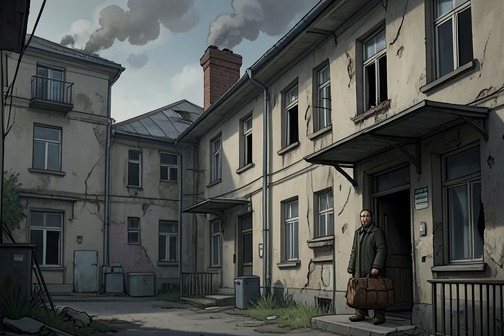
[Colton loses his apartment after the building is damaged](entity:event-recall-event-colton-loses-his-apartm-9825205dc1fe) when repairs make the affected units uninhabitable and the landlord orders them emptied. The loss is more than temporary displacement: [Colton](entity:character-recall-character-colton-b4acbe3e32b9) is left with no possessions, little money to replace them, and the prospect of sharing a new home whose rent may exceed his means.
## Causes and Circumstances
The building must be gutted and rebuilt, suspending Colton’s ordinary housing and work routine. With the building unavailable, he has no rent to pay for the time being, but that reprieve does not make the loss secure or temporary in any comforting sense: he does not know whether he will have an apartment to return to when the work is finished.
Colton’s financial position leaves him poorly equipped to absorb the damage. He earns thirteen dollars an hour and spends most of it on rent to a landlord he considers greedy and responsible for failing to keep the building up to code. He has no nest egg for replacing his belongings, and no renter’s insurance to fall back on.
## Loss of Home and Possessions
The landlord decides that everything in the affected units will be thrown out. Colton is not allowed to return and search for anything salvageable before the crew begins gutting the building and tearing down walls. When he objects, the landlord invokes renter’s insurance and hangs up, turning an already irreversible loss into a brusque dismissal.
The consequences are concrete: Colton has nothing to take to his next home. In the days after the damage, he makes do with two outfits and faces the cost of replacing all the rest of his possessions. Even the possibility of eventually returning to an apartment does not restore what has been discarded.
## Temporary Displacement and Financial Pressure
The damage disrupts Colton’s daily life as well as his housing. He is staying with [Marcel](entity:character-recall-character-marcel-9cdc35802b92) while the building is rebuilt and has agreed to take a day or two off from his morning shift at [Will](entity:character-recall-character-will-17d4ceb7f768)’s shop to figure things out. Because he is not paying rent during the reconstruction, he briefly has room to address the immediate upheaval, but his low wages make replacing his possessions a daunting expense.
The displacement also brings a new, difficult calculation into his relationship with Marcel. As they prepare to move into a new house, Colton has avoided thinking about the move for three days; a delay reported by Holland has extended their hotel stay by another night. He wants to pay half the rent, but worries that Marcel’s tastes are beyond his budget. He considers working doubles, asking Will for extra hours, or taking another job, reasoning that school is no longer an option.
## Consequences and Significance
The apartment’s damage turns a housing emergency into a wider loss of security. Colton has no control over when he can retrieve his things, no compensation he can afford to claim through insurance, and no certainty about returning to his old home. The landlord’s response compounds the physical damage with the abrupt denial of any chance to recover what remains.
The episode also shapes the terms of Colton’s next home: shelter with Marcel offers a place to go, but not freedom from anxiety about money or dependence. Colton’s wish to contribute half the rent sits alongside the fact that he has been stripped of the belongings and financial reserve that would make starting over easier. The move therefore carries both immediate relief and the pressure of rebuilding a life from almost nothing.
Event 8
Marcel discovers Brad’s infidelity and leaves him

[Marcel discovers Brad’s infidelity and leaves him](entity:event-recall-event-marcel-brad-9c2268c558dd), a rupture that makes clear the difference between being kept for convenience and being loved with care. Even when [Brad](entity:character-recall-character-brad-0abd64e0fe0a) later offers an apology that sounds sincere, [Marcel](entity:character-recall-character-marcel-9cdc35802b92) will not return: the betrayal was not an isolated lapse, and his new independence is something he has chosen rather than merely endured.
## Causes and the Break
Marcel’s account to [Colton](entity:character-recall-character-colton-b4acbe3e32b9) establishes the betrayal as the starting point of their friendship. After Brad had sex with another man in their shared bed, Marcel found himself at a bar with nowhere to go. Colton offered him the refuge he had available; Marcel later tells him that the night mattered because it left him feeling safe and wanted during one of the worst moments of his life. Their friendship thus begins in the aftermath of Brad’s breach of trust, with Colton’s welcome answering the isolation that the breakup exposed.
The separation does not immediately end Brad’s claim on Marcel’s attention. Brad contacts Marcel’s brother, [Antoine](entity:character-recall-character-antoine-d27fa2f26ec6), in a panic because he has not seen Marcel. Marcel corrects the implication that he is missing or unsafe: he is at his own place, Brad was sleeping with someone else, and they are no longer together. He explains that Brad has seen him since the breakup but is unhappy that Marcel has moved on and will not consider taking him back. Marcel also tells Antoine that Brad appeared while he was out with friends, asking to talk things over, and that Marcel told him to leave; the encounter became ugly. Marcel’s insistence that his family has no right to manage his private life marks the breakup as a matter of autonomy as well as fidelity.
## Confrontation and the Evidence of a Pattern
In a later confrontation, Marcel asks why Brad persuaded him to move to [Fairfield](entity:location-recall-location-fairfield-16d12e6e6e31) only to be having sex with someone else less than a month later. He asks whether the cheating had also been happening in California. Brad’s silence supplies no reassurance, and Marcel notes that he has recently tested negative for sexually transmitted infections. The question widens the injury: Marcel is not only confronting the known betrayal but also the possibility that the dishonesty began before the move.
Marcel names the pattern he sees between them: Brad needs to believe Marcel was the one cheating so that he can live with his own guilt, while Marcel has come to accept that Brad did not care about the relationship as he claimed. He pulls his arm away from Brad’s bruising grip and asks him to let the relationship go. The physical attempt to hold him and Marcel’s act of wrenching free make the conflict concrete: Brad seeks another opening, while Marcel refuses to let the past dictate his next choice.
## Independence, Apology, and Refusal
Marcel’s decision to stay in Fairfield is not simply a way to remain near Colton. He tells Colton that moving there taught him he did not need anyone. He dislikes being alone and values having Colton with him, but he distinguishes that comfort from dependence: he wanted Colton and was able to live on his own, rather than moving him in or keeping him close because he feared solitude. The distinction gives the breakup a consequence beyond separation from Brad; it becomes part of Marcel’s effort to choose intimacy freely.
Brad later apologizes with a sincerity Marcel had not heard from him before. In the past, Marcel recalls, Brad’s apologies served to get his way or silence him rather than acknowledge harm. This time the change in tone unsettles Marcel, but it does not undo what happened. He has no intention of forgiving Brad: the infidelity is clear, and Marcel believes it had been going on for some time. He describes having been treated as convenient company and sex, kept available when useful, rather than respected as a partner.
## Consequences and Significance
Marcel’s refusal is grounded in the future he wants. He wants stability and a life in which he is not taken for granted; he wants to be loved intensely by someone he loves in return. He concludes that Brad cannot be that person, regardless of any later self-reflection or change. The apology may alter Marcel’s understanding of Brad’s present regret, but it does not change the history or restore trust.
Against Brad’s possessiveness and betrayal, Marcel and Colton’s bond is associated with friendship, shelter, and reciprocal care. Marcel’s account of the night Colton welcomed him explains why he later insists that Colton is with him as a friend, not as an object of pity or a responsibility. The breakup therefore does more than remove Brad from Marcel’s life: it clarifies the kind of closeness Marcel will accept, and the difference between choosing someone and needing someone to avoid being alone.
Event 9
Brad confronts Colton and Marcel at Ruby’s bar
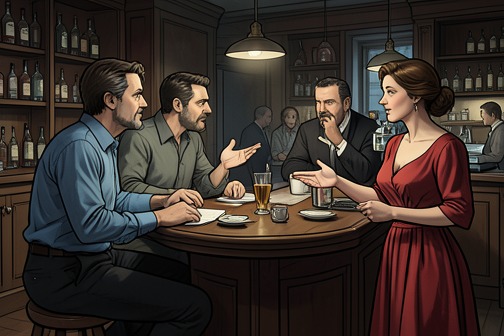
[Brad confronts Colton and Marcel at Ruby’s bar](entity:event-recall-event-brad-ruby-s-colton-marc-8acdf613d2c6) in a scene that makes [Marcel](entity:character-recall-character-marcel-9cdc35802b92)’s break with his former partner public and tests whether [Colton](entity:character-recall-character-colton-b4acbe3e32b9) will stand beside him. [Brad](entity:character-recall-character-brad-0abd64e0fe0a) tries to recast betrayal as a mistake and the separation as Marcel’s ingratitude; instead, Colton intervenes, Marcel rejects Brad’s control, and [Ruby](entity:character-recall-character-ruby-d712cc61b93e) expels him. The confrontation’s aftermath carries its own turn: Colton admits he feels guilty for embellishing Marcel’s marriage proposal, and Marcel is forced to face how his own protective excuses can deny Colton a choice.
## Background and Stakes
The confrontation follows Marcel’s separation from Brad after Brad’s infidelity. Brad has reason to know that [Marcel’s visual impairment](entity:state-recall-state-marcel-s-visual-impairm-882ae8b18fa5) has restricted his employment: Marcel has been rejected from jobs for which he was qualified because businesses did not know how to accommodate him, and studios reduced his teaching to one class a week because students were uncomfortable with his blindness. Brad has witnessed those barriers, yet holds Marcel’s difficulty finding work against him. His appeal to Marcel’s dependence therefore carries a history of unequal power: he invokes the support he has given while using circumstances he understands as a weapon.
Colton, meanwhile, has recently begun sharing a home with Marcel, and their closeness is still unsettled. Marcel has floated marriage as a way to help Colton with the money needed for school, but that practical offer is not the same as a settled romantic commitment. Colton’s own resources are precarious: his veterinary-school financial aid was denied because he did not qualify as independent, despite having spent the last year in foster care, since his parents had never legally lost custody and their income was counted. When he later explains that his parents sent him to [Father Benson’s conversion camp](entity:organization-recall-organization-father-benson-927ff6cc76b2) after discovering he was gay, and that he ran away because he feared the priest might kill him, his vulnerability becomes part of the context for how carefully he weighs rejection and support. Those histories do not make the bar scene a simple contest over who will provide for whom; they sharpen the importance of being able to choose a relationship rather than be told what one is worth.
## The Public Confrontation
Brad raises his voice over the bar’s noise, insisting that Marcel would not be there without him and that they both know where their relationship went wrong. Marcel asks him, in a low tone, to stop shouting. Brad calls him “babe” and presents himself as trying to make Marcel see reason. Marcel answers with a boundary he has already had to repeat: Brad is not to call him that, pursue him, or order him to return because the man Brad had been with has left. Brad admits that he made a mistake, but couples the apology with the claim that Marcel is nothing without him; he says he has been with people he considers bigger and better, yet still wants Marcel. The supposed declaration of preference arrives inside an attempt to diminish the person being addressed.
Marcel does not accept Brad’s framing. When Brad asks whether anyone else would put up with him or want to live with him, Colton answers yes before he has even realized he has moved to Marcel’s side. Colton is younger but taller and broader than Brad; though generally passive, he is prepared to fight if Brad pushes further. Brad tries to dismiss him as a child, mocking his age and drink. Marcel reaches between them to take Colton’s hand and quietly says he is all right. Colton agrees that Marcel is safe enough, but refuses to let Brad speak to him that way. His intervention is not just a threat of physical protection: it publicly contradicts Brad’s claim that Marcel is unwanted and alone.
## A Claim, an Expulsion, and an Exit
When Brad demands to know what the matter has to do with Colton, Colton says that he and Marcel have just moved in together and that Marcel told him he wanted to marry him. The claim draws on a real, but more casual and financially motivated, remark Marcel had made about marriage; Colton knows he is turning it into something more definite and feels a rush of guilt. In the moment, though, he cannot bring himself to care: Brad’s expression gives way to startled disbelief. Marcel confirms the literal basis of the statement—Colton lives with him, and Marcel did ask him to marry him—without clarifying the proposal’s original context in front of Brad.
Brad retaliates by making their age difference sexual and insinuating that Marcel’s conduct could amount to statutory rape. Ruby, tired of his abuse, leans over the bar, identifies herself as its owner, and orders him out. When Brad protests, she warns that she will call the police and have him removed. Her authority changes the balance of the encounter: Brad has been trying to dictate what Marcel owes him, but he cannot dictate who is permitted to stay in Ruby’s establishment. Once Brad leaves, Colton releases his grip but remains beside Marcel and suggests they go. Marcel nods, then asks how many people have been watching. Colton answers honestly that everyone has; the men at the table are pretending not to watch, while [James](entity:character-recall-character-james-b40e84036a54) holds a fork like a trident. The room’s attention makes the confrontation unmistakably public, but the scene ends with the group’s readiness to support Marcel rather than with a fight.
## Aftermath and the Question of Choice
Away from the bar, the couple turns toward the ordinary comfort of going home for ice cream. Colton then returns to the lie he has been carrying: he apologizes for suggesting that Marcel seriously proposed, because he assumed Marcel had not meant the marriage offer. Marcel stops him and asks what made him think it was not serious. The exchange exposes two different uncertainties at once. Colton has mistaken Marcel’s offer for a promise of romantic commitment, while Marcel has already regretted making the offer and believes Colton deserves someone better.
Colton challenges that reasoning directly. He says he can accept Marcel not wanting to date him or have sex with him, but he does not want Marcel to make that decision on his behalf. Marcel recognizes that his explanation—that he was not trying to decide for Colton—does not hold up. Shame crosses his face; he steps back and asks to go home. Colton offers his arm again, and Marcel takes it more tightly than before. The gesture is slight, but it marks progress after the public crisis: support does not require Colton to be passive or Marcel to presume what is best for him.
That distinction continues to matter when Colton later interprets Marcel’s anxiety about telling others as embarrassment about him. Colton describes himself as hyper, nervous, much younger, and a café worker; Marcel reassures him that he wants him exactly as he is, including his love of stray dogs and the small habit of folding his socks. The later reassurance does not erase the awkwardness exposed at Ruby’s. It clarifies the relationship the confrontation has helped bring into focus: being defended matters, but so does being seen accurately and allowed to make one’s own choices.
Event 10
Colton and Marcel’s first intimate encounter

[Colton and Marcel’s first intimate encounter](entity:event-recall-event-colton-marcel-f1af021998c9) marks a decisive change in their relationship: desire becomes possible without requiring [Colton](entity:character-recall-character-colton-b4acbe3e32b9) to surrender control, define his virginity on anyone else’s terms, or conceal the effects of his trauma. Their intimacy develops through explicit consent, a deliberately limited first step, and [Marcel](entity:character-recall-character-marcel-9cdc35802b92)’s recognition that trust—not sex alone—is what Colton is offering.
## The Choice to Begin
Marcel’s declaration that he wants Colton answers a fear that the younger man has been teasing or playing with him. Marcel acknowledges that he has let the possibility between them linger, but states plainly that his desire is real. He does not turn that desire into a demand: he tells Colton that the relationship can last for however long Colton wants it, and that a future change of heart will not be held against him. The reassurance leaves the choice with Colton while admitting that the possibility of being hurt remains real for Marcel.
Colton asks what Marcel wants, but insists that the decision must belong to both of them. Marcel responds that he wants whatever Colton wants to give, then makes his own desire unmistakable while telling Colton that the choice is entirely his. The encounter therefore begins not with assumed permission, but with both men naming what they want and negotiating how to proceed.
## Boundaries and the Pace of Intimacy
When Colton clarifies that he needs his clothes, Marcel recognizes that he has been moving too quickly and apologizes. Colton says he is not ready for everything. Marcel accepts that limit without argument, and Colton explains that he has not yet decided what virginity means to him; he does know that he is not ready for penetrative sex. He wants pleasure and closeness, but on terms he can choose for himself.
Marcel affirms that Colton’s virginity means what Colton says it means, rather than being something another person can take from him. He offers a practical agreement for the night: Colton will lead, either man may stop, and stopping will carry no consequence. Marcel also stresses that the encounter is not a one-time bargain. These conditions make the boundary active rather than merely reassuring: Colton can choose specific forms of intimacy without being pressed toward sex he has not consented to.
## The Encounter and Its Mutuality
Within those limits, Colton takes the lead in naming what he wants: to touch Marcel, put his fingers inside him, taste him, and have Marcel bring him to orgasm. The explicitness matters because Colton is not simply following Marcel’s wishes; he is directing the sequence and deciding how far it goes. Their negotiated roles make his agency tangible, while Marcel’s willingness to receive his direction turns trust into a shared practice rather than a promise made in the abstract.
Colton brings Marcel to orgasm with his mouth. Marcel warns that he is close and may not be able to stop, and Colton continues; Marcel’s climax is followed by a reversal of care as he turns his attention to Colton. At Marcel’s invitation, Colton comes across Marcel’s stomach. The moment gives physical form to their mutual desire, but it does not erase the boundaries that shaped it: the encounter remains the one Colton chose, rather than a progression toward penetration that he had already said he was not ready for.
Afterward, Marcel names the gift as trust and as Colton’s promise to give their relationship a chance. He describes ordinary possibilities too—ice cream, films, dates, and holding hands—so their connection is not confined to sex or to the intensity of this night. He says there is time for larger plans and better birthdays, grounding the encounter in an open-ended future rather than demanding an immediate definition or commitment.
## Trauma, Recognition, and the Meaning of Trust
The encounter’s importance becomes clearer in light of what Colton has disclosed about his past. When he first tried to explain that he had been sent to a camp because something was wrong with him, fear overwhelmed him: his vision whitened, his limbs grew sluggish, and he could only ask whether he had to go back. Officer Kimball answered that he would not be sent back and called him Colton rather than Mr. Davidson when Colton asked to be addressed by his first name. Later, Colton told his therapist [Amit](entity:character-recall-character-amit-c907974af4b2) that his Mormon family had treated his emerging gay identity as a problem, and that things became ugly after he was discovered. These earlier moments establish how much control over his own identity and safety had been taken from him; his intimate choices with Marcel carry particular weight against that history.
Colton eventually tells Marcel that his parents sent him to a [conversion camp](entity:location-recall-location-27bfbe77abbc) run by [Father Benson](entity:character-recall-character-father-benson-2cb0d40f4635), where staff tried to make him stop being gay. He ran away because the abuse was worsening and he feared the priest might kill him; after living on the streets, he was caught by police for vagrancy and sent to [Ted House](entity:location-recall-location-ted-house-fb2dc4b48c1a). Colton does not know what happened to the camp after authorities may have pursued a child-abuse case, and says his therapist and [Sage](entity:character-recall-character-sage-dd58037f98b1) kept him away from those proceedings so he could move on. He also connects the account to his financial-aid rejection: because his parents had never legally lost custody, the school counted their income despite his time in foster care. His distress is therefore not a single memory detached from the present; the disclosure comes amid the continuing consequences of family control, institutional abuse, and financial insecurity.
That history informs the couple’s careful attention to choice. Marcel apologizes when he realizes Colton needs his clothes and accepts that Colton is not ready for everything. Later, when Marcel touches a scarred area and Colton flinches, Marcel immediately draws back and asks whether he has hurt him. Colton then takes Marcel’s wrist and guides his hand back, explaining that he has nerve damage from the priest’s use of electricity to cure his supposed affliction; some areas are sensitive and others numb. The scar tissue and the disclosure make visible what Colton had previously described in words, while Marcel’s withdrawal and willingness to listen leave the next move to Colton.
The scene does not present intimacy as a cure for that damage. Instead, it gives Colton room to set limits, disclose at his own pace, and decide what contact means. Marcel’s insistence that Colton’s virginity is defined by Colton, alongside their agreement that either can stop without consequence, stands in stark contrast to the camp’s attempt to control and remake his sexuality. By calling trust the gift he has received and promising time for a future together, Marcel recognizes that the encounter’s central change is relational: Colton can offer closeness without surrendering the authority to choose it.
The encounter’s importance becomes clearer in light of what Colton has disclosed about his past. When he first tried to explain that he had been sent to a camp because something was wrong with him, fear overwhelmed him: his vision whitened, his limbs grew sluggish, and he could only ask whether he had to go back. Officer Kimball answered that he would not be sent back and called him Colton rather than Mr. Davidson when Colton asked to be addressed by his first name. Later, Colton told his therapist Amit that his Mormon family had treated his emerging gay identity as a problem, and that things became ugly after he was discovered. These earlier moments establish how much control over his own identity and safety had been taken from him; his intimate choices with Marcel carry particular weight against that history.
Colton eventually tells Marcel that his parents sent him to a conversion camp run by Father Benson, where staff tried to make him stop being gay. He ran away because the abuse was worsening and he feared the priest might kill him; after living on the streets, he was caught by police for vagrancy and sent to Ted House. Colton does not know what happened to the camp after authorities may have pursued a child-abuse case, and says his therapist and Sage kept him away from those proceedings so he could move on. He also connects the account to his financial-aid rejection: because his parents had never legally lost custody, the school counted their income despite his time in foster care. His distress is therefore not a single memory detached from the present; the disclosure comes amid the continuing consequences of family control, institutional abuse, and financial insecurity.
That history informs the couple’s careful attention to choice. Marcel apologizes when he realizes Colton needs his clothes and accepts that Colton is not ready for everything. Later, when Marcel touches a scarred area and Colton flinches, Marcel immediately draws back and asks whether he has hurt him. Colton then takes Marcel’s wrist and guides his hand back, explaining that he has nerve damage from the priest’s use of electricity to cure his supposed affliction; some areas are sensitive and others numb. The scar tissue and the disclosure make visible what Colton had previously described in words, while Marcel’s withdrawal and willingness to listen leave the next move to Colton.
The scene does not present intimacy as a cure for that damage. Instead, it gives Colton room to set limits, disclose at his own pace, and decide what contact means. Marcel’s insistence that Colton’s virginity is defined by Colton, alongside their agreement that either can stop without consequence, stands in stark contrast to the camp’s attempt to control and remake his sexuality. By calling trust the gift he has received and promising time for a future together, Marcel recognizes that the encounter’s central change is relational: Colton can offer closeness without surrendering the authority to choose it.
Event 11
Colton cannot afford veterinary school after financial aid is denied
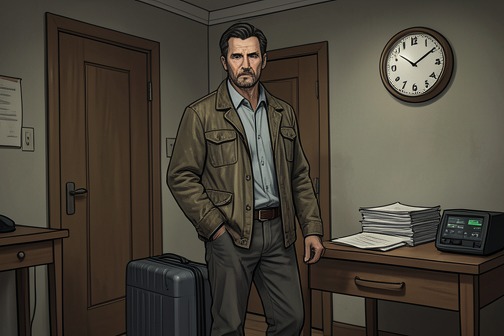
[Colton cannot afford veterinary school after financial aid is denied](entity:event-recall-event-colton-7f0879ffe738) because the aid system treats him as financially dependent on parents who sent him to a [conversion camp](entity:location-recall-location-27bfbe77abbc) after discovering he was gay. His foster-care experience does not satisfy the institution’s test for independence: since his parents were never legally stripped of custody, their income counts against him. The rejection makes an educational goal he has begun to imagine feel unreachable, and its consequences accumulate through a damaged apartment, an approaching tuition deadline, and the prospect of postponing school for years.
## The rule behind the denial
[Colton](entity:character-recall-character-colton-b4acbe3e32b9)’s financial-aid problem is not simply that he earns little or has spent time in foster care. The university’s decision turns on legal status. Although he has been in the foster system, he does not qualify as independent because his parents have not legally lost custody; their income is therefore included in the assessment. When [Marcel](entity:character-recall-character-marcel-9cdc35802b92) asks why a former foster child working for barely more than minimum wage has been denied aid, Colton explains that his parents sent him away rather than losing him to child-protection authorities. Their retained legal connection, despite their rejection and abuse, becomes the mechanism that blocks support.
That mismatch between lived circumstances and formal eligibility sharpens the injustice. Colton has neither the practical support of his parents nor the financial independence the aid process requires him to prove. The denial does not establish that his family can or will pay; it makes their income decisive on paper. His history of being placed in care therefore fails to protect him at the moment when he needs a route into higher education.
## The rejection letter and its aftermath
The decision arrives in a thick envelope from the veterinary school at the university. Colton opens it with trembling hands and learns that his application has been denied. Before he can work through the reasons or consider what to do, water begins trickling from the ceiling; then the walls burst, flooding the apartment. He manages to save his laptop, phone, file folder, and backpack, but little else. The aid letter is soaked, and he walks away with one dry change of clothes he has kept for emergencies, a remnant of habits formed while living on the street.
The flood compounds the educational crisis with immediate housing and financial losses. While the building is gutted and rebuilt, Colton has no rent to pay, but the apartment’s contents are ruined and he has no savings for replacements. Earning thirteen dollars an hour, he has spent most of his pay on rent to a landlord who failed to keep the building up to code. Even before deciding how to respond to the aid rejection, he has to reckon with damaged housing, lost possessions, and the costs of starting over.
The paper’s consequences remain with him after he leaves the apartment. He remembers the water-logged letter and its deadline for the first tuition payment: three payments over three months, each carrying more zeroes than he has ever seen attached to his name. By the time he considers sharing a home with Marcel, he is also worried about paying half the rent in a place that seems beyond his means. He thinks about asking [Will](entity:character-recall-character-will-17d4ceb7f768) for extra shifts or taking another job, while recognizing that school is not happening that year and that the assistance ruling may continue to govern when it can.
## Alternatives without an affordable route
Colton examines a cheaper community-college option, where he could complete the first two years of classes and potentially become eligible for grants or scholarships that do not require his parents’ income. The proposed full-time tuition is $3,200, with a $250 deposit followed by monthly payments of just under $1,000 for three months. Although the costs are lower than at the university, the payment plan still assumes access to money Colton does not have. He cannot treat the deposit as a modest first step when even a thousand dollars in his account would be extraordinary.
The alternative offered by the college is a financial-aid appeal. To qualify, he would need documents proving that he is not a dependent under his parents’ tax status. He knows he cannot obtain paperwork from them, leaving the appeal functionally inaccessible. Taking one or two classes at a time would reduce each payment, but only by stretching the degree over a much longer period and forcing further cuts to daily necessities, including food and heating or air conditioning. Neither option resolves the central gap between the formal process and the resources available to him.
The call ends not with a workable plan but with a physical crisis. Colton thanks the representative and hangs up, then bends over the toilet, sick with fear and frustration. As the bathroom walls seem to close in and his head begins to spin, he runs outside; only when he nearly collapses against a wall does he realize he is having a panic attack. The scene gives the financial barrier bodily force: tuition figures and documentary requirements are not abstract obstacles for him but pressures that overwhelm his ability to keep moving through the day.
## The future placed on hold
Colton’s educational hopes are framed against his earlier struggle to reach adulthood with any foothold at all. At [Ted House](entity:location-recall-location-ted-house-fb2dc4b48c1a), his eighteenth birthday and high-school graduation mark the end of his placement, a deadline he experiences as a ticking clock. Staff reassure him that he will not simply be abandoned, yet he finds it difficult to believe that a family-like home can be permanent when it is structured to end. [James](entity:character-recall-character-james-b40e84036a54) explains that Colton must leave because he is eighteen, and that the remaining months are a grace period before he faces life outside.
After aging out, Colton receives a small apartment and keeps his café job. A year passes in the same routine, without prospects beyond the work he does before dawn. He is lonely, tired, and short-tempered; the exhaustion spills into his dealings with his boss, customers, and debt collectors. Even then, his attention to animals persists: one day he finds two starving stray dogs in an alley and risks arriving late to work so he can make them a bed in the storage closet. That instinct points toward a vocation, but caring deeply does not supply tuition or overcome the eligibility rules.
The denial thus marks a delay rather than proof that Colton has abandoned the life he wants. His veterinary ambitions remain entangled with poverty, family history, and the paperwork required to establish independence from parents who harmed him. The same rules that look only to legal custody cannot account for the actual absence of parental support; the community-college schedule cannot make its payments attainable simply by dividing them into installments. Colton’s path forward depends not on desire alone, but on finding material support and a way around a system whose records do not reflect the conditions of his life.
Event 12
Elliot invites Colton to join the veterinary clinic and fund his tuition
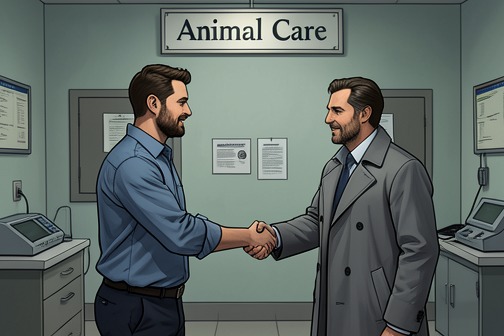
[Elliot](entity:character-recall-character-elliot-f10547ce5276)’s offer to [Colton](entity:character-recall-character-colton-b4acbe3e32b9) is the turning point that makes veterinary school financially possible: he invites Colton to work at the animal clinic and promises to pay the full tuition. The decision grows out of a conversation in which Colton admits both how badly he wants this future and how close he has come to giving it up; Elliot’s response joins professional opportunity to an overdue effort at reconciliation.
## Background and Financial Barrier
Colton’s interest in veterinary work is not a sudden ambition. He has continued returning to the clinic for two years, despite the difficult history between himself and Elliot, drawn by the animals and by watching Elliot work. By the time the offer arises, Colton has been admitted to veterinary school, but acceptance has not solved the question of how he can afford to attend.
That obstacle is shaped by the circumstances of Colton’s childhood and by the rules applied to his financial-aid application. Although he had spent the last year in foster care, his parents had never legally lost custody, so the school did not classify him as independent. Their income was therefore counted against him, and his aid was denied. The denial arrives alongside a flood that damages his apartment building and destroys most of his belongings, intensifying an already precarious financial situation.
When Colton later explains the rejection to [Marcel](entity:character-recall-character-marcel-9cdc35802b92), he connects it to the history the paperwork fails to capture. His parents sent him to [Father Benson’s conversion camp](entity:organization-recall-organization-father-benson-927ff6cc76b2) after realizing he was gay; Colton describes being subjected to efforts to change his sexuality, running away because he feared he would be killed, and living on the streets before the police sent him to [Ted House](entity:location-recall-location-ted-house-fb2dc4b48c1a). He suspects that his family’s legal status, rather than his actual estrangement from them, is behind the aid decision. Marcel recognizes that Colton cannot manage another task immediately and asks what he can do; Colton says he has to wait until he is old enough to qualify independently. The resulting impasse helps explain why Elliot’s offer matters as more than a gesture of encouragement.
## Colton Names the Future He Wants
At the clinic, Elliot asks why Colton keeps coming around, observing that it cannot be only for Gomez. Colton struggles through his answer: he likes the clinic, likes watching Elliot work, and likes the animals. He then says plainly that he wants to do this work. The admission is not easy. He has been accepted to veterinary school but cannot afford it, and he doubts whether his attention span will carry him through the lengthy education required. Therapy and medication have helped his ADHD, he says, but he does not expect his brain to become “normal.”
Elliot answers with the phrase “Normal is subjective,” then immediately acknowledges that Colton has reason to distrust such reassurance. Colton’s disclosure has moved from a general fear that he cannot manage the future to a specific statement of desire: he wants veterinary school, but money and uncertainty about his own capacity appear to block it. Elliot does not treat that uncertainty as proof that Colton should abandon the goal. Instead, he offers a concrete route into the profession.
## The Offer and Its Conditions
Elliot proposes that Colton come work for him. The offer is startling enough that Colton repeats it back as a question. Elliot explains that the clinic provides tuition reimbursement and scholarships, noting that two of his veterinary technicians are already using the program and that another employee is leaving for Columbia in three weeks. The vacancy gives the proposal an immediate workplace context: Elliot needs someone to fill the departing technician’s position.
When Colton asks how much support is available, Elliot makes the scale explicit. If Colton is serious about becoming a veterinarian, Elliot says, he will pay the full tuition. He describes the arrangement as partly self-interested: the clinic will employ Colton, and Elliot will receive a tax break. He also rejects the idea that pity alone is enough to justify the commitment. He believes Colton is dedicated and points to his continued visits over two years, despite Elliot’s earlier treatment of him, as evidence that the ambition is genuine.
The offer therefore combines employment, educational funding, and a judgment about Colton’s commitment. It does not erase the financial and institutional barriers that preceded it; instead, it supplies a specific means of getting past them. Elliot asks Colton to send his paperwork and confirms that the arrangement depends on his having been officially admitted. Colton, now able to say so with pride, confirms that he got in.
## Reconciliation and Consequences
Elliot’s proposal also takes place within a damaged relationship. He has just apologized for failing Colton in the past, admitting that he was impatient and that Colton deserved better. He explains that Colton reminded him of his brother, who had left, and that he did not know how to handle that resemblance. Elliot calls his earlier conduct his own fault rather than an excuse. The apology gives the offer a personal history, but Elliot grounds the decision in Colton’s commitment rather than presenting financial help as a substitute for accountability.
After Colton confirms his admission, Elliot’s response turns the possibility into next steps: Colton should bring in the paperwork, sign forms, and meet with an advisor to plan classes. Elliot says he is glad Colton accepted and hopes he will one day be forgiven for having been “a shit.” Colton tells him that he forgives him and thanks him. The exchange does not undo what happened between them, but it changes their relationship from old antagonism toward professional support and a more open reconciliation.
The offer also changes what Colton can imagine doing next. He had arrived at the clinic prepared to say goodbye to veterinary school because he could not see how to pay for it or sustain the years of study. By the end of the conversation, admission, employment, tuition coverage, and academic planning have become linked steps rather than separate impossibilities. The scene’s decisive movement is from a desired vocation that seems unaffordable to a funded path that still requires work, paperwork, and study. Elliot’s support does not make Colton’s future effortless; it makes that future materially attainable.
Event 13
Marcel discovers Brad’s infidelity

[Marcel discovers Brad’s infidelity](entity:event-recall-event-marcel-discovers-brad-s-298e27984fa9) when he catches [Brad](entity:character-recall-character-brad-0abd64e0fe0a) in bed with another man, a rupture that turns betrayal into a decisive break rather than a passing suspicion. The event reverberates through [Marcel](entity:character-recall-character-marcel-9cdc35802b92)’s later choices: [Colton](entity:character-recall-character-colton-b4acbe3e32b9) was there for him that night, and Marcel eventually tells his brother that this encounter helped lead him to the man he loves.
## The Discovery and Its Immediate Meaning
The infidelity is not presented merely as a partner’s sexual betrayal. When Marcel later confronts Brad, he recalls that Brad had assumed Marcel would not know what was happening because he was blind, and that he had realized it was not the first time. The cruel premise of the affair is therefore also a judgment of Marcel’s capacity: Brad treats blindness as a reason Marcel should not discover the truth, while Marcel’s account insists on his own perception and understanding.
That realization turns pain toward anger at himself for having trusted Brad. Marcel’s words also connect the affair to the shared bed, making the violation intimate and domestic, not abstract. The discovery’s force lies in both what Brad did and what he believed Marcel could be made not to know.
## What the Relationship Had Already Revealed
Brad’s betrayal lands in a relationship already marked by unequal regard. He had seen Marcel repeatedly rejected from jobs he was qualified to do because employers did not know how to accommodate him; he had also watched studios reduce Marcel’s teaching hours when students felt uncomfortable with his blindness. Yet Brad held Marcel’s employment difficulties against him, even while knowing the obstacles were not a lack of ability.
That background gives the breakup a wider context. Brad’s later contempt for Marcel’s choice to teach yoga in a small studio echoes the earlier pattern: he measures Marcel by money and opportunity while dismissing the barriers Marcel faces. The affair is the acute breach, but the contempt surrounding it shows why reconciliation cannot be reduced to regret over one incident.
## Colton’s Place in the Aftermath
Colton was with Marcel on the night he caught Brad in bed with someone else. Marcel later recalls that a stranger made him feel as though he was worth something after Brad’s betrayal. In telling the story to Colton, he draws a parallel between their first encounter: each was met at a vulnerable moment, and the meeting became the beginning of a bond neither could have anticipated.
The discovery also shapes Marcel’s explanation to his brother, [Antoine](entity:character-recall-character-antoine-d27fa2f26ec6), for why he will not leave [Fairfield](entity:location-recall-location-fairfield-16d12e6e6e31). Marcel says that Colton was there for him the night he caught Brad cheating; when Antoine dismisses Colton as a rebound, Marcel insists that he is in love and refuses to uproot his life. The event thus persists beyond the breakup as part of Marcel’s account of how his life in Fairfield became his own choice.
## Consequences and Significance
Brad’s later admission that Marcel was not supposed to find out confirms that the betrayal involved deliberate concealment, not a misunderstanding. Marcel rejects the logic that his blindness made him unaware or that his trust made him foolishly available to be deceived. He leaves the encounter with a clearer view of Brad’s disregard and, eventually, with a relationship to Colton that is grounded in being recognized rather than underestimated.
In the story’s emotional structure, the discovery is both an ending and a hinge. It closes Marcel’s partnership with Brad, while the support he receives from Colton becomes part of the path toward a different intimacy. The contrast is not simply between an unfaithful partner and a new lover: it is between being treated as someone who can be deceived and being met as a person whose presence, choices, and worth are taken seriously.
Event 14
Colton receives a veterinary school scholarship

[Colton receives a veterinary school scholarship](entity:event-recall-event-colton-65b3d9379243) after a sequence of institutional exclusion and personal setbacks has made his ambition seem financially unreachable. [Elliot](entity:character-recall-character-elliot-f10547ce5276)’s offer of a clinic job and full tuition does more than rescue a plan: it gives [Colton](entity:character-recall-character-colton-b4acbe3e32b9) a path from low-paid café work toward the animal-care vocation that has long drawn him, while recognizing his dedication rather than treating him as a project to be fixed.
## Causes and Background
Colton’s educational prospects have been constrained by the aftermath of abuse and by rules that fail to recognize his actual circumstances. Raised Mormon, he knew he was different from his family and tried to hide his sexuality; after his parents discovered he was gay, they sent him to a [conversion camp](entity:location-recall-location-27bfbe77abbc) run by [Father Benson](entity:character-recall-character-father-benson-2cb0d40f4635), a Catholic priest. Colton later tells [Marcel](entity:character-recall-character-marcel-9cdc35802b92) that the camp’s purpose was to make him not gay, that the treatment hurt more and more, and that he feared Father Benson would kill him. He ran away, spent time on the streets, and was eventually arrested for vagrancy before being sent to [Ted House](entity:location-recall-location-ted-house-fb2dc4b48c1a).
Turning eighteen and graduating high school did not end his dependence on precarious work. After leaving Ted House, Colton kept a café job and lived in a small apartment, but a year of routine left him lonely and without a clear prospect beyond work. The aid system then blocked the next step: the university’s veterinary-school financial-aid decision treated him as dependent because his parents had never legally lost custody, despite his time in foster care. Their income was counted against him, and the out-of-state cost made the denial especially daunting.
The financial shock coincided with a flood that damaged Colton’s apartment building. He saved his laptop, phone, file folder, and backpack, but most of his belongings were ruined; he had only one set of dry clothes, kept from his earlier experience of homelessness. With the building needing to be gutted and rebuilt, he had no rent to pay temporarily, but his low hourly wage and lack of savings left him unable to replace what he had lost. These overlapping pressures made a veterinary career feel out of reach for reasons beyond effort or commitment.
## The Immediate Crisis
By the time Colton tells Marcel what happened, he has been trying to find other work and hearing that employers are going in a different direction. He has calculated what he could pay for community college himself: about one class per semester, a pace that would leave him only a freshman at twenty-five. The arithmetic turns an abstract worry about tuition into a picture of years passing without meaningful progress.
Colton walks to clear his head and ends up at the veterinary clinic. There he meets a newly hired, partially sighted employee, a stranger whose conversation helps him feel better. The encounter echoes Marcel’s own experience of meeting Colton after [Brad](entity:character-recall-character-brad-0abd64e0fe0a) cheated on him: in each case, an unexpected conversation offers reassurance at a vulnerable moment. At the clinic, Colton also sees baby rabbits before Elliot arrives, bringing the scene back to the animals that have repeatedly held his attention and to the professional setting in which his interest might become work.
## Elliot’s Offer
Elliot apologizes for having been a jerk to Colton when he was younger and tells him about a scholarship program for veterinary technicians who want to attend veterinary school. Two technicians are already using the program, while a third has been accepted to Columbia and is leaving in three weeks, creating an opening at the clinic. The opportunity is therefore structured as employment connected to training, not simply an unconditioned payment.
When Colton asks how much support is available, Elliot makes the offer explicit: if Colton is serious about becoming a veterinarian, Elliot will pay his full tuition. The arrangement serves both sides. Elliot needs someone to fill the departing technician’s position and notes that the arrangement gives him a tax break; he also insists that he is not spending money merely out of pity. He describes Colton as dedicated and points to his willingness to return to the clinic after two years, despite their past conflict, as evidence that the goal matters to him.
Elliot nevertheless acknowledges that sympathy is part of his response. He feels sorry that the people who should have cared for Colton instead damaged his life. But the offer rests on more than compassion: it joins financial assistance to a job and to Elliot’s confidence in Colton’s commitment. The distinction matters in a story where adults and institutions have repeatedly claimed authority over Colton’s future; this support opens a route forward without framing his sexuality or trauma as something to correct.
## Consequences and Meaning
Colton tells Marcel that he will start in the coming fall semester. Marcel embraces him and kisses his temple, asking when he begins; Colton answers that the start is this coming semester and admits that the news does not yet feel real. He does not dismiss the good news or argue that he does not deserve it, a small but significant change in how he receives care and possibility.
The scholarship also changes the terms of Colton’s immediate decisions. He expects that he will have to leave the café, and worries that quitting may complicate [Will](entity:character-recall-character-will-17d4ceb7f768)’s staffing, especially because [Jason](entity:character-recall-character-jason-907de5833184) has only recently started there. The offer thus brings a practical transition, not an instant erasure of difficulty: Colton has to consider how to move from one job to another and how to respond to support without feeling responsible for every inconvenience it creates.
For Marcel, who has his own experience of employment being narrowed by blindness and businesses’ failure to accommodate him, the offer makes Colton’s future newly tangible. Their conversation joins the painful account of Colton’s past to a plan with a start date. The scholarship does not undo the conversion camp, the aid denial, or the loss of his belongings, but it converts a dream threatened by poverty into a funded course of study and work in the veterinary field. Its significance lies in that concrete change: Colton’s future is no longer measured only by the limits others have placed on him.
Event 15
Marcel falsely claims he proposed to Colton

[Marcel](entity:character-recall-character-marcel-9cdc35802b92)’s false claim that he proposed to [Colton](entity:character-recall-character-colton-b4acbe3e32b9) converts an intimate offer made amid Colton’s desperation into an apparent engagement announced to Marcel’s family. The deception is not a simple fabrication of feeling: Marcel genuinely wants a future with Colton, but the supposed proposal has not been mutually agreed upon, and Marcel knows that presenting it as settled is dishonest.
## Causes and Background
The claim surfaces during a phone conversation with Marcel’s brother [Antoine](entity:character-recall-character-antoine-d27fa2f26ec6). Antoine challenges Marcel’s decision to live with Colton, dismissing him as a one-night stand or rebound and questioning how serious the relationship can be after only a couple of months. He points out that their parents are willing to help Marcel financially, implicitly urging him to reconsider his choice and return to a more familiar source of support.
Marcel answers that he is in love with Colton and will not uproot his life because Antoine treats his choices as a joke. Under that pressure, he blurts out that he asked Colton to marry him. The statement has a real basis: Marcel had made the offer during a moment when Colton was desperate for security and a place to live. But Marcel recognizes that Colton did not know the offer meant a genuine marriage proposal, so describing it to Antoine as an established engagement distorts what happened.
## The Claim and Its Immediate Consequences
The words change the terms of Marcel’s conversation with Antoine. What had been an argument over whether Marcel’s relationship was serious now sounds like proof that the couple is engaged. Marcel is conscious of the difference between what he said and what Colton understood; he also knows that he would marry Colton, which makes the lie emotionally credible to him without making it truthful.
After the claim, Marcel tells Antoine that he and Colton are going away for the weekend and that he is shopping for the trip. He ends the call before Antoine can respond, then strikes his head against a shelf again and hurries through the store to buy what they need. The abrupt exit leaves the deception unresolved: by the time he checks out, Marcel still does not know how to tell Colton what he has done.
## From False Announcement to Future Promise
The lie acquires a wider consequence when Marcel acknowledges that Antoine and his parents now believe he and Colton are properly engaged. Later, when Colton asks whether Marcel wants to marry him, Marcel answers yes, but carefully distinguishes present fact from future intention: they are not engaged yet, though he does want to marry Colton someday. He notes that it helps that his brother and parents already think they are engaged, making explicit that the false claim has reached his family.
Marcel then describes the proposal he hopes to make for real: he wants to sweep Colton off his feet, find words for the depth of his love, and make Colton feel as loved as Marcel feels. He says this will happen, but not now. That promise reframes the earlier lie without erasing it. Marcel’s desire is sincere; the engagement he announced was not yet a shared decision.
## Narrative Significance
The episode turns on the gap between a declaration and the mutual commitment it appears to name. Marcel’s words work socially as an announcement of engagement, especially in the conversation with Antoine, but privately he knows they outrun Colton’s understanding and consent. The resulting tension is sharpened by the contrast between Marcel’s genuine willingness to marry and his awareness that he has misrepresented the moment when he supposedly asked.
The later clarification gives the false claim a future-facing resolution rather than treating it as a completed proposal. Marcel does not withdraw his wish to marry Colton; instead, he insists that the real proposal should be deliberate, expressive, and something Colton can fully recognize as such. The event therefore marks both the seriousness of Marcel’s commitment and the ethical distance between wanting a shared future and claiming that the decision has already been made.
Event 16
Marcel与Colton互相告白

[Marcel](entity:character-recall-character-marcel-9cdc35802b92) and [Colton](entity:character-recall-character-colton-b4acbe3e32b9)’s mutual declaration of love at the hospital is the emotional resolution of a crisis that could have left Marcel isolated and Colton uncertain whether he would reach him in time. After Marcel refuses to leave with [Brad](entity:character-recall-character-brad-0abd64e0fe0a), Colton arrives, explains how he uncovered the sabotage behind the apparent accident, and tells Marcel he loves him. Marcel answers in kind, and the scene ends with their decision to go home together: not merely an escape from the waiting room, but a choice of the life and future they have been building together.
## Causes and Background
The reunion follows a deliberate effort by Brad and [Jason](entity:character-recall-character-jason-907de5833184) to manipulate events through a fake accident and damage to a car. Marcel is left at the hospital with Brad, who warns that he will regret rejecting him. Marcel is exhausted by the conflict and makes his position plain: he is done, and Brad needs to go. The choice is consequential because Brad is not simply asking for another conversation; Marcel is refusing to resume a relationship that has become a source of coercion and uncertainty.
Marcel’s decision to stay put is also a test of whether he can choose his own direction rather than be pulled back into Brad’s life. He tells Brad that he would wait outside for the rest of his life rather than leave anywhere with him. The line makes the immediate stake stark: the alternative to remaining at the hospital is not a neutral journey, but renewed dependence on the person Marcel has just rejected. Brad’s warning that Marcel will regret his choice fails to unsettle that resolve.
## Colton’s Arrival
Marcel recognizes Colton before he has fully described the rescue. A familiar squeaking brake, the LED headlamp complained about by the men at the shop, and the rumble of tires announce that Colton has come. The sounds transform waiting into recognition: Marcel knows who is arriving and trusts that Colton has come for him. The moment’s force depends on that certainty arriving before explanation.
Colton steps out and reports what happened in brisk, almost ordinary detail: the rain has stopped, he has dealt with an “asshole,” and the car has been fixed. He adds that Brad pulled the spark plugs, a basic trick Colton recognizes because [James](entity:character-recall-character-james-b40e84036a54) taught him about it. The explanation makes the apparent accident legible as sabotage rather than bad luck. Jason, Colton says, admitted almost immediately what he had done to the car and described the fake accident; Jason had thought the scheme was merely retaliation against Marcel for leaving Brad, and did not know what Brad was actually planning. Brad had also texted while Marcel was on his way, but Marcel does not claim sympathy for him.
The reunion is physical before it becomes a full exchange of explanations. Marcel takes the steps two at a time, stumbles at the end, and does not care: Colton is only feet away, with warm arms and reaching hands waiting for him. Marcel kisses him first, with a desperation that the narration connects to embracing the life and future he has risked choosing. The kiss is both relief at Colton’s arrival and an active return to the relationship that Brad’s manipulation had threatened to interrupt.
## The Mutual Declaration
After they part, Colton runs a hand through Marcel’s hair. Marcel laughs, and Colton thanks him for showing up; Marcel answers that he would not leave him there. This brief exchange frames the rescue as reciprocal commitment rather than a one-sided act of protection. Colton has reached Marcel, while Marcel meets him openly and lets the reunion become an expression of love.
Colton then touches Marcel’s cheek. Marcel understands that Colton is about to speak, but does not stop him. Colton says that he loves Marcel. The permission matters: the words are not forced out of Marcel by the crisis, nor does he evade them when the moment arrives. Marcel bows his head, noses along Colton’s face, and kisses him before saying that he loves him too, repeating the declaration with greater emphasis. The exchange makes their feelings mutual in explicit language, while the gesture of the kiss carries the answer into physical closeness.
The scene’s emotional movement is from threat to recognition and then to affirmation. At first Marcel is still beside Brad, defending his refusal while Brad predicts regret. Colton’s arrival gives that refusal a future beyond the hospital: someone has come to meet him, and Marcel can move toward that person. Their declaration does not erase the danger that brought them there, but it replaces Brad’s attempt to define Marcel’s future with a choice the two men make together.
## Going Home and the Future
Colton asks whether Marcel is ready to go home. Marcel says yes, and insists that he has never been more ready for anything. The exchange turns the love declaration into a concrete decision: they will leave together, rather than let Brad determine where Marcel goes or whom he trusts. “Home” carries particular weight as the destination they can choose together; the scene presents it as the next step in their shared life, not as a guarantee that every difficulty is finished.
The narration holds the smallness of the moment against the scale of what lies ahead. A question, an answer, and a kiss are modest actions, but Marcel understands them as the beginning of a future that his decision to stay in [Fairfield](entity:location-recall-location-fairfield-16d12e6e6e31) and invest in this relationship has made possible. That contrast gives the ending its force: after a manufactured crisis, the future is not secured by grand promises or by Brad’s approval, but by Colton’s arrival, two reciprocal declarations, and their willingness to go home together.
## Narrative Significance
The scene closes the immediate conflict with Brad while confirming the central relationship through action as well as speech. Marcel has already refused to leave with his ex; Colton’s arrival demonstrates that the relationship he chose is present when it matters, and their mutual confession makes that commitment unmistakable. The event therefore functions as both reunion and turning point: the danger is exposed, Marcel’s boundary holds, and the couple’s next movement is toward a shared home and future.
Its resolution also depends on the distinction between rescue and agency. Colton comes to Marcel and helps him understand how the car was sabotaged, but Marcel has already made his own decision to reject Brad. The final question gives Marcel the chance to choose what happens next, and his immediate answer confirms that going with Colton is what he wants. The declaration of love matters not as a substitute for that choice, but as its emotional recognition: each man is present by willingness, and each names the bond the other has chosen.