Enzo’s first weeks
A Puppy in Spangle
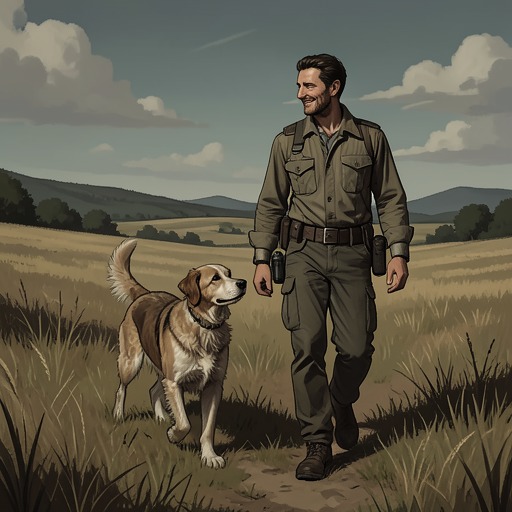
[Enzo](entity:character-recall-character-enzo-e10ddc20fe9d) begins life in a litter on a farm near [Spangle](entity:location-recall-location-41ebe941e893), where his mother is indifferent and the farm’s owner is willing to lie about the puppies’ breeding to raise their price. Enzo suspects he is part terrier, a belief that fits his self-image as an independent problem solver.
The farm owner has Enzo’s dew claws cut off without anesthetic. The pain becomes an early source of his distrust of human medical care and of the careless authority people exercise over animals.
About twelve weeks after Enzo’s birth
Denny Chooses Enzo
[Denny](entity:character-recall-character-denny-68352f02f4be) reaches into the tumbling litter and selects [Enzo](entity:character-recall-character-enzo-e10ddc20fe9d). The puppy is lifted from the only world he has known and carried away with the lean, blue-eyed young man who will become the center of his life.
Enzo quickly bonds with Denny and follows him from the farm to a small apartment in [Seattle](entity:location-recall-location-seattle-ec620f372076). Their companionship begins before Enzo understands what it means to leave home, but it gives him a first sense of belonging.
During Enzo’s first years with Denny
Denny Teaches the Rain
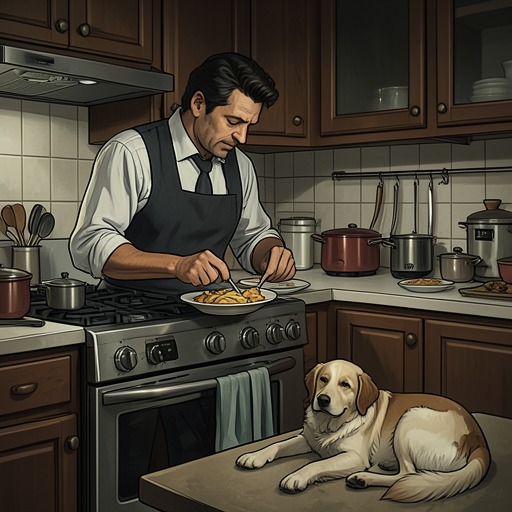
[Denny](entity:character-recall-character-denny-68352f02f4be) regularly plays racing videos for [Enzo](entity:character-recall-character-enzo-e10ddc20fe9d) and explains the craft of driving. He teaches him balance, anticipation, patience, and the importance of being fully present rather than dwelling on the last mistake.
The lesson Enzo remembers most is that a driver should handle wet pedals as gently as if eggshells rested on them. Racing becomes more than a fascination: it gives Enzo a language for understanding control, risk, and the choices that shape a life.
When Enzo is just over a year old
Eve Enters Their Lives
[Denny](entity:character-recall-character-denny-68352f02f4be) brings Eve home, and [Enzo](entity:character-recall-character-enzo-e10ddc20fe9d) watches their attraction with jealousy. Eve asks whether she can love Denny without coming between the two of them, but Enzo assumes that she will change their close, private world.
The couple marries in a small ceremony on [Whidbey Island](entity:location-recall-location-a19f94d43548). Eve soon makes the apartment feel like her own, yet her pregnancy begins to soften Enzo’s resentment: it reminds him of the care a mother gives a nursing puppy.
When Enzo is about two years old
Zoë Is Born
While [Denny](entity:character-recall-character-denny-68352f02f4be) is in [Daytona](entity:location-recall-location-b31edfcc3909) for the 24-hour race, Eve gives birth at home to [Zoë](entity:character-recall-character-zo-4329e1cc1b09). Eve allows [Enzo](entity:character-recall-character-enzo-e10ddc20fe9d) to remain beside her and asks him to promise that he will protect the baby; he takes the request as the first real purpose he has been given beyond companionship.
Denny returns disappointed after his team’s car is wrecked before his driving stint. His sorrow gives way when he holds his daughter, and Enzo silently renews his promise to protect her.
After Zoë’s birth
The Lonely Days Begin
[Denny](entity:character-recall-character-denny-68352f02f4be) takes a full-time job at an automobile service shop, while Eve returns to work and [Zoë](entity:character-recall-character-zo-4329e1cc1b09) attends day care. [Enzo](entity:character-recall-character-enzo-e10ddc20fe9d) is left alone for long stretches, missing the family bustle and the games that once made him part of Zoë’s earliest discoveries.
One morning Denny forgets to switch off the television after checking the weather. Enzo discovers [The Weather Channel](entity:organization-recall-organization-the-weather-chan-742035a15a02) and then, with Denny’s encouragement, racing broadcasts; television becomes his self-directed education and a way to make solitary days pass.
A few years after Zoë’s birth
A New House and a Hidden Illness
For [Zoë](entity:character-recall-character-zo-4329e1cc1b09)’s second birthday, [Denny](entity:character-recall-character-denny-68352f02f4be) and Eve reveal that they have bought a Craftsman house in [Seattle](entity:location-recall-location-seattle-ec620f372076)’s [Central District](entity:location-recall-location-82dd7b15fa3a). The yard gives [Enzo](entity:character-recall-character-enzo-e10ddc20fe9d) room to play, and the new home seems to promise a more settled family life.
But Enzo detects a foul, decaying smell around Eve’s head before anyone knows she is ill. He cannot explain what his nose has found, and the helplessness deepens his sense that his loyalty to the family is greater than his ability to protect it.
One summer afternoon after the move
Enzo Makes Peace with Eve
While [Denny](entity:character-recall-character-denny-68352f02f4be) and [Enzo](entity:character-recall-character-enzo-e10ddc20fe9d) watch a wet-weather race, Eve asks how Denny can drive so quickly in the rain. He explains that deliberately initiating a car’s movement makes it less unpredictable, recalling the saying, [That Which You Manifest Is Before You](entity:rule-recall-rule-that-which-you-manifest-e526c243b9c4).
Enzo recognizes that his fear and resentment have helped keep him distant from Eve. He leaves the television to lie beside her in the kitchen, and she scratches his belly and calls him a sweet dog. Their relationship begins to change from rivalry into trust.
Several years after the move
Eve Leaves Enzo Behind
On a day when [Denny](entity:character-recall-character-denny-68352f02f4be) is away racing at [Watkins Glen](entity:location-recall-location-8cc044d5b3ad), Eve wakes with crushing head pain and vomits. She hurriedly packs for herself and [Zoë](entity:character-recall-character-zo-4329e1cc1b09), then leaves the house without taking [Enzo](entity:character-recall-character-enzo-e10ddc20fe9d) or realizing that he remains inside.
Enzo understands that Eve is ill and may not return soon. With the doors locked, he prepares to survive until Denny comes home, relying on the canine ability to endure hunger and rationing the water available from the toilet.
During the second night alone
The Zebra’s Nightmare
After roughly forty hours without food, [Enzo](entity:character-recall-character-enzo-e10ddc20fe9d) hears a sound in [Zoë](entity:character-recall-character-zo-4329e1cc1b09)’s room and sees the stuffed zebra appear to come alive. In his vision, it attacks her other toys and then tears its own stuffing out until it collapses into a lifeless heap.
Enzo cannot tell whether hunger has brought on a hallucination or revealed something supernatural. The frightening image becomes his recurring symbol for a destructive force he cannot see or explain.
Three days after Eve leaves
Denny Finds Enzo Alone
[Denny](entity:character-recall-character-denny-68352f02f4be) returns to find [Enzo](entity:character-recall-character-enzo-e10ddc20fe9d) still inside the house, hungry and surrounded by the mess he has made on the mat by the back door. He calls Eve and learns that she and [Zoë](entity:character-recall-character-zo-4329e1cc1b09) are elsewhere; his alarm turns to anger at the realization that Enzo was left behind.
[Eve and Zoë](entity:relation-recall-relation-eve-and-zo-9b4175b1ddab) arrive soon afterward. Denny scolds Eve for her carelessness, while Eve says her illness made her unable to think clearly. Their argument exposes the strain building beneath the family’s ordinary routines.
The afternoon Denny returns
The Ruined Toys
[Zoë](entity:character-recall-character-zo-4329e1cc1b09) cries that her animals have been destroyed. [Denny](entity:character-recall-character-denny-68352f02f4be) finds her toys torn apart and, in his anger, grabs [Enzo](entity:character-recall-character-enzo-e10ddc20fe9d) and strikes him, believing that the dog has caused the devastation.
Eve intervenes and shields Enzo. Zoë eventually rests a hand on his head, allowing him to understand that she has not entirely withdrawn her trust. Enzo still believes the zebra was responsible, and regrets that he failed to stop it.
That night
Denny’s First Major Win
On the porch, [Denny](entity:character-recall-character-denny-68352f02f4be) tells [Enzo](entity:character-recall-character-enzo-e10ddc20fe9d) that the race at [Watkins Glen](entity:location-recall-location-8cc044d5b3ad) ended in an overall victory, not merely a class win. The result could earn him a touring-car seat, but it would require months away from Eve, [Zoë](entity:character-recall-character-zo-4329e1cc1b09), and Enzo.
Denny admits that he does not want to leave them for so long. Enzo is proud of the victory but shares the family’s dread of another separation, an early sign of the conflict between racing ambition and responsibility at home.
The following months
Eve’s Symptoms Return
Eve’s episodes become unpredictable: severe headaches, nausea, dizziness, and sudden dark moods alternate with periods of apparent relief. She refuses to see a doctor, fearing that treatment will only mask the pain or trap her in a medical system she distrusts.
[Denny](entity:character-recall-character-denny-68352f02f4be) cannot make the illness disappear, so he takes on more work at home and tries to reduce Eve’s burdens. [Enzo](entity:character-recall-character-enzo-e10ddc20fe9d) stays beside her during the worst episodes, becoming a quiet source of comfort while Denny cares for [Zoë](entity:character-recall-character-zo-4329e1cc1b09).
During Enzo’s early years in the house
The Crows Take Their Revenge
When crows steal a grocery bag from the porch, [Enzo](entity:character-recall-character-enzo-e10ddc20fe9d) barks to draw them close, knowing it contains bags of his waste. The birds eat from it, then return in a large, angry flock and cover the deck with droppings.
The episode becomes a private triumph for Enzo, but the crows haunt his nightmares afterward. His comic revenge also shows how closely he watches human routines and how much he turns ordinary incidents into dramatic stories.
The spring after Eve’s symptoms worsen
Denny Joins the Touring Series
[Denny](entity:character-recall-character-denny-68352f02f4be) prepares for a touring-car season without telling [Enzo](entity:character-recall-character-enzo-e10ddc20fe9d): he studies circuits through racing games, trains, and changes his diet. When he finally announces that he has taken a seat and will leave for Sebring, Enzo feels both excitement and anxiety for the family he will leave behind.
Eve has urged Denny to race, hoping the separation will make her stronger. She asks him to come back, revealing a fear she cannot fully explain, while Enzo resolves to stay with her and [Zoë](entity:character-recall-character-zo-4329e1cc1b09) during his absence.
Early in Denny’s touring-car season
The Team’s Costly Mistakes
[Denny](entity:character-recall-character-denny-68352f02f4be)’s first two races are disrupted by mechanical and pit-crew problems. A tire change and a penalty leave him laps down, and he returns home frustrated that his team has not given him a fair chance to finish well.
Eve questions whether his time away is worthwhile if the team keeps making mistakes. Their discussion turns to Denny’s need for more practice, sharpening the tension between his career and the family’s need for him at home.
During dinner after Denny’s early races
Eve Cuts Her Palm
A dispute over [Zoë](entity:character-recall-character-zo-4329e1cc1b09)’s chicken nuggets escalates when Eve insists that the child eat them and [Denny](entity:character-recall-character-denny-68352f02f4be) offers to prepare a hot dog instead. Eve storms into the kitchen, where a knife slips from a frozen package and cuts deeply into the webbing of her palm.
Eve refuses to go to the hospital, terrified of doctors and medical confinement. Denny closes the wound at home, while Zoë watches in distress and later sits with her parents as Eve apologizes for her behavior.
Early summer
A Brief Season of Hope
[Denny](entity:character-recall-character-denny-68352f02f4be) wins at Laguna and earns a podium finish at Road Atlanta. Racing friends visit the family, and [Zoë](entity:character-recall-character-zo-4329e1cc1b09) delights the adults by repeating lessons she has learned from her father. Eve also regains strength and returns to exercise, giving the household a rare stretch of optimism.
The improvement seems to have no clear explanation. [Enzo](entity:character-recall-character-enzo-e10ddc20fe9d) enjoys the family’s renewed energy but remains aware that Eve’s injured hand still troubles her and that periods of health have never guaranteed the illness is gone.
Later that summer
Phoenix Ends the Winning Run
At [Phoenix International Raceway](entity:location-recall-location-e5a3b8d27426), another driver hits [Denny](entity:character-recall-character-denny-68352f02f4be) in the first turn and damages his car’s alignment. Denny finishes last, a crushing result that threatens his hopes of becoming rookie of the year.
Eve insists the accident was unfair, but Denny says he was responsible for being in a position where he could be hit. His view of racing—accepting responsibility even when another driver causes the incident—becomes a model for the difficult choices ahead.
After the Phoenix race
Denny Chooses Racing Again
[Denny](entity:character-recall-character-denny-68352f02f4be) calculates that he can still salvage his season and plans to return to [Sonoma](entity:location-recall-location-2b5d546a3468) for more work with the team. Eve is reluctant to have him leave, though she understands how much the racing matters to him.
The family jokes about the possibility of conceiving a child with a turkey baster, briefly restoring their shared humor. [Enzo](entity:character-recall-character-enzo-e10ddc20fe9d) senses both their affection and the uncertainty surrounding Eve’s health as Denny prepares to leave again.
That summer
Eve Falls at Denny Creek
On a family outing to [Denny Creek](entity:location-recall-location-2fbc77a25868), Eve and [Denny](entity:character-recall-character-denny-68352f02f4be) slide [Zoë](entity:character-recall-character-zo-4329e1cc1b09) down the smooth rock channels at [Slippery Slabs](entity:location-recall-location-ce545a20b102). When Zoë pulls her feet from the icy water, Eve loses her balance and falls hard, striking her head on the rock.
Denny guides the dazed Eve off the trail and takes her to a hospital in [Bellevue](entity:location-recall-location-17f43a6da8e8). [Enzo](entity:character-recall-character-enzo-e10ddc20fe9d) waits in the car, frightened by the blow and by how disoriented Eve has become.
After Eve’s fall at Slippery Slabs
Eve’s Brain Tumor Is Treated
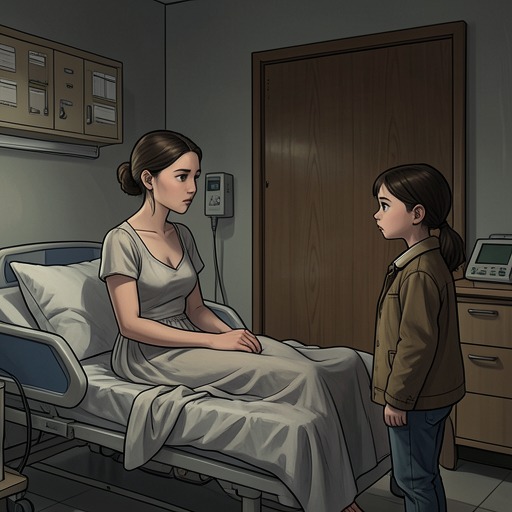
At the hospital, doctors investigate Eve’s symptoms and find a mass in her brain. She undergoes surgery, and the family learns that the tumor is cancerous and the prognosis is terminal.
The diagnosis gives a name to the headaches, nausea, and personality changes [Enzo](entity:character-recall-character-enzo-e10ddc20fe9d) had sensed for years. [Denny](entity:character-recall-character-denny-68352f02f4be) abandons his racing plans so he can remain with [Eve and Zoë](entity:relation-recall-relation-eve-and-zo-9b4175b1ddab), while the family’s future is suddenly organized around illness and limited time.
During Eve’s long hospital stay
Eve and Zoë Move to Mercer Island
Eve remains in the hospital for weeks, and [Denny](entity:character-recall-character-denny-68352f02f4be) tries to balance work, caring for [Zoë](entity:character-recall-character-zo-4329e1cc1b09), and daily visits. To manage the strain, the family adopts a rigid schedule, leaving [Enzo](entity:character-recall-character-enzo-e10ddc20fe9d) with fewer walks and less attention but never breaking his resolve to be patient.
When Eve is discharged, she and Zoë move into [Maxwell](entity:character-recall-character-maxwell-895edb9cf7c6) and [Trish](entity:character-recall-character-trish-c0e5d4302c83)’s home on [Mercer Island](entity:location-recall-location-a242c3660865). The move is presented as practical care for Eve, but it also puts Denny farther from his daughter and gives the grandparents increasing control over the family’s arrangements.
Soon after Eve returns from the hospital
Zoë Accepts the Separation
[Maxwell](entity:character-recall-character-maxwell-895edb9cf7c6) and [Trish](entity:character-recall-character-trish-c0e5d4302c83) ask that [Zoë](entity:character-recall-character-zo-4329e1cc1b09) stay with them so she can be near Eve. [Denny](entity:character-recall-character-denny-68352f02f4be) explains the arrangement to his daughter, who understands that her mother needs her and agrees to stay for a while.
Zoë also makes him promise that he will not leave her there forever. Denny promises, even as the grandparents begin to frame the separation as a long-term solution rather than a temporary measure.
The first night at Maxwell and Trish’s home
Enzo Guards Eve at Night
Eve asks [Denny](entity:character-recall-character-denny-68352f02f4be) to leave because she does not want him to remember her only as a sick and altered version of herself. She asks [Enzo](entity:character-recall-character-enzo-e10ddc20fe9d) to stay beside her and protect her from the frightening presence she calls the demon.
A nurse later sends Enzo to the garage, but Eve retrieves him and insists that he sleep near her. He remains awake through the night, keeping watch; in the morning, Eve thanks him for staying.
The months after Eve moves in
The Grandparents Tighten Their Hold
[Denny](entity:character-recall-character-denny-68352f02f4be) visits [Eve and Zoë](entity:relation-recall-relation-eve-and-zo-9b4175b1ddab) frequently at first, then less often as the exhausting routine continues. [Maxwell](entity:character-recall-character-maxwell-895edb9cf7c6) and [Trish](entity:character-recall-character-trish-c0e5d4302c83) press him to move [Zoë](entity:character-recall-character-zo-4329e1cc1b09) to a [Mercer Island](entity:location-recall-location-a242c3660865) school, but Denny refuses, insisting she remain at the school she loves in [Seattle](entity:location-recall-location-seattle-ec620f372076).
The grandparents’ complaints about Denny and his racing persist even as he keeps his promise to visit and care for his family. [Enzo](entity:character-recall-character-enzo-e10ddc20fe9d) sees Zoë growing sad in a home where her father is increasingly an outsider.
February during Eve’s illness
The Methow Valley Gathering
[Denny](entity:character-recall-character-denny-68352f02f4be) takes [Zoë](entity:character-recall-character-zo-4329e1cc1b09) and [Enzo](entity:character-recall-character-enzo-e10ddc20fe9d) to a family gathering in the [Methow Valley](entity:location-recall-location-e117755e2a68) while Eve is too weak to travel. Relatives speak as if Eve’s death is near and treat the trip as a chance for Zoë to know them before it happens.
Around the fire, Enzo notices that a teenage relative named [Annika](entity:character-recall-character-annika-d7d5056371dd) is especially attentive to Denny. Denny appears not to recognize the intensity of her interest, but Enzo watches her position herself beside him throughout the gathering.
The end of the Methow Valley trip
The Icy Drive Home
Freezing rain and road closures turn the drive back toward [Seattle](entity:location-recall-location-seattle-ec620f372076) into a dangerous ordeal. [Denny](entity:character-recall-character-denny-68352f02f4be) pushes onward through the storm, installing tire chains and navigating slick roads while [Enzo](entity:character-recall-character-enzo-e10ddc20fe9d) panics in the back seat beside [Zoë](entity:character-recall-character-zo-4329e1cc1b09).
Zoë calms Enzo by singing a song she once shared with Eve. The family eventually crosses [Snoqualmie Pass](entity:location-recall-location-c8d4f49d6b78) and reaches home safely, only for [Annika](entity:character-recall-character-annika-d7d5056371dd) to arrange to stay overnight, claiming Denny said he would drive her home the next morning.
The night after the stormy drive
Annika’s Attempted Assault
After [Denny](entity:character-recall-character-denny-68352f02f4be) falls asleep from exhaustion, [Annika](entity:character-recall-character-annika-d7d5056371dd) approaches him, removes his clothes, and tries to initiate sex. [Enzo](entity:character-recall-character-enzo-e10ddc20fe9d) barks until Denny wakes and pulls away, insisting that Annika dress and leave.
Annika cries and claims that Denny led her on. Denny says that he is married and that she is too young, then arranges for her father to collect her. The incident will later become the basis for a false accusation with devastating consequences.
The spring before Eve’s death
Enzo’s Thunderhill Hot Laps
[Denny](entity:character-recall-character-denny-68352f02f4be) drives [Enzo](entity:character-recall-character-enzo-e10ddc20fe9d) to [Thunderhill Raceway Park](entity:location-recall-location-925859c926d7) for a commercial shoot. After walking the circuit to learn its features, Denny secures Enzo in the passenger seat with a sheet and takes him out for several laps.
Enzo is exhilarated by the speed and the changing forces through the turns. Denny establishes a signal: two barks mean faster. The ride becomes one of Enzo’s most treasured experiences and deepens the bond between dog and driver.
May 1, after the doctors’ predicted six to eight months
Eve’s First Day Not Dead
Despite the prognosis, Eve remains alive beyond the period doctors expected. At a family dinner, she arrives dressed beautifully and announces that this is her first day of not being dead, turning the evening into a celebration.
She tells [Enzo](entity:character-recall-character-enzo-e10ddc20fe9d) she is no longer afraid and asks him to keep caring for [Denny](entity:character-recall-character-denny-68352f02f4be) and [Zoë](entity:character-recall-character-zo-4329e1cc1b09). That night, after Denny and Enzo leave, Eve dies; Enzo sees her soul depart in a dream and understands that her death is not, in her own terms, the end.
The morning after Eve dies
Enzo Runs from Grief
[Denny](entity:character-recall-character-denny-68352f02f4be) takes [Enzo](entity:character-recall-character-enzo-e10ddc20fe9d) to [Luther Burbank Park](entity:location-recall-location-11fd882c6871) and talks about bringing [Eve and Zoë](entity:relation-recall-relation-eve-and-zo-9b4175b1ddab) home, not yet knowing that Eve has died. When the news reaches him, he turns away and sobs.
Unable to bear the moment, Enzo runs into the brush and kills and eats a squirrel. He later returns to Denny, ashamed and exhausted, having briefly abandoned his effort to live by human restraint in order to feel like an animal again.
The day Eve dies
The Custody Suit Begins
At [Maxwell](entity:character-recall-character-maxwell-895edb9cf7c6) and [Trish](entity:character-recall-character-trish-c0e5d4302c83)’s home, [Denny](entity:character-recall-character-denny-68352f02f4be) is allowed a final moment with Eve. Then the grandparents announce that they intend to seek custody of [Zoë](entity:character-recall-character-zo-4329e1cc1b09), arguing that they can give her a more stable and privileged upbringing.
Denny refuses to surrender his daughter. When Maxwell tries to prevent Zoë from leaving, Denny insists that she pack and takes her home, turning a grieving family’s disagreement into an open custody battle.
The day after Eve’s funeral
Enzo Receives His Diagnosis
[Enzo](entity:character-recall-character-enzo-e10ddc20fe9d) can barely stand, and [Denny](entity:character-recall-character-denny-68352f02f4be) takes him to a veterinarian. The examination confirms hip dysplasia and degenerative arthritis, with the possibility of expensive surgery later.
Enzo fears that accepting a diagnosis will make its worst outcome inevitable. The examination also recalls the cruelty of having his dew claws removed as a puppy, reinforcing his suspicion of medical authority even as Denny tries to care for him.
During the months of restricted contact
Enzo Visits Zoë Without Denny
Because [Denny](entity:character-recall-character-denny-68352f02f4be) cannot see [Zoë](entity:character-recall-character-zo-4329e1cc1b09), [Mike](entity:character-recall-character-mike-cb6fa8ab1468) takes [Enzo](entity:character-recall-character-enzo-e10ddc20fe9d) to visit her at the grandparents’ home. The dog becomes a living connection between father and daughter, though he cannot tell Denny how lonely and unhappy Zoë is.
During a later stay, Enzo hears [Maxwell](entity:character-recall-character-maxwell-895edb9cf7c6) and [Trish](entity:character-recall-character-trish-c0e5d4302c83) discuss the accusation and their custody ambitions. Maxwell admits that he intends to use the allegation to take advantage of the situation, while Trish doubts that Denny is a bad person.
During one of Enzo’s stays with the grandparents
Enzo’s Pepper Rebellion
[Enzo](entity:character-recall-character-enzo-e10ddc20fe9d) accepts a pepperoncini from [Maxwell](entity:character-recall-character-maxwell-895edb9cf7c6), knowing it will upset his stomach, and later deliberately defecates on the grandparents’ expensive carpet. He does it in protest against their attempt to separate [Zoë](entity:character-recall-character-zo-4329e1cc1b09) from her father.
The act is both retaliation and a small demonstration of Enzo’s limited power. He cannot challenge the legal system or explain the truth, but he can disrupt the orderly household that is helping keep his family apart.
The following September
The First Visitation Victory
After a long delay, [Denny](entity:character-recall-character-denny-68352f02f4be) wins a custody hearing that ends the restraining order and grants him regular visits with [Zoë](entity:character-recall-character-zo-4329e1cc1b09). The decision gives him alternate weekends and a weekday visit, but leaves her living with the grandparents and does not resolve the criminal case.
Zoë returns briefly to Denny’s home, still believing he has been racing in Europe. When he explains that a court must decide where she will live, she asks whether her grandparents made the accusation and blames herself for being loved by them.
The year after visitation is restored
Zoë Beats Denny at Karts
[Denny](entity:character-recall-character-denny-68352f02f4be) takes [Zoë](entity:character-recall-character-zo-4329e1cc1b09) to an indoor go-kart track. She immediately understands the kart and repeatedly blocks his attempts to pass, despite her age and lack of experience.
Zoë wins the race, delighting Denny and [Enzo](entity:character-recall-character-enzo-e10ddc20fe9d). The victory offers Denny a private source of hope: the daughter he has fought to keep is not only close to him but already showing a natural feel for racing.
During the prolonged legal fight
The Settlement Pressure
As the legal process drags on, [Denny](entity:character-recall-character-denny-68352f02f4be)’s resources run low. [Mark Fein](entity:character-recall-character-mark-fein-86940a1362f9) suggests that giving up the custody claim could make the criminal charge disappear, and he argues that the grandparents can offer [Zoë](entity:character-recall-character-zo-4329e1cc1b09) financial security and a stable home.
Denny refuses to choose between being a father and pursuing the life he wants. His insistence that circumstances can still change keeps him in the fight, even as legal bills threaten his ability to continue.
That summer
Denny Sells the Family Home
With mounting legal costs and little money left, [Denny](entity:character-recall-character-denny-68352f02f4be) sells the family home and moves with [Enzo](entity:character-recall-character-enzo-e10ddc20fe9d) into a one-bedroom apartment on [Capitol Hill](entity:location-recall-location-07ccb837b262). The change costs them the yard, the dog door, and the space that had held their life with [Eve and Zoë](entity:relation-recall-relation-eve-and-zo-9b4175b1ddab).
Enzo tries to adapt to the chemical-smelling carpet and the lack of cable television. The move marks how thoroughly the custody conflict has reshaped their daily lives and stripped away the home they once shared as a family.
Soon after Enzo stops the settlement
Denny Returns to the Track
After the confrontation over the papers, [Denny](entity:character-recall-character-denny-68352f02f4be) and [Enzo](entity:character-recall-character-enzo-e10ddc20fe9d) watch a recording of [Ayrton Senna](entity:character-recall-character-ayrton-senna-cc945cfcdfd1) racing through rain at Monaco. Denny takes the race as a reminder that a competitor must stay in the contest rather than give up at the first crisis.
Enzo’s crude but unmistakable gesture has helped Denny recover his resolve. Their shared ritual of watching races again becomes a source of steadiness amid the legal and financial pressure.
The summer after the settlement confrontation
Denny’s Ferrari Demonstration
At [Pacific Raceways](entity:location-recall-location-478bdebb392a), [Denny](entity:character-recall-character-denny-68352f02f4be) is invited to drive a [Ferrari F430](entity:object-recall-object-ferrari-f430-34f135936534) for [Luca Pantoni](entity:character-recall-character-luca-pantoni-eec66dcfaac0), a senior [Ferrari](entity:organization-recall-organization-ferrari-bc9025b02fb0) representative visiting the track. Denny begins cautiously, then displays extraordinary speed and control as the car tears around the circuit.
After the demonstration, Luca offers Denny a position in Italy testing vehicles and instructing clients. Denny cannot accept while his legal case prevents him from leaving Washington, but Luca promises to keep the opportunity available.
Several years after the attempted assault
Denny Speaks with Annika
[Denny](entity:character-recall-character-denny-68352f02f4be) encounters [Annika](entity:character-recall-character-annika-d7d5056371dd) at a neighborhood coffee shop and approaches her with [Enzo](entity:character-recall-character-enzo-e10ddc20fe9d) beside him. He asks that her friend remain present so the conversation cannot be misrepresented.
Denny acknowledges that he may have given Annika the wrong impression, but explains that he was married, she was too young, and the accusation has kept him from his daughter. He asks her not to take [Zoë](entity:character-recall-character-zo-4329e1cc1b09) away from him, and he believes she has finally heard what the consequences have been.
During Denny’s criminal trial
Annika Withdraws Her Accusation
At the trial, [Annika](entity:character-recall-character-annika-d7d5056371dd) initially describes a week of flirtation and implied interest, leaving the courtroom uncertain about [Denny](entity:character-recall-character-denny-68352f02f4be)’s conduct. During cross-examination, however, her account breaks down and she admits that she has been describing what she wished had happened rather than what actually occurred.
Annika withdraws the accusation, and the prosecution drops the case. Denny is free of the criminal charge, while [Enzo](entity:character-recall-character-enzo-e10ddc20fe9d) watches Annika leave and recognizes that she is not simply a villain but a young person who helped cause profound harm.
The day after the criminal case ends
The Custody Suit Is Dropped
[Mr. Lawrence](entity:character-recall-character-mr-lawrence-187b106f5b51) tells [Denny](entity:character-recall-character-denny-68352f02f4be) that [Maxwell](entity:character-recall-character-maxwell-895edb9cf7c6) and [Trish](entity:character-recall-character-trish-c0e5d4302c83) have withdrawn their custody suit. After years of separation, controlled visits, and legal conflict, [Zoë](entity:character-recall-character-zo-4329e1cc1b09) is legally free to return to her father.
Denny could insist that the grandparents deliver her immediately, but he grants their request for two more days with her. He chooses compassion despite the harm they have caused, and begins preparing for Zoë’s return.
Two days before Zoë returns home
Denny Accepts the Ferrari Job
While baking cookies, [Denny](entity:character-recall-character-denny-68352f02f4be) calls [Luca Pantoni](entity:character-recall-character-luca-pantoni-eec66dcfaac0) and explains that the problems keeping him in the United States have been resolved. He asks whether the [Ferrari](entity:organization-recall-organization-ferrari-bc9025b02fb0) position is still available, and Luca confirms that it is.
Denny accepts the chance to move to [Maranello](entity:location-recall-location-874ca48e41a2) with [Zoë](entity:character-recall-character-zo-4329e1cc1b09) and [Enzo](entity:character-recall-character-enzo-e10ddc20fe9d). Luca explains that a mentor once helped him through grief by offering him work, and that he now wants to pass that support on to Denny.
The days before Zoë’s return
Enzo’s Final Decline
[Enzo](entity:character-recall-character-enzo-e10ddc20fe9d)’s hips and bladder grow increasingly unreliable, and he can no longer manage ordinary movement without pain. He has long imagined choosing his own death rather than forcing [Denny](entity:character-recall-character-denny-68352f02f4be) to make that decision for him.
Now that Denny’s future with [Zoë](entity:character-recall-character-zo-4329e1cc1b09) and [Ferrari](entity:organization-recall-organization-ferrari-bc9025b02fb0) is opening, Enzo believes his own work may be finished. He wants to spare Denny another painful burden, even as the thought of leaving his family becomes harder to accept.
The morning before Zoë’s return
Enzo Says Goodbye
[Denny](entity:character-recall-character-denny-68352f02f4be) makes pancakes and cleans up after [Enzo](entity:character-recall-character-enzo-e10ddc20fe9d), whose body is failing. Enzo cannot eat the piece Denny offers him and collapses, prompting Denny to kneel beside him and cradle his head.
Denny tells Enzo that he can go if he needs to. Enzo imagines the fields of [Spangle](entity:location-recall-location-41ebe941e893) and remembers that a dog’s soul may roam freely after death before choosing its next life. He runs toward that imagined freedom, barking twice to signal that he wants one more lap.
Years after Enzo’s death
A Champion at Imola
At [Imola](entity:location-recall-location-53c42cd66760), [Denny](entity:character-recall-character-denny-68352f02f4be) has become a [Formula One](entity:organization-recall-organization-formula-one-7332276ca70c) champion and sits alone after the season’s final race. [Zoë](entity:character-recall-character-zo-4329e1cc1b09) brings over an Italian father and his young son, who is named [Enzo](entity:character-recall-character-enzo-e10ddc20fe9d) and already loves racing karts.
The boy studies Denny with bright, familiar eyes and speaks of becoming a champion. Denny is startled by the name and the child’s presence, then writes his telephone number on the boy’s program and offers to help him find proper instruction, suggesting that Enzo’s soul has returned in a new life.