
The Court’s Search for a Coherent Story
The Brothers KaramazovThis flow traces how investigators and advocates interpret ambiguous evidence, showing the tension between psychological narrative and factual proof.
increasing Bearing strength in each event
 decreasing
Bearing strength in each eventdecreasingA Pattern from Circumstances
Evidence accumulates
A persuasive sequence
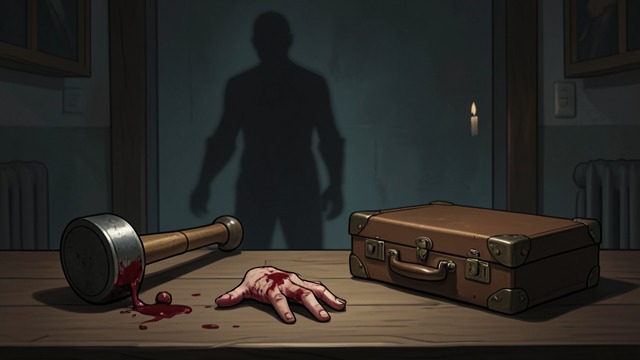
Investigators connect Dmitri’s threats, the pestle, his bloodied appearance, and his sudden possession of money. Each detail appears to support the others, producing a powerful story of motive and opportunity.
Missing certainty
The investigators cannot directly prove how much money was present or who entered the house. The case advances through interpretation as much as through physical evidence.
Two Experts, Two Readings

Character as evidence
Competing accounts
The Moscow doctor interprets Dmitri’s behavior as possible aberration and mania, while Doctor Varvinsky rejects the diagnosis. Their disagreement reveals how clinical language may either soften or intensify legal responsibility.
A remembered act of kindness
Herzenstube recalls buying young Dmitri a pound of nuts and seeing his gratitude years later. The small memory complicates the courtroom portrait of a violent and unfeeling man.
Arguments That Cut Both Ways

Interpretation decides the case
The prosecutor’s narrative
Ippolit Kirillovitch presents the evidence as a coherent chain: Dmitri’s hatred, threats, access, and money all point toward murder and robbery.
The defense’s counter-reading
Fetyukovitch argues that each fact can be interpreted another way and warns that psychology cuts both ways. The jurors must decide whether the overall story outweighs the unresolved gaps.
the preliminary investigation after the murder
the medical testimony during Dmitri’s trial
the closing speeches at the trial
