
The Fall
The Fall (French: La Chute) is the last complete novel by Albert Camus, published in 1956. It is a philosophical novel written in the form of a dramatic monologue, delivered by a French expatriate named Jean-Baptiste Clamence to a silent listener in a seedy bar called Mexico City, located in Amsterdam’s red-light district. The book is relatively short—about 147 pages in the original edition—but dense with existential and moral inquiry.
The plot unfolds entirely through Clamence’s confession. He was once a successful Parisian lawyer, renowned for his pro bono work and his reputation as a champion of the underdog. One night, while crossing a bridge over the Seine, he heard a woman’s body hit the water after she jumped, but he did nothing to help her. This incident triggered a profound crisis. Clamence began to see his past altruism as a mask for vanity and a desire for social approval. Unable to bear the weight of his own hypocrisy, he deliberately sabotaged his career through public acts of self-mockery, then fled to Amsterdam. There, in the dimly lit bar, he constructs a new identity as a “judge-penitent”: by confessing his own sins in detail, he compels his listener to recognize their own guilt, thereby gaining a paradoxical sense of superiority. He also recounts his experience in a World War II concentration camp, where he was chosen as a mock “Pope” by his fellow prisoners, further illustrating the human lust for power and the absurdity of imposed roles.
Central themes in The Fall include guilt, judgment, freedom, and the impossibility of innocence. Camus argues that all human beings are fundamentally guilty—not in a legal sense, but because each person is responsible for their choices, and those choices are inevitably tainted by selfishness. People fear being judged by others, so they try to escape judgment by judging others first. Clamence’s “fall” is both a personal descent from grace and a metaphor for the human condition in a world without God or absolute values. The novel’s setting—Amsterdam’s concentric canals, which Clamence compares to the circles of Dante’s hell—underscores the idea of a modern inferno where everyone is trapped in their own guilt.
Written during a period of intense personal and political turmoil, The Fall reflects Camus’s own disillusionment. He had broken with Jean-Paul Sartre after the publication of The Rebel (1951) and was deeply troubled by the Algerian War. Friends reported that Camus suffered from depression and suicidal thoughts at the time. The novel can be read as a self-examination of the intellectual’s responsibility and the dangers of self-righteousness. Sartre himself later called The Fall “perhaps the most beautiful and least understood of Camus’s works.”
The Fall has had a lasting influence on literature and philosophy. It is frequently studied as a key text of absurdism and existentialism, and its exploration of performative morality, collective guilt, and the desire for judgment remains strikingly relevant. In the English-speaking world, it is often regarded as Camus’s masterpiece, despite being overshadowed in France by The Stranger. Camus received the Nobel Prize in Literature in 1957, partly for this novel and its predecessors. The Fall continues to challenge readers with its cunning narrator, its bleak humor, and its unsettling mirror held up to the human soul.
About the Author
Albert Camus (1913–1960) was a French novelist, philosopher, essayist, dramatist, and journalist. He was born on November 7, 1913, in Mondovi, French Algeria, to a semi-proletarian family. His father died in World War I, and his mother worked as a maid to support him and his brother. Despite poverty, a primary school teacher, Louis Germain, recognized Camus’s talent and helped him secure a scholarship. Camus went on to study philosophy at the University of Algiers, though his academic career was cut short by tuberculosis, which also ended his promising youth as a soccer goalkeeper. He founded a theater company, joined the French Communist Party briefly, and became a journalist. During World War II, he was active in the Resistance, editing the underground newspaper Combat.
Camus’s major works include The Stranger (1942), The Myth of Sisyphus (1942), The Plague (1947), The Rebel (1951), and The Fall (1956). The Stranger introduced the concept of absurdity through the story of Meursault, a man who kills an Arab under the Algerian sun. The Myth of Sisyphus argued that life is meaningless but can be lived with passion and revolt. The Plague allegorized the Nazi occupation and the necessity of collective resistance. The Rebel, a philosophical essay, criticized revolutionary violence and led to a famous break with Jean-Paul Sartre and other existentialists. The Fall, his last completed novel, is a darkly comic monologue about guilt and judgment. Camus also wrote plays such as Caligula (1944) and The Just Assassins (1949).
In 1957, Camus was awarded the Nobel Prize in Literature for “his important literary production, which with clear-sighted earnestness illuminates the problems of the human conscience in our times.” He was the second youngest recipient ever, after Rudyard Kipling. On January 4, 1960, Camus died in a car crash in Villeblevin, France. He was 46. His death was a profound loss to literature and philosophy.
Camus’s legacy is immense. He is often associated with absurdism, though he rejected the label of existentialist. His works continue to be widely read, studied, and adapted. His concise, lucid prose and his unwavering commitment to human dignity, freedom, and justice have made him a timeless figure in world literature. His life and thought remain a touchstone for debates on morality, politics, and the meaning of existence.
StoryFlow
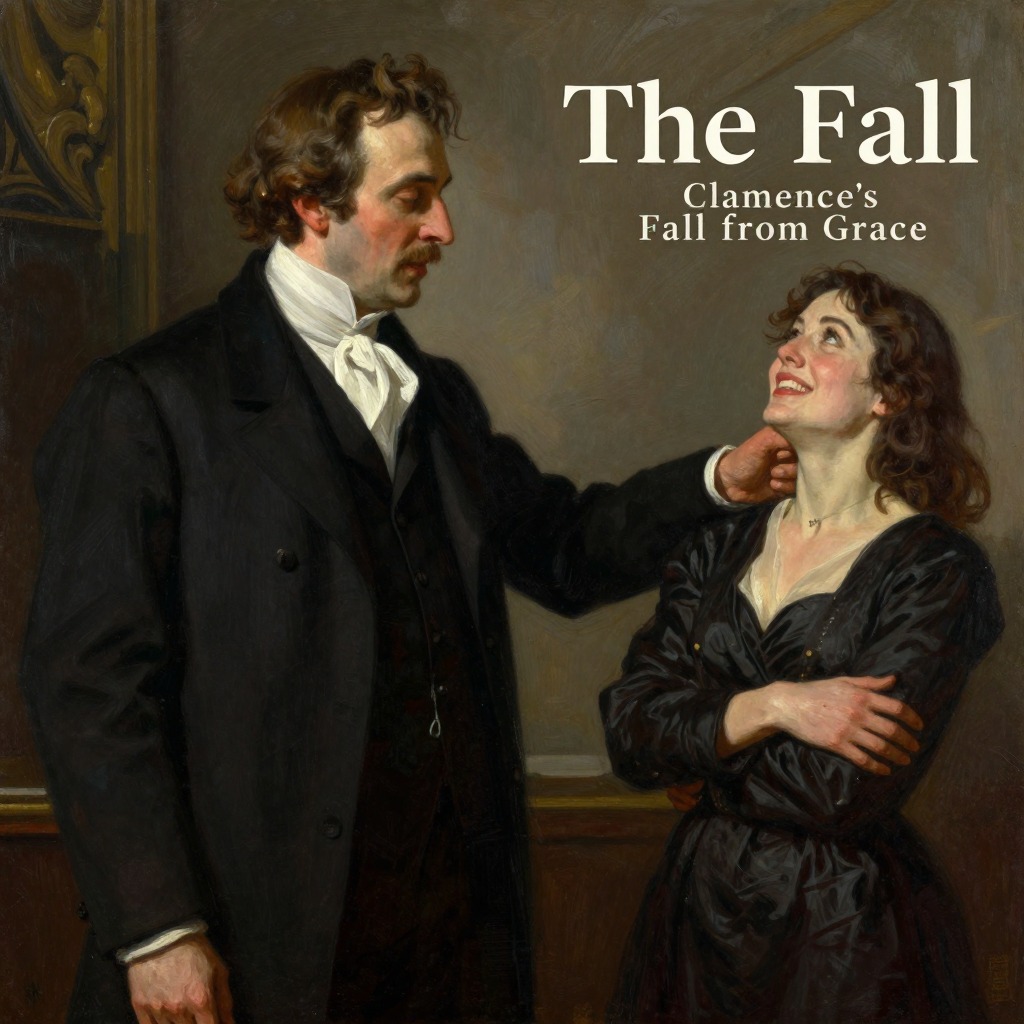
Clamence's Fall from Grace
Traces Jean-Baptiste Clamence's descent from a self-satisfied Parisian lawyer to a guilt-ridden exile in Amsterdam, triggered by a mysterious laugh and a woman's suicide.
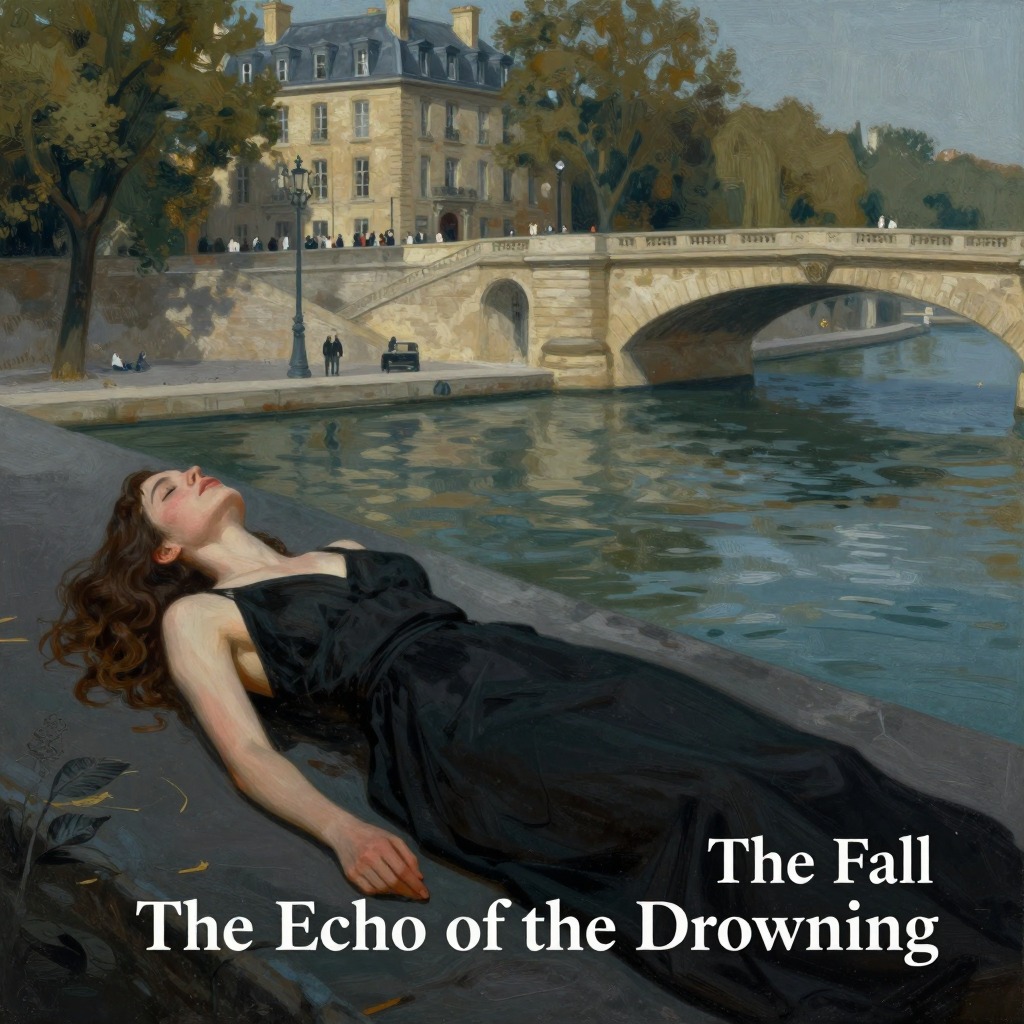
The Echo of the Drowning Woman
Follows the recurring motif of the woman's suicide on the Pont Royal, from its occurrence to its haunting presence in Clamence's life.
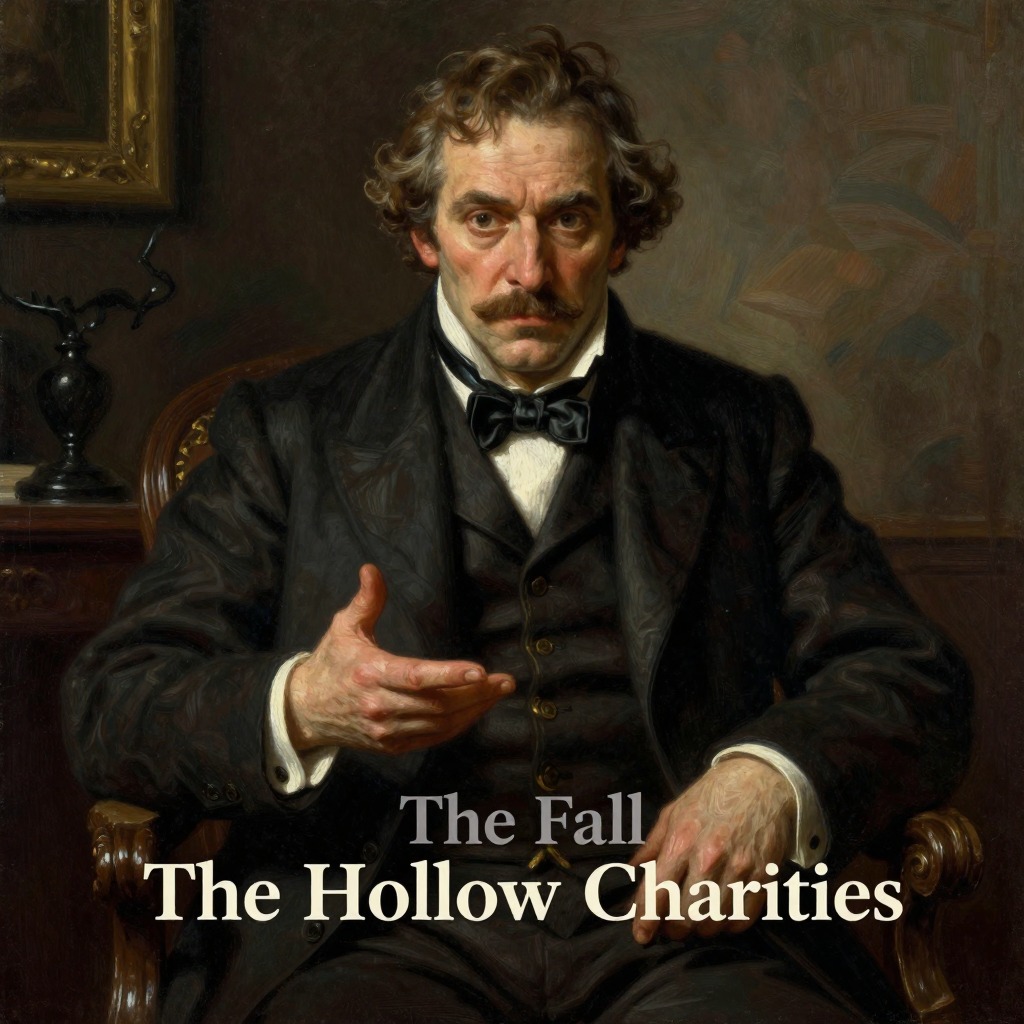
The Hollow Charities
Traces Clamence's acts of public generosity and their hidden motives of vanity and self-aggrandizement.
