
The Fall of the House of Usher
Overview and plot
Edgar Allan Poe’s “The Fall of the House of Usher” is a Gothic horror short story first published in 1839 in Burton’s Gentleman’s Magazine. It later appeared in Poe’s collection Tales of the Grotesque and Arabesque. The title carries a double meaning: “the House of Usher” is both the family’s decaying ancestral home and the Usher family itself. The destruction of the building and the extinction of its inhabitants become parts of the same catastrophe.
An unnamed narrator rides to the remote home of his childhood friend, Roderick Usher, on a bleak day. The sight of the mansion, with its dark windows and a thin crack running down its façade, fills him with dread. A stagnant tarn reflects the building, making the estate seem cut off from ordinary life. Roderick is physically unwell, intensely nervous, and unusually sensitive to sound, light, and touch. He believes the family’s fate is bound to the house. His twin sister Madeline suffers from a mysterious illness marked by cataleptic episodes, and her presence deepens the sense that the household is closing in on itself.
The narrator stays to comfort Roderick, but the atmosphere grows more oppressive. When Madeline is believed dead, the brothers place her temporarily in a vault beneath the house. Days later, during a violent storm, the narrator reads aloud from a romance to calm Roderick. The sounds in the tale seem to recur in the mansion itself. Roderick confesses that he has heard Madeline moving in the vault. She appears at the chamber door, bloodied and exhausted, and falls upon her brother; both die. The narrator flees. Looking back, he sees the crack widen, the mansion split apart, and the building sink into the tarn.
Themes and form
The story’s horror comes not only from the possibility of supernatural events but also from uncertainty about what can be known. The narrator observes a sick household and a decaying building, yet cannot settle whether the house is merely a setting, an active force, or an extension of Roderick’s mind. Poe makes the landscape seem to register the characters’ distress: the enclosed rooms, dim light, stagnant water, storm, and fissured walls externalize psychological collapse. This connection between inner life and physical surroundings is a defining feature of the story’s Gothic effect.
The Usher twins’ closeness, Madeline’s apparent death and return, and the family’s final destruction bring together themes of mortality, confinement, bodily vulnerability, and the return of what has been repressed. The title’s “fall” suggests architectural ruin, the end of a lineage, and the breakdown of mental and social order at once. The reading scene, in which fictional noises appear to echo through the house, makes art part of the suspense: the story within the story seems to anticipate and intensify the crisis outside it. Carefully repeated images and a steadily tightening narrative build a unified atmosphere, culminating in the sudden collapse.
Background and legacy
Poe wrote during the nineteenth-century Romantic era, when Gothic fiction offered writers a way to explore fear, isolation, death, and unstable states of mind. He was especially attentive to the concentrated effect a short story could produce. In “The Fall of the House of Usher,” familiar Gothic materials—the ancestral mansion, the declining family, illness, burial, and apparent return from death—are organized into a tightly controlled psychological and symbolic design. The story does not simply explain its mysteries; it makes uncertainty part of the reader’s experience.
The tale is widely regarded as one of Poe’s major works and a landmark of American Gothic literature. Its ruined mansion, its family bound to a doomed estate, and its final image of a house sinking into a dark tarn have become enduring literary and visual motifs. Later writers and artists have repeatedly adapted or echoed its images and title, and the story continues to shape how readers imagine Gothic houses as expressions of the minds and histories contained within them.
About the Author
Early life and education
Edgar Allan Poe was born in Boston, Massachusetts, on January 19, 1809. His parents, David Poe Jr. and Elizabeth Arnold Poe, were touring actors. His father left the family, and his mother died in Richmond, Virginia, in 1811. Poe and his siblings were separated, and Edgar was taken into the household of John and Frances Allan, a prosperous Richmond couple. They never formally adopted him, but he grew up using the Allan name. The loss of his parents and the instability of his early family life form part of his biography, though his fiction cannot be reduced to autobiography.
The Allan family moved to Britain in 1815, and Poe attended school in England, including in the London area. After the family returned to Richmond in 1820, he continued his education there. In 1826 he entered the University of Virginia, where he studied languages and literature, but left without completing his course. Financial difficulties and conflict with his foster father contributed to his unsettled early adulthood. In 1827 he enlisted in the army under the name Edgar A. Perry and published his first collection, Tamerlane and Other Poems. He later entered the United States Military Academy at West Point, but left in 1831.
Writing career and major works
Poe made his living largely through writing and editorial work, an unusually difficult undertaking in the American publishing world of his time. He worked for periodicals as an editor, critic, and contributor, and wrote poetry, short fiction, and literary essays. His short story “MS. Found in a Bottle” won a Baltimore newspaper contest in 1833 and helped establish his reputation. “The Fall of the House of Usher” followed in 1839, combining Gothic conventions with a close study of psychological strain and a carefully unified atmosphere.
Poe’s range extended well beyond Gothic horror. “The Murders in the Rue Morgue” (1841), featuring the analytical detective C. Auguste Dupin, became a foundational work in the development of detective fiction. “The Tell-Tale Heart” (1843) and “The Black Cat” (1843) explore guilt, obsession, and distorted perception, while “The Gold-Bug” (1843) combines adventure with decipherment. His poem “The Raven,” published in 1845, made him widely known for its insistent rhythm, sound patterns, and meditation on grief. “The Cask of Amontillado” (1846) is another celebrated tale of revenge and confinement. In “The Philosophy of Composition” (1846), Poe described his ideas about designing a literary work for a concentrated effect. His late prose work Eureka (1848) reflects his interest in cosmology and philosophical speculation.
Poe married his cousin Virginia Clemm in 1836. She suffered from illness and died in 1847, a devastating loss in his personal life. Throughout his career, Poe paid close attention to form: the pacing of a tale, the arrangement of details, the use of a restricted narrator, and the emotional effect produced by sound and repetition. His stories often make setting and narrative structure mirror a character’s unstable state of mind, while his poems use musical patterns to intensify their themes.
Death and reputation
Poe died in Baltimore, Maryland, on October 7, 1849, at the age of forty. The events immediately preceding his death and its precise cause remain uncertain, and no single popular explanation should be treated as established fact. His life was marked by financial insecurity and professional disputes, yet his critical writing and imaginative work secured a lasting place in literature. He is regarded as a major figure in American Romanticism, a pioneer of the detective story, and an important influence on the development of modern short fiction, science fiction, and horror. Translations and advocacy by writers including the French poet Charles Baudelaire helped build his international readership. Poe’s stories and poems remain widely read, studied, adapted, and debated, and his reputation rests on the distinctive combination of formal control, musical language, psychological intensity, and the macabre.
StoryFlow
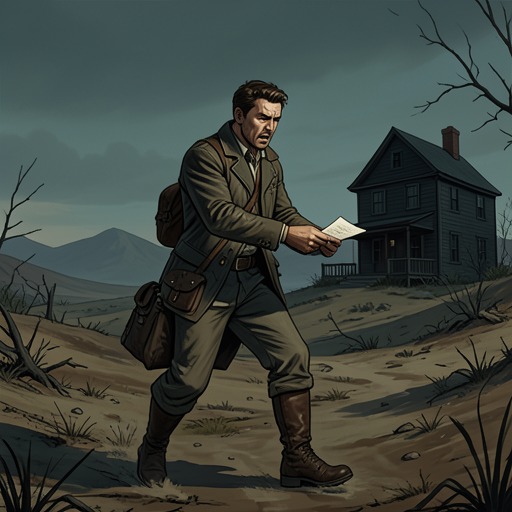
The Summons to the House
The narrator’s journey from an urgent letter to a final escape traces how friendship draws him into the Usher family’s catastrophe.
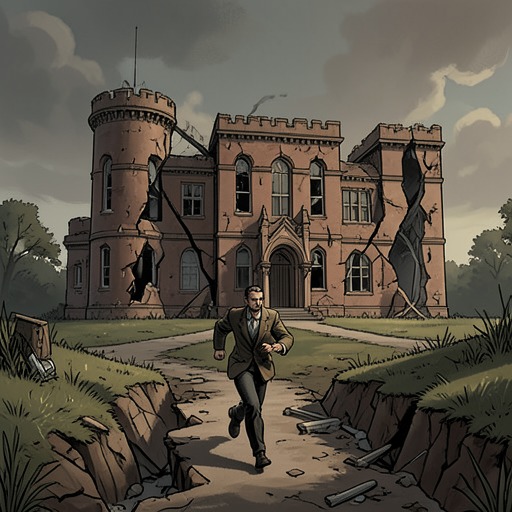
The Mansion’s Last Hours
The mansion’s apparent endurance gives way to visible fracture and physical ruin, paralleling the final collapse of its occupants.
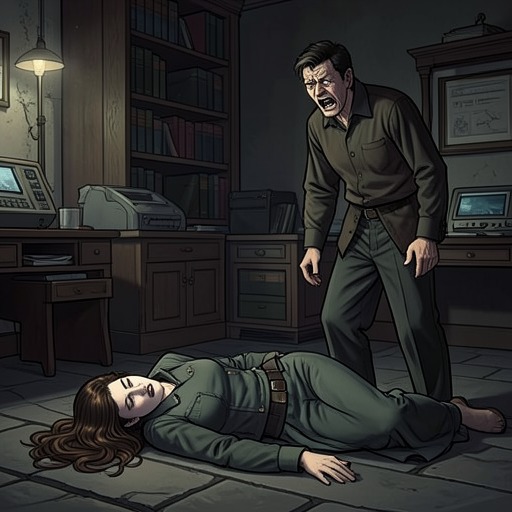
The Twins’ Shared Ending
The apparent death, concealed burial, and return of Madeline converge with Roderick’s terror in the destruction of both twins.
