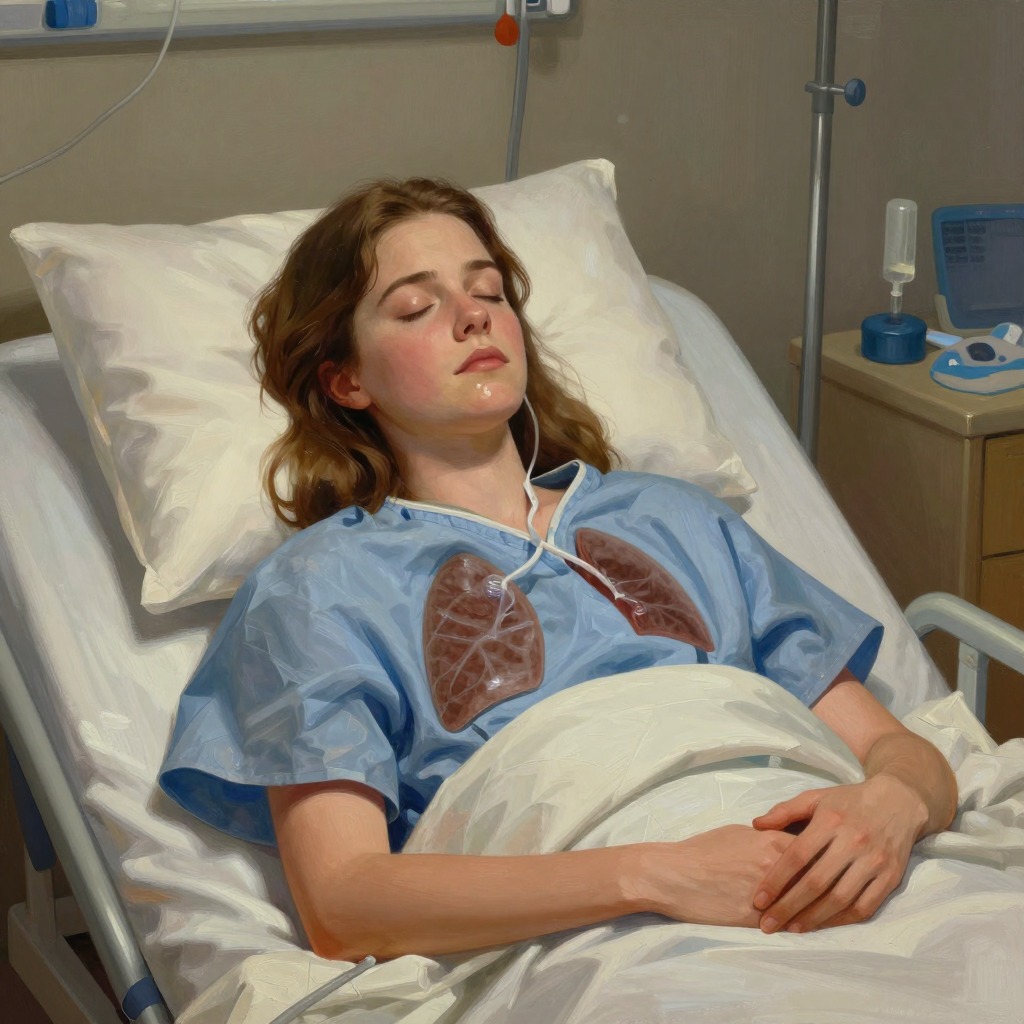
Philip (BiPAP)
Philip is the name Hazel Grace Lancaster gives to her rectangular BiPAP (bilevel positive airway pressure) machine, a medical device that forces air in and out of her lungs at night. More than a piece of equipment, Philip becomes a character in Hazel's interior life—a dragon whose breathing she synchronizes with, a constant companion in her struggle against the fluid buildup and oxygen deprivation caused by her terminal thyroid cancer. The machine represents both the technological extension of her failing body and the intimate, mechanized reality of living with a disease that never pauses.
Identity and Naming
Hazel names the machine Philip because "it just kind of looked like a Philip." The naming is a small act of imaginative ownership over a piece of medical technology that otherwise dominates her nights. Philip is a large, rectangular oxygen concentrator that sits beside her bed, distinct from the smaller portable tanks she wheels around during the day. Every morning, her mother unscrews Hazel from Philip and hooks her up to a portable tank, a ritual that marks the transition from the enforced passivity of sleep to the managed activity of waking life. The machine is so central to Hazel's routine that when she wakes up panicked from a nightmare, her mother is already there helping her disconnect from it.
Function and Experience
Philip delivers BiPAP therapy, which takes control of Hazel's breathing away from her, forcing air in on inhalation and whirring as she exhales. The experience is intensely annoying, but Hazel transforms it through imagination: she hears the machine's rumbling and whirring as a dragon breathing in time with her, a pet dragon cuddled up beside her that cares enough to synchronize its breaths with hers. This fantasy helps her sink into sleep. The machine is necessary because her lungs, damaged by cancer and fluid accumulation, cannot adequately oxygenate her body on their own. After a severe episode that lands her in the ICU—where a liter and a half of fluid is drained from her chest—she returns home and uses Philip every night, finding that sleeping with it makes her lungs feel almost normal.
Role in Daily Life and Relationships
Philip structures Hazel's days and her interactions with her family. She is often attached to the machine when her parents come to talk to her, and conversations happen around its noise. When Augustus Waters calls her late at night, she is sometimes already connected to Philip. The machine also becomes a point of tension: during a fight with her parents about her spending too much time with Augustus, Hazel is attached to the BiPAP in the living room, and when she tries to storm off, she cannot because she cannot breathe without it. Her father has to help her reconnect to the oxygen, a moment that dramatizes how her dependence on the machine curtails even the most ordinary teenage rebellion.
Narrative Significance
Philip is a concrete symbol of the medicalized life Hazel leads—a life in which breathing itself requires mechanical assistance and in which the boundary between her body and technology is blurred. The machine is also a marker of her difference from healthy people: Augustus, who has his own prosthetic leg, never needs a BiPAP, and Hazel's dependence on it is part of what makes her feel like a "grenade" who will inevitably hurt those she loves. Yet her imaginative reframing of Philip as a dragon shows her resilience, her ability to find comfort and even companionship in the very apparatus that keeps her alive. The machine is both a burden and a lifeline, a constant reminder of her mortality and a tool that allows her to keep living.