
Escalation of Sacrifice
The Giving TreeThis thread tracks the rising physical cost of The Tree’s responses, from fruit taken away to the loss of her entire trunk.
increasing Bearing strength in each event
 decreasing
Bearing strength in each eventdecreasingFruit as First Cost
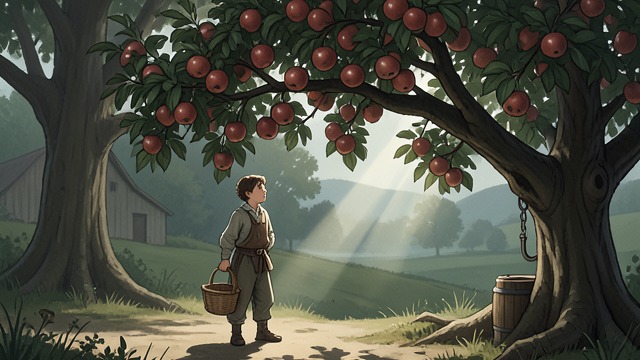
Fruit as First Cost
The Tree offers apples after The Boy asks for money, and he carries the fruit away.
Limited Loss
The gift removes something the tree produces, while leaving her branches and trunk intact.
Pattern Begins
This exchange establishes a scale of increasing sacrifice that later requests will surpass.
Branches as Material
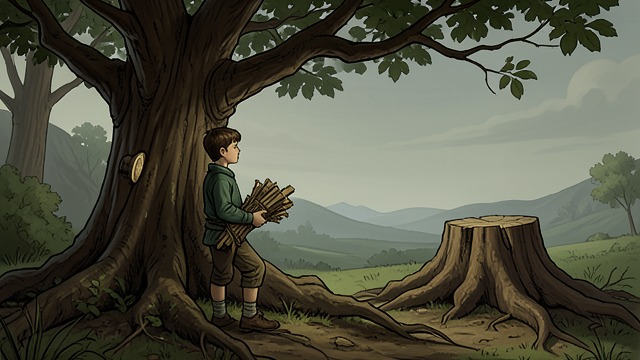
Branches as Material
The Tree lets The Boy cut off her branches so he can build a house.
Greater Physical Cost
Unlike apples, branches are part of the tree’s structure and cannot be treated as a temporary harvest.
Changed Capacity
Their loss alters The Tree’s ability to serve as the playmate she once was.
Trunk as Boat
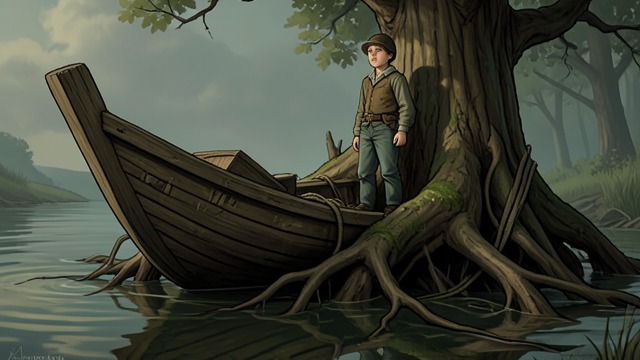
Trunk as Boat
The Tree offers her trunk so The Boy can make a boat and sail away.
Maximum Giving
The proposal allows a final departure by surrendering the part of the tree that remains central to her form.
Irreversible Outcome
The Boy leaves, and the escalating cost reaches its most visible point.
Nothing Left
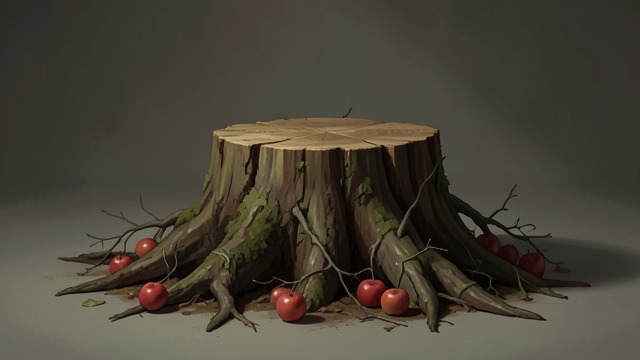
Nothing Left
The Tree lists what is gone: apples, branches, and trunk. She believes she has nothing left to give.
Consequence Named
The earlier requests now appear as a cumulative depletion rather than isolated solutions.
A New Limit
The Tree’s apology expresses the tension between her desire to help and her exhausted capacity.
Stump as Answer
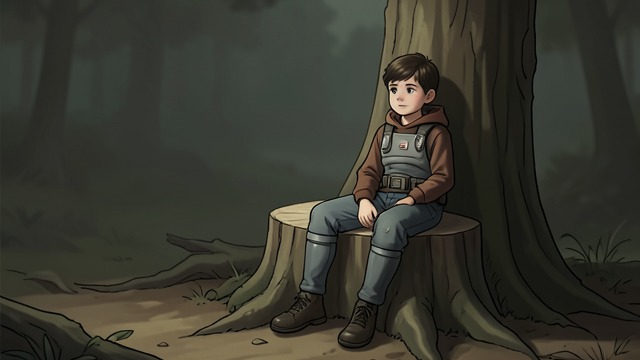
Stump as Answer
The Boy asks for a quiet place, and The Tree recognizes that the stump can serve him.
A Different Measure
The last gift does not require further cutting; it uses what remains.
Conflict Softened
The exchange ends with rest, shifting the story away from escalating material loss.
At The Boy’s first request for money
When The Boy needs a house
When The Boy seeks to travel
When The Boy returns after a long time
At the final scene
