The Tree
The Giving TreeThe Tree is defined by her love for The Boy and by the way that love takes material form: she gives him what he asks for, from apples that can be sold to the trunk that can become a boat, and at last welcomes him to rest on the stump she has become. Across his changing life, her repeated happiness sits beside unmistakable costs: time passes, The Boy grows older, and The Tree is often alone. Her arc makes giving both the language of their bond and the source of its lasting imbalance.
Identity and Introduction
The story introduces The Tree through an intimate relation rather than a human biography: there is a tree, and she loves a little boy. From the outset, affection is not merely a feeling she describes; it becomes the pattern through which she responds to him. She offers a place to climb, branches to swing from, apples to eat, shade in which to play, and the invitation to be happy. Her identity is therefore established as both a living presence and a provider of practical pleasures.
That first invitation conveys what The Tree hopes their relationship can be: shared play in her own surroundings. When The Boy later says he is too big to climb and play, the offer no longer fits his age or ambitions. Yet The Tree does not make continued closeness depend on his accepting the childhood activities she proposes. She listens to what he wants next and redirects her gifts toward it.
Time, Absence, and Return
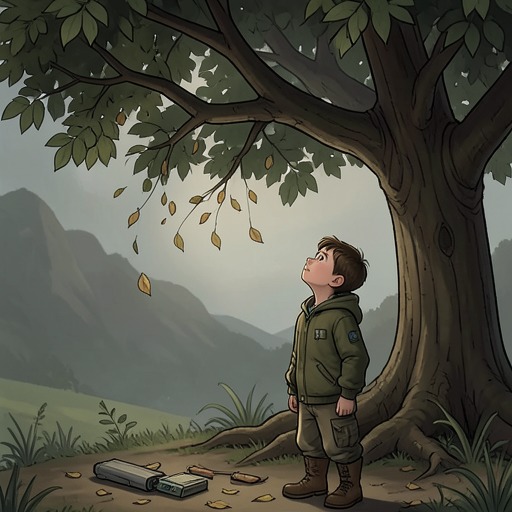
Time passing changes the rhythm of the relationship. The Boy grows older, and The Tree is often alone. The text places this solitude alongside the account of his growing up, making absence an important condition of her life rather than a passing interruption. The Tree remains available even as the shared play that once defined their meetings recedes.
When The Boy comes again, he does not ask to climb or play. He wants money to buy things and have fun, and asks whether The Tree can give him some. She says she has no money, only leaves and apples, then offers the apples for him to sell in the city. The response is both a limit and a solution: she cannot supply the currency he names, but she turns what she does possess into a means for him to obtain it. Her gift serves his goal, while the story records no equivalent return to The Tree.
The sequence links his departures with her changing emotional state. After the apple-giving, the narrative says The Tree is happy; later, after The Boy has been away for a long time, it says she is sad. The repeated judgments are spare, but their contrast matters: her happiness does not erase her capacity for loneliness or make his absence inconsequential.
What She Gives
On another return, The Boy asks for a house. The Tree answers that she has no house to give him, describing the forest as her own home, but offers her branches so he can build one. Her answer again transforms a request she cannot meet directly into a sacrifice of something that belongs to her. The branches pass from being part of The Tree to becoming material for The Boy's shelter; afterward, the narrative again marks The Tree as happy, and that happiness lasts for a long time.
The contrast between their needs is central to this exchange. The Boy seeks a house for himself, while The Tree names the forest as her home and then makes the branches available for his. The episode gives her generosity a physical consequence: what sustains or constitutes her is removed to serve a new use in his life. The Tree's willingness is clear in what she says and gives, although the text does not describe the practical aftermath beyond the loss itself and the renewed statement of happiness.
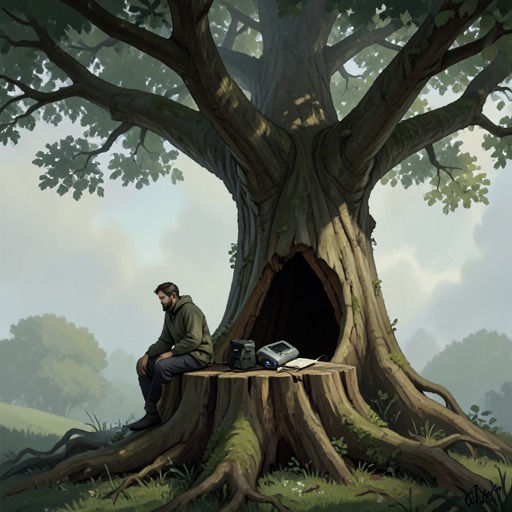
Much later, The Tree is so happy when The Boy comes back that she can hardly speak. She whispers an invitation to come and play, reaching again toward their earlier companionship. The Boy's request instead turns to a boat. The Tree tells him to cut down her trunk and make one, so that he can sail away and be happy. The gift is more final than the earlier ones: the branches could be removed while The Tree remained, but cutting down the trunk leaves her without the living form that had made those previous gifts possible.
The account says that The Boy makes the boat and sails away. It then says The Tree is happy, but qualifies the assertion with the words “but not really.” That qualification interrupts the refrain that has accompanied her giving. Her stated happiness can no longer be treated as uncomplicated evidence that each sacrifice leaves her content; the narrative itself places doubt beside the familiar formula.
The Stump and the Ending
At a later meeting, the absences have accumulated into explicit losses. The Tree says her apples are gone and her branches are gone; The Boy says his teeth are too weak for apples. The exchange makes the distance between their present circumstances concrete. The apples that could once serve his desire for money are no longer available, and even the possibility of eating them has passed for him. His weakness belongs to the same late stage of life in which the former gifts have disappeared.
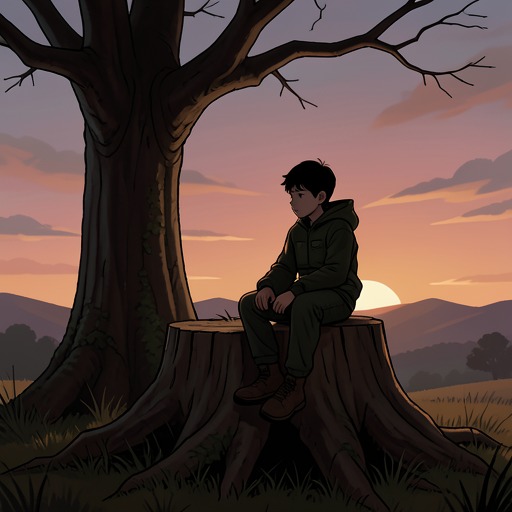
The Tree describes herself as an old stump with nothing left and apologizes. The Boy's need, however, has changed: he says he does not need very much, only a quiet place to sit and rest, and that he is very tired. This request differs from wanting money, a house, or a boat. It asks not for a resource that will carry him toward another plan but for a place to remain.
The Tree straightens herself as much as she can and invites him to sit down and rest. The gesture gives the stump a final use without restoring what has been lost: it cannot offer apples, branches, or a trunk, but it can be a seat. The Boy rests on what remains of her, and the story ends once more with the statement that The Tree is happy. The ending brings the relationship back to physical closeness, though not to the boyhood play with which it began.
Narrative Role and Significance
The Tree's plot is shaped by a recurring pattern: The Boy returns with a desire, The Tree offers the material she has, and the story marks her happiness after the gift. The objects change in scale and consequence—apples, branches, trunk, stump—while the pattern persists. Her giving enables The Boy's successive aims, but the returns are separated by long absences, and the things given cannot be recovered within the story.
The repeated happiness refrain both binds the episodes and grows more complicated as the exchanges accumulate. At first, happiness follows the giving without qualification; after The Boy sails away, the text explicitly denies that the Tree is happy “not really” in the simple sense the refrain might suggest. At the end, the refrain returns when The Boy rests on the stump. Its force now depends on the contrast between her near-total diminishment and the modest form of companionship he finally seeks.
Through The Tree, love is represented as action and provision rather than as a negotiated exchange. She repeatedly adapts her offer to The Boy's changing circumstances, even when doing so costs her what she has. The story makes the tenderness of that constancy visible, but it also keeps loneliness, loss, and the imbalance between giving and receiving in view. Her final gift is not a means for The Boy to leave again: it is a place where he can stop, sit, and rest beside her.