
The Glass Menagerie
Overview
Tennessee Williams’s The Glass Menagerie is a memory play that premiered in Chicago in 1944 and was published in 1945. The work brought Williams to prominence and received the New York Drama Critics’ Circle Award. Its first-person frame makes recollection part of the drama itself: Tom Wingfield, looking back on his youth, tells the audience about a family and a home he has left but cannot escape in memory. The play draws on autobiographical experience, yet shapes that experience into a poetic exploration of longing, responsibility, and loss rather than a documentary account.
The action is set in a St. Louis apartment during the Great Depression. Tom works in a warehouse to support his mother, Amanda, and his sister, Laura. Their father abandoned the family years earlier, leaving behind little more than a brief postcard. Amanda repeatedly revisits memories of her youth in the South and hopes to secure a respectable future for Laura. Laura, shy and physically fragile, has withdrawn from school and social life; she finds comfort in her collection of delicate glass animals. Tom, meanwhile, resents the warehouse and the obligations that bind him to home. He dreams of escape, adventure, and a life beyond the apartment, but remains emotionally attached to the women he supports.
At Amanda’s urging, Tom invites a colleague, Jim O’Connor, to dinner as a possible gentleman caller for Laura. His visit briefly awakens hope and brings Laura into an unusually intimate encounter with another person. The glass unicorn becomes a focus of that fragile connection. When it is accidentally damaged, the small incident also unsettles Laura’s idealized hopes. Tom eventually leaves the family, pursuing the freedom he has wanted, but the memory of Laura follows him. His departure is therefore not a clean release: the play ends with the continuing burden of remembrance.
Themes and form
The play’s central tension is between escape and obligation. The absent father, Amanda’s nostalgia, Laura’s retreat into her glass collection, and Tom’s restless desire to travel all represent different efforts to endure a difficult present. The glass animals suggest Laura’s private world and its vulnerability; the unicorn, with its broken horn, briefly seems more ordinary, but the change also marks the precariousness of the hopes attached to it. Amanda’s insistence on the past can frustrate her children, yet her concern for their prospects grows out of poverty, insecurity, and abandonment.
As a memory play, the work makes no claim to neutral or complete realism. Tom addresses the audience, and the staging, music, lighting, and symbolic details follow the emotional logic of recollection. What is shown has been selected and shaped by a narrator who feels both the pull of escape and the guilt of leaving. Williams thus allows everyday family conflict to take on a lyrical, subjective quality without losing the material pressures of work, money, and cramped living conditions.
Background and legacy
The play’s family circumstances have strong autobiographical roots. Williams spent formative years in St. Louis, and the tensions within the Wingfield household draw on his own experiences of family life. Tom’s situation particularly echoes the playwright’s memories, while the characters remain dramatic creations rather than simple portraits. Williams also developed the play from earlier short-story material, transforming personal recollection into a sustained stage work about longing and the difficulty of breaking free from one’s past.
The Glass Menagerie remains a landmark of modern American drama. Its success launched Williams’s major theatrical career and established his gift for giving poetic intensity to people who are vulnerable, alienated, or trying to escape their circumstances. Alongside A Streetcar Named Desire and Cat on a Hot Tin Roof, it is among his best-known works. Its intimate domestic setting, memorable glass-animal imagery, and innovative use of memory continue to invite performance and critical discussion. The play’s enduring force lies in its refusal to make either departure or family loyalty simple: freedom can bring its own grief, and the past can persist even when a person has gone.
About the Author
Life and education
Tennessee Williams was born Thomas Lanier Williams III on March 26, 1911, in Columbus, Mississippi. He grew up in the American South and later spent important formative years in St. Louis, where his family moved during his childhood. His father worked for a shoe company and was often away, while tensions within the household shaped Williams’s lasting interest in family conflict and emotional insecurity. As a child he was often unwell, and his early life included periods of isolation as well as the imaginative world of stories and reading.
Williams attended the University of Missouri and Washington University in St. Louis before studying at the University of Iowa, where he received a bachelor’s degree in 1938. His education and early working life were not a straight path to literary success. He wrote while dealing with financial pressure and took jobs before establishing himself as a playwright. Friends at university gave him the nickname “Tennessee,” associated with his Southern accent; he adopted it as his professional name. His early writing included short stories and plays, and the economic hardship of the Depression contributed to his attention to people living under material and social strain.
Family and writing career
Family experience supplied emotional material for much of Williams’s drama. His relationship with his mother was complicated, and his sister Rose’s mental illness and later lobotomy caused him enduring grief and a sense of helplessness. These events should not be treated as direct equivalents of fictional plots, but they help illuminate his recurring concern with vulnerable family members, responsibility, confinement, and escape. The Glass Menagerie, in particular, draws strongly on his memories of home and his years in St. Louis, transforming them into a carefully shaped memory play.
The Chicago premiere of The Glass Menagerie in 1944 marked a decisive breakthrough. Williams followed it with A Streetcar Named Desire, which premiered in 1947 and won the Pulitzer Prize for Drama in 1948. The Rose Tattoo appeared in 1951 and won the Tony Award for Best Play. Cat on a Hot Tin Roof, staged in 1955, earned him his second Pulitzer Prize for Drama. Later plays include Summer and Smoke and The Night of the Iguana, the latter receiving the New York Drama Critics’ Circle Award in 1961. Alongside his major plays, Williams wrote short fiction, poetry, and screenplays; his dramatic works have also been adapted for film and opera.
Reputation and legacy
Williams became known for poetic dialogue, expressive stage imagery, and an intense understanding of people who are alienated or unable to reconcile desire with circumstance. His plays give particular force to characters who are fragile, unconventional, or marginalized, while examining the economic pressures, social expectations, and family power that shape their choices. His work combines Southern memory with modern questions of loneliness, sexuality, self-deception, and the costs of freedom. The Glass Menagerie established his reputation, while A Streetcar Named Desire and Cat on a Hot Tin Roof secured his place among the leading American dramatists of the twentieth century.
During his career, Williams received two Pulitzer Prizes for Drama, several New York Drama Critics’ Circle Awards, and the Presidential Medal of Freedom. He also struggled with alcohol and drug use, and his later years included personal and professional difficulties. He died in New York City on February 25, 1983, aged 71, and was buried at Calvary Cemetery. His plays continue to be performed and studied internationally. Their combination of lyrical intensity, unsentimental attention to suffering, and compassion for imperfect people remains central to his reputation and to modern American theatre.
StoryFlow
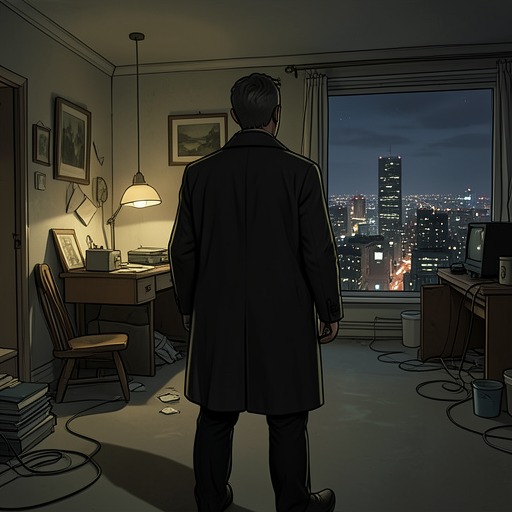
Tom’s Departure and Return
This flow traces Tom’s movement from domestic entrapment through escape into a life haunted by memory and guilt.
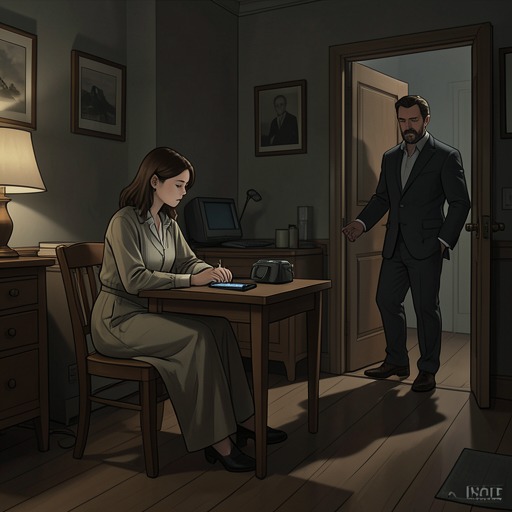
Laura’s Retreat and Exposure
This flow follows Laura from private refuge through the ordeal of a caller and back into painful solitude.
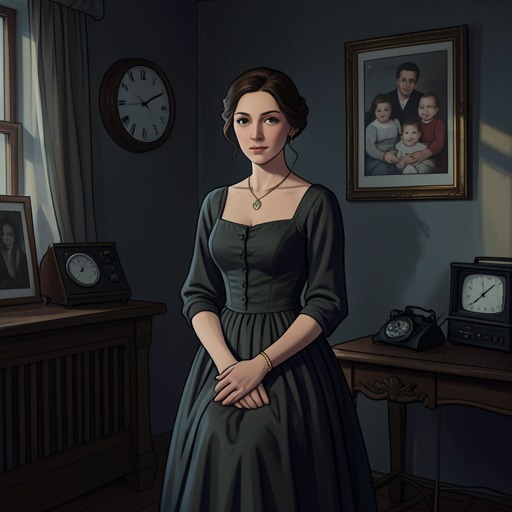
Amanda’s Memories and Plans
This flow traces Amanda’s reliance on an idealized past as she tries to secure a future for her children.
