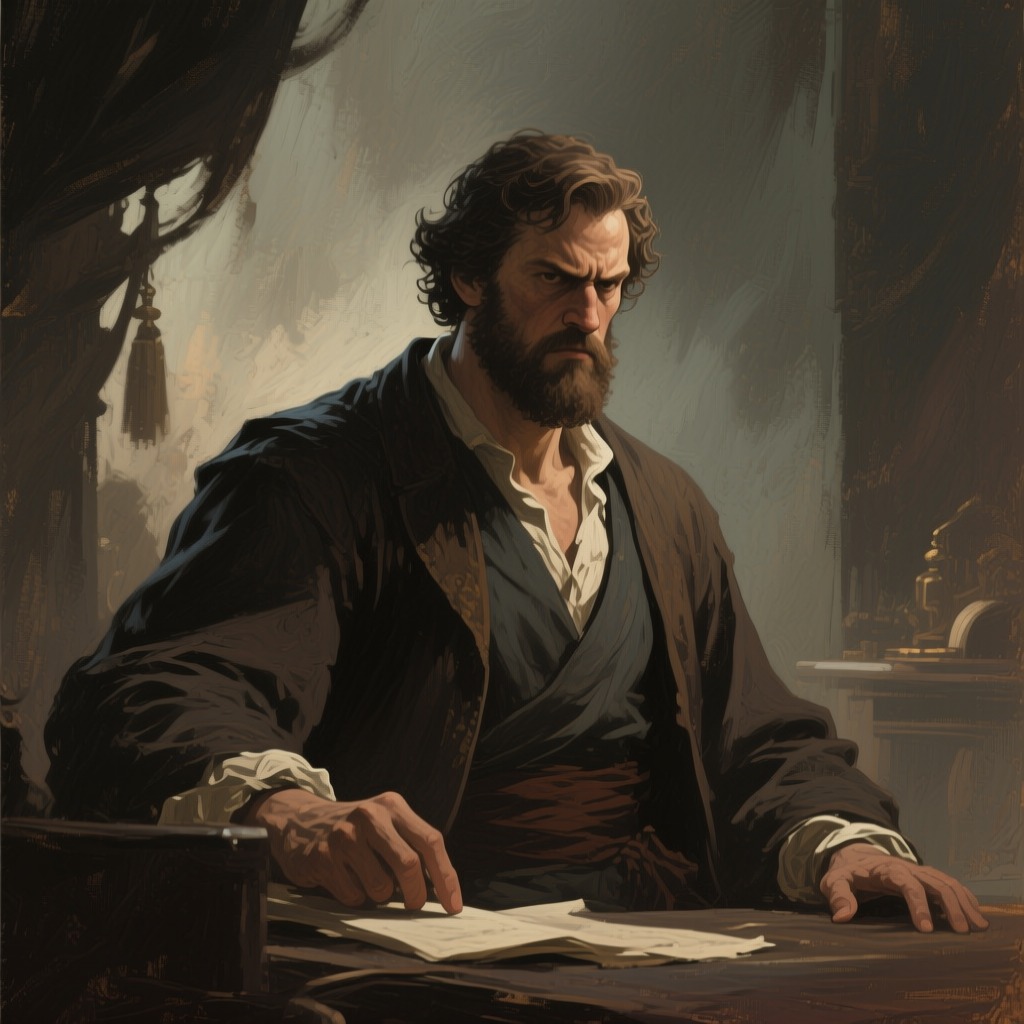
Curtis Anderson
Curtis Anderson is the assistant warden at Cold Mountain Penitentiary during the fall of 1932, a figure of administrative competence who operates in the shadow of Warden Hal Moores. He is the warden's chief assistant, a man whose written communications are marked by a "backslanting and somehow prissy script" and whose guesses about execution dates are described as "very informed." When Moores is absent tending to his dying wife, Melinda, Anderson assumes temporary command of the prison, a role that places him at the center of the most chaotic events on E Block.
Role and Responsibilities
Anderson's primary function is that of a bureaucratic administrator. He is the source of official paperwork on E Block, including the DOE (date of execution) orders that govern the lives of the condemned men. It is Anderson who sends Paul Edgecombe a memo predicting that Eduard Delacroix will walk the Green Mile shortly before Halloween, and it is Anderson who writes the initial report on William Wharton, describing him as "a problem child" who is "crazy-wild and proud of it." His note to Edgecombe about Wharton includes the underlined warning that "this man just doesn't care," a judgment that proves prescient. Anderson's authority is procedural rather than personal; he is the man who signs the death warrant for John Coffey when it reaches the prison, a document Edgecombe finds on his desk with dread.
Presence at the Botched Execution
Anderson is present in the storage room as a witness during the execution of Eduard Delacroix on the night of October 25, 1932. When the execution goes catastrophically wrong—the sponge is dry, Delacroix's mask catches fire, and the condemned man screams and jitters in the chair for over two minutes—Anderson is among those who react. He grabs Edgecombe's shoulder and demands to know what is happening, asking why the current has not been shut down. Edgecombe tells him it is too late to stop. Afterward, Anderson turns to the panicked witnesses, bawling that everything is under control and that the disaster was merely a power surge from the electrical storm raging outside. Later, in the tunnel beneath the prison, Anderson confronts the guards, calling the execution "a direct-current abortion" and expressing concern that the witnesses will not sleep for a month. He accepts the explanation that Percy Wetmore made a stupid mistake, and he orders a complete report on his desk the next day, instructing the guards not to speak to Warden Moores before he has had his chance.
Management of the Wharton Shooting Aftermath
In the early morning hours following the Delacroix execution, after Percy Wetmore has shot and killed William Wharton in his cell, Anderson is again at the center of the crisis. He keeps the catatonic Percy at the prison until eight o'clock that morning, then defers to Warden Moores when the warden arrives, looking grim and competent. Anderson steps aside with a sigh of relief that the other guards can almost hear, allowing Moores to resume command. His role in the aftermath is that of a manager who handles the immediate chaos but lacks the authority or the will to shape the narrative that follows.
Narrative Significance
Curtis Anderson functions as a representative of the institutional machinery that processes the condemned. He is neither cruel nor kind, but merely efficient, a man who signs papers and manages crises without ever confronting the moral weight of the executions he oversees. His presence at the Delacroix execution and his handling of the Wharton shooting aftermath underscore the theme of bureaucratic complicity: the system grinds on, and men like Anderson ensure that the paperwork is filed and the witnesses are soothed, regardless of the human cost. He is the face of the prison's administrative power, a power that is ultimately indifferent to the innocence or guilt of the men it kills.