
Ahoshta and the Limits of Courtly Power
The Horse and His BoyAhoshta’s influence and Aravis’s rejection reveal a court where rank and flattery can advance ambition but cannot create genuine consent or loyalty.
increasing Bearing strength in each event
 decreasing
Bearing strength in each eventdecreasingA Favored Courtier
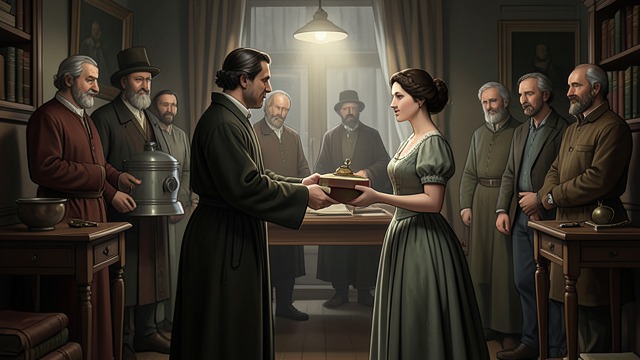
Status acquired by flattery
Rise at court
Ahoshta Tarkaan is of humble birth but wins the Tisroc’s favor through flattery and harmful counsel. His political standing grows until he becomes Grand Vizier.
A marriage as advantage
His power and wealth make him attractive to Aravis’s father as a potential husband for his daughter. The proposed match serves family and political interests without asking whether Aravis wants it.
Ahoshta’s rise demonstrates how social rank can be acquired within a court through service to power. It does not make him admirable or ensure that a marriage arranged around his position will be welcomed.
A Betrothal Resisted
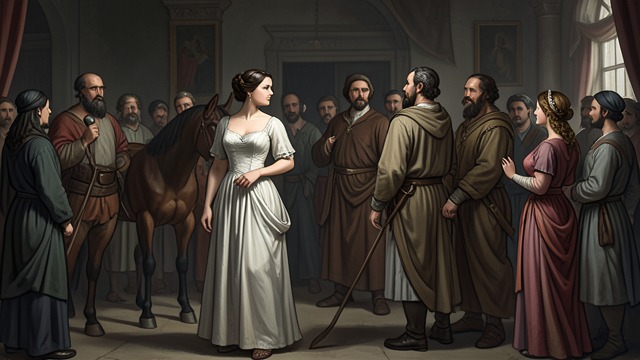
A match rejected
Power against consent
Aravis learns that her father has promised her to Ahoshta, an older courtier she finds grotesque. The announcement makes clear that her family’s social calculations take precedence over her preferences.
Escape instead of compliance
Aravis first despairs, then chooses to leave rather than accept the proposed marriage. Her plan relies on disguise and deception because open refusal would not give her a safe route out.
The conflict is not simply between a young woman and an unpleasant suitor. It concerns a system in which a powerful match can be arranged without the bride’s consent and requires risk to resist.
The Vizier Before the Tisroc
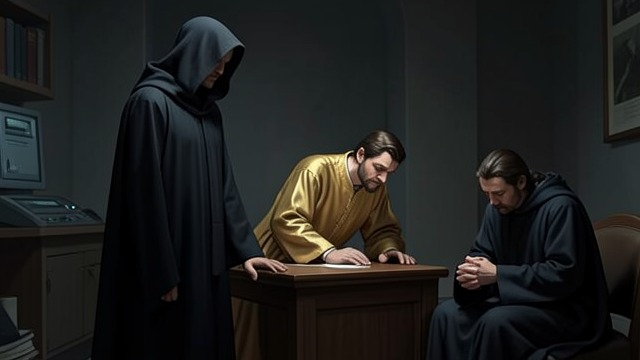
Counsel under coercion
The prince’s proposal
Ahoshta is present when Rabadash proposes an invasion and is ordered to give his judgment. He hesitates to speak freely because the prince may kick him and the Tisroc may punish silence.
Flattery as survival
The Vizier praises the proposal after offering cautious arguments. His speech serves the rulers before it serves truth, showing how courtly eloquence can become a defense against those who hold power.
Ahoshta’s behavior explains both his rise and his moral weakness. He has influence, but the habits that secured his position leave little room for independent counsel when the court considers violence.
A Marriage Refused at a Distance
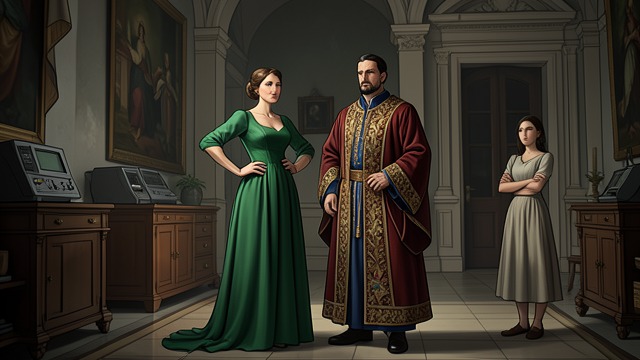
Wealth does not persuade
Lasaraleen’s recommendation
Lasaraleen praises Ahoshta’s palaces, pearls, and political advancement. She believes these advantages make him an excellent husband and cannot understand why Aravis would refuse him.
Aravis’s answer
Aravis says that she would rather marry a household scullion than Ahoshta. Her judgment rests on his character and her own unwillingness, not on whether the marriage would increase her comfort.
The scene distinguishes social success from human worth. Ahoshta’s wealth can make the match desirable to observers but cannot turn an unwanted marriage into a chosen relationship.
The Match Dissolved by Escape
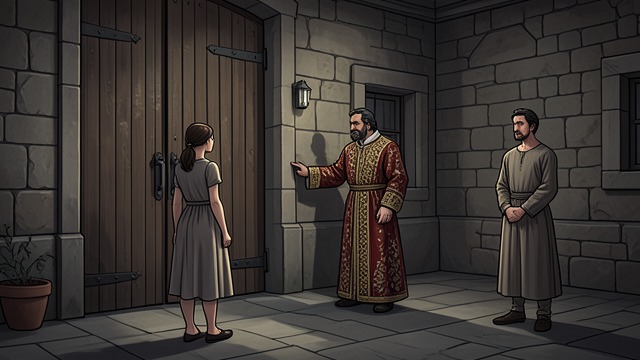
A future beyond the bargain
The proposed marriage loses its hold
Aravis reaches Archenland without submitting to Ahoshta’s arrangement. She becomes a guest at Anvard and is welcomed by King Lune and Queen Lucy.
Choice replaces transaction
Aravis’s later relationship with Cor grows from shared experience and mutual affection rather than a political exchange arranged by a parent. Her future is no longer determined by the Vizier’s wealth or court influence.
The escape does not reform Ahoshta’s court or undo every custom Aravis left behind. It does demonstrate that the match could be refused and that a different life was possible beyond its reach.
before Aravis’s betrothal
when Aravis hears she will marry Ahoshta
during the secret palace council
during Aravis’s stay with Lasaraleen
after Aravis reaches Archenland
