Tirian's Resistance
The Last BattleTirian's Resistance is the small, improvised coalition led by Tirian against the Ape's false authority and the Calormene forces exploiting Narnia. Its struggle is both military and moral: Tirian tries to free creatures subjected to forced labor and expose the deception behind the Ape's claim to speak for Aslan, but he cannot compel the whole country to believe or join him. The resistance's victories release captives and gather brave allies; its isolation, even at the Stable, shows how far coercion and falsehood have divided Narnia.
Formation and Oppression
The resistance takes shape against a regime that presents enslavement as benevolent administration. The Ape declares that horses, bulls, and donkeys will be sent to Calormen for labor, while moles, rabbits, and Dwarfs will work in the Tisroc's mines. When the Beasts protest that Aslan would never sell them into slavery, the Ape denies the word rather than the substance: workers will supposedly receive wages, but their pay will go into Aslan's treasury and be spent for everyone's good. The Calormene chief endorses the plan, making the alliance between the Ape's fabricated religious authority and Calormen's political power explicit.
The Ape also tries to define freedom as obedience. When an old Bear says the Beasts want to be free and to hear Aslan for themselves, the Ape claims that true freedom means doing what he commands. This language accompanies concrete restrictions and threats: dissent is shouted down, and a Beast who calls the Ape a liar is struck and kicked by Calormenes. The Ape orders the prisoner taken away and tied to a tree, disguising his own command as a promise that Aslan will later do justice. The resistance therefore confronts not only armed occupation but a system that recasts forced labor, silencing, and detention as the will of Aslan.
The King Calls Narnia to Act
After Puzzle's disguise is exposed, Tirian sees a chance to end secrecy and make the deception visible. He laughs at the prospect of meeting the approaching Dwarfs, declaring that Puzzle can show them what they had feared and bowed to. He expects the truth about the Ape's plot to turn the tide, and speaks of hanging the Ape and bringing good news to the Dwarfs. The change in tone matters: after hours of whispering and skulking, the group speaks and laughs aloud, and Puzzle himself is able to bray again. Tirian's confidence rests on disclosure—if the Dwarfs see the false Aslan unmasked, he believes, they may join the struggle.
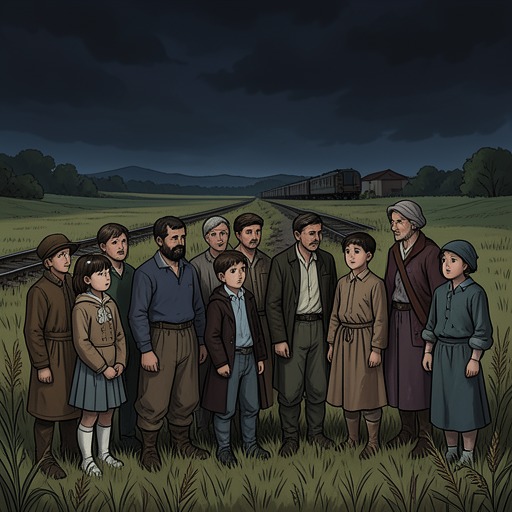
Instead, the armed column of about thirty Dwarfs arrives under Calormene guard. Tirian steps into the road and demands to know where they are being led and by whose order. He and Eustace attack the guards; the Dwarfs kill the two soldiers at the rear, leaving no enemy alive. Tirian praises Eustace, announces that the Dwarfs are free, and promises to lead them in freeing Narnia the next day. But his call for three cheers for Aslan receives only a feeble response from about five Dwarfs, sulky growls from others, and silence from many. A battlefield success has not become a political one: the captives are free, but most do not trust or support their liberators.
Allies and Uneven Solidarity
Poggin is the notable exception among the Dwarfs. He catches up with Tirian's party after escaping from the others, declares that he is on the side of Tirian and Aslan, and asks for a Dwarfish sword so he can strike on the right side. Though one Dwarf cannot greatly alter the balance of forces, his choice heartens the group. His arrival offers a small, personal answer to the Dwarfs' collective rejection, while also underlining how little support the resistance can count on.
The coalition widens at the Stable, where Tirian can no longer bear to watch a brave Beast left to face approaching Calormene soldiers alone. He brings seven figures forward, four in shining mail, and publicly names himself as Tirian of Narnia, standing in Aslan's name. His challenge calls the Ape a traitor, condemns Tash, and asks true Narnians whether they will wait to be killed one by one by their new masters. The appeal makes the resistance's purpose plain: to fight rather than submit to the fate the conspirators have prepared.
The response is real but limited. All fifteen Talking Dogs present bound to Tirian's side, welcoming the King and offering to help; mice, moles, and a squirrel arrive as well, followed by a Bear and a Boar. Their joyful rush is one of the night’s rare moments of fellowship, and Eustace begins to hope that events may yet turn out well. Tirian, however, sees how few animals have moved. When he calls the absent creatures cowards, the mice explain that the Talking Horses are tied at the bottom of the hill, forced to work by the Ape. Tirian sends the small animals to gnaw through their ropes and bring the Horses to the fight, turning their size and teeth into a practical means of rescue.
Battle and Significance
While the mice hurry to free the Horses, Rishda orders his soldiers to capture the resistance alive and drive its members into the Stable, where they are to be burned as an offering to Tash. Tirian answers with an organized defense. Jill is placed on the left to shoot; the Boar and Bear stand beside her; Poggin and Eustace take positions by Tirian; Jewel holds the right wing, with Puzzle beside him; Farsight is to strike from above; and the Dogs wait to enter the melee once the sword fighting begins. This deployment shows the resistance as a coalition of different kinds of beings, whose varied abilities are coordinated against a force that means to turn them into captives and sacrifices.
The coalition fights despite unequal numbers and divided loyalties within Narnia. As the enemy advances, Jill's arrows bring down a Calormene and Wraggle the Satyr, who is fighting on the enemy side. The evidence records the battle's approach and its first blows, rather than a complete account of its outcome. What it establishes is the resistance's defining tension: Tirian can rally courageous allies, rescue some of the enslaved, and make a public stand, but neither a revealed deception nor a royal command can instantly restore common purpose. The resistance is a real act of liberation, and at the same time a measure of how thoroughly fear and falsehood have fractured the country it is trying to defend.