
Dispossession and Cultural Extinction
The Last of the MohicansThis thread connects Chingachgook’s personal bereavement and Tamenund’s final words to the larger decline of Indigenous peoples under colonial expansion.
increasing Bearing strength in each event
 decreasing
Bearing strength in each eventdecreasingA Homeland Remembers Its Past
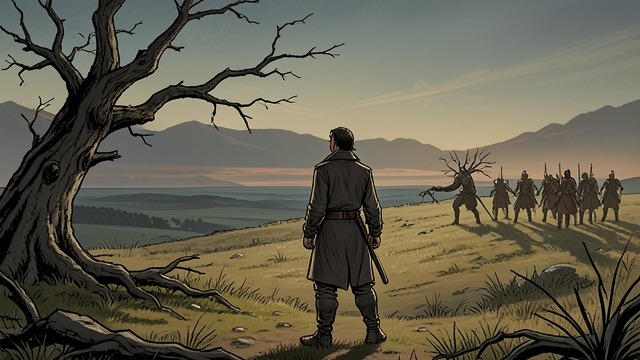
The Weight of Earlier Generations
A people’s long memory
Tamenund recalls the strength and happiness of earlier generations. His speech places the present grief within a history that extends beyond the battle.
Loss has a landscape
The forests and ancestral grounds are not empty scenery; they hold the memory of communities whose authority has been displaced. The mourning gathering becomes a reckoning with that history.
Chingachgook Names His Solitude
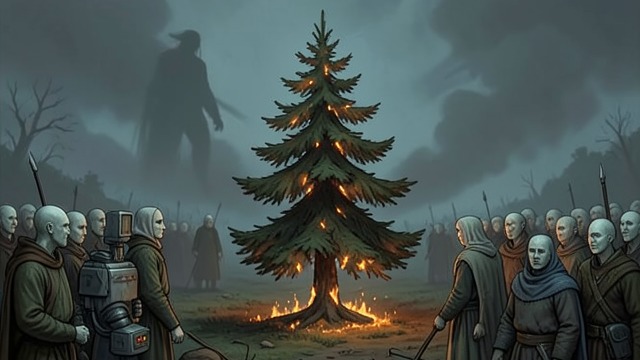
A Personal Loss Becomes Collective
The last survivor’s claim
Chingachgook describes himself as a blazed pine standing alone in a clearing of pale faces. The image makes his son’s death part of a larger disappearance.
Friendship across difference
Hawkeye answers that shared loyalty connects them despite differences of color and ancestry. Their bond resists isolation but cannot restore the community that has been lost.
The Final Warning
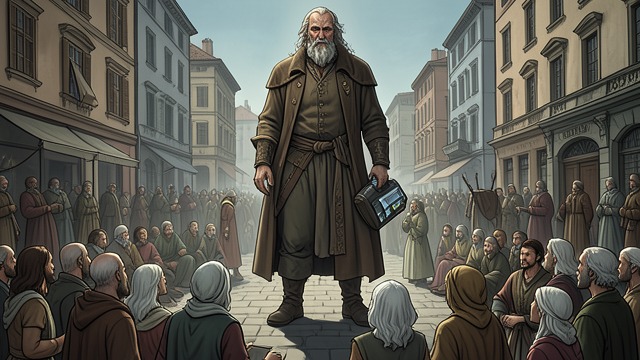
A Closing Prophecy
Power has changed hands
Tamenund declares that pale faces master the earth and that the red men’s time has not returned. His words interpret the immediate tragedy as part of colonial displacement.
The title’s elegiac force
With Uncas dead and Chingachgook bereaved, the phrase “last of the Mohicans” names both a family loss and a threatened people. The ending refuses to make victory a promise of survival.
As Tamenund addresses the mourners
At Uncas’s grave
As Tamenund dismisses the mourners
