
The Frontier as a Living Adversary
The Last of the MohicansThis flow traces how the forest, rivers, darkness, and falls shape the conflict as actively as any human opponent. This flow examines how tracking, observation, disguise, and misreading determine who can move safely through the wilderness. This flow traces how the travelers' assumptions about Native character are unsettled by the Mohicans' conduct and by Hawkeye's own prejudices.
increasing Bearing strength in each event
 decreasing
Bearing strength in each eventdecreasingThe Forest Boundary
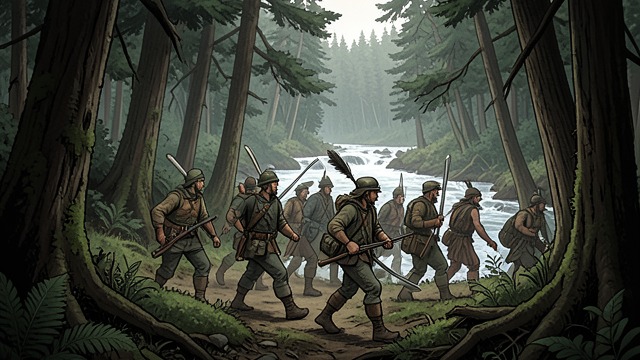
Nature as a Theater of War
Distance Before Battle
The armies must struggle through forests, rapids, and mountain passes before they can meet. The wilderness delays movement and isolates small groups.
A Contested Landscape
The lakes and portage form the natural route between French and British positions. Neither empire can treat the region as empty space.
The setting determines the pace and danger of the campaign from the beginning.
The Blind Path
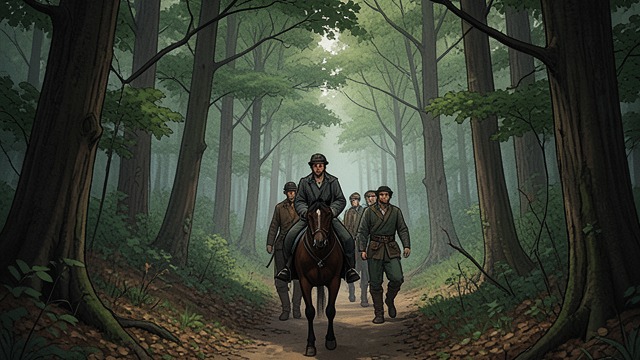
Navigation as Power
A Route Hard to Read
The narrow path admits only one rider at a time and quickly separates the travelers from the column. Knowledge of the land belongs to the guide, not the officer.
Isolation Grows
When the party becomes lost, ordinary military maps and authority offer little help. The forest turns a small navigational error into a potentially fatal separation.
Control of terrain becomes a form of control over people.
Water as a Hidden Road
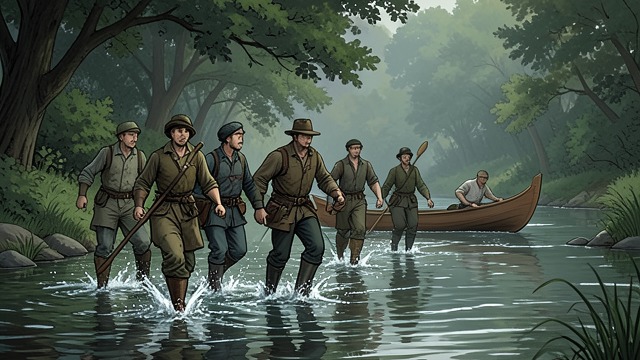
The River Conceals and Tests
Erasing the Trail
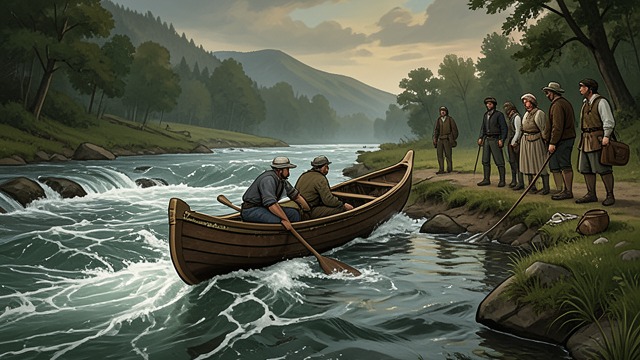
Hawkeye leads the party through the stream because water leaves fewer tracks. The same river also demands careful handling of the canoe and current.
A Dangerous Passage
The travelers must stem a rapid under darkness and depend on Hawkeye's local knowledge. The route hides them but risks drowning them.
Nature offers protection only through hazards that the guide understands better than the passengers.
The Falls as Fortress
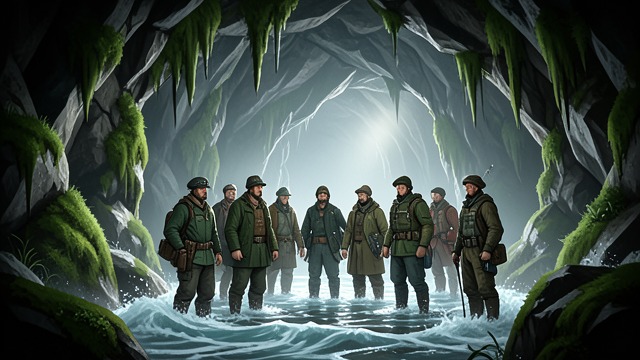
Shelter Made by Water
A Defensive Island
The falls and chasms make the caverns difficult to approach. The rock formations offer concealment and narrow passages that defenders can watch.
Beauty and Threat
The water's roar comforts and alarms the travelers at once. Its power can hide sound, obstruct pursuit, or sweep a canoe and swimmer away.
The same landscape that provides a refuge also limits escape.
The Current Takes the Canoe
The Landscape Turns
A Lost Resource
A Huron redirects the canoe into the swift current, making the river carry away the defenders' principal means of escape. The natural passage becomes an enemy's weapon.
An Uncertain Exit
The Mohicans later use the water to flee, but their survival is not confirmed. Cora and Alice remain at the refuge as the current separates the party.
The river controls both the possibility of escape and the danger of being lost.
Inherited Categories
Trust Shaped by Difference
Alice's Unease
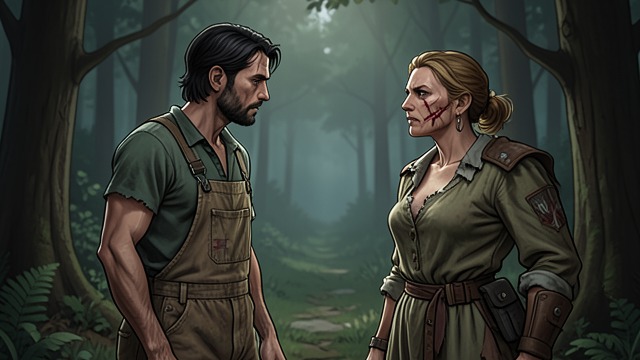
Alice reads Magua's appearance as threatening and asks Heyward to test him through speech. Her reaction reflects the colonial habit of treating unfamiliarity as danger.
Cora's Objection
Cora refuses to make skin color or custom sufficient grounds for mistrust. Her principle challenges prejudice even though Magua proves dangerous.
The scene separates fair judgment from the claim that appearances reliably reveal character.
Hawkeye's Tribal Bias
Experience and Prejudice
A Categorical Verdict
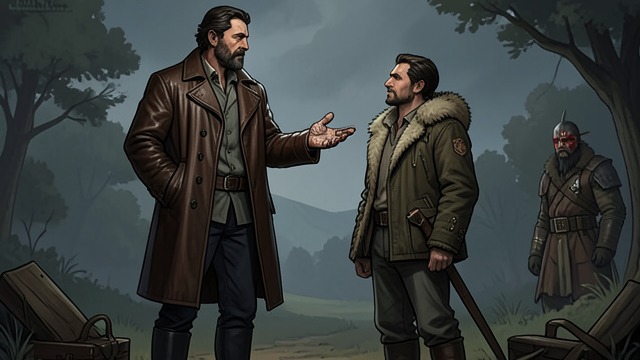
Hawkeye distrusts Magua because he is Huron and insists that a Mingo remains a Mingo despite adoption. His suspicion is partly accurate but expressed through a broad judgment about a people.
A Complicated Guide
The same Hawkeye who condemns Magua praises the honesty and courage of Delawares and Mohicans. His relationships complicate, but do not erase, his sweeping categories.
The narrative presents practical knowledge alongside the limitations of the observer who possesses it.
The Mohican's Appearance
Recognition Through Presence
A New Impression
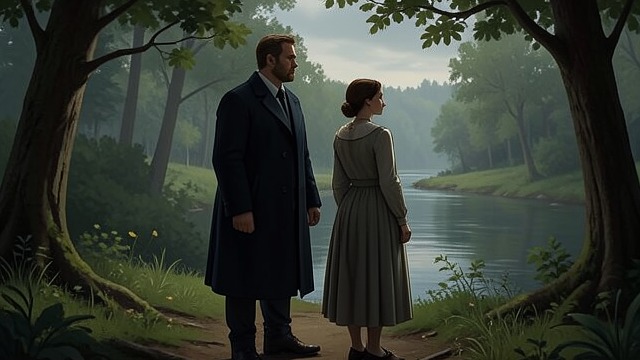
The travelers see Uncas's composure and noble bearing and begin to doubt the stories that equate Native people with wanton violence. Alice admires him, while Cora recognizes his humanity without idealizing the danger around them.
Shared Capacity
Heyward acknowledges that virtue is possible among both Christians and Native people. His words revise the assumptions that had informed the journey.
The encounter shifts judgment from racial stereotype toward attention to individual conduct.
Hospitality in the Cave
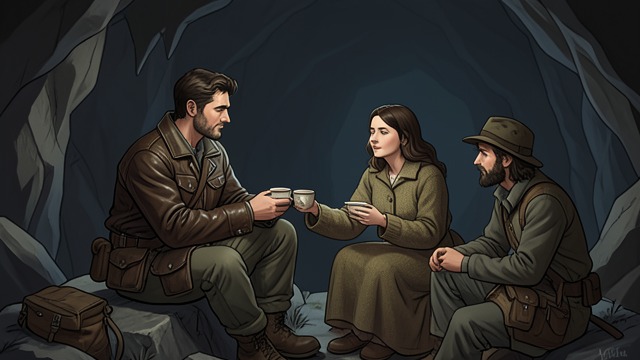
Respect Across Custom
Uncas's Service
Uncas attends to the sisters with courtesy, even though such service is described as unusual for a warrior. The act grows from the Mohicans' respect for hospitality.
A Different Standard
The travelers observe generosity in someone they had been taught to fear. Their experience contests received judgments more effectively than abstract argument.
The refuge becomes a setting for mutual recognition even as enemies remain close outside.
The River Test
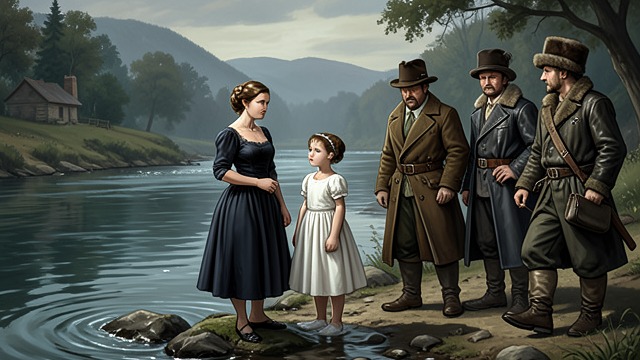
Character Revealed by Choice
A Chance to Escape
Cora asks the Mohicans to leave, despite the danger this creates for her and Alice. Their responses show whether the bond is one of mere service or personal loyalty.
Loyalty with Limits
Uncas initially stays, then obeys Cora's plea; Chingachgook and Hawkeye enter the river. Their choices show courage and attachment, but the text gives no outcome.
The scene replaces simple ethnic judgment with a test of individual decisions under pressure.
Magua’s False Guidance
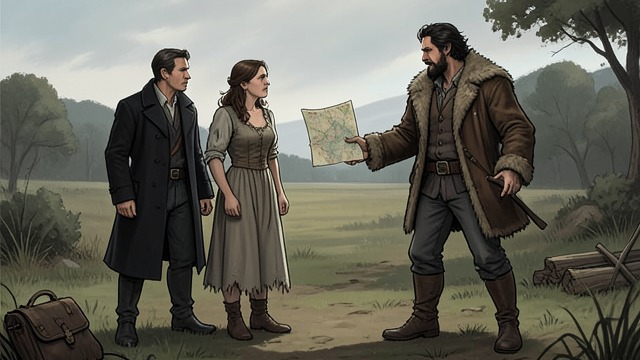
Magua’s False Guidance
Trust manipulated
Heyward has relied on Magua as a guide, not recognizing that the Huron’s apparent assistance conceals betrayal. The guide’s knowledge gives him control over the travelers’ route.
Appearance and intention
The deception exposes how little visible conduct guarantees honest purpose. Heyward must reconsider every earlier sign once Magua reveals his allegiance.
The Disguised Trail
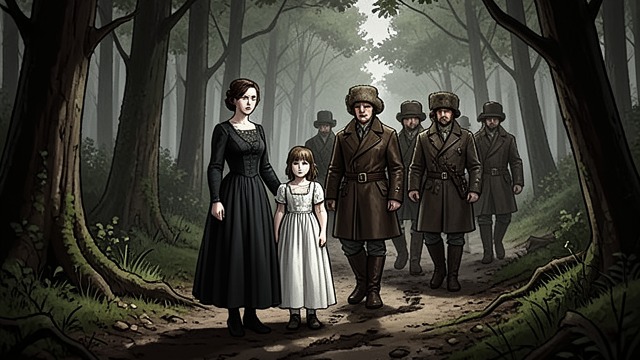
The Disguised Trail
Evidence obscured
The Hurons use horses and give the prisoners moccasins, reducing the clarity of the trail. Cora’s attempt to leave a sign is deliberately disguised by one of her guards.
Reading against concealment
The rescuers do not accept the absence of familiar clues as proof that no trail exists. Uncas and Hawkeye interpret unusual traces and recover the route.
Heyward’s French Performance
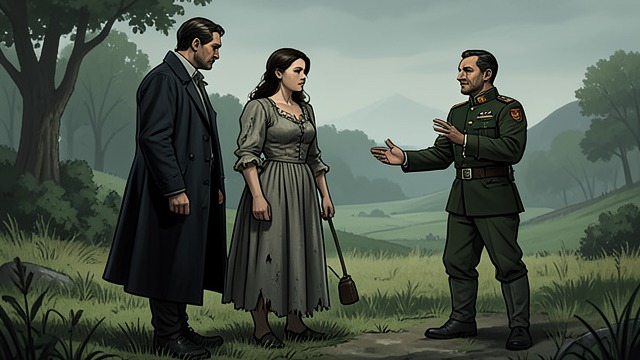
Heyward’s French Performance
A borrowed identity
Heyward speaks French and claims to be a French-aligned officer escorting Munro’s daughters. His fluency and confident manner prevent the sentry from recognizing the party.
Language as passage
The disguise succeeds because the sentry accepts a plausible account. Knowledge of another language becomes as important as weapons or concealment.
The Unread Letter
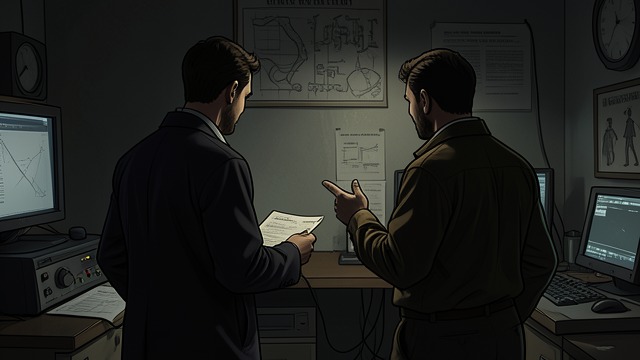
The Unread Letter
Intelligence withheld
Heyward seeks the meaning of a letter that Montcalm has intercepted, but the general reveals nothing. Both men use courtesy and indirection to conceal what they know.
Limits of interpretation
Diplomatic fluency cannot force access to guarded information. The exchange shows that knowledge in war is itself contested terrain.
The Cannon Furrow
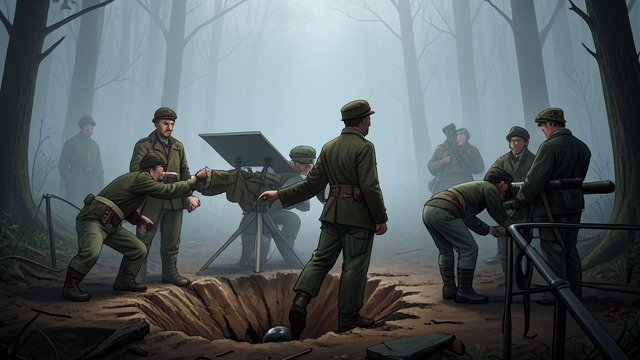
The Cannon Furrow
A clue in disturbed ground
The fugitives lose their orientation in fog and gunfire. Uncas finds the track made by a cannonball, and Hawkeye uses it to recover a direction.
Observation as survival
The group survives by treating damage as evidence rather than noise. In this landscape, close attention can turn an apparent threat into useful knowledge.
At the opening of the narrative, before the party leaves Fort Edward
Morning, after Magua leads the party off the road
After sunset, during the journey to Glenn's Falls
Night, after the party reaches the rock island
During the siege, after the defenders' ammunition runs low
At the start of the journey, when Alice questions Magua
Late afternoon, during the first meeting at the stream
Night, when the travelers first see Uncas clearly in the cavern
Later that night, during the meal in the refuge
At the end of the defenders' stand on the island
Before the cave capture, during the journey with Magua
After the captives are led away from the river
At the first encounter with a French sentry by the pond
During Heyward’s first conference with Montcalm
During the fog crossing after the French volley
