Tristram Shandy's Christening
The Life and Opinions of Tristram Shandy, GentlemanTristram Shandy’s Christening becomes a contest over whether a child’s baptism and name can be unsettled by legal argument. In the later discussion, scholars parse the wording of baptismal formulas and rules of kinship, while Uncle Toby objects that Tristram was christened as Tristram against the wishes of his parents and family. The dispute’s elaborate technical reasoning cannot conceal its central irony: a question about the child’s place in the family is argued through doctrines that, taken literally, threaten to leave him related to almost no one.
Background: The family’s birth arrangements
The christening dispute follows a history in which Walter Shandy’s marital agreement with Elizabeth Mollineux had already turned childbirth into a matter of contract. The settlement provided that if Walter retired from business to the country while Elizabeth could still bear children, he was to pay the trustees £120 for a coach, horses, incidental expenses, and her lying-in in London. Elizabeth was to choose where she stayed in the city, despite her married status. The agreement thus set out a specific right over the circumstances of childbirth, rather than leaving the choice entirely to household custom.
A further clause limited that right if Elizabeth sent Walter to London on false signs of labour: she would forfeit her entitlement only for the next confinement. The narrator remarks that he has always felt the burden of the arrangement fell on him. When Elizabeth later took Walter to London, he insisted on the clause, and the narrator connects that decision to the compression of his nose at birth. The family’s disputes over the child’s future therefore begin before the christening, with the terms of marriage and childbirth already shaping his bodily and familial circumstances.
Naming and baptism under dispute
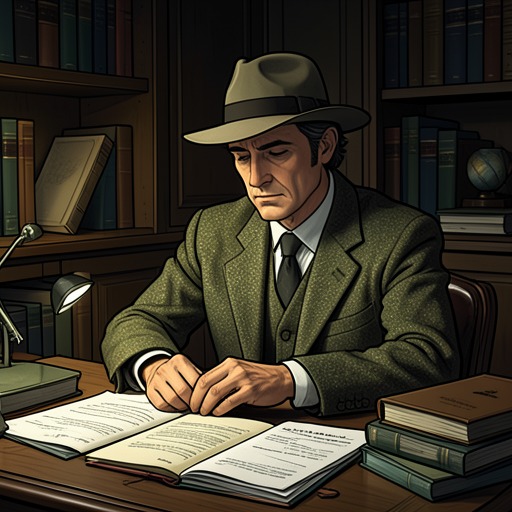
In the later debate, Didius considers what would have happened if a priest before the Reformation had made a mistake in the Latin baptismal formula. He gives an example in which the endings of the Latin words are wrong. Kysarcius answers that errors confined to grammatical terminations need not invalidate baptism if the roots and sense of the words remain intact; he distinguishes such a mistake from one affecting the first syllables. Their argument treats validity as a technical question about wording and the priest’s intention, not simply as a matter of whether the rite accords with a family’s wishes.
Uncle Toby interrupts that line of reasoning with the family’s particular grievance: Tristram is a Protestant gentleman’s child, christened Tristram against the wishes of both parents and all his relations. His protest shifts attention from historical precedent to the actual child and the people who objected to the name. Kysarcius replies that, if the wishes of those related to the child are to count, Mrs. Shandy has the least standing among them. Uncle Toby lays down his pipe, while Walter draws his chair closer to the table to hear what follows, making the legal argument a matter of immediate family interest.
Kinship and the learned argument
The debate’s most unsettling legal precedent is the Duke of Suffolk’s case. After the duke’s son died intestate, unmarried, and without children, the boy’s mother received administration of his goods under the statute governing intestate estates. His paternal half-sister challenged that appointment, claiming that she was next of kin and that the mother was not kin to her own son. The question was referred to a broad body of temporal and church lawyers, civilians, advocates, and judges, who unanimously held that a mother was not legally kin to her child under the maxim cited in the discussion.
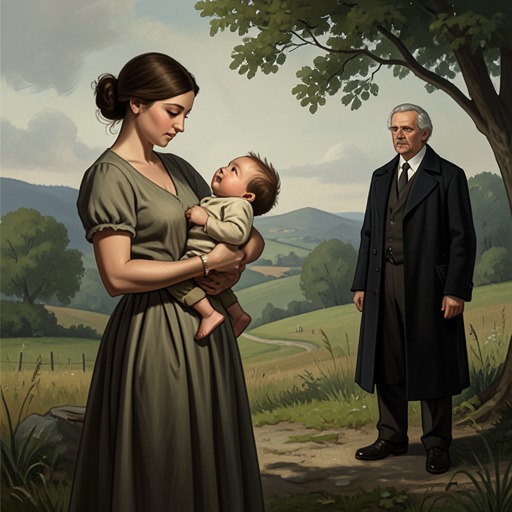
The case is introduced as a precedent with consequences for future property disputes, but it also supplies the grotesque logic behind the christening argument. On the stairs, Yorick tells Uncle Toby that, according to the learned men, neither Mrs. Shandy nor Walter is truly related to Tristram: since the mother is supposedly no kin, the father is less than nothing in the reckoning, and Yorick claims to be closer to the child than Walter is. Walter only shakes his head. Uncle Toby answers that, whatever the learned say, there must have been some kind of kinship between the Duchess of Suffolk and her son. His common-sense objection exposes the distance between a rule’s formal conclusion and the human relation it is supposed to describe.
Consequences and narrative significance
The christening episode does not settle the family’s dispute by establishing a new name or undoing the baptism. Instead, it leaves the reader with competing registers of authority: the legal and ecclesiastical experts reason from precedent, wording, and technical distinctions; Uncle Toby appeals to ordinary familial attachment; and the parents’ wishes remain central to the complaint even as the learned argument threatens to exclude them from legal kinship. The practical outcome reported by Yorick is not reconciliation but a conclusion so strained that it places him nearer to Tristram than either parent.
The scene’s comedy depends on the contrast between the grand apparatus of scholarship and the plain fact of parenthood. A discussion that begins with the validity of baptismal words moves through a property case and ends by making parents strangers to their own child. The earlier marriage settlement deepens that irony: Elizabeth’s conditional right to choose a London confinement and Walter’s insistence on the contract’s terms show how family life is repeatedly subjected to legal arrangements and male authority. In this episode, even a child’s name and relations become matters for learned adjudication, while Uncle Toby’s insistence on the obvious keeps human kinship from disappearing altogether.