
Vittoria’s Defiant Attachment
The Lying Life of AdultsVittoria’s life is shaped by her estrangement from Andrea, her lasting bond with Enzo, and her fierce effort to hold her family together even as that effort drives people away.
increasing Bearing strength in each event
 decreasing
Bearing strength in each eventdecreasingThe Excluded Sister

The Excluded Sister
A family cut apart
Vittoria lives in the poorer neighborhoods of Naples, far from the elevated world Andrea has built for himself. He and Nella rarely visit, and their daughter grows up knowing Vittoria chiefly through their anxious preparations and her father’s stories of a spiteful, dangerous sister.
A grievance that persists
Vittoria understands the estrangement differently. She believes Andrea has used education and social standing to disown the relatives who did not share his ascent, leaving her with little schooling and a diminished place in the family. Their disagreement is not merely over manners; it concerns who gets to define their common past and who belongs to it.
When Giovanna finally seeks her out, Vittoria sees a chance to restore a blood bond that Andrea has tried to erase. The same urgency that makes her welcoming also makes her possessive: she wants her niece to recognize her as kin and judge the family from her side.
Enzo’s Enduring Presence
Enzo’s Enduring Presence
A love preserved in ritual
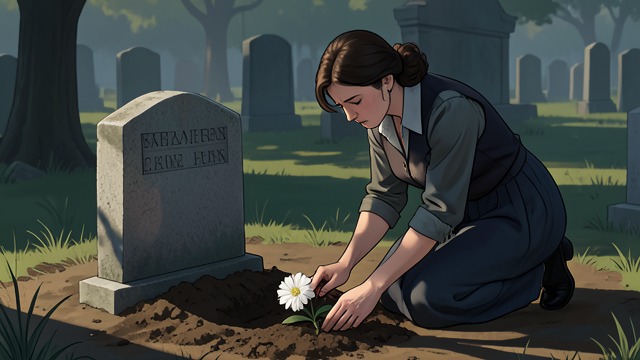
On May 23, Vittoria brings Giovanna to Enzo’s grave, tending his flowers and speaking of the love she says has remained alive since their first dance. The annual visit gives grief a repeated form: a date, a cemetery, fresh water, and words addressed to someone who cannot answer.
Love alongside injury
Vittoria describes Enzo as good and sensitive and holds Andrea responsible for exposing their affair to Enzo’s wife. She also admits the affair’s painful circumstances: Enzo was married, returned to Margherita, and died after their relationship ended. Her account makes fidelity look both like devotion and like a life organized around a wound.
The cemetery visit changes Giovanna’s sense of what love can mean. Vittoria’s grief offers an alternative to the controlled emotional conduct of Giovanna’s home, but her story does not settle the truth of what happened or free her from the past.
Kinship Beyond the Parents

Kinship Beyond the Parents
Reintroducing the family
Vittoria takes Giovanna to meet her paternal aunts, uncles, and cousins, calling the journey a meeting with her blood. The relatives welcome Giovanna warmly and call her Giannina, a name that gives her a sense of entering a different, more expansive version of herself.
Affection and allegiance
These visits show Vittoria in a gentler role than her quarrels with Andrea suggest. She is known and loved by the people around her, and Giovanna sees that her aunt’s place in the family cannot be reduced to the monster her parents have described.
Yet the welcome also serves Vittoria’s argument against Andrea. She wants Giovanna to notice what her father has withheld and to recognize that affection from relatives comes with a history of resentment. For Giovanna, belonging feels real, but it is inseparable from pressure to take sides.
The Unruly Guardian

The Unruly Guardian
Protection through force
At the parish sale, Vittoria’s concern for the younger generation becomes visible in her command of the gathering and her defense of Corrado. When Rosario Sargente laughs, she threatens him and pricks his leg with scissors, turning an act of protection into a frightening display of power.
A confidante’s burden
Giovanna confides that she saw Nella and Mariano in suspicious physical contact. Vittoria responds that Andrea will not care, a reaction that disappoints Giovanna and shows that her aunt’s priorities are not always the same as the girl’s need for reassurance. Vittoria is absorbed instead by Corrado’s conduct and by her own family’s disputes.
Her loyalty can be intimate and generous, but it comes with anger, control, and an appetite for confrontation. Giovanna begins to understand that being loved by Vittoria does not mean being safe from her demands or able to direct her choices.
A New Job and New Distance
A New Job and New Distance
A changed household role
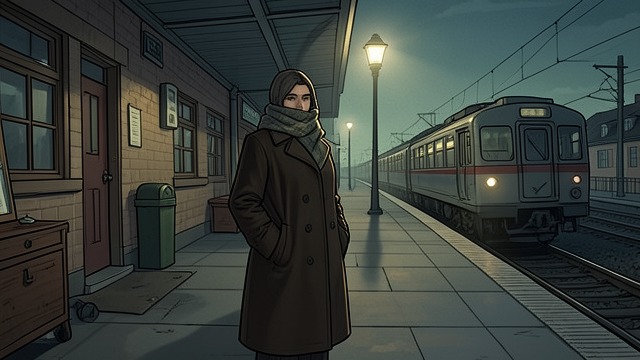
After the crisis in Andrea and Nella’s marriage, Vittoria disappears from Giovanna’s daily life for a time. Later, Andrea helps arrange a job for her caring for someone who needs constant attention, and the work may take her to Posillipo, away from Margherita and the children in Pascone.
Attachment without reconciliation
Vittoria suspects that Andrea has arranged the job to make her suffer by separating her from the people she loves. She is reluctant to leave, especially after Tonino has already gone to Venice, and her fear of loneliness emerges beneath her familiar bravado.
She does briefly come to speak with Andrea, but neither sibling describes the encounter as peace. Their shared family history still governs their suspicions, even when practical need forces renewed contact. Vittoria’s final position remains double: fiercely attached to her family, yet repeatedly left to experience change as another abandonment.
Before Giovanna’s adolescence, during the long estrangement from Andrea
Seventeen years after Vittoria first danced with Enzo, on May 23
During Giovanna’s first autumn of visiting Vittoria’s relatives
During the Christmas-season parish sale, after Giovanna brings Angela and Ida
After Andrea and Nella separate, as Vittoria prepares to leave Pascone
