The bracelet
The Lying Life of AdultsThe bracelet is a white-gold heirloom whose changing ownership gives material form to the family’s unresolved history. It is at once a grandmother’s possession, an object contested by her children, a gift returned by Costanza, and a source of conflict between Giovanna and her father. Its repeated appearance unsettles the distinction between what is inherited, what is given, and what can be claimed as one’s own.
Family History and Ownership
The bracelet’s history is disputed before Giovanna can understand it. Andrea tells her mother that he remembers it on his own mother’s wrist; when Vittoria wanted to sell it, he gave her money and took it. That account places the bracelet within a chain of competing claims: Vittoria had possessed it, Andrea asserted his right to it, and the paternal grandmother had worn it before either of those transfers.
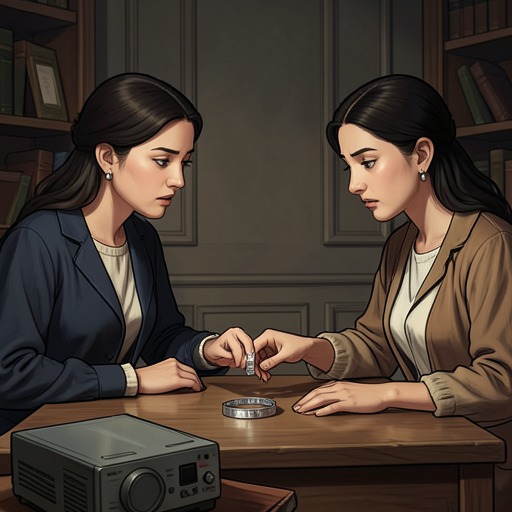
A family photograph makes that history visible. Looking closely at an image of Andrea and his mother, Giovanna uses a magnifying glass to enlarge the grandmother’s right wrist and recognizes the bracelet. Her mother had kept the photograph in a dictionary, where she had focused on Andrea as a young man without noticing the jewelry. Giovanna’s discovery connects the heirloom to a past her mother had not seen, and to the older family ties and resentments concealed beneath the adults’ accounts.
Costanza’s Return and Giovanna’s Claim
Costanza eventually returns the bracelet to Giovanna, saying that she had thought it was hers but now understood that it belonged to Giovanna. Her hands tremble as she helps Giovanna put it on. The gesture is intimate but not simple: the heirloom arrives through a woman who had held it as her own, while its supposed destination depends on a family history that remains contested.
Giovanna responds by trying to make possession into certainty. She tells herself the bracelet is hers because it belonged to her grandmother, because Vittoria and Andrea each took it against the other’s wishes, and because Costanza gave it back. The photograph adds another reason: Giovanna has recognized what her mother did not. She writes Vittoria a long letter setting out her arguments and waits for her aunt or Corrado to return. Rather than settling the dispute, the list reveals how many incompatible claims the object can carry at once.
The Bracelet as a Source of Conflict
The bracelet becomes especially charged when Giovanna notices her mother holding it and staring at it. By then Giovanna has stopped wearing it. When her mother asks about it, she says she does not like it; the object has come to bear pain beyond its appearance or practical use. The mother’s attention to the bracelet also recalls the photograph and the difficult history that Giovanna has uncovered.
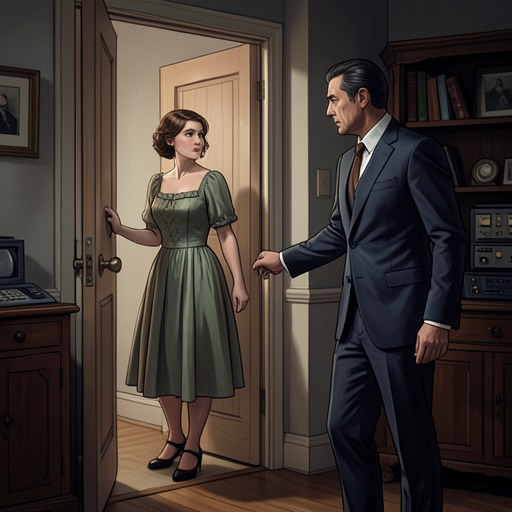
At a family meal, Giovanna deliberately displays the bracelet and asks her father whether Vittoria gave it to her. Later, when the disagreement sharpens, she insists that it belonged to her grandmother and that she cannot give it to strangers. Andrea orders her to take it off. She tears it from her wrist and throws it at a kitchen cabinet. The heirloom that had seemed to offer Giovanna a claim to family becomes the focus of an open confrontation with her father.
Transfer, Reversal, and Meaning
Giovanna later offers the bracelet back to Vittoria. She says that she had not wanted to give it up and had thought it was hers, but now believes it belongs to her aunt and that no one else should have it. Vittoria reacts with visible annoyance rather than accepting the gesture as reconciliation. The return does not resolve the family’s history; instead, it exposes how little agreement there is about what the bracelet means or who is entitled to it.
The object’s circulation continues. Much later, Giovanna sees it on Giuliana’s wrist, partly covered by the sleeve of her jacket. She recognizes it as the bracelet she returned to Vittoria and understands that her aunt has given it to her goddaughter. The transfer reverses Giovanna’s expectation that returning the heirloom would restore it to its rightful owner: Vittoria can pass it on again, and the bracelet gains a new place in the family through Giuliana.
Across these episodes, the bracelet is never merely decorative. Its physical presence prompts Giovanna to investigate the family photograph, to challenge her father’s account, and to reconsider her mother’s knowledge and pain. Because its ownership remains entangled with memory, betrayal, and affection, each transfer changes the relationships around it without producing a final settlement. The heirloom’s repeated movement makes family belonging visible as a contested inheritance rather than a stable possession.