Event 1
Frank Peterson Murder
[Frank Peterson Murder](entity:event-recall-event-ec598bbbf4df) is the killing of eleven-year-old [Frank Peterson](entity:character-recall-character-frank-peterson-ec1f6e4fd21e), a crime whose apparent clarity helps propel an investigation toward [Terry Maitland](entity:character-recall-character-terry-maitland-416bbab8ede5) before evidence from another state makes that conclusion impossible to sustain. The case is presented through the discovery of Frank’s body, forensic findings, witness identifications, and competing records of where the suspected killer was. Its significance lies in the widening gap between evidence that seems conclusive in isolation and the contradictions that emerge when the evidence is compared.
## Discovery and Initial Evidence
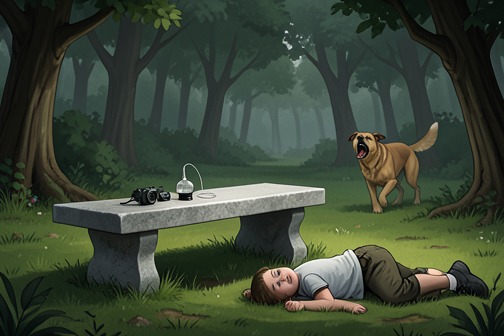
The discovery is recounted by Ritz, who followed his beagle, Dave, along a blood trail into a secluded clearing. He estimated that he found it at about 6:20 or 6:25 in the evening. A granite bench stood at the center of the clearing, and Frank’s body lay on the grass beside it. Ritz noticed that the scene showed both extensive bloodshed and deliberate abuse. Dave, who had been barking as they approached, began to howl. The encounter established the killing as exceptionally disturbing while leaving the assailant unidentified.
Ritz also reported seeing a handprint on a section of bark-stripped wood at the scene. That observation gave investigators a concrete trace to examine, and later forensic work documented fingerprints on the smoothed portion of the branch. The branch was about twenty-two inches long and three inches in diameter; the report noted that its bark had likely been stripped through rough handling. Its physical details linked the eyewitness account to recoverable evidence, while the prints made the object central to the effort to identify the perpetrator.
## Forensic Findings
The medical examiner concluded that Frank died from massive blood loss. An autopsy addendum described multiple bite injuries and concluded that the attack had been frenzied; the examination also recorded sexual assault. The report further noted that portions of Frank’s body were missing. The medical examiner considered both the possibility that the perpetrator had taken them as trophies and the possibility that they had been eaten, but treated those explanations as alternatives rather than established facts. She urged that the most sensational details be withheld from the press and any trial unless disclosure proved essential to securing a conviction, in part to spare Frank’s parents further distress.
Blood testing on the branch distinguished Frank’s blood from a second type found on the object. The victim’s blood was identified as O positive, including on the branch’s end, while traces of AB positive blood were also present. The report proposed that the second blood might belong to the perpetrator, who could have injured a hand while handling the branch, but described this as an inference rather than a confirmed identification. The forensic evidence therefore offered investigators a possible route to the assailant without, by itself, establishing who had left the trace.
## The Case Against Terry Maitland
Terry was publicly arrested for Frank’s murder at a baseball game. When Detective [Ralph Anderson](entity:character-recall-character-ralph-anderson-40c042967493) named the charge, Terry appeared not to understand what he was hearing and asked whether the officers were joking. A newspaper photographer captured the moment, and the resulting image appeared on the front page the next day. The arrest transformed an investigative suspicion into a public spectacle before the contradictions in Terry’s whereabouts had been resolved.
The case against Terry included witness identifications: when he heard that [June Morris](entity:character-recall-character-june-morris-f8378f101c89) and [Willow Rainwater](entity:character-recall-character-willow-rainwater-ce1460354700) had identified him, he reacted with disbelief, and Ralph said that multiple witnesses had selected him from photographic arrays without hesitation. Investigators also had evidence they regarded as strong enough to justify moving quickly. Ralph, however, had wanted more time to investigate Terry’s anticipated alibi before making the arrest. He believed they had the right man, but recognized that the ordinary course would have been to find the weaknesses in the alibi and test them before proceeding. The urgency of the case displaced that caution.
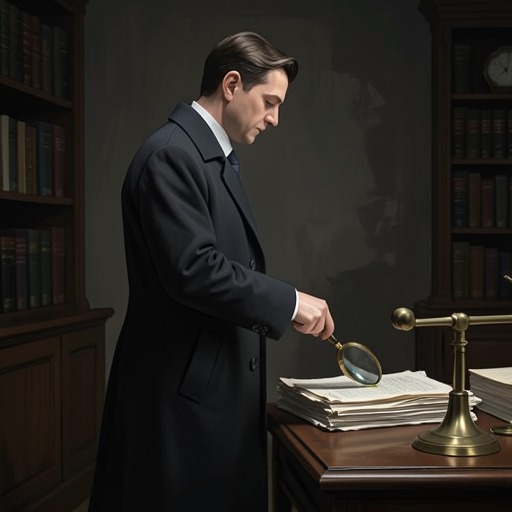
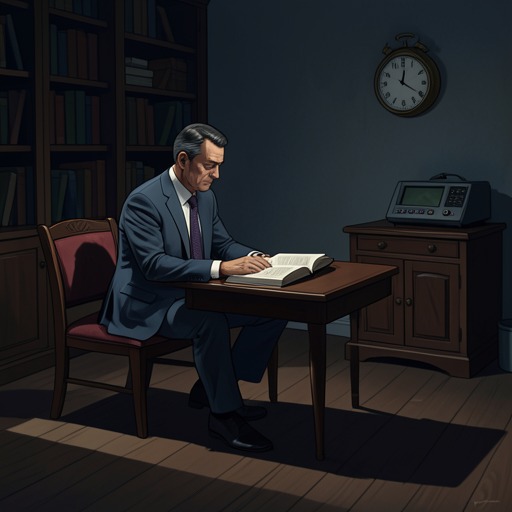
The investigation’s apparent certainty was strengthened by records that seemed to place a man resembling Terry in [Cap City](entity:location-recall-location-cap-city-6ff1f145c0a0). A preliminary review of station surveillance recorded a subject entering the [Vogel Transportation Center](entity:location-recall-location-vogel-transportation-fd798ba6648e) at 9:33 p.m. on [July 10](entity:time-recall-time-july-10-3e75b0e15f36), looking up at the clock, buying a paperback at the newsstand, and leaving through the south entrance at 9:39. The images showed a yellow shirt, blue jeans, and a horse-head belt buckle. The record established what the cameras captured, but not where the subject went after leaving the monitored area.
A [Channel 81](entity:organization-recall-organization-channel-81-18d2e6390fa5) recording later showed Terry at a [Tri-State Teachers of English](entity:organization-recall-organization-tri-state-teache-2adfaa66962c) meeting in Cap City, where he appeared as a guest at the conference. Ralph also reviewed the [Cap City Sheraton](entity:location-recall-location-cap-city-sheraton-f54e81c8038f)’s clear security footage: a man he believed to be Terry appeared in the hotel lobby, gift shop, fitness room, and autograph line. The images made the alibi harder to dismiss, but they did not settle how the apparent overlap with the [Flint City](entity:location-recall-location-flint-city-aa88b90b28ad) evidence could be explained. Ralph’s wife argued that if Terry had been in Flint City, a double must have been in Cap City; Ralph could only acknowledge that none of it made sense.
## Contradictions and Wider Connections
Evidence from the Howard sisters’ murders in Ohio brought a parallel case into the investigation. [Holly Gibney](entity:character-recall-character-holly-gibney-b39cdab3f007) pointed out that the man arrested for those killings had also been seen on surveillance in [Trotwood](entity:location-recall-location-trotwood-737b30490ae5), despite an alibi placing him elsewhere. He had worked as an orderly at the [Heisman Memory Unit](entity:location-recall-location-heisman-memory-unit-4859d19753de) and had been there during the same week that Terry visited his father. On Terry’s last visit, on [April 26](entity:time-recall-time-april-26-76f59a9ed43d), the two men had literally bumped into each other. The parallel presented a second apparent overlap between a suspected killer and Terry, making the possibility of mistaken identification more difficult to avoid.
Fingerprint comparisons further complicated the case. Investigators matched prints associated with [Merlin Cassidy](entity:character-recall-character-merlin-cassidy-23eaad1781ca) across the stolen van and his arrest intake, and matched Frank’s prints between medical-examiner evidence and the van. A print from the van also matched Terry’s Flint City police intake prints. But another van print closely resembled a print from [Heath Holmes](entity:character-recall-character-heath-holmes-a22f0facfb27)’s intake in Montgomery County. [Yunel Sablo](entity:character-recall-character-yunel-sablo-8f72b0e53ec0) judged the match sufficient to conclude that Holmes had been in the van at some point, while noting minor differences that might reflect degradation. The van thus connected several people to the same evidence and widened, rather than simplified, the question of who had used it.
The apparent Terry connection extended to the clothing found at the barn: after Terry’s death, Jack Hoskins visited the taped-off site and thought of it as part of the route the killer might have taken after changing out of bloody clothes. That association reflected the case investigators believed they had built, but did not resolve the growing conflict between the physical traces and the evidence placing similar figures in different locations. During a later meeting, Ralph acknowledged that the burned man he said he had seen beside Terry during the courthouse shooting was absent from all the footage investigators had checked. The failure of the cameras to record that figure echoed the case’s larger instability: images could strongly establish some appearances while leaving other reported ones unconfirmed.
## Reassessment and Significance
Terry’s death did not end the case’s consequences for the Peterson family or settle the accusation against him. [Howard Gold](entity:character-recall-character-howard-gold-87119fd79519) told Marcy that the evidence for Terry’s guilt existed but that too much evidence opposed it; he also invoked Terry’s dying declaration. Marcy feared that people would interpret that declaration as an attempt to conceal guilt from her. The exchange shows how public suspicion could persist even when those close to the case doubted that Terry had committed the crime.
Ralph later understood Terry as the event that had shattered the Peterson family’s life, while still resisting the implication that someone could have worn Terry’s face. The thought did not explain the crime; it exposed the gap between the damage the case had done and the explanation ordinary reasoning could offer. The later matches involving Heath Holmes, together with the parallel Ohio murders, further weakened the notion that the evidence pointed cleanly to one man. Frank Peterson Murder therefore drives the novel’s conflict between conviction and doubt: the case begins with a vivid, tangible scene, accumulates apparently decisive identifications and traces, and becomes less comprehensible as those records are brought together.
## Discovery and Initial Evidence
The discovery is recounted by Ritz, who followed his beagle, Dave, along a blood trail into a secluded clearing. He estimated that he found it at about 6:20 or 6:25 in the evening. A granite bench stood at the center of the clearing, and Frank’s body lay on the grass beside it. Ritz noticed that the scene showed both extensive bloodshed and deliberate abuse. Dave, who had been barking as they approached, began to howl. The encounter established the killing as exceptionally disturbing while leaving the assailant unidentified.
Ritz also reported seeing a handprint on a section of bark-stripped wood at the scene. That observation gave investigators a concrete trace to examine, and later forensic work documented fingerprints on the smoothed portion of the branch. The branch was about twenty-two inches long and three inches in diameter; the report noted that its bark had likely been stripped through rough handling. Its physical details linked the eyewitness account to recoverable evidence, while the prints made the object central to the effort to identify the perpetrator.
## Forensic Findings
The medical examiner concluded that Frank died from massive blood loss. An autopsy addendum described multiple bite injuries and characterized the attack as frenzied; it also documented sexual assault. The report recorded that portions of Frank’s body were missing. The examiner raised two possible explanations—that the perpetrator had taken them as trophies or had eaten them—but established neither as fact. She recommended withholding these details from the press and, unless necessary to secure a conviction, from any trial, mindful of the further distress disclosure could cause Frank’s parents.
## Reassessment and Significance
Terry’s death did not end the consequences of Frank’s murder or settle the accusation against him. Howard Gold told [Marcy Maitland](entity:character-recall-character-marcy-maitland-94a7409c8791) that evidence supported Terry’s guilt, but that too much stood against it; he also pointed to Terry’s dying declaration. Marcy worried that others would interpret the declaration as an attempt to hide guilt from her. The exchange shows how suspicion could endure even among people who doubted Terry had committed the crime.
## Forensic Findings
The medical examiner concluded that Frank Peterson died from massive blood loss. An autopsy addendum described multiple bite injuries and characterized the attack as frenzied; it also documented sexual assault. The report recorded that portions of Frank’s body were missing. The examiner raised two possible explanations—that the perpetrator had taken them as trophies or had eaten them—but established neither as fact. She recommended withholding these details from the press and, unless necessary to secure a conviction, from any trial, mindful of the further distress disclosure could cause Frank’s parents.
Blood testing on the branch distinguished Frank’s blood from a second type found on the object. Frank’s blood was identified as O positive, including on the branch’s end, while traces of AB positive blood were also present. The report proposed that the second blood might belong to the perpetrator, who could have injured a hand while handling the branch, but described this as an inference rather than a confirmed identification. The forensic evidence thus offered investigators a possible route to the assailant without, by itself, establishing who had left the trace.
## The Case Against Terry Maitland
Terry Maitland was publicly arrested for Frank Peterson’s murder at a baseball game. When Detective Ralph Anderson named the charge, Terry appeared not to understand what he was hearing and asked whether the officers were joking. A newspaper photographer captured the moment; the image appeared on the front page the next day, presenting Terry as both bewildered and, to viewers, potentially guilty. The arrest converted suspicion into public disgrace before the conflict in the evidence had been resolved.
Witness identifications strengthened the accusation. When Terry heard that June Morris and Willow Rainwater had identified him, he reacted with disbelief. Ralph said that multiple witnesses had selected Terry from photographic arrays without hesitation. Yet Ralph had wanted more time to investigate the alibi he expected Terry to offer. Although he believed they had the right man, he recognized that normal procedure would have been to examine the alibi’s weaknesses before making an arrest. The urgency surrounding the case displaced that caution.
Records from Cap City soon made the apparent certainty harder to maintain. A preliminary surveillance review at the Vogel Transportation Center placed a subject there on July 10: he entered at 9:33 p.m., looked up at the clock, bought a paperback at the newsstand, and left through the south entrance at 9:39. The cameras recorded a yellow shirt, blue jeans, and a horse-head belt buckle. They did not show where the subject went after leaving the monitored area, so the footage established an appearance at the station without explaining how it fitted the evidence against Terry.
A Channel 81 recording showed Terry at a Tri-State Teachers of English meeting in Cap City. Ralph also reviewed security footage from the Cap City Sheraton, where a man he believed was Terry appeared in the lobby, gift shop, fitness room, and autograph line. These images made the alibi increasingly difficult to dismiss, but they did not explain the apparent overlap with evidence placing a Terry-like figure in Flint City. Ralph’s wife proposed that if Terry had been in Flint City, a double must have been in Cap City. Ralph could only acknowledge that the evidence did not make sense.
## Contradictions and Wider Connections
Evidence from the murders of the Howard sisters in Ohio introduced a parallel case that unsettled the apparent logic of the accusation against Terry Maitland. Holly Gibney explained that the man arrested for those killings had claimed to be at his mother’s home, thirty miles away, and she corroborated his account; yet surveillance footage placed him in Trotwood, where the girls had been abducted. The man, Heath Holmes, worked as an orderly at the Heisman Memory Unit and had been there during the same week Terry visited his father. On Terry’s last visit, April 26, the two supposed killers had literally bumped into one another. The coincidence made the overlap more than an abstract alibi problem: it put both men in the same place, and each was associated with a separate crime of similar character.
## Reassessment and Aftermath
The evidence did not resolve into a single, uncomplicated identification. Fingerprint comparisons tied the stolen van to several people: prints associated with Merlin Cassidy matched between the van and his arrest intake, and Frank Peterson’s prints matched between medical-examiner evidence and the van. A print from that same van also matched Terry Maitland’s Flint City police intake. Another print closely resembled Heath Holmes’s intake print from Montgomery County; Yunel Sablo judged the comparison sufficient to conclude that Holmes had been in the van, while acknowledging minor differences that might have resulted from degradation. The shared vehicle evidence therefore connected the investigation’s central suspects without establishing a simple account of who committed the murder.
The case’s remaining uncertainty was plain in later conversations. Howard Gold told Marcy Maitland that evidence supported the accusation against Terry, but that too much evidence opposed it; he also cited Terry’s dying declaration. Marcy feared others would take the declaration as proof that Terry had concealed guilt from her. Gold, by contrast, privately wondered whether Terry had even known Marcy was present when he spoke. His uncertainty captures the distance between a public interpretation and what the surviving evidence could actually establish.
Ralph Anderson later reflected that the Peterson family had been well before Frank’s murder, which he compared to a drop of ink spreading through clear water. He saw Terry as the cause of the family’s devastation, but could not settle whether the person responsible had truly been Terry or someone wearing his face. The image of contamination gives the case a consequence beyond its disputed identification: one crime spreads through the lives of Frank’s family, while the investigation’s competing traces spread doubt through the official account of who killed him.
## Contradictions and Wider Connections
Evidence from the Howard sisters’ murders in Ohio introduced a parallel case that unsettled the apparent logic of the accusation against Terry Maitland. Holly Gibney explained that Heath Holmes, the man arrested for those killings, had claimed to be at his mother’s home, thirty miles away, and she corroborated his account; yet surveillance footage placed him in Trotwood, where the girls had been abducted. Holmes worked as an orderly at the Heisman Memory Unit and had been there during the same week Terry visited his father. On Terry’s last visit, April 26, the two men had literally bumped into each other. That encounter made the overlap more than an abstract alibi problem: it placed the men in the same location while each was associated with a separate crime of similar character.
## Reassessment and Aftermath
The evidence did not resolve into a single, uncomplicated identification. Fingerprint comparisons tied the stolen van to several people: prints associated with Merlin Cassidy matched between the van and his arrest intake, and Frank Peterson’s prints matched between medical-examiner evidence and the van. A print from that same van also matched Terry Maitland’s Flint City police intake. Another print closely resembled Heath Holmes’s intake print from Montgomery County; Yunel Sablo judged the comparison sufficient to conclude that Holmes had been in the van, while acknowledging minor differences that might have resulted from degradation. The shared vehicle evidence connected people and traces across the cases without establishing a simple account of who committed Frank’s murder.
## Discovery and Initial Evidence
Frank Peterson’s murder begins, for the reader, with a witness following a trail of blood. Ritz, walking his beagle, Dave, estimated that they reached a clearing at about 6:20 or 6:25 in the evening. A granite bench stood at its center; Frank’s body lay on the grass beside it. Ritz described the boy’s clothing as pulled down and a dead branch at the scene. Dave, who had been barking as they approached, began to howl. The clearing gave investigators a location and a witness account, but neither identified the killer.
Ritz also saw a handprint on the branch, where part of the bark had been stripped away. Later examination documented fingerprints on that smooth section. The branch was approximately twenty-two inches long and three inches in diameter, and the report suggested that rough handling had stripped its bark. This link between what Ritz remembered seeing and a trace that could be photographed and lifted made the branch a crucial physical exhibit. Its fingerprints appeared to promise a direct route from the scene to the person responsible, a promise the case’s later evidence would complicate.
## Forensic Findings
The medical examiner concluded that Frank Peterson died from exsanguination, or massive blood loss. Her autopsy addendum also described multiple bite injuries and sexual assault. She noted that portions of Frank’s body were missing and offered two possible explanations: the perpetrator might have taken them as trophies, or might have eaten them. Neither possibility was established as fact. The examiner urged investigators to keep these findings from the press and, unless disclosure became necessary to secure a conviction, from any trial, mindful of the additional distress they could cause Frank’s parents.
## Conflicting Traces and the Case’s Afterlife
Fingerprint comparisons linked the van used in Frank Peterson’s abduction to several people. Prints associated with Merlin Cassidy matched between the van and his arrest intake, while Frank’s prints matched between medical-examiner evidence and the van. A van print also matched Terry Maitland’s police intake prints. Another, degraded print closely resembled Heath Holmes’s intake print from Montgomery County; Yunel Sablo judged the comparison sufficient to conclude that Holmes had been in the van at some point. The evidence therefore connected the vehicle to Frank, Terry, Cassidy, and Holmes without, on its own, establishing who had committed the murder.
The accusation continued to shape how Terry’s death was understood. Howard Gold told Marcy Maitland that evidence supported Terry’s guilt, but that too much stood against it; he also cited Terry’s dying declaration. Marcy feared that people would interpret the declaration as an attempt to hide guilt from her. Gold privately wondered whether Terry had even known she was there. Their exchange shows how a disputed case could sustain incompatible readings even among people closest to its consequences.
Ralph Anderson later thought of Frank’s family as having been well before the murder, then devastated as if a drop of ink had spread through clear water. He blamed Terry—or whoever had worn Terry’s face—for that destruction, while recognizing that the identity behind the apparent evidence remained unexplained. The image joins the murder’s personal aftermath to the investigation’s central fracture: the harm to Frank’s family is certain, while the evidence assembled to name the killer becomes harder to reconcile as new connections emerge.
Event 2
Terry Maitland’s Arrest at the Baseball Game

[Terry Maitland’s Arrest at the Baseball Game](entity:event-recall-event-0e29e132f945) is the public turning point at which a heavily weighted but insufficiently tested accusation becomes a spectacle witnessed by Terry’s family, his players, and a crowd of nearly sixteen hundred. Detective [Ralph Anderson](entity:character-recall-character-ralph-anderson-40c042967493) chooses to have Terry arrested during a [Flint City Golden Dragons](entity:organization-recall-organization-flint-city-golde-094aa535f928) game, but refuses to make the arrest himself because Terry had coached Ralph’s son, Derek Anderson. The scene makes the cost of that choice immediate: Terry is taken from the field in handcuffs, while the circumstances that later undermine the case have yet to be properly examined.
## The Decision to Arrest
By the time officers reach the packed [Estelle Barga Park](entity:location-recall-location-estelle-barga-park-2a80af927f2f) lot, Ralph has already decided that Terry is the right man, though he wishes the investigation had gone further. He had told District Attorney [Bill Samuels](entity:character-recall-character-bill-samuels-593e2a14dfb1) that they lacked background and could expect Terry to claim an alibi. Ralph would have preferred to identify weaknesses in that alibi before bringing him in, but he and Samuels had chosen speed. Their concern was that the killer might strike again, possibly against another child; Ralph also carries an irrational, personal sense that he should have recognized the danger earlier.
The urgency does not erase Ralph’s misgivings. There are only three full-time detectives on the [Flint City](entity:location-recall-location-flint-city-aa88b90b28ad) force after budget cuts, and the staffing situation helps explain his presence in an operation he knows he should not personally join. Still, he regards the arrest at the game as his own decision, distinct from the shared decision to move quickly. He directs Troy Ramage and Tom Yates to make the arrest, read Terry his rights loudly, and bring him to the station, where Samuels is waiting. Ralph assigns Yates to ride with Terry and leaves himself in the front of the unmarked car.
Ralph’s reason for stepping aside is neither procedural detachment nor doubt about the accusation. He says that the man accused of attacking and killing [Frank Peterson](entity:character-recall-character-frank-peterson-ec1f6e4fd21e) had coached Derek for four years, in both Peewee and Little League, and had personally taught him how to hold a bat. Ralph does not trust himself to make the arrest. The choice acknowledges the intimacy behind his judgment even as he remains responsible for ordering a public arrest.
## The Arrest on the Field
The game is close, and Terry is thinking about whether the Golden Dragons will advance to the city championship and state competition or end their season with the customary backyard barbecue. He looks toward [Marcy Maitland](entity:character-recall-character-marcy-maitland-94a7409c8791) and their daughters, who are sitting behind the home-plate screen. Marcy’s smile falters when she sees Ramage and Yates walking down the third-base line. The umpire calls for the officers to leave the field, but they continue into the dugout, where Ramage takes out handcuffs.
The officers move directly to Terry. His question to Ramage reflects genuine confusion: he knows the officer from local youth football games but does not understand why he is there. Ramage, following Ralph’s instruction, announces to the crowd that he is arresting Terence Maitland for Frank Peterson’s murder. The words are deliberately audible across the field. The crowd responds with a rising murmur, and the game ceases to be the event around which everyone had gathered.
Terry initially cannot make sense of the accusation. He asks whether Ramage is joking, while a photographer from the Flint City Call captures his open-mouthed, bewildered expression. That photograph appears on the next day’s front page, where the shock on Terry’s face can be read as guilt as readily as disbelief. The scene thus makes an image part of the arrest itself: a moment of confusion is fixed and circulated before Terry can explain what has happened.
The arrest also reaches the people around Terry in distinct ways. Marcy and their daughters remain behind the chicken wire, staring at him; the girls are crying, and Marcy grips and shakes the barrier as she demands to know what the officers are doing and why they have chosen this place. Baibir Patel, a young player, leaves third base and begins to cry as he watches Terry. When Yates pulls Terry’s arms behind him and Ramage cuffs him, the officers read him his rights in front of the crowd. Terry says he understands, then tells Coach Frick to return to the game, attempting to preserve some order even as he is taken away.
## Public Shame and Its Aftermath
Terry understands that this is not simply an arrest: he has been handcuffed and read his rights in front of almost sixteen hundred people, including his wife and two daughters. He experiences it as a public shaming and recognizes that his life will not return to normal quickly. The game’s crowd, the family behind the barrier, and the next day’s photograph give the accusation a public form before its central contradictions have been resolved.
The consequences extend beyond the field. When Marcy later arrives at the Maitland home, she finds police vehicles, a [State Police](entity:organization-recall-organization-state-police-f1fda5cf27fd) mobile crime unit, troopers, and neighbors watching from their lawns. The arrest has already become visible community news, carried outward by cell phones. At Terry’s arraignment, cameras again record the crowd and the proceedings. After the shooting, footage shows Terry pushing Marcy out of the line of fire before collapsing in the street when the fatal shot strikes him. The arrest therefore begins a chain in which official action and public images repeatedly shape how the case is seen.
## The Decision Reconsidered
The arrest’s certainty is later challenged by the alibi that Ralph and Samuels had not checked before acting. A station report records the subject under investigation entering the [Vogel Transportation Center](entity:location-recall-location-vogel-transportation-fd798ba6648e) at 9:33 p.m. on [July 10](entity:time-recall-time-july-10-3e75b0e15f36), looking up at the clock, buying a paperback, and leaving through the south portal at 9:39. Separately, video of Harlan Coben’s talk at the [Cap City Sheraton](entity:location-recall-location-cap-city-sheraton-f54e81c8038f) shows Terry at the [Tri-State Teachers of English](entity:organization-recall-organization-tri-state-teache-2adfaa66962c) gathering. These materials do not make the arrest scene disappear; they expose what the decision had bypassed.
Ralph later reviews the facts that resist a simple conclusion. A man connected to the case had behaved as though unfamiliar with Flint City, while Terry had spent his life there. Teachers would place Terry with them at the relevant times, and his appearance on the lecture recording seems conspicuously visible. Even the fingerprints on the book strike Ralph as almost too perfect. He admits that he does not know whether Terry killed the boy. The arrest at the game thus stands both as the moment Ralph commits the case to a public accusation and as the beginning of his recognition that the evidence may have been arranged to make certainty feel complete.
Event 3
Terry Maitland’s Alibi Revealed
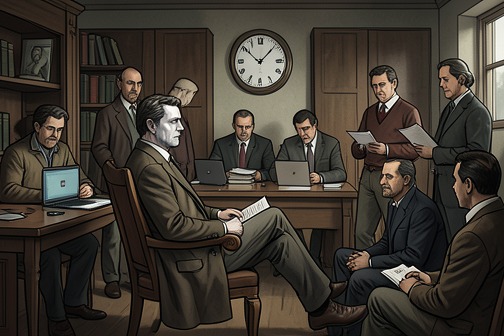
[Terry Maitland](entity:character-recall-character-terry-maitland-416bbab8ede5)’s alibi is revealed in the interrogation room, turning an apparently decisive murder case into a crisis of evidence and judgment. Terry says he attended an English teachers’ conference in [Cap City](entity:location-recall-location-cap-city-6ff1f145c0a0) when witnesses placed him in [Flint City](entity:location-recall-location-flint-city-aa88b90b28ad) with [Frank Peterson](entity:character-recall-character-frank-peterson-ec1f6e4fd21e); colleagues and a recorded speech seem to corroborate him. Rather than settling the case, the contradiction exposes how the police arrested him before checking a claim they should have anticipated, and leaves [Ralph Anderson](entity:character-recall-character-ralph-anderson-40c042967493) confronting evidence that resists a coherent explanation.
## The Account Given in Interrogation
Terry tells his lawyer, [Howie Gold](entity:character-recall-character-howie-gold-16e552ff9e41), and the investigators that he did not travel alone. He says he went with Everett Roundhill, Billy Quade, and Debbie Grant, all members of the [Flint City High School](entity:organization-recall-organization-flint-city-high-d4d59824b417) English Department. Terry’s own vehicle was being repaired, so, according to his account, they left the high school in Roundhill’s BMW at ten on Tuesday morning. The group was headed to a three-day conference organized by the [Tri-State Teachers of English](entity:organization-recall-organization-tri-state-teache-2adfaa66962c).
The conference ran from July 9 through July 11 at the [Cap City Sheraton](entity:location-recall-location-cap-city-sheraton-f54e81c8038f). Terry explains that he had not attended for five years, but came this time because the mystery writer Harlan Coben was the keynote speaker. He had arranged for other parents to cover his Little League practices on Tuesday and Wednesday, despite an important game approaching, and planned to resume coaching later in the week. The specific professional and family commitments make the trip more than a bare denial: Terry supplies a reason for attending, companions who can confirm the journey, and a schedule that places him away from Flint City.
Terry describes attending the banquet lunch, Coben’s speech, and an evening panel discussion. He says he and his colleagues stayed overnight; Roundhill and Grant each had a single room, while Terry shared a double room with Quade. The speech was scheduled for three in the afternoon, and Terry estimates that it lasted about forty-five minutes, followed by questions. His account thus establishes a public event, a named speaker, fellow attendees, and an approximate timetable that investigators can test.
## The Collision of Timelines
The alibi collides with an eyewitness account central to the accusation. Ralph remembers that Arlene Stanhope placed Terry at the same approximate hour, allegedly putting Frank and his bicycle into a dirty white van and leaving with the boy. Stanhope had said she heard the Town Hall clock strike three. Terry’s reported appearance at Coben’s speech and the alleged abduction are not merely different versions of an uncertain hour: they put him in Cap City and Flint City at the same time.
Ralph and District Attorney [Bill Samuels](entity:character-recall-character-bill-samuels-593e2a14dfb1) had not checked Terry’s movements before the arrest. Ralph had worried that the case needed more background and expected Terry to claim an alibi, but he and Samuels believed they had the right man and feared that preliminary questions might alert a dangerous suspect. Samuels had promised that the defense’s account could be disproved. Once Terry gives the details, that confidence is abruptly tested: the investigators have to investigate the very possibility their decision to arrest was supposed to overcome.
The immediate response is not confirmation but uncertainty. Ralph is blindsided by the account and recognizes that they should have checked Terry’s movements in advance. Samuels appears both suspicious and perplexed, while Gold points out that the contradiction undermines the arrest. The scene changes the case’s central question: the investigators are no longer dealing only with the weight of evidence against Terry, but with how that evidence can coexist with a potentially verifiable account placing him elsewhere.
## Corroboration and Its Limits
Ralph reports that Roundhill confirms the group’s journey. Roundhill says he picked up Terry, Quade, and Grant at the high school at ten on Tuesday morning and reached the Sheraton at about 11:45, in time for the banquet lunch and conference check-in. He recalls losing track of Terry for roughly an hour after lunch, though he thinks Quade was with him; the group was back together by three. That gap leaves part of the afternoon less firmly accounted for, but Roundhill’s account supports the journey and the conference schedule.
Quade also corroborates Terry’s presence. When Ralph speaks to him, Quade is stunned rather than angry. He says he and Terry went to a used bookstore called Second Edition after lunch, browsed there, and returned for Coben’s speech. Grant has not yet been reached because, according to her husband, she is out with friends and has turned off her phone. Ralph expects her to confirm the other accounts, but at this point her testimony remains anticipated, not obtained. The distinction matters: the alibi is supported by witnesses, but the available confirmations do not erase every interval in the timeline.
A separate account of station surveillance further illustrates why movements and timing matter to the investigation. A report says the subject entered the [Vogel Transportation Center](entity:location-recall-location-vogel-transportation-fd798ba6648e) at 9:33 p.m. on [July 10](entity:time-recall-time-july-10-3e75b0e15f36), crossed the concourse, and looked up at the clock; at 9:35 he bought a paperback at the newsstand, with the horse-head belt buckle visible in the footage. He left through the south portal at 9:39, after which a momentary shadow—not a clear image—was noted near a service alley. Those observations concern a later evening and do not by themselves verify Terry’s conference alibi. In the broader pattern of the case, however, surveillance produces both concrete details and consequential gaps: a face is visible for seconds, while the figure’s subsequent route remains uncertain.
## The Recorded Speech
The investigators later find a [Channel 81](entity:organization-recall-organization-channel-81-18d2e6390fa5) video titled “HARLAN COBEN SPEAKS TO TRI-STATE ENGLISH TEACHERS.” It opens with Josephine McDermott, the association’s president, welcoming attendees and introducing the keynote speaker. The recording gives Terry’s account a public, time-stamped setting to test: the conference is not just a story told by the accused and his colleagues but an event documented by a camera.
The recording’s significance lies in the possibility of checking whether Terry appears at the speech he says he attended. The evidence presented here establishes the video’s existence and its opening, rather than detailing the complete visual confirmation of Terry’s presence. Even so, the search for the footage marks a shift from accepting or dismissing his account on instinct to testing it against an independent record. The camera becomes part of the evidentiary chain, but it does not by itself explain the contradiction with the eyewitness claim in Flint City.
## From Arrest to Irreversible Consequence
The alibi emerges only after Terry has been arrested publicly. At the ball field, when Ralph’s colleague announces the arrest for Frank’s murder, Terry appears not to grasp what the declaration means. A newspaper photographer captures his startled expression; the next day, the photograph appears on the front page, making the arrest a public image before the investigators have resolved the conflict in his whereabouts.
The damage extends beyond the interrogation. When Marcy returns to the Maitland home, police vehicles, a [State Police](entity:organization-recall-organization-state-police-f1fda5cf27fd) mobile crime unit, and troopers are already outside; neighbors watch from their lawns, and she fears that mobile phones have spread the news. At the courthouse, cameras record Terry’s arraignment and the shooting. In the footage Ralph later reviews with Jeannie, Terry pushes Marcy away from the gunfire before collapsing after the fatal shot. The case’s evidentiary crisis therefore unfolds alongside public exposure and ends in a death that cannot be undone by a later correction.
Ralph’s response is marked by self-reproach. He had taken part in the arrest despite believing that more investigation would ordinarily be appropriate, and later admits that he made a serious mistake by failing to ask about Terry’s movements. When asked whether Terry killed Frank, Ralph weighs details that seem to implicate an impostor—such as a traveler using the wrong form of address and asking for directions in a city where Terry had lived all his life—against the conference witnesses, the speech, and the fingerprints on a book. He cannot decide whether Terry committed the crime. The alibi’s decisive significance is thus its refusal to function as a simple exoneration: it undermines the case, exposes investigative overconfidence, and leaves Ralph facing a contradiction that ordinary certainty cannot contain.
## Narrative and Thematic Significance
The account first enters the story as Terry’s explanation under pressure, then changes status as other people and records are brought into the inquiry. Roundhill and Quade’s recollections provide human corroboration; the conference timetable makes the claim testable; and Channel 81’s recording offers a public record. This progression gives the alibi the shape of an investigation within the larger investigation, moving from a suspect’s assertion toward independent checks without making every detail conclusive.
The conflict also turns on the difference between evidence that appears to be strong and evidence that has been adequately tested. Ralph and Samuels had treated the case as sufficiently complete to justify arrest, while Terry’s itinerary reveals a basic line of inquiry they left unexplored. Their fear that questioning him might compromise the investigation helped make the arrest seem prudent at the time; afterward, the same decision looks careless. The alibi consequently changes not only what the investigators know, but how they must assess the process by which they claimed to know it.
Finally, the story places recorded visibility beside unresolved identity. A camera can show a speaker at a conference; witnesses can identify a man in Flint City; a newspaper image can fix Terry’s startled face as the public face of an accusation. Yet the records and recollections do not immediately yield one consistent account of where he was. The alibi’s force comes from that collision: it challenges the prosecution’s certainty without supplying an easy answer, and makes the human costs of acting before verification part of the mystery itself.
Event 4
Terry Maitland’s Arrest
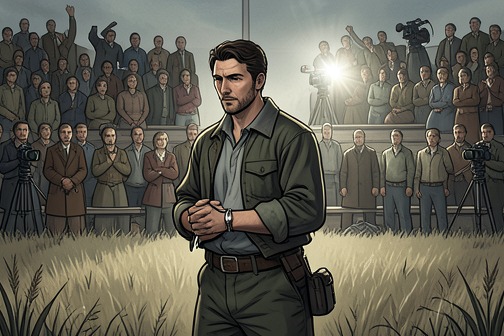
[Terry Maitland](entity:character-recall-character-terry-maitland-416bbab8ede5)’s arrest is the decisive opening act of the catastrophe that follows: an accusation made with apparent certainty, carried out before a crucial alibi has been checked, and witnessed by a crowd and news cameras. The arrest does not resolve the case. Instead, it makes suspicion public, devastates the Maitland family, and leaves [Ralph Anderson](entity:character-recall-character-ralph-anderson-40c042967493) convinced that his decision helped set off a chain of violence and misery.
## Causes and Background
Ralph joins the arrest despite recognizing that he should not be personally involved. The case feels different from his earlier arrests because it is personal, while staffing shortages leave the [Flint City](entity:location-recall-location-flint-city-aa88b90b28ad) police force with only three full-time detectives. Jack Hoskins is away on vacation, and [Betsy Riggins](entity:character-recall-character-betsy-riggins-ecbc292a6072) is assisting the [State Police](entity:organization-recall-organization-state-police-f1fda5cf27fd) with another part of the operation. Ralph’s sense that he has the right man is strong, but he still wants more investigation before making the arrest.
In a pre-arrest conference, Ralph tells [Bill Samuels](entity:character-recall-character-bill-samuels-593e2a14dfb1) that the team lacks background and that Terry will claim an alibi. Samuels insists they can disprove it. Ralph would ordinarily prefer to identify the gaps in the alibi before bringing Terry in, but he accepts that this is not an ordinary case. The urgency rests partly on fear that Terry could offend again, especially because he is often around children. Ralph later recognizes that this fear and his confidence in the accusation helped displace the caution he had wanted to exercise.
## The Arrest and Its Public Image
At the ballfield, Ralph directs the police vehicle toward the handicap spaces as the officers search for a place to park. The arrest is therefore conducted at a crowded public sporting event rather than privately. When the charge is announced, Terry appears unable to grasp what it means. He knows who [Frank Peterson](entity:character-recall-character-frank-peterson-ec1f6e4fd21e) was and what happened to him, yet can only respond with bewilderment and ask whether the officers are joking.
A sports photographer captures Terry at that moment. The resulting image, published on the front page of the Flint City Call the next day, shows him with his mouth open and eyes wide, his hair sticking out beneath his Golden Dragons cap. The photograph makes the arrest a public spectacle, and its appearance can be read as both bewilderment and apparent guilt. The image does not settle which interpretation is true; it gives the public a lasting visual record of an accusation before the evidence has been fully tested.
## The Alibi and the Reversal of Certainty
Terry’s alibi concerns his presence at a teachers’ meeting in [Cap City](entity:location-recall-location-cap-city-6ff1f145c0a0) on the night of the crime. Surveillance footage from the station shows a subject identified as Terry entering the [Vogel Transportation Center](entity:location-recall-location-vogel-transportation-fd798ba6648e) at 9:33 p.m. and crossing the concourse without luggage. At 9:35 he buys a paperback at the newsstand; the footage also shows the horse-head belt buckle associated with the suspect. He exits at 9:39, before the train he was said to be taking arrives. These details form part of a trail that complicates the arresting team’s account rather than cleanly resolving it.
The existence of public footage of Terry at the Harlan Coben talk becomes especially consequential. Ralph and the others had agreed not to ask questions about Terry’s movements before the arrest, fearing that an inquiry would alert a dangerous suspect. Given the evidence they believed they had, they had also considered such checks unnecessary. Once the contradictory information surfaces, Ralph understands that the team should have investigated Terry’s movements in advance. What had seemed prudent now looks careless to him, and his confidence gives way to the admission that he does not know whether Terry committed the murder.
## The Family Under Siege
The consequences reach the Maitland home almost immediately. When Marcy returns to [Barnum Court](entity:location-recall-location-barnum-court-b7619c045355), she finds police vehicles, a State Police mobile crime unit, and troopers outside the house. Neighbors watch from their lawns, and Marcy assumes that mobile phones have already spread the news. The police presence turns the home into a visible extension of the accusation, while the neighbors’ attention makes the family’s private crisis public.
In the hours after the arrest, Marcy takes Grace into bed when the younger girl asks to join her; Sarah declines but is told she can come later. Marcy imagines Terry alone in jail and draws temporary comfort from her belief that [Howie Gold](entity:character-recall-character-howie-gold-16e552ff9e41), his defense lawyer, can use the strength of Terry’s alibi to clear him. That hope sits beside her anger at Ralph, whom she now regards as a betrayer. She considers suing the police department and Ralph personally, and imagines the humiliation she wants him to suffer. Her alternating reliance on the alibi and fantasies of retaliation show how arrest has transformed trust into grievance without giving her any certainty about what comes next.
The family’s isolation continues into the following morning. Sarah and Grace barely eat and leave their phones and tablets behind after brief checks; Marcy sees news vans and a police cruiser outside and closes the curtains. Gold arranges a visit with Terry, but because he is held under maximum security restrictions, the family will have to speak with him through glass. Even before any court judgment, the arrest has changed the family’s home, communications, and contact with Terry.
## Consequences and Significance
At the county jail, Terry spends his first night among other prisoners and reflects on the shame of being accused. He wonders whether someone capable of the crime would feel fear, cunning, or nothing at all, and realizes he cannot know what such a person would think. His bewilderment is not merely public: confinement makes the accusation press upon his own sense of identity, although he does not accept it as true.
The arrest also becomes the first domino in Ralph’s account of the later events. After Terry is dead, Ralph’s wife tries to imagine a return to active duty and ordinary life, but Ralph cannot treat the case as over. He believes that arresting Terry at the ballfield began the chain of violence and misery, and that he played a part in Terry’s death regardless of whether Terry was innocent or guilty. The event’s significance thus lies not only in the error exposed by the alibi, but in the irreversibility of acting publicly before uncertainty has been resolved: the accusation acquires a life of its own, while its consequences remain with the family and the investigator who set it in motion.
Event 5
Channel 81 Speech Footage Revealed
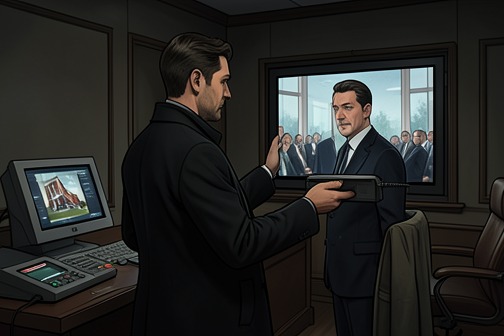
[Channel 81 Speech Footage Revealed](entity:event-recall-event-channel-81-bba3a710fb48) is the turning point at which a public-access recording makes [Terry Maitland](entity:character-recall-character-terry-maitland-416bbab8ede5)’s impossible alibi visible. [Alec Pelley](entity:character-recall-character-alec-pelley-74702c4c2094) sends the link to the video, and [Ralph Anderson](entity:character-recall-character-ralph-anderson-40c042967493) and [Bill Samuels](entity:character-recall-character-bill-samuels-593e2a14dfb1) watch as the recording shows a man who appears to be Terry at a [Cap City](entity:location-recall-location-cap-city-6ff1f145c0a0) conference during the period investigators had tied him to [Frank Peterson’s abduction and murder](entity:action-recall-action-frank-peterson-s-abduc-c57353ebfd03). The footage does not resolve how the conflicting accounts can both be true; it makes the contradiction impossible to dismiss.
## The Link and the Search
Alec Pelley tells [Marcy Maitland](entity:character-recall-character-marcy-maitland-94a7409c8791) that he has found something significant in Cap City and sends her a link. She watches it with [Sarah Maitland](entity:character-recall-character-sarah-maitland-cbc9e0821966) and [Grace Maitland](entity:character-recall-character-grace-maitland-0e6837a9b09b) on Sarah’s mini-tablet, since the police have taken the family’s computers. Their initial reaction is joyful: the material seems to give them a reason to hope that the case against Terry can be challenged. Pelley’s discovery therefore reaches the family before it reaches the detectives, briefly changing the atmosphere of a home under police scrutiny and media attention.
Pelley also sends the link to the investigators. His message asks whether they are sure they want to pursue the case against T. Maitland and urges them to check the recording first. Ralph opens it on his iPad with Samuels present. The site is [Channel 81](entity:organization-recall-organization-channel-81-18d2e6390fa5)’s public-access archive, a collection that includes council meetings, local events, and community programming. The evidence is not a private recording or a recollection: it is a publicly available video that can be replayed and examined by the people building the case.
## What the Recording Shows
The video documents a meeting of the [Tri-State Teachers of English](entity:organization-recall-organization-tri-state-teache-2adfaa66962c) at the [Cap City Sheraton](entity:location-recall-location-cap-city-sheraton-f54e81c8038f). Its opening shows the association’s president introducing the guest speaker, Harlan Coben. Samuels directs Ralph forward through the lengthy introduction to the point at which Coben is welcomed onto the stage. The recording uses two cameras, alternating between the speaker and the audience; audience shots repeatedly place a man resembling Terry among those attending.
The decisive moment comes during the question-and-answer portion. The camera gives a close view of the questioner, who is Terry Maitland, standing to ask Coben whether he knows who committed a crime when he begins writing, or whether the answer can sometimes surprise him. The recording thus supplies more than a brief image of a lookalike in a crowd: it shows the man’s face clearly and captures him speaking from the conference audience. Ralph pauses and studies the image. The possibility that Terry had a double, previously entertained by [Jeannie Anderson](entity:character-recall-character-jeannie-anderson-f2fa14383bf4), no longer offers an easy way to explain away what they are seeing.
## The Evidence in Conflict
The video collides with the case’s existing timeline and physical evidence. Investigators had treated Terry as the man implicated in [Frank Peterson](entity:character-recall-character-frank-peterson-ec1f6e4fd21e)’s abduction and death. They cited fingerprints on the white van, the boy’s bicycle, a toolbox, a Subaru, and the branch recovered in the case. The strength of those claims had made the arrest appear straightforward, although Ralph had earlier worried that the investigation lacked background and that Terry would claim an alibi. At the same time, a witness identification was not exact certainty: when Detective Anderson showed [June Morris](entity:character-recall-character-june-morris-f8378f101c89) six photographs of people who looked somewhat like Coach Terry, she selected photograph four.
The conference footage makes that uncertainty consequential. Ralph recognizes that the apparent Terry is in the audience at the Sheraton at around the time that Arlene Stanhope said she saw Terry putting Frank’s bicycle into the stolen van. Her account placed the sighting at three o’clock, which Ralph notices is close to the conference timing. The recording therefore does not merely add a favorable detail for the defense; it puts a documented public appearance in direct tension with a witness account and the prosecution’s reconstruction.
That contradiction has a wider context. Surveillance records had independently placed a man identified as the subject under investigation at the [Vogel Transportation Center](entity:location-recall-location-vogel-transportation-fd798ba6648e) on [July 10](entity:time-recall-time-july-10-3e75b0e15f36): he entered at 9:33 p.m., wore a yellow shirt and blue jeans, and looked toward the station clock. The station footage and the Sheraton recording belong to different parts of the investigation, but together they sharpen the central impossibility: evidence appears to put Terry in places that cannot be reconciled through the ordinary timeline the case assumes.
## From Private Discovery to Public Consequence
The video reaches the Maitland family as a sudden reprieve. Marcy, Sarah, and Grace laugh, cheer, and exchange high fives while watching it. Their response does not mean the case has been resolved; it marks the first visible reversal in a situation that had exposed them to searches, neighbors’ scrutiny, and press attention. The recording offers something the family had been denied: a concrete reason to question whether Terry could have committed the crime as alleged.
The footage later becomes part of the broader media record surrounding the case. At the courthouse arraignment and shooting, television crews film the crowd and the fatal attack; afterward, Ralph and Jeannie Anderson review recordings from the stations, including Channel 81. That later use underlines the double role of cameras in the story. A camera can make a man publicly legible as a suspect, as the photograph taken during Terry’s arrest did, but the archived conference recording can also preserve evidence that challenges that public judgment.
## Significance for the Case
The recording does not itself explain the apparent double presence, establish how the conflicting evidence was produced, or immediately erase the consequences of Terry’s arrest. Its force is narrower and more disruptive: it confirms that the case cannot be understood by treating the prosecution’s timeline as settled. The investigators now have to confront a visual record that appears to show Terry at the conference while the other evidence places him in the crime’s orbit.
That reversal also complicates the official account of why the case proceeded. At the later public review, Samuels acknowledges that authorities did not possess all the relevant facts on the day Terry was arrested or arraigned, and explains that mixed DNA samples from [Figgis Park](entity:location-recall-location-figgis-park-b2334810bce1) had seemed to match Terry. The Channel 81 footage is part of the evidence that makes those earlier judgments newly questionable. As a public recording, it carries the authority of a preserved event; as a piece of the mystery, it deepens rather than settles the question of how one person could seem to occupy incompatible circumstances.
Event 6
Fingerprints Found on the Cap City History Book
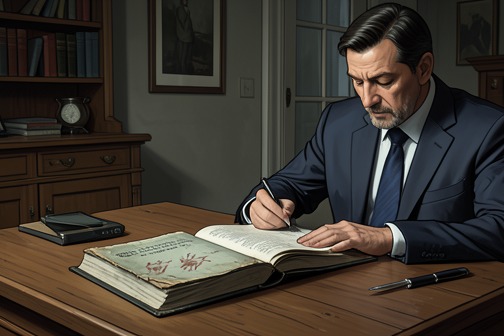
[Fingerprints Found on the Cap City History Book](entity:event-recall-event-476756729b16) becomes a crucial piece of physical evidence in the case against [Terry Maitland](entity:character-recall-character-terry-maitland-416bbab8ede5): a book in [Cap City](entity:location-recall-location-cap-city-6ff1f145c0a0) bears prints that [Ralph Anderson](entity:character-recall-character-ralph-anderson-40c042967493) identifies as Terry’s, corroborating footage that places a man resembling him there while [Frank Peterson](entity:character-recall-character-frank-peterson-ec1f6e4fd21e) was murdered in [Flint City](entity:location-recall-location-flint-city-aa88b90b28ad). Rather than settle the investigation, the discovery sharpens its central contradiction: the evidence against Terry and the evidence placing him elsewhere appear to point in opposite directions.
## From a digital lead to a physical object
[Alec Pelley](entity:character-recall-character-alec-pelley-74702c4c2094) sends a link to Ralph that leads him to [Channel 81](entity:organization-recall-organization-channel-81-18d2e6390fa5)’s online archive and a recording of Harlan Coben speaking to the [Tri-State Teachers of English](entity:organization-recall-organization-tri-state-teache-2adfaa66962c). The recording appears to place Terry at the [Cap City Sheraton](entity:location-recall-location-cap-city-sheraton-f54e81c8038f) during the conference, so Ralph follows up on the hotel’s records and security footage. The footage shows a man Ralph believes to be Terry in several locations, including the ballroom autograph line and the fitness room. Those images give the alibi a visual basis, but the book offers a different kind of trace: a physical object that a person could have handled and left behind.
## The book and the reported encounter
Ralph learns that a man matching Terry’s appearance took a book down from a rack, remarked that its cover photograph had been taken in [Canning Township](entity:location-recall-location-canning-township-040a8fdd6a78), and returned it after seeing the price. The book is a shrink-wrapped copy of [A Pictorial History of Flint County, Douree County, and Canning Township](entity:object-recall-object-a-pictorial-history-of-414616ab5f1d), with a funeral procession pictured on its cover. The clerk recalls the encounter, including the man’s decision not to buy the book. Ralph carefully takes the volume down and asks whether the person in the image handled it; the clerk confirms that he did. At this point, the book is not yet proof of identity, but the reported handling gives Ralph a reason to examine it.
## Prints identified as Terry’s
Ralph protects the book by holding it at its sides and later placing it in a plastic bag. After dusting the shrink-wrap for fingerprints, he finds one clear thumbprint on the front near the spine and four more usable prints on the back. Their positions fit the way someone might hold a heavy book, with a thumb in front and fingers spread behind it. Ralph compares the impressions with a photocopy of Terry’s fingerprint card and tells [Bill Samuels](entity:character-recall-character-bill-samuels-593e2a14dfb1) and [Yunel Sablo](entity:character-recall-character-yunel-sablo-8f72b0e53ec0) that the prints belong to Terry. He says a computer comparison will confirm the identification, but maintains that his own experience is sufficient to recognize the match. The discovery therefore rests both on the recovered prints and on Ralph’s identification of them; his statement anticipates, rather than reports, the further confirmation he says a computer will provide.
## What the evidence does—and does not—resolve
The fingerprints reinforce the account that Terry was in Cap City, but they do not explain how that presence relates to the evidence tying him to Frank Peterson’s murder in Flint City. The contrast is especially stark because the case already contains competing traces: conference video shows a man Ralph recognizes as Terry in Cap City, while investigators have other evidence they attribute to Terry in the Peterson case. Earlier, Ralph had voiced concern that the arrest was proceeding before the alibi had been fully investigated, even as he believed the case pointed to the right man. The book’s fingerprints make the unresolved alibi harder to dismiss without making the contradiction intelligible.
The discovery also depends on several kinds of records, none of them interchangeable. The clerk’s memory supplies an account of handling; surveillance footage supplies images of a man’s movements; the prints supply a physical impression; and Ralph supplies the comparison and its interpretation. Each contributes a different claim about presence and identity. The book is consequently more than a clue that supports an alibi: it becomes a point at which the investigation’s confidence in familiar forms of evidence meets an apparent impossibility that those forms, by themselves, cannot explain.
Event 7
Merl Cassidy’s apprehension
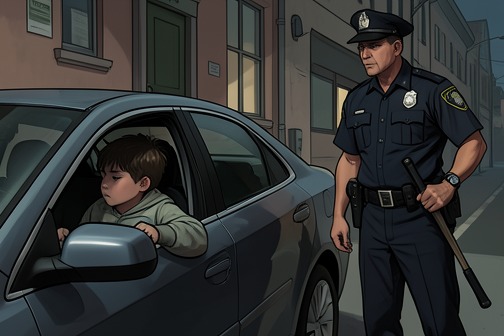
[Merl Cassidy’s apprehension](entity:event-recall-event-8629880cc167) in [El Paso](entity:location-recall-location-el-paso-fd3f872e3994) ends a months-long flight and supplies investigators with a concrete answer about who stole the van used in the case. The encounter is small beside the murder investigation that surrounds it: a police officer finds a tired twelve-year-old in a stolen Buick, and routine processing sends his fingerprints into a national system. Yet the episode matters because its ordinary procedures resolve one uncertainty even as the larger case exposes the cost of investigators’ failure to test another.
## The Stop in El Paso
Merl has pulled into a [Walmart](entity:organization-recall-organization-walmart-20ad3d884f4e) Supercenter parking lot to sleep in a Buick that is nearly out of gas; he is also nearly out of money. A police officer taps on the car window with a nightstick and gestures for him to roll it down. When the officer notices that the Buick carries an Oklahoma plate, Merl has no answer. He is told to get out and keep his hands visible, then asked his name. The exchange ends his immediate freedom of movement without turning the scene into a dramatic pursuit: the car, the plate, and Merl’s inability to explain them are enough to prompt the stop.
The apprehension follows a longer period on the road. Merl reflects that he has been away from home since late April and might have been caught many times before, but was not. By the time the officer stops him, his flight has left him with little money and no clear destination. The arrest therefore ends a journey that had continued through evasion rather than any stable plan to reach a particular place.
## Routine Processing and Identification
At the police station on Harrison Avenue, Merl is photographed, deloused, and fingerprinted while authorities wait for someone from social services to arrive. His fingerprints are sent out over the wire as a routine matter. The scene establishes both that he is twelve and that his case is being handled as that of a child requiring social-services follow-up, rather than as a simple adult vehicle-theft arrest.
The procedural details acquire significance later, when investigators learn that the boy they have in custody stole four vehicles. The van was the first: he drove it as far as Ohio, abandoned it with the ignition key left inside, and then changed vehicles. He eventually made it to El Paso in the stolen Buick before the officer found him sleeping in the Walmart lot. These facts confirm that the van’s route and abandonment belonged to a chain of thefts by Merl, rather than resolving every question about how it reached the location where investigators found it.
## What the Arrest Resolves—and What It Does Not
News of the arrest reaches [Ralph Anderson](entity:character-recall-character-ralph-anderson-40c042967493) through [Bill Samuels](entity:character-recall-character-bill-samuels-593e2a14dfb1), who presents it as a useful confirmation: the van was stolen by a twelve-year-old and left with its key, just as one of the investigators’ theories had proposed. For Samuels, that agreement with the theory is a point of satisfaction. For Ralph, the finding closes a loose thread but leaves another one unresolved. He still asks how the vehicle got down to the place where it was discovered, and Samuels concedes that they do not know.
The episode’s clean procedural result sits in deliberate contrast with the investigation of [Terry Maitland](entity:character-recall-character-terry-maitland-416bbab8ede5). Before the arrest, Ralph and Samuels had accepted the weight of the evidence and feared that further inquiries might alert a dangerous suspect; Ralph later recognizes that this choice meant they had not checked Maitland’s movements in advance. Once the alibi emerges, he is blindsided. The account of the stolen van can verify one piece of the investigators’ reconstruction, but it cannot repair the omission at the center of their case.
## The Arrest in the Novel’s Investigation
The arrest is thus both an answer and a limit. It identifies Merl as the twelve-year-old who stole the first vehicle in the sequence, and it supports the specific detail that the van was left with its ignition key. But the discovery does not supply the missing explanation for how the van reached its eventual location, nor does it settle the questions raised by Maitland’s apparently incompatible movements and the evidence against him.
That distinction gives the episode its broader investigative force. Routine police work makes Merl’s identity legible through a stop, a plate, and fingerprints, while the main investigation’s confidence has already outrun its checks. The arrest narrows one part of the case without making the whole story simple: a loose thread is tied off, but the larger knot remains.
Event 8
Fred Peterson’s Failed Hanging Attempt and Rescue
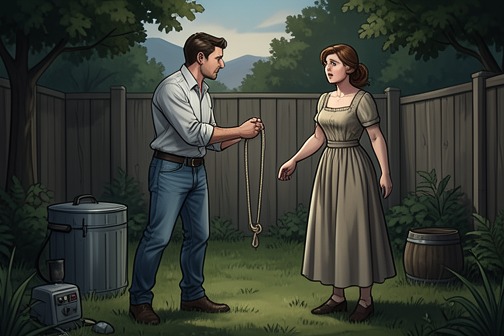
[Fred Peterson](entity:character-recall-character-fred-peterson-92d02f009df5)’s failed hanging attempt and rescue mark a further catastrophe in the Peterson family’s aftermath: Fred tries to die before the funeral, but his neighbor, Mrs Gibson, intervenes and keeps him alive. The rescue does not restore him to consciousness or safety; the doctors later tell [Ralph Anderson](entity:character-recall-character-ralph-anderson-40c042967493) that Fred has minimal brain function and very little chance of coming back.
## Causes and Circumstances
On the night before the funeral, Fred goes into his backyard and prepares to hang himself. He has decided that the deaths of Frank, Arlene, and Ollie have closed the Peterson family’s story, and he hopes they have not gone far and that he might still catch up with them. The immediate pressure is also the next day’s funeral schedule: the family is to be buried at Donelli Brothers in the morning, while the man Fred believes responsible for their deaths is to be buried there in the afternoon. Fred feels unable to face both funerals.
The attempt takes place against the novel’s unresolved conflict over Frank’s murder. Ralph Anderson has rejected a supernatural explanation and concluded that, improbable as it may be, [Terry Maitland](entity:character-recall-character-terry-maitland-416bbab8ede5) was Frank’s killer; Terry is now dead. Fred’s decision to regard the family’s losses as a completed equation therefore comes while the case appears settled in a way that offers him no comfort. His plan is not presented as a response to one isolated incident, but as the consequence of bereavement and the unbearable prospect of the coming funeral.
## The Attempt and the Rescue
Fred uses a footstool in the backyard and ties his rope to an old hackberry branch. When he kicks the stool away, the branch breaks instead of supporting him. A neighbor, Mrs Gibson, hears the disturbance and hurries into the yard, initially believing that Fred has shot himself. She sees the rope and the broken branch, drops her cane, and crosses the space between the backyards to reach him.
Mrs Gibson works to loosen the rope and then begins mouth-to-mouth resuscitation. Her actions draw directly on her experience as a Home Helper: after retiring from work as a bank teller, she had taken the training required for that role, including resuscitation. When Mr Jagger arrives, she asks him to call 911 and to take over if she passes out. She continues breathing for Fred until he takes several breaths on his own, then begins chest compressions when his breathing stops again. The ambulance is approaching as the scene ends.
## Outcome and Aftermath
Fred is brought to medical care, but being pulled through the immediate crisis does not mean that he recovers. A few hours later, [Betsy Riggins](entity:character-recall-character-betsy-riggins-ecbc292a6072) sends a colleague to tell Ralph that Fred tried to hang himself in his backyard and that Mrs Gibson’s intervention saved him. The doctors’ assessment is grave: Fred has minimal brain function, and his chances of ever coming back are about one in a hundred.
The news reaches Ralph while he is on leave. It affects him so sharply that he turns away, fearing he will vomit, before answering the colleague who has brought the update. The failed attempt thus extends the Peterson tragedy beyond the family deaths themselves: Fred survives the immediate attempt, but remains in a near-unresponsive state, while the news forces Ralph to confront another devastating consequence of the case.
## Narrative Significance
The episode turns the idea of rescue into an unresolved outcome. Mrs Gibson’s practical skill and persistence interrupt Fred’s attempt, but the report of his minimal brain function denies the event a simple recovery or consolation. Her intervention is concrete and procedural—calling for emergency help, giving breaths, and beginning compressions—while its consequences remain uncertain.
The timing intensifies the scene’s place in the larger story. Fred acts on the night before a double funeral, in a case where Ralph believes the responsible man has already been identified and is himself dead. Fred’s attempt exposes the human cost of that apparent closure without settling the deeper question of whether the case has truly been understood. Its ending shifts from the backyard rescue to Ralph’s reaction to the doctors’ prognosis, carrying the Peterson family’s grief into the investigation’s continuing aftermath.
Event 9
Douglas Elfman Discovers the Abandoned Clothes
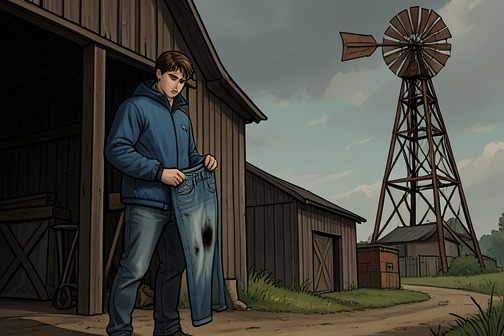
[Douglas Elfman Discovers the Abandoned Clothes](entity:event-recall-event-1fac8a1de750) is the moment an apparently ordinary ranch chore turns discarded clothing into a lead in the investigation of [Terry Maitland](entity:character-recall-character-terry-maitland-416bbab8ede5). The clothes are marked not with identifiable blood but with an unexplained black substance; a silver horse-head buckle connects them to a news report about Terry and sends the evidence to police.
## Discovery on the Ranch
At four o’clock in the afternoon, seventeen-year-old Dougie Elfman drove an old Dodge pickup along a ranch road fifteen miles south of [Flint City](entity:location-recall-location-flint-city-aa88b90b28ad). He passed a broken windmill, a deserted ranchhouse, a cemetery known locally as the Cowboy Graveyard, and a boulder painted with a fading political slogan. Galvanized milk cans clanged in the truck bed: he was there to retrieve them, not to investigate a crime scene.
Dougie kept checking his phone as he drove and felt relieved when he reached Highway 79 and looked back at the empty road. He called his father, Clark Elfman, to report that he had found the cans. The everyday purpose of the trip frames what comes next as an accidental discovery rather than a planned search.
## The Clothing and Its Stain
In the barn, Dougie had found new-looking blue jeans, Jockey underwear, and expensive sneakers lying in hay. The items appeared valuable, but each was stained, as was the hay beneath them. When Clark asked whether the substance was blood, Dougie said it was not: whatever it was had turned the hay black.
The blackened hay and stained garments make the evidence unsettling without explaining it. Dougie also noticed a shiny silver belt buckle shaped like a horse’s head. That specific object transformed a bundle of abandoned clothes into something he recognized from the public account of the case.
## Recognition and Police Response
Dougie told Clark that the news had shown Terry Maitland wearing a similar buckle when he was seen at the train station in [Dubrow](entity:location-recall-location-dubrow-a1dd08cb0d71), after the murder of a young boy. Clark did not initially understand why the buckle mattered, but Dougie urged him to get the police. His recognition turned a local find into a report that could be checked against the investigation’s existing evidence.
Later, Yune Sablo recounted that Dougie had found the clothing late the previous afternoon and recognized the buckle from a news report. Dougie called his father, who contacted the [State Police](entity:organization-recall-organization-state-police-f1fda5cf27fd); Yune arrived with the crime van at about quarter to six. The jeans alone offered little identification, but Yune recognized the buckle and showed [Ralph Anderson](entity:character-recall-character-ralph-anderson-40c042967493) a close-up photograph. Ralph was certain it matched the buckle visible in security footage from the [Vogel Transportation Center](entity:location-recall-location-vogel-transportation-fd798ba6648e) in Dubrow.
## Place in the Investigation
The buckle supplied a material link between the discarded clothing and the earlier transportation-center footage. Ralph placed it into a developing route reconstruction: after abandoning the van behind Shorty’s Pub, the suspect took a Subaru, left it near the [Iron Bridge](entity:location-recall-location-iron-bridge-0ba36db8ffe2), and changed into fresh clothes. Dougie’s discovery therefore helped investigators connect the clothes to a sequence of vehicle changes and a suspected escape route.
The episode’s force rests on the difference between the objects’ ordinary appearance and their evidentiary weight. Jeans, underwear, sneakers, hay, and a belt are recognizable things from daily life; once the horse-head buckle is matched to the footage, they become part of the case’s physical chain. The unexplained black staining remains a distinct clue, while the buckle gives police a concrete basis for linking the abandoned garments to Terry’s movements.
Event 10
Terry Maitland and Heath Holmes Meet at the Haysom Memory Care Center
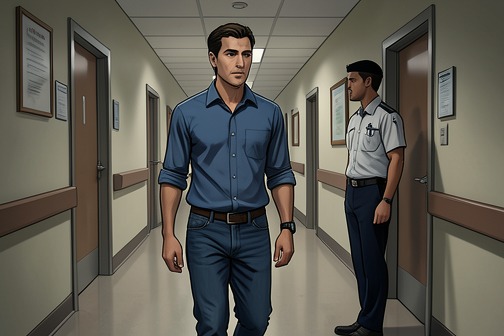
[Terry Maitland and Heath Holmes Meet at the Haysom Memory Care Center](entity:event-recall-event-52c7dd87cca5) in a pair of incidents that turn an ordinary mishap into a possible evidentiary link between two men whose cases are otherwise difficult to reconcile. Terry’s account of a minor scrape is later echoed by a report that Heath slipped in the same wing; the resemblance gives the investigators a lead, not a solution.
## Terry’s Last Visit
On the final day of the Maitlands’ trip, Terry visited his father in the Memory Unit. As he left the room, he collided with an orderly in a corridor where a janitor had recently mopped the floor. The orderly slipped while trying to steady himself by grabbing Terry’s arm, and Terry helped him up before continuing down the hall. Only later did Terry notice that his wrist was bleeding. A nurse disinfected the scrape and covered it with a Band-Aid, as his daughter Sarah had said.
The timing gives the incident its significance: the Maitlands flew home the following morning, so this was Terry’s last visit to his father. In isolation, the scrape had an ordinary explanation—a brief collision, a fall on a wet floor, and an accidental contact. It was not the decisive evidence [Ralph Anderson](entity:character-recall-character-ralph-anderson-40c042967493) had hoped to find.
## The Parallel Incident
After the murders, police searched the B Wing suites at the Haysom Memory Care Center, paying particular attention to Terry’s father’s room because Cam Melinsky, a janitor, said he had seen Heath coming out of it. Melinsky’s recollection included a detail strikingly similar to Terry’s account: while Melinsky was washing the hall floor, Heath slipped and fell.
The matching circumstances—janitors cleaning the corridor, a slip, and contact in the course of the fall—make Terry’s scrape newly relevant. They do not establish that the two incidents were the same event or explain how Heath came to be in the room. Rather, the parallel raises a question about whether the injury Terry described could connect his visit to the later investigation of Heath.
## Evidence and Limits
Terry’s wife, [Marcy Maitland](entity:character-recall-character-marcy-maitland-94a7409c8791), recounts his explanation to Ralph and [Howie Gold](entity:character-recall-character-howie-gold-16e552ff9e41). Ralph recognizes the scrape as a possible “confluence,” using [Jeannie Anderson](entity:character-recall-character-jeannie-anderson-f2fa14383bf4)’s word for a connection worth pursuing, and says he would need Yune Sablo’s help to pin it down. He nevertheless answers plainly that the account does not solve the case. The distinction matters: a converging detail can justify further checking without proving a conclusion.
A separate report about the search adds another unresolved detail. Candy says a nurse, Penny Prudhomme, heard an officer mention that police found blond hair in the room. The information is secondhand, and the passage does not establish whose hair it was or what it proved. It sits beside the matching accounts as a potentially significant clue rather than a settled finding.
## Narrative Significance
The episode turns on repetition with a difference. A wet corridor and a slip first explain Terry’s small injury; later, a similar fall in the same wing makes that explanation part of a larger pattern involving Heath. The ordinary details do not yield certainty, but they alter what the investigators can reasonably ask. By pairing the two accounts while withholding a definitive answer, the narrative makes the Memory Unit a point of convergence in the case, not its resolution.
Event 11
Amber and Janelle Howard’s Murders
[Amber and Janelle Howard’s Murders](entity:event-recall-event-086e39089019) are the April killings of two sisters from [Trotwood](entity:location-recall-location-trotwood-737b30490ae5) whose discovery and aftermath form a revealing parallel to the case against [Terry Maitland](entity:character-recall-character-terry-maitland-416bbab8ede5). The sisters’ deaths intensified fear around child victims, while the eventual arrest of [Heath Holmes](entity:character-recall-character-heath-holmes-a22f0facfb27) did not lead to a trial: he died in jail, leaving another case unresolved in court.
## Disappearance and Discovery
The sisters were reported missing from nearby Trotwood. On [April 25](entity:time-recall-time-april-25-496b9ac4841f), a local newspaper announced that Amber and [Jolene Howard](entity:character-recall-character-jolene-howard-ecd215bbb14f) had been found dead in a ravine not far from their home. The report said they had been sexually assaulted; the book does not require graphic detail to establish the brutality of the crime and the public shock surrounding it.
The timing mattered to [Holly Gibney](entity:character-recall-character-holly-gibney-b39cdab3f007)’s investigation. Terry Maitland was in [Dayton](entity:location-recall-location-dayton-16bda8c8f347) on April 25 with his family, and the coincidence placed the Howard murders alongside the timeline she was reconstructing. The next two days produced no reported developments. On April 28, police announced that they were questioning a person of interest, and two days later Heath Holmes was arrested. He was thirty-four, lived in Dayton, and worked as an orderly at the [Heisman Memory Unit](entity:location-recall-location-heisman-memory-unit-4859d19753de).
## Holmes and the Reported Evidence
Holly’s review of newspaper archives supplied a sequence of public facts, but not a complete account of the crime. A woman who knew Holmes recalled that he had been on vacation in the spring and had said he was going to [Regis](entity:location-recall-location-regis-529b5764ed63) with his mother for a service commemorating his father, who had died the year before. She allowed that he might have made the trip, but said he had returned and killed the Trotwood girls. Her account relied on what people had seen and on gas-station surveillance showing him buying fuel; she was unsure what vehicle appeared in the newspaper reports.
This recollection is presented as an informant’s account, not as a full forensic reconstruction. Its uncertainty about the vehicle stands beside her confidence that Holmes had returned and that witnesses and video placed him in the relevant account. The distinction is important: Holly is piecing together a case from public records and conversations, while the narrative gives no courtroom determination establishing the details of the murders.
## Arrest, Death, and the Parallel Case
Holmes survived his arraignment, unlike Terry Maitland, but the resemblance between the cases ends in another devastating outcome. The newspaper record Holly follows reports that Holmes died by suicide in the Montgomery County Jail on June 7. As a result, he was never tried for Amber and Jolene’s murders, and the accusation against him did not receive a verdict at trial.
That parallel unsettles the idea that an arrest can deliver certainty or closure. In [Flint City](entity:location-recall-location-flint-city-aa88b90b28ad), residents’ fear and anger after [Frank Peterson](entity:character-recall-character-frank-peterson-ec1f6e4fd21e)’s murder created pressure for a swift arrest, and the public response to Terry’s case escalated into demonstrations and hostility toward his family. The Howard case supplies a related pattern: a grave crime, an accused suspect, and a prosecution cut short before trial. The two cases are not identical, but their convergence helps Holly recognize how repeated events can connect investigations without resolving every question.
## Narrative Significance
The Howard sisters’ murders enter the story through Holly’s archival work rather than through a sustained depiction of the crime itself. She searches reports day by day, tracks the announcement of the deaths and Holmes’s arrest, then compares that chronology with Terry Maitland’s movements. This documentary approach makes the case a thread in a larger inquiry: each dated notice narrows the field of coincidence while exposing what the record cannot settle.
The sisters remain central as victims, not merely as a clue. Their deaths explain why the case carried such urgency and why the appearance of another accused man could seem to confirm a familiar pattern. Yet Holmes’s death before trial leaves the legal question unfinished. Set beside Terry’s fate, the case underscores the difference between public accusation, investigative inference, and a conclusion established through judicial process.
Event 12
Heath Holmes’s Suicide in Prison
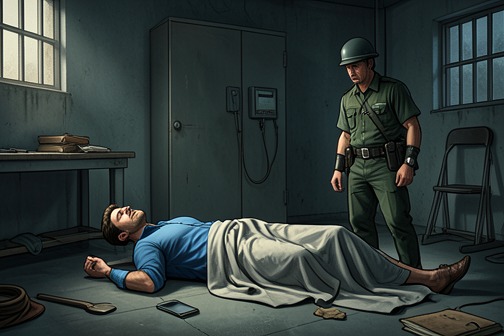
[Heath Holmes’s Suicide in Prison](entity:event-recall-event-e56f795bbb6a) closes the immediate legal trajectory of the Howard sisters’ murder case without resolving it at trial. Holmes, arrested as a person of interest, died by suicide in the Montgomery County Jail on June 7; the parallel with [Terry Maitland](entity:character-recall-character-terry-maitland-416bbab8ede5)’s fate turns his death into part of a recurring pattern of accusation, interrupted proceedings, and unresolved justice.
## Arrest and the Howard Sisters Case
The sequence began with the [April 25](entity:time-recall-time-april-25-496b9ac4841f) discovery of [Amber Howard](entity:character-recall-character-amber-howard-4137d87feaaa) and [Jolene Howard](entity:character-recall-character-jolene-howard-ecd215bbb14f), the missing girls from [Trotwood](entity:location-recall-location-trotwood-737b30490ae5), dead in a ravine not far from their home. On April 28, police announced that they were questioning a person of interest. Two days later, they arrested Holmes, a 34-year-old [Dayton](entity:location-recall-location-dayton-16bda8c8f347) resident who worked as an orderly at the [Heisman Memory Unit](entity:location-recall-location-heisman-memory-unit-4859d19753de).
Holmes’s arrest placed him within the investigation of the sisters’ murders, but it did not lead to a trial. His death cut off the ordinary path by which the accusations against him might have been tested in court.
## Death in Custody
Holmes died by suicide in Montgomery County Jail on June 7. The account identifies the date and place, but gives no further circumstances of his death. His suicide therefore marks a definite endpoint in the record of his prosecution, not a judicial resolution of the murders.
## Parallel with Terry Maitland
In reviewing the case, [Holly Gibney](entity:character-recall-character-holly-gibney-b39cdab3f007) recognizes a disturbing resemblance to Terry Maitland’s story: like Maitland, Holmes survived arraignment but would never be tried for the murders attributed to him. [Jeannie Anderson](entity:character-recall-character-jeannie-anderson-f2fa14383bf4)’s term for such a convergence of events supplies a frame for the parallel. The two cases are not presented as identical in their evidence or circumstances; what they share here is the interruption of trial by the accused man’s death.
That repetition deepens the uncertainty surrounding the investigations. Holmes’s death does not establish what happened to the Howard sisters or settle the case against him. Instead, it leaves the accusation without a trial and makes the likeness to Maitland’s fate another unresolved strand in Holly’s attempt to follow the story.
Event 13
Jack Hoskins Encounters a Supernatural Presence in the Canning Barn
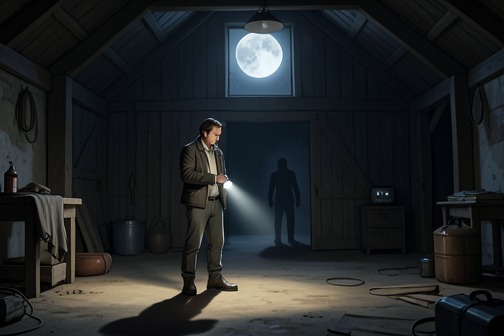
[Jack Hoskins Encounters a Supernatural Presence in the Canning Barn](entity:event-recall-event-b31306876aec) is the moment Jack’s investigative detour becomes a bodily threat. Alone at the taped-off ranch where clothing connected to [Terry Maitland](entity:character-recall-character-terry-maitland-416bbab8ede5)’s case had been found, he enters the barn despite his fear and encounters a figure he cannot explain. The presence does not simply frighten him: it touches his neck, and later tells him that the touch has caused cancer. By making his body the evidence of its power, the encounter gives the threat a lasting hold over him.
## The return to the ranch
The encounter begins after Jack drives through county police tape to reach a cluster of ramshackle buildings: a barn and three sheds. No one is there. He tries to call in, but the radio returns only static and the remote location has no cell service. Already frustrated, he has arrived at a place where he cannot readily summon help.
Jack gets out with a long-barreled flashlight, telling himself there is nothing to do and that the trip is a fool’s errand. The heat and wind, and the cottonwoods shifting in the moonlight near an old water pump, frame the stop as both empty and exposed. Yellow tape still marks the barn entrance where the clothes were found; Jack knows the evidence has been bagged and sent to [Cap City](entity:location-recall-location-cap-city-6ff1f145c0a0), but the site remains charged for him by its connection to the case.
He reconstructs the route he believes Terry Maitland took: past the boat landing where the bloody clothes were changed, then to Gentlemen, Please, on to [Dubrow](entity:location-recall-location-dubrow-a1dd08cb0d71), and finally back toward the barn. Jack thinks of himself as retracing Maitland’s path. That investigative certainty carries him toward the building even as the place unsettles him.
## At the open barn door
The barn’s open door resembles a gaping mouth. Jack does not want to approach it alone, and his reasoning offers little comfort: Terry is dead, and ghosts do not exist. Nevertheless, he forces himself forward, step by slow step, and shines his flashlight inside. Someone stands at the far end.
Jack cries out and reaches for his sidearm, only to realize that he is not wearing it. His Glock is locked in the small Gardall safe in his truck. He drops the flashlight, bends to retrieve it, and feels the vodka he has been drinking make him woozy and unsteady. At the point when he needs to respond, his weapon is out of reach and his balance is impaired.
The presence remains behind him. Jack imagines it grabbing him and thinks he should drop and roll, but he cannot move. He mentally retraces his mistakes: he should have turned back when the scene was deserted, taken his gun from the safe, or stayed in the truck. The thought that he will die at the end of a dirt road in [Canning Township](entity:location-recall-location-canning-township-040a8fdd6a78) marks the collapse of his ordinary confidence into immediate terror.
## The touch and its aftermath
The figure touches the back of Jack’s neck with a hand as hot as a hot-water bottle. He tries to scream but cannot; his chest feels locked. He expects a second hand and a choking attack, but the contact changes instead: the hand withdraws while its fingertips continue to move lightly across his skin, leaving trails of heat.
Jack cannot tell how long he stands frozen. The wind moves his hair and neck, echoing the touch, while the cottonwood shadows race across the ground. In this scene, ordinary sensations—wind, shadow, skin—become difficult to separate from the presence’s action. The figure remains behind him, its long, thin shadow accompanying a caress that is at once intimate and threatening.
## Cancer as leverage
Later, a figure behind a curtain tells Jack to touch the back of his neck and threatens to reveal itself if he does not. Jack obeys. His body answers with bolts of pain running toward his temples and down to his shoulders; when he looks at his hand, it is smeared with blood.
The figure declares that Jack has cancer in his lymph glands, throat, sinuses, and eyes, and describes malignant cells entering his vision. It asks whether he knows when he contracted it. Jack knows: he connects the illness to the earlier touch in Canning Township. The barn encounter thus returns not as a frightening memory alone but as the origin of a physical affliction that the presence claims to control.
The presence offers to take the cancer back. Jack weeps and pleads for it to do so. When asked whether he will do something if requested, he agrees; when asked whether he will hesitate, the exchange continues. The encounter’s decisive consequence is coercion: a supernatural threat has turned bodily pain and the promise of relief into leverage over Jack, binding his later choices to the touch at the barn.
## Narrative significance
The scene moves from investigation to vulnerability through a sequence of failed protections. Police tape does not keep Jack away; the radio cannot connect him to anyone; his gun remains locked in his truck; and his own attempt to reason away ghosts cannot keep him from entering the barn. The ordinary safeguards are present, but at the crucial moment each proves insufficient.
The later diagnosis gives the earlier caress a retrospective meaning. What Jack experienced as a terrifying, inexplicable touch becomes, in the figure’s account, the cause of a disease it can remove. The narrative therefore makes the threat intimate and transactional: the presence can reach Jack without first overcoming a visible barrier, and relief is offered only alongside a demand for obedience. His encounter at the barn is both a supernatural manifestation and the beginning of his subjection to that bargain.
Event 14
Grace Maitland Receives a Warning
[Grace Maitland Receives a Warning](entity:event-recall-event-f98118f33f5f) is a dream encounter that carries the intruder’s threat from the Maitland home to Detective Anderson. The visitor takes on the appearance of Grace’s murdered father, then uses her fear and affection to deliver an ultimatum: Anderson must stop, or something bad will happen.
## The Visitor in Grace’s Room
Ten-year-old Grace has been sleeping poorly since her father’s murder, her limited sleep haunted by nightmares. One rainy Sunday, while her mother and Sarah make a cake downstairs, she lies down upstairs. She wakes to find a man sitting on her bed. He wears jeans and a green T-shirt; tattoos of snakes, a cross, a dagger, and a skull cover his hands and climb his arms. Although his face has become less crudely distorted than when she first saw him outside Sarah’s window, Grace recognizes the visitor. This time, he has her father’s eyes.
The change in appearance does not make the encounter reassuring. The man’s green shirt becomes her father’s Golden Dragons game shirt, then a white smock-like garment, before reverting to green. Grace takes the shifting clothes as proof that she is dreaming. The visitor accepts her calling him Daddy and tells her that he loves her, exploiting the intimacy of her father’s likeness even as the transformation exposes its instability.
## From Intimidation to an Ultimatum
The visitor turns from affection to mockery, taunting Grace in babyish language. When she tells him to stop, he offers to do so on one condition: she must do something for him. The specific request is withheld from the reader, but the scene’s immediate consequence is clear. Sarah wakes Grace and calls her downstairs for cake; Grace concludes that the encounter was a bad dream, yet fears that complying with the request might prevent it from returning.
That uncertainty does not keep Grace silent. She explains that she did not know how to contact the detective who arrested her father, so she asks an adult to relay the visitor’s message. Grace remembers that the intruder first had straw-like eyes and says he tried to make her believe he had her father’s eyes. Although his face now looks better, she still finds him frightening and does not want him to come back, even in a dream.
## The Message to Detective Anderson
Grace tells the adult to warn Detective Anderson to stop: if he does not want something bad to happen, he has to stop. The message makes the dream more than a private nightmare. The visitor has reached into the grieving child’s vulnerability to issue a threat aimed at the investigation, and Grace chooses to pass it on despite expecting she might get in trouble.
The scene’s horror depends on the gap between familiar appearance and threatening presence. The eyes and game shirt evoke Grace’s father, but the changing clothing, remembered straw-like eyes, and coercive demand prevent the visitor from becoming a comforting substitute. By making a child the messenger, the warning extends the danger beyond the investigators and into the Maitland family’s intimate grief. For Grace, the encounter remains uncertain as a dream; for the story, its message is an explicit attempt to make Detective Anderson stop.
Event 15
Mysterious Man Enters the Anderson Home to Warn Ralph
A mysterious visitor enters [Ralph Anderson and Jeannie Anderson](entity:relation-recall-relation-a24de1fe9fed)’s home and warns Ralph to stop his investigation in [Flint City](entity:location-recall-location-flint-city-aa88b90b28ad). The encounter turns a threat against the investigation into a direct intrusion on the Anderson family, yet its traces resist ordinary verification: Jeannie sees the visitor, later recognizes him as [Claude Bolton](entity:character-recall-character-claude-bolton-f1f539b446d0), and remains convinced he was present despite the absence of marks where he sat.
## The intrusion and the missing chair
After noticing the kitchen light, Jeannie finds that the kitchen is empty. She begins to cross the room to switch off the stove light and sees that the table has only three chairs, although there should be four, including the chair the family calls the guest chair. The discrepancy interrupts an otherwise familiar household space before the visitor is fully visible.
The man speaks from the living room and tells Jeannie not to move or scream. She can see only part of him from the kitchen: his lower legs and feet, faded jeans, and moccasins without socks; his upper body remains indistinct. The scene’s gradual disclosure makes the uncertainty itself part of the encounter. The threat is already present before Jeannie can make out the person making it.
## A warning aimed at Ralph
The intruder tells Jeannie to tell her husband that it is done in Flint City and that he must stop. He promises that things will return to normal if Ralph complies, and threatens to kill Ralph and everyone else if he does not. The message makes the visit an explicit attempt to halt the investigation, while its threatened consequences extend beyond Ralph to his family.
The man’s warning is not a request for discussion: he sends it through Jeannie, making her the immediate recipient and Ralph the intended target. Its terms connect the safety of the Anderson household to Ralph’s decision about whether to continue. The encounter therefore brings the investigation’s danger into the domestic space where Ralph and Jeannie live.
## The aftermath and the question of proof
When Ralph examines the place where Jeannie says the man sat, he gets down beside the point where the kitchen’s wooden floor meets the living-room carpet. He notes that the carpet is new and that a chair occupied even briefly should have left marks in its pile. There are none. The physical check offers no confirmation of the visitor’s presence, but it does not persuade Jeannie to retract her account: she acknowledges the absence of marks and insists that the man was there.
That disagreement is central to the aftermath. Jeannie distinguishes the lack of a material trace from the reality of her experience, while Ralph’s inspection gives the couple’s uncertainty a concrete object—the unmarked carpet—rather than resolving it. Her certainty stands alongside the evidence that would ordinarily be used to test it.
## Identification as Claude Bolton
Later, Ralph gives Jeannie a phone displaying a mug shot and asks her to consider that the pictured person is older now. After looking at it for ten seconds, she recognizes the visitor. She says his hair is shorter and that he now has a full goatee rather than the small mustache in the photograph, but identifies him as the man who entered their home and threatened Ralph.
Ralph names the man as Claude Bolton. Jeannie immediately asks whether Ralph intends to arrest him. The identification gives the intruder a name and connects the warning to a person Ralph can pursue, but it does not settle the earlier contradiction between Jeannie’s recognition and the visitor’s lack of an ordinary physical trace.
## Significance to the investigation
The episode changes the threat from an abstract danger surrounding Ralph’s work into a message delivered inside his own home. Its sequence moves from a small domestic irregularity—the missing guest chair—to an unseen speaker, an ultimatum, an inconclusive physical check, and finally a face recognized from a mug shot. Each step supplies a different kind of information without making all the others fit neatly together.
Jeannie’s identification of Claude Bolton gives Ralph a lead, while her insistence that the visitor was present despite the untouched carpet preserves the scene’s unresolved strangeness. The warning also raises the stakes of continuing the Flint City investigation: the visitor makes clear that Ralph’s choices may put his family, not only himself, in danger.
Event 16
Howard Sisters Murder

The [Howard Sisters Murder](entity:event-recall-event-189f39a1b8b9) concerns the deaths of Amber and [Jolene Howard](entity:character-recall-character-jolene-howard-ecd215bbb14f), two young sisters who disappeared after leaving school on [April 23](entity:time-recall-time-april-23-c98e37a5dc21). In the investigators’ reconstruction, a stolen landscaping truck, a sequence of surveillance images, witness accounts, and forensic findings place [Heath Holmes](entity:character-recall-character-heath-holmes-a22f0facfb27) with the girls and connect him to their deaths. The accumulating evidence appears conclusive, yet its resemblance to the case against [Terry Maitland](entity:character-recall-character-terry-maitland-416bbab8ede5) makes the investigation part of a larger question about how persuasive evidence can still mislead.
## Background and Disappearance
Amber and Jolene lived in a low-income household with an alcoholic mother and no father present. Their school considered them at risk, and they had skipped classes before. On Monday, April 23, they left school at about ten in the morning: Amber had a free period, while Jolene said she needed the bathroom. Investigators thought the circumstances suggested the sisters had probably planned to leave together.
Shortly before noon, the girls were seen at a small beer-and-grocery store about five blocks from the school. The shop’s surveillance camera recorded them carrying sodas and candy bars. The clerk knew they were supposed to be in class and refused to sell to them; investigators later identified him as the last person to report seeing the sisters alive. His refusal becomes a hinge in the reconstruction: it is followed by evidence that they encountered Heath Holmes elsewhere.
## The Truck and the Surveillance Trail
A second camera recorded a different scene at 12:19 p.m. at a gas station. Holmes, walking back toward a panel truck marked [Dayton](entity:location-recall-location-dayton-16bda8c8f347) Landscaping & Pools, carried a soda in each hand. Amber leaned out of the driver’s-side window to take them. The image placed the older sister and Holmes together, apparently before the violence investigators would later attribute to him. The truck had been stolen on April 14, nine days before the sisters disappeared.
The photographs suggested a possible sequence rather than proving every step. [Holly Gibney](entity:character-recall-character-holly-gibney-b39cdab3f007) inferred that Holmes may have encountered the girls after the store clerk turned them away, obtained the drinks and candy they wanted, and offered them a ride. Mrs Howard told Sergeant Highsmith that Amber sometimes accepted rides when she wanted to go somewhere, despite repeated warnings about the danger. Yune Sablo cautioned against blaming the girls for their choices; the case presentation instead uses their school and family circumstances to explain how the meeting might have begun, not to assign them responsibility for what followed.
## Holmes After the Disappearance
A little after six that evening, Holmes appeared at a Waffle House on the outskirts of Dayton. The waitress and short-order cook said he had blood on his face, hands, and shirt. He claimed he had suffered a bloody nose and washed up in the men’s room, then ordered food to take away. The staff noticed spots of blood on the back of his shirt and on his pants as well, details that made his explanation seem less credible. The waitress recorded his license plate and contacted police; both employees later identified Holmes from a photographic lineup.
Holmes was still driving the stolen panel truck when he stopped at the restaurant. It was later found abandoned in the [Regis](entity:location-recall-location-regis-529b5764ed63) municipal parking lot, less than half a mile from his home. Investigators found extensive blood in its rear, along with Holmes’s fingerprints and the girls’ fingerprints, including prints in blood. Police theorized that he left the truck, walked home, changed, and prepared supper for his mother. The account presents that sequence as the police theory, not as a separately observed event.
## Forensic Evidence and the Maitland Parallel
On [April 26](entity:time-recall-time-april-26-76f59a9ed43d), Holmes visited the [Heisman Memory Unit](entity:location-recall-location-heisman-memory-unit-4859d19753de) during his vacation. He told the woman in charge, June Kelly, that he needed something from his locker and wanted to check on a couple of patients. His explanation attracted notice because orderlies had plastic cubbies rather than lockers, and Holmes ordinarily used informal language for the residents. One person he visited was Terry Maitland’s father. Investigators subsequently found blond hairs in the man’s bathroom and matched them to Jolene Howard.
The case against Holmes accumulated through several kinds of evidence: the stolen truck and its fingerprints, the surveillance photographs, the staff accounts from the Waffle House, the girls’ underwear found in a basement, and a DNA match. Cheek swabs collected while Holmes was in custody matched semen recovered at the scene. As the evidence mounted, investigators assumed that Holmes had been careless or wanted to be caught. The striking resemblance to the evidence in the [Frank Peterson](entity:character-recall-character-frank-peterson-ec1f6e4fd21e) killing prompted the comparison with Terry Maitland: both cases seemed to assemble an unusually complete chain tying a suspect to a violent crime.
## What the Evidence Does—and Does Not—Resolve
The crucial difference in the comparison is that Holmes had no corresponding alibi recording. In Maitland’s case, a lecture recording appeared to place him elsewhere at the time of the crime, producing a conflict between identification and apparent physical evidence. Nothing of that kind emerged for Holmes. His mother insisted that he had remained in Regis throughout his vacation, denied that he had visited the Heisman Memory Unit, and rejected the suggestion that he had gone to [Trotwood](entity:location-recall-location-trotwood-737b30490ae5). Her account directly conflicted with the investigation’s reconstruction and the evidence placing him in those locations.
The case is therefore presented as both a grim reconstruction and an unsettling echo. The evidence against Holmes ranges from the girls’ appearance in the truck to blood, fingerprints, hair, clothing, witness identifications, and DNA; the comparison with Maitland makes that accumulation feel familiar without erasing the difference in the available alibi evidence. The sisters’ murder becomes a test of how investigators interpret a seemingly coherent trail—and of whether a trail that appears to settle a case can be understood without the contradictions that reshaped another one.
Event 17
Heath Holmes’s Arrest in the Howard Sisters Murder Case
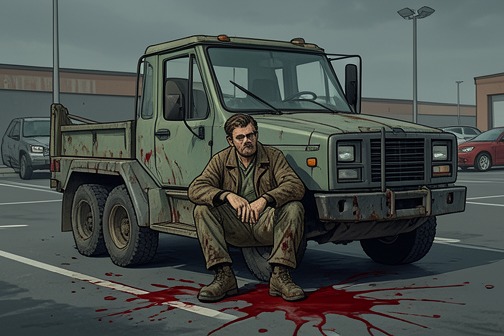
[Heath Holmes](entity:character-recall-character-heath-holmes-a22f0facfb27)’s arrest for the murders of Amber and [Jolene Howard](entity:character-recall-character-jolene-howard-ecd215bbb14f) supplies the central parallel that unsettles the investigation into [Terry Maitland](entity:character-recall-character-terry-maitland-416bbab8ede5). Holmes is presented as a plausible, evidence-linked suspect, but his case also reproduces the contradiction at the heart of Maitland’s: physical traces point toward guilt while other evidence places the accused away from the crime. The comparison raises the possibility that apparently decisive evidence can be manufactured or transferred, without explaining who did so or when.
## Arrest and the Case Against Holmes
During a briefing, Yune Sablo identifies Holmes as a thirty-four-year-old man arrested for the murders of Amber and Jolene Howard. The investigators are told that the crime-scene images are too disturbing to show, but the broader evidence is laid out: a work vehicle was found abandoned in a municipal parking lot in [Regis](entity:location-recall-location-regis-529b5764ed63), less than half a mile from Holmes’s home. It contained blood and fingerprints associated with both the victims and Holmes.
The police reconstruction made the vehicle’s proximity seem incriminating. Investigators theorized that Holmes had abandoned it, returned home, changed out of his clothes, and continued his ordinary evening. The fingerprint identification came quickly, but administrative delays meant that it took several days to establish his name. The account’s force lies in the apparent coherence of these details: a nearby suspect, a vehicle tied to the crime, and physical evidence connecting him to it.
Yune adds that the prosecution’s case included surveillance photographs, the victims’ underwear found in Holmes’s basement, and a DNA match between Holmes and semen recovered at the scene. The evidence had accumulated to the point that investigators assumed Holmes had either been careless or wanted to be caught. Yet the resemblance to the evidence assembled against Maitland is precisely what makes the parallel troubling: accumulation gives an accusation weight, but does not by itself explain conflicts in the record.
## The Counterevidence and the Maitland Parallel
Holmes’s alibi was not supported by a recording of him at a public event. His mother said he had stayed in Regis, had not visited the [Heisman Memory Unit](entity:location-recall-location-heisman-memory-unit-4859d19753de), and had not gone to [Trotwood](entity:location-recall-location-trotwood-737b30490ae5). Yune notes that a jury might not have credited her testimony. Other neighborhood witnesses, however, placed Holmes at home on the day the Howard sisters were taken: he did yard work for his mother, repaired her gutters, painted her stoop, and helped a neighbor plant flowers. His conspicuous work truck was also seen as he ran errands.
The comparison with Maitland is explicit. Holmes lacked the counterpart of Maitland’s recorded appearance at Harlan Coben’s talk, an event that placed Maitland in [Cap City](entity:location-recall-location-cap-city-6ff1f145c0a0) while the crimes were occurring. In Maitland’s case, that public footage forced [Ralph Anderson](entity:character-recall-character-ralph-anderson-40c042967493) to confront an alibi he had not checked before the arrest. Ralph later recognized the troubling pattern in the evidence against Maitland: witnesses placed him with teachers at the relevant times, while clues such as the fingerprints and his conspicuous appearance at Coben’s lecture seemed almost too perfectly arranged. Holmes’s case repeats the structure without offering an equally definitive recording of the accused elsewhere.
That difference matters. Holmes’s mother and neighbors provide testimony, but their accounts do not carry the same public, time-stamped form as the lecture video. The briefing therefore contrasts forms of proof rather than simply counting them: a witness’s recollection, a family member’s account, surveillance photographs, fingerprints, and DNA each acquire authority differently. The case against Holmes appears powerful, but the Maitland investigation has already shown that powerful-looking evidence can coexist with an impossible timeline.
## The Fingerprint That Crosses Cases
The most consequential new link emerges when Yune compares fingerprints from the van used in the Peterson abduction. A print from that vehicle closely matches Holmes’s intake print from Montgomery County, Ohio. Yune judges the print degraded, perhaps by the passage of time, but says there are enough points of identity to conclude that Holmes had been in the van at some point. The finding connects Holmes not only to the Howard sisters’ case but also to the vehicle associated with [Frank Peterson](entity:character-recall-character-frank-peterson-ec1f6e4fd21e)’s abduction.
The link does not settle the chronology. Another print from the same van matches Maitland’s [Flint City Police Department](entity:organization-recall-organization-flint-city-polic-92afe9c83b71) intake print. But a faint, blurred impression on the horse-head belt buckle cannot be confidently assigned to either man. Yune says he does not believe it is Maitland’s print; Holmes cannot have left it, because he was dead before the buckle appeared in the train-station video. The buckle thus carries a trace that seems to belong to neither available explanation.
The investigators are left with a sequence of incompatible certainties. Holmes was in the van, according to the degraded print; Maitland’s print is also there; and the buckle’s blurry impression is neither one, as far as Yune can determine. The evidence creates a connection without supplying a usable account of when, how, or why the print was left. Instead of closing the gap between the cases, forensic comparison makes that gap more visible.
## Meaning and Unresolved Outcome
Holmes’s arrest functions as a grim test of the assumptions behind the Maitland investigation. If a suspect’s fingerprints, DNA, vehicle, and other traces can form a compelling case while witnesses also place him elsewhere, then evidence may be both materially real and radically incomplete as an explanation. The parallel does not establish that Holmes was framed, nor does it identify whoever might have planted or transferred evidence. It shows why the investigators’ confidence in a coherent accumulation of clues cannot, on its own, resolve the contradictions.
The episode ends not with a solution but with the investigators facing a table of evidence that will not assemble into a clear picture. Holmes’s case sharpens the mystery surrounding the van and its prints, while leaving the decisive questions open: when Holmes was in the vehicle, who left the buckle’s indistinct impression, and how the overlapping traces of Holmes and Maitland came to occupy the same chain of evidence. The arrest therefore changes the inquiry less by answering it than by revealing that the apparent solidity of a case can conceal an unexplained structure beneath it.
Event 18
Terry Maitland’s Arrest and Death

[Terry Maitland’s Arrest and Death](entity:event-recall-event-7aa248132bf8) marks the point at which a murder investigation becomes a public judgment—and then an irreversible loss. Arrested before a crowd on suspicion of killing [Frank Peterson](entity:character-recall-character-frank-peterson-ec1f6e4fd21e), Terry is presented as a plainly guilty man even as the case’s evidence begins to resist that conclusion. His death during the courthouse shooting leaves his family bereaved and the investigators responsible for facing what their certainty helped set in motion.
## Arrest and Public Exposure
The arrest takes place at a baseball game, where an officer tells Terry he is being arrested for Frank Peterson’s murder. Terry understands the words but cannot grasp their meaning as applied to him. His brief, bewildered response is captured by a photographer from the [Flint City](entity:location-recall-location-flint-city-aa88b90b28ad) Call; the resulting front-page image makes his open-mouthed shock legible to the public as weakness and guilt alike. From the outset, the arrest is not merely a police action: it becomes an image through which the town sees and judges him.
The case’s evidence subsequently complicates that first impression. A surveillance report places a man identified as the subject under investigation inside the [Vogel Transportation Center](entity:location-recall-location-vogel-transportation-fd798ba6648e) at 9:33 p.m. on [July 10](entity:time-recall-time-july-10-3e75b0e15f36), wearing a yellow shirt and blue jeans and carrying no luggage. At 9:35, he buys a paperback at the concourse newsstand; the footage also shows a horse-head belt buckle. He leaves through the Montrose Avenue exit at 9:39. These recorded details become part of the investigation’s account of Terry’s movements, even as they deepen the discrepancy between the apparently conclusive accusation and the unresolved question of who was seen where.
## The Family Under Scrutiny
The arrest’s public reach extends immediately to the Maitland home. When Marcy arrives at the family’s [Barnum Court](entity:location-recall-location-barnum-court-b7619c045355) house, police vehicles, a mobile crime-unit truck, and state troopers occupy the driveway and street. Neighbors watch from their lawns, while the spread of information by cell phone makes the police presence difficult to separate from public knowledge and rumor. The scene turns a private home into an exposed place, with the family’s crisis visible to the surrounding community.
The same exposure follows Marcy to the courthouse. During Terry’s arraignment, she leaves the vehicle despite efforts to hold her back and runs toward her husband. Cameras swing toward her; someone throws a book that strikes her shoulder. [Ralph Anderson](entity:character-recall-character-ralph-anderson-40c042967493) tries to direct her away, but the scene has already become part of the public spectacle surrounding Terry. Marcy’s movement toward him is a personal act of loyalty occurring in front of cameras and a hostile crowd, while the arrest’s media framing threatens to define both spouses before the investigation is settled.
At a later investigative meeting, Marcy explains that Lukesh and Chandra Patel volunteered to watch her daughters. Their son, Baibir, had played on Terry’s team and was at third base when the arrest occurred; he was heartbroken and did not understand what had happened. The arrest therefore reaches beyond the immediate family: it disrupts the children’s ordinary relationships and makes a public accusation part of their lives as well.
## Death and Its Recorded Aftermath
At the courthouse, the shooting ends with Terry’s death. News cameras had gathered for his arraignment; when gunfire breaks out, they turn toward Terry as he pushes Marcy out of the line of fire and then collapses. The CBS camera is struck by Ralph Anderson’s bullet and goes blank before Terry is killed, while footage from the other stations records the final moments. The recordings preserve parts of the event but do not make its meaning simple: they show Terry trying to protect his wife, yet leave the larger questions surrounding his arrest unresolved.
Ralph and Jeannie review the footage later at their kitchen table. They watch each clip twice, then Ralph asks to see [Channel 81](entity:organization-recall-organization-channel-81-18d2e6390fa5)’s recording again because, despite its erratic camera movement during the shooting, it offers the clearest view of the crowd beforehand. The search for a usable image turns the courthouse recording into more than a record of Terry’s death: it may also help identify a figure connected to the case. In this investigation, cameras can document a public event, but their framing and blind spots determine what investigators are able to see.
## Responsibility and the Unsettled Case
Terry’s death does not settle the case for those involved. When Ralph asks [Bill Samuels](entity:character-recall-character-bill-samuels-593e2a14dfb1) what his former wife thinks of the affair, Samuels admits that she believes he played a part in getting Terry killed, and that she may be right. He recalls how convincing the case had seemed, but his uncertainty shows that the force of the original evidence has not erased responsibility for what followed.
Ralph answers with a specific judgment about the arrest itself: he would not have arrested Terry in front of the whole town and would have made sure he entered the courthouse by the back door. His response distinguishes the decision to pursue the case from the public exposure surrounding it. The arrest made Terry’s accusation a spectacle; after his death, Ralph can identify a choice that might have reduced that exposure, even though he cannot undo its consequences.
At the later investigative meeting, Marcy compares Terry’s fate with that of [Heath Holmes](entity:character-recall-character-heath-holmes-a22f0facfb27), saying Terry was luckier than Holmes, but not lucky enough. Her brief comparison places Terry’s death within the larger pattern of cases under review: an apparent case against a suspect can conceal a deeper failure of explanation, and the consequences are borne by people who never receive a chance to see the truth established in time.
## The Investigation Reopens
After Terry’s death, the investigation returns to the contradiction between the case against him and the evidence that points elsewhere. At a later meeting, Ralph recounts what [Claude Bolton](entity:character-recall-character-claude-bolton-f1f539b446d0) had said: Terry nicked him with a fingernail while they shook hands. He also describes the clothes found in [Canning Township](entity:location-recall-location-canning-township-040a8fdd6a78)—pants, underwear, socks, and sneakers, but no shirt—and the man he saw on the courthouse steps. Ralph cannot be certain that this figure used the shirt Terry wore at the [Dubrow](entity:location-recall-location-dubrow-a1dd08cb0d71) train station to cover a presumably scarred, hairless head, but he considers it possible. These details recast the arrest not as a conclusion but as one stage in an inquiry whose central identity question remains unresolved.
## The Investigation Reopens
After Terry’s death, the investigation returns to the contradiction between the case against him and the evidence that points elsewhere. At a later meeting, Ralph recounts what Claude Bolton had said: Terry nicked him with a fingernail while they shook hands. He also describes the clothes found in Canning Township—pants, underwear, socks, and sneakers, but no shirt—and the man he saw on the courthouse steps. Ralph cannot be certain that this figure used the shirt Terry wore at the Dubrow train station to cover a presumably scarred, hairless head, but he considers it possible. These details recast the arrest not as a conclusion but as one stage in an inquiry whose central identity question remains unresolved.
Event 19
The Outsider Appears at the Anderson and Maitland Homes
[The Outsider Appears at the Anderson and Maitland Homes](entity:event-recall-event-82b599863264) is the point at which warnings experienced inside two families’ homes become part of the investigation itself. [Jeannie Anderson](entity:character-recall-character-jeannie-anderson-f2fa14383bf4) recounts a visitor in her house, while [Grace Maitland](entity:character-recall-character-grace-maitland-0e6837a9b09b) has described a figure appearing to her twice. Their accounts converge on a startling identification: the figure resembles [Claude Bolton](entity:character-recall-character-claude-bolton-f1f539b446d0), a bouncer who had been cut while shaking [Terry Maitland](entity:character-recall-character-terry-maitland-416bbab8ede5)’s hand. The convergence gives the investigators a concrete link between separate encounters, but it does not settle whether those encounters were real or explain how Bolton could appear in [Texas](entity:location-recall-location-22116bb34b58) and elsewhere.
## Jeannie’s Account Becomes Evidence
[Ralph Anderson](entity:character-recall-character-ralph-anderson-40c042967493) turns to his wife and asks her to tell the others who she dreamed had been in their house. Jeannie rejects the word dream: in her view, what she experienced had not faded away like a dream would. She describes seeing a light on downstairs, then finding a man sitting beyond the archway on one of the chairs from the kitchen table. The domestic details place the apparition not in some distant or unfamiliar setting but amid the recognizable rooms and furniture of the Anderson home.
Jeannie recalls the visitor’s warning that Ralph must be told to stop. She emphasizes that the man had fading blue letters tattooed on his fingers, and says that after the encounter she fainted, something she had never done before. Her account is specific enough to offer the group more than a general report of fear: it supplies both a physical marker and a message directed at the investigator. Yet the circumstances leave room for disbelief. Ralph notes that she woke in bed, with no sign of entry and the burglar alarm still set. [Bill Samuels](entity:character-recall-character-bill-samuels-593e2a14dfb1) dismisses the incident as a dream, while Jeannie insists that the man was there.
## An Identification Through the Finger Tattoos
Ralph does not claim to understand what happened; he says only that something did. The detail that matters to him is the visitor’s finger tattoos, because someone else connected with the case had similar tattoos. Ralph remembers the possible link, asks Yune Sablo to send a picture, and has Jeannie identify the man in it. She identifies the visitor as Claude Bolton, the bouncer at Gentlemen, Please—the man who was cut while shaking Terry’s hand.
The identification joins the house encounter to an earlier injury without resolving the mystery. [Marcy Maitland](entity:character-recall-character-marcy-maitland-94a7409c8791) immediately draws a parallel with Terry’s own cut when he bumped into an orderly, whom she identifies as [Heath Holmes](entity:character-recall-character-heath-holmes-a22f0facfb27). The comparison gives the investigators another instance in which physical contact and a cut connect people caught up in the case. [Holly Gibney](entity:character-recall-character-holly-gibney-b39cdab3f007) responds that Holmes is the obvious person to have been the orderly, but the exchange does not establish that Bolton and Holmes are the same figure or explain the relationship between their appearances. Instead, the scene builds a chain of suggestive correspondences: tattoos, cuts, and people whose identities or whereabouts complicate an ordinary account of events.
## Grace’s Two Encounters
With [Howie Gold](entity:character-recall-character-howie-gold-16e552ff9e41) encouraging Marcy to speak for Terry, Marcy recounts what her daughter Grace had told her. Grace saw a man twice. The first encounter happened about a week earlier, when Grace and her sister Sarah were sleeping together in Sarah’s room. Grace said the man was floating outside the window, with a Play-Doh face and straws for eyes. Marcy had taken the description for a bad dream, understandable, she thought, in a child grieving her father’s death. At the meeting, however, the earlier image becomes part of the evidence: its strangeness may mark not a simple nightmare but a figure that was not yet fully formed.
The second encounter took place on Sunday. Grace said she woke from a nap and found the man sitting on her bed. This time, he no longer had the straw-like eyes: he had her father’s eyes. He still frightened her, and she described tattoos on his arms and hands. Ralph adds details Grace had given him: the Play-Doh face was gone, and the man had short, sticky-up black hair and a small beard around his mouth. Jeannie calls it a goatee and concludes that the second figure must have been Bolton, while distinguishing that apparently identifiable appearance from the less finished figure Grace saw at the window.
Marcy resists that conclusion. She remains convinced the encounter had to have been a dream, in part because Grace said the man’s shirt changed colors while he spoke. That detail, to Marcy, belongs to the unstable logic of dreaming rather than to an actual visit. Her uncertainty is not merely a disagreement over a child’s description: she must weigh frightening testimony against the understandable desire to explain it as a dream, even after losing Terry and trying to make sense of what has happened to her family.
## The Warning and the Unresolved Contradiction
According to Marcy, the man mocked Grace by calling her a baby. When she began to cry, he told her it was good that she was sad. He then gave her a message for Ralph: the detective had to stop, or something bad would happen. The words echo the warning Jeannie remembers from the visitor in her own house. In both accounts, the presence is not simply seen; it addresses the investigation and tries to influence Ralph through people close to him. Grace’s description also gives the threat a cruelly personal form, using her grief rather than merely frightening her with an unfamiliar face.
Ralph sets the two versions of Grace’s sighting side by side. The first appearance seemed unfinished; the second sounded like a man who could be Claude Bolton. But Bolton is in Texas, Ralph points out, and Bill Samuels replies that if Bolton is there, he cannot have been here. That contradiction keeps the group from treating resemblance as a straightforward identification. The accounts raise the possibility that an apparent human identity can be present across incompatible circumstances, but the characters do not reach agreement on that explanation. Samuels’s refusal to accept the implication and Jeannie’s insistence that her visitor was real preserve the central conflict between observable clues and what seems physically impossible.
## Narrative Significance
The encounters change the status of the warnings. At first, the Anderson and Maitland families can treat them as private experiences—a dream, a child’s nightmare, or a bereaved family’s distress. Once Jeannie identifies Bolton and Grace’s descriptions are compared, those experiences intersect with the case’s physical clues: finger tattoos and the cuts associated with Terry and the orderly. The home scenes consequently become part of the investigators’ evidence, though not evidence that can be comfortably reconciled with their assumptions about location and identity.
The episode also makes uncertainty cumulative rather than resolving it. A kitchen chair, a burglar alarm left set, fading tattoos, a face that changes from unfinished to recognizable, and the claim that the man cannot be where Bolton is all pull in different directions. The warnings intensify the stakes by making the families’ homes vulnerable and by telling Ralph to stop, while the group’s argument shows that acknowledging the testimony is not the same as knowing how to interpret it. What emerges is a consequential but incomplete convergence: both households report a threatening visitor, Grace’s later description resembles Bolton, and the investigation is warned against continuing, yet the apparent impossibility of Bolton’s presence remains unanswered.
Event 20
Howard Gold’s Office Investigation Meeting

[Howard Gold’s Office Investigation Meeting](entity:event-recall-event-12c45b1e2f20) is the point at which evidence from the [Frank Peterson](entity:character-recall-character-frank-peterson-ec1f6e4fd21e) murder and the Howard sisters’ murders is assembled into a single, increasingly difficult pattern. In Gold’s conference room, [Holly Gibney](entity:character-recall-character-holly-gibney-b39cdab3f007), [Ralph Anderson](entity:character-recall-character-ralph-anderson-40c042967493), Yune Sablo, [Alec Pelley](entity:character-recall-character-alec-pelley-74702c4c2094), [Bill Samuels](entity:character-recall-character-bill-samuels-593e2a14dfb1), and members of the Maitland family weigh fingerprint comparisons, reported appearances, and a film about [El Cuco](entity:character-recall-character-el-cuco-4e67a87a43e5). The meeting does not resolve whether the explanation is supernatural; it exposes the cost of dismissing evidence that does not fit ordinary expectations and sends investigators toward [Claude Bolton](entity:character-recall-character-claude-bolton-f1f539b446d0) in [Texas](entity:location-recall-location-22116bb34b58).
## A Meeting Convened Around Two Cases
The gathering takes place in [Howard Gold](entity:character-recall-character-howard-gold-87119fd79519)’s conference room. [Marcy Maitland](entity:character-recall-character-marcy-maitland-94a7409c8791) attends, while Gold opens the discussion by asking who is caring for her daughters. Marcy explains that Lukesh and Chandra Patel volunteered; their son Baibir had been on Terry’s baseball team and was playing third base when the police arrested Terry. He was heartbroken and did not understand what was happening. The detail places the children’s lives and the effects of the arrest inside a meeting otherwise dominated by investigative procedure.
Gold identifies Holly Gibney as a private investigator Alec Pelley hired to examine the [Dayton](entity:location-recall-location-dayton-16bda8c8f347) side of the case, on the assumption that it might connect to the [Flint City](entity:location-recall-location-flint-city-aa88b90b28ad) investigation. Holly corrects the description of her work: her partner, Peter Huntley, holds the private-investigator license, while their company mainly handles repossession and skip-tracing, sometimes taking criminal investigations. Her modest account of her credentials contrasts with the scale of the explanation she will soon be asked to offer.
## Evidence That Connects the Investigations
Yune Sablo begins laying out a striking parallel between the cases. The killer of Amber and [Jolene Howard](entity:character-recall-character-jolene-howard-ecd215bbb14f) used a panel truck, then left it somewhere it could readily be found. The man who abducted Frank Peterson likewise left the van behind Shorty’s Pub and spoke to witnesses, much as [Heath Holmes](entity:character-recall-character-heath-holmes-a22f0facfb27) spoke to people at the Waffle House. Both vehicles yielded numerous fingerprints, including prints belonging to the victims and at least one unidentified set from the van. Yune says that set has now been identified through comparisons.
He first shows prints from the person who stole the van in upstate New York, comparing a print from the vehicle with that person’s intake print after arrest in [El Paso](entity:location-recall-location-el-paso-fd3f872e3994). He then compares a print from the van with [Terry Maitland](entity:character-recall-character-terry-maitland-416bbab8ede5)’s intake print at the [Flint City Police Department](entity:organization-recall-organization-flint-city-polic-92afe9c83b71); the match is exact. These comparisons establish that both men’s prints were present, but they do not by themselves explain how the evidence relates to the murders.
The next comparison sharpens the connection while making it less straightforward. A van print attributed to an unknown person is placed beside Heath Holmes’s intake print from Montgomery County, Ohio. The fit is not exact, but Yune considers it close enough to identify Holmes, allowing for degradation of the older print and the points of identity that remain. His conclusion is specific: Holmes had been in the van at some point. The discovery is new information, not yet a complete account of when or why Holmes was there.
## Testimony About Apparitions
With the fingerprints on the table, Gold asks whether anyone has further information. Ralph turns to [Jeanette Anderson](entity:character-recall-character-jeanette-anderson-a38ebba8d5fc) and asks her to describe the man she said had appeared in their home. Jeanette insists that the experience was not a dream: she remembers seeing a light downstairs, finding a man seated beyond the archway in a kitchen chair, and hearing him warn her to tell Ralph to stop. She also recalls fading blue lettering tattooed on the man’s fingers and says she fainted.
Ralph connects the finger tattoos to Claude Bolton, the bouncer at Gentlemen, Please. He explains that Bolton had cut himself while shaking Terry’s hand. Marcy immediately links that detail to Terry’s own cut after he bumped into an orderly, whom Holly identifies as Heath Holmes. The meeting thus joins three moments through injury and contact: Bolton’s handshake with Terry, Terry’s encounter with Holmes, and Jeanette’s description of the tattooed visitor. It is a chain of associations, not a demonstrated explanation of how one person could appear in different places.
Marcy adds that [Grace Maitland](entity:character-recall-character-grace-maitland-0e6837a9b09b) saw a man twice, the second time inside the Maitland home. Marcy had taken the episodes for distressing dreams following her father’s death. According to Ralph’s account of Grace’s description, the first appearance seemed unfinished, while the second sounded like Claude Bolton, although Bolton was in Texas. Samuels objects that Bolton could not be in Texas and present in the house. Gold answers with the cases already before them: the apparent impossibility surrounding Terry Maitland has an analogue in what they have now learned about Heath Holmes.
## Holly’s Explanation and Ralph’s Resistance
Gold asks Holly to connect the pieces. She pauses over a painting and says, “[Straws for eyes](entity:expression-recall-expression-straws-for-eyes-02f553ed77c8),” recognizing the phrase from Grace’s description. She then offers to show the group part of a film she has brought on DVD, asking them to keep an open mind. The choice to present a film rather than begin with an abstract theory gives her account a concrete form, while her preparation for disbelief makes clear that she expects her proposal to meet resistance.
Holly explains that the Mexican wrestling-women film retells an ancient legend and asks whether its story fits the pattern of the murders. Samuels grants the fit but calls belief in El Cuco absurd. Ralph, though unconvinced, recognizes that Holly has shown courage in presenting an explanation she knows the others may reject. His skepticism hardens into a direct statement: he will not accept a supernatural monster that lives on children’s blood. He argues that strange evidence does not prove a supernatural cause; the unknown, in his view, may still have a natural explanation.
Jeanette objects that Ralph is closing his mind before Holly can finish. Her anger is tied to her own account of the visitor: for her, rejecting Holly’s explanation seems to mean rejecting what Jeanette says she saw. Ralph understands the connection and wants to believe his wife, but the description of the visitor also resembles Bolton, a connection he cannot explain. His commitment to a natural account therefore remains in direct tension with the evidence gathered in his own home.
Yune eventually challenges Ralph for resisting every step of the way. The case, he says, is outside their experience, but the pieces fit into a chain from Holmes to Terry to Bolton. Alec proposes that they travel to Texas and interview Bolton. Jeanette questions the plan because she has just described a man resembling him in their home; Samuels, meanwhile, has already pointed to the apparent impossibility of Bolton being in two places. The disagreement keeps the meeting from turning its emerging pattern into settled fact.
## A Decision to Continue the Inquiry
Ralph proposes the next step in explicit investigative terms: the visitor may still be in [Flint County](entity:location-recall-location-flint-county-35bae5808102), as Jeanette’s and Grace’s accounts suggest, but someone should go to Texas to interview Bolton and learn whether he knows anything. Ralph volunteers to lead the trip. Alec wants to accompany him, and Gold says he would also like to go; the group then looks to Yune. The meeting closes not with a verdict on El Cuco, but with a plan to pursue Bolton while leaving the contradiction unresolved.
That ending matters because the discussion is also a test of how the investigators handle evidence that appears to violate their assumptions. The fingerprint comparisons support connections among people and vehicles, while the family’s accounts supply testimony that the conventional explanation has yet to absorb. The meeting preserves the distinction between what has been established—such as Holmes’s presence in the van—and what remains an interpretation. Its forward movement depends on continuing to investigate even as its participants disagree about what the evidence can mean.
Event 21
Bloodied Clothes Found in an Abandoned Ohio Factory
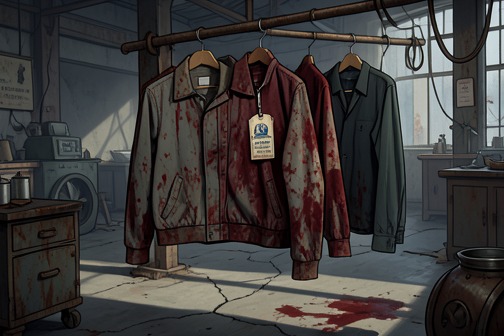
The discovery of bloodied clothes in an abandoned Ohio factory gives the investigators a concrete lead in [Holly Gibney](entity:character-recall-character-holly-gibney-b39cdab3f007)’s theory of the outsider’s movements and ties the apparent transformation into [Heath Holmes](entity:character-recall-character-heath-holmes-a22f0facfb27) to the murders of the Howard sisters. The jacket’s [Heisman Memory Unit](entity:location-recall-location-heisman-memory-unit-4859d19753de) tag points toward Holmes, but the find also creates a dilemma: the evidence may explain how the outsider framed him, while drawing renewed police attention to a case the investigators hope will not be reopened against his family.
## From Photographs to a Search
The lead begins with Holly’s photographs of places near [Peaceful Rest Cemetery](entity:location-recall-location-b07b597e8e51) in [Regis](entity:location-recall-location-regis-529b5764ed63), where Heath Holmes is buried with his parents. She presents images of a train station, a factory marked with a spray-painted swastika, and a deserted car wash, suggesting that the outsider may have taken a van stolen in [Dayton](entity:location-recall-location-dayton-16bda8c8f347) to one of those locations. She reasons that a search might uncover traces of the van or of the outsider, even after three months. A photograph of nearby boxcars offers another possibility: they could not have concealed the van, Holly says, but the outsider might have sheltered in one.
The sequence matters because the photographs change an unsettling theory into a search with defined targets. [Ralph Anderson](entity:character-recall-character-ralph-anderson-40c042967493) has been willing, for the time being, to consider that an outsider could be responsible, but the possibility does not resolve the central impossibilities troubling him: the man who vanished at the courthouse and the evidence that [Terry Maitland](entity:character-recall-character-terry-maitland-416bbab8ede5) was in two places at once. Holly’s proposal supplies a more ordinary investigative step without pretending to settle those contradictions.
## The Factory Evidence
The Montgomery County Sheriff’s Office sends deputies to examine the photographed locations. At the abandoned factory, they find a pile of bloody clothes. One item is an orderly’s jacket with a sewn-in tag reading PROPERTY OF HMU. [Howie Gold](entity:character-recall-character-howie-gold-16e552ff9e41) identifies HMU as the Heisman Memory Unit, giving the clothing a direct institutional connection to Holmes.
The jacket does not, by itself, establish who left the clothes or when. Its significance comes from the conjunction of its identifying tag, its location among the searched sites, and the investigators’ developing account of the outsider’s transformations. Howie predicts that blood analysis will show blood from one or both of the Howard girls; [Alec Pelley](entity:character-recall-character-alec-pelley-74702c4c2094) expects any fingerprints to belong to Holmes, perhaps blurred if [the change](entity:concept-recall-concept-1850101ea547) had already begun. Holly immediately qualifies that expectation: the investigators do not know how long a transformation takes, or whether its duration is consistent. The factory discovery therefore advances the theory while leaving its forensic details unresolved.
## A Lead with a Cost
The discovery comes to light while the investigators are with Claude and [Lovie Bolton](entity:character-recall-character-lovie-bolton-ee44fb680a18). After Claude has left, Lovie asks what they had not wanted her son to hear, and [Yunel Sablo](entity:character-recall-character-yunel-sablo-8f72b0e53ec0) explains that deputies found the clothes. Howie interprets the tag and anticipates what the blood may show; Alec adds his expectation about fingerprints; Holly emphasizes uncertainty about the transformation process. This exchange reveals both the group’s working model and the limits of what they can yet claim as fact.
Yunel says the sheriff has questions, but he has put him off and hopes to do so indefinitely. His reluctance shows that the evidence is not merely a solution to an old crime: it may expose a new investigative trail in a case involving a dead suspect. Lovie, worried about Claude, insists that her son is innocent, like the two other men who have died. Her response makes the human stakes explicit even before she receives a fuller explanation. The clothes can help connect the outsider’s movements to the Howard sisters’ deaths, yet the same connection risks extending suspicion and suffering to people already caught up in the investigation.
## Meaning and Limits of the Find
The factory discovery works as a material hinge between Holly’s geographic reconstruction and the investigators’ account of the outsider’s assumed identities. A jacket marked as belonging to the Heisman Memory Unit is more specific than a generalized suspicion: it anchors the proposed connection to Holmes in an identifiable object recovered from a location Holly had selected for examination. The evidence thus gives the team something concrete to pursue after confronting the case’s apparent impossibilities.
But the discovery is not presented as a complete forensic resolution. The blood still requires analysis, the predicted fingerprints remain unconfirmed in this exchange, and Holly refuses to treat the timing or mechanics of the change as known. At the same time, the sheriff’s questions demonstrate that an investigative lead has consequences beyond the group’s private theory. The clothes may illuminate how the outsider used Holmes’s identity, but they also threaten to reopen pressure on those associated with him. Their importance lies in that double force: they make the theory more testable while making the risks of testing it harder to ignore.
Event 22
The Bolton Family Inquiry and the Marysville Hole Clue
The Bolton family inquiry and the [Marysville Hole](entity:location-recall-location-marysville-hole-7d42feab3262) clue bring the investigation from an uneasy encounter at [Claude Bolton](entity:character-recall-character-claude-bolton-f1f539b446d0)’s home to the buried history of a [Texas](entity:location-recall-location-22116bb34b58) cave. Claude’s fear that someone is watching his family first sounds like another isolated disturbance; Lovie’s account reveals that the nearby Marysville Hole has its own legacy of missing children, failed rescue, and lethal collapse. The cave’s past supplies a possible link to the pattern [Holly Gibney](entity:character-recall-character-holly-gibney-b39cdab3f007) is tracing, while its physical hazards will later constrain the investigators’ choices underground.
## The Bolton family and a night of unease
Claude agrees to meet the investigators at the [Plainville](entity:location-recall-location-plainville-6600efb0231e) airport, about sixty miles from his home in [Marysville](entity:location-recall-location-marysville-854d67eaf694). He has slept badly and tells [Ralph Anderson](entity:character-recall-character-ralph-anderson-40c042967493) that the previous night felt like the tense hours in prison before violence, when people sensed that something was about to happen without knowing what. Claude says his mother had begun to feel uneasy too. His decision to meet the group makes that fear part of the inquiry rather than a private concern.
Claude describes waking around two in the morning from a disturbing dream about someone lying beneath his bed and looking up. He normally does not lock the doors while at home, though he asks his mother to lock them when she is alone after her Home Helpers leave at six. After he wakes, he gets up to secure the house. On his way, he trips over his mother’s hassock; she wakes, and he tells her to remain in her room while he checks the bathroom and the window. He finds no one, but remains convinced that someone is outside, concealed and waiting. Claude stays awake until daybreak, when Lovie wakes him so they can go to the airport. His report is specific about what he did and did not find: the threat is a powerful impression, not a witnessed intruder.
## The investigation turns to Lovie
After Claude leaves, Lovie asks what the investigators had not wanted her son to hear. Yune Sablo explains that deputies from the [Montgomery County Sheriff's Office](entity:organization-recall-organization-montgomery-count-8beac56cec12) have searched locations Holly photographed. At an abandoned factory, marked by a spray-painted swastika, they found a pile of bloody clothes, including an orderly’s jacket bearing a [Heisman Memory Unit](entity:location-recall-location-heisman-memory-unit-4859d19753de) property tag. [Howie Gold](entity:character-recall-character-howie-gold-16e552ff9e41) connects the clothing to [Heath Holmes](entity:character-recall-character-heath-holmes-a22f0facfb27), while [Alec Pelley](entity:character-recall-character-alec-pelley-74702c4c2094) says any fingerprints might be blurred if Holmes had already begun changing.
Holly draws the geographic connection that redirects the conversation. The factory where the clothes were found is close to the graveyard where Holmes and his parents are buried; other clothes had been found in a barn near a graveyard associated with [Terry Maitland](entity:character-recall-character-terry-maitland-416bbab8ede5)’s ancestors. She asks whether Marysville has a graveyard nearby. Lovie says there is a burial ground in Plainville, but none in Marysville; the town’s former church, Our Lady of Forgiveness, burned twenty years earlier. The question prompts Lovie to remember a different burial site: the place where Claude’s relatives and others died, close to Marysville.
## Lovie recalls the cave disaster
Lovie names the Marysville Hole as the place where Roger Bolton, Claude’s uncle, and other men died. She remembers that Roger’s two sons were buried there too, alongside four or perhaps five other men, and recalls the [Jamieson twins](entity:character-recall-character-jamieson-73591933fd92), who were eleven when they became lost in the cave. Unlike Tom and Becky in the story Lovie invokes, the twins never found their way out. The people who entered to rescue them did not return either.
The family’s history gives the cave a personal dimension. Claude had been sent to Gatesville for six months for stealing, a period Lovie remembers with anger and shame. Looking back, she considers that sentence merciful: had Claude been at home, he might have joined his relatives in the cave disaster. His father, George, had already suffered two heart attacks and could not have gone. Lovie’s memory therefore connects the inquiry’s present danger to a family loss that Claude survived by circumstance, though he remains attached to the dead as his people.
Lovie explains that Roger found work at the Marysville Hole after the dog business failed. He had explored the less accessible Ahiga side, and that experience helped him get hired as a guide. Guides took tourists down in groups of about twelve to the cave’s most popular attraction, the [Chamber of Sound](entity:location-recall-location-chamber-of-sound-01d83d2605d2). Lovie describes it as a cathedral-like main chamber, hundreds of feet below the surface, where the acoustics carried a guide’s whispered recitation of the Pledge of Allegiance to listeners above. The walls bore pictographs, and visitors used Coleman gas lamps to view them and the stalactites. An iron spiral staircase of more than four hundred steps descended to the bottom; Lovie remembered taking the elevator back up rather than climbing the stairs.
## A rescue becomes a catastrophe
According to Lovie, Roger and the others heard the lost boys’ voices from the Ahiga side after their voices seemed to fade elsewhere. They collected ropes and lights from the equipment building and entered to find them. The cave’s passages formed a maze. Ev Brinkley stayed behind to pay out the rope and tie on additional lengths, while the others went farther in. Lovie recalls that Brinkley was nearly out of free rope when he heard a sound he compared to a firecracker in a closed toilet. She believes someone fired a pistol in an attempt to guide the boys toward the rescuers, bringing down part of the cave roof. She insists that Roger would not have fired a gun underground, where a ricochet or the sound itself could cause danger.
The precise cause remains a reconstruction rather than a fully witnessed account. Lovie attributes the collapse to a gunshot and says the men and boys were crushed; Alec notes that a gunshot in a cave might disturb the ceiling, and Ralph recognizes the implication of a slow death underground. Ev, the man left holding the rope, survived, later moved to Austin, and was remembered as heartbroken. The others did not return to daylight. Their fate made the cave not merely a dangerous location but a mass grave whose passages kept the dead inaccessible.
## The cave as clue and threat
Lovie says that search parties entered the Marysville Hole repeatedly over the years, until the [2007 earthquake](entity:time-recall-time-2007-earthquake-d23d9564f5cc). Though only a three- or four-point quake, it damaged the cave: stalactites fell in the Chamber of Sound, and other passages, including the Art Gallery, collapsed. The cave was closed afterward, with both the main entrance and, as Lovie understands it, the [Ahiga entrance](entity:location-recall-location-ahiga-ecb93178e218) blocked. Its closure preserves the old disaster while making any later attempt to enter more dangerous.
The investigators hear in the cave’s history a possible connection to the pattern they are investigating. Holly asks that Claude not be told what they have discussed. Lovie answers that he already knows the history because the dead were his relatives, even if he disliked older cousins who had bullied him. Holly distinguishes between Claude knowing his family’s past and knowing that the group has connected it to the investigation. She wants that second fact kept from him. Roger, Lovie adds, once said the cave might reach all the way down to hell; Holly’s description of the outsider makes the remark resonate as more than local folklore, without turning Lovie’s memory into proof of what waits below.
That history becomes materially present when Ralph and Holly later descend. In the narrowing passage, rubble crowds both sides beneath a deep cavity in the rock roof, the visible scar of the earlier collapse. Ralph identifies it as the place where the roof came down; Holly observes that the second rescue party must have shifted the larger pieces aside, leaving the rest. The old disaster thus shapes the terrain of the new confrontation. When the outsider invokes the cave’s history, Holly confirms that they know a gunshot once brought down the roof in the Devil’s Slide passage. The outsider warns that a shot in their present position could dislodge stalactites or bring down the bluff. The Marysville Hole clue has led the investigation to the place it needs to reach, but the cave’s history also makes every action there carry the risk of repeating its catastrophe.
Event 23
Marysville Hole Cave Disaster
[Marysville Hole Cave Disaster](entity:event-recall-event-5f9ec6628b39) is the failed rescue of the [Jamieson twins](entity:character-recall-character-jamieson-73591933fd92), whose disappearance drew Roger Bolton, his sons, and other searchers into the cave and ended with a collapse that killed those who went in. Recounted by [Lovie Bolton](entity:character-recall-character-lovie-bolton-ee44fb680a18) to [Ralph Anderson](entity:character-recall-character-ralph-anderson-40c042967493) and the investigators, the disaster is both a family history and a practical warning: the cave’s confusing passages, misleading sounds, and fragile rock make it a place where a rescue effort can become a catastrophe.
## The Cave and the Missing Twins
[Marysville Hole](entity:location-recall-location-marysville-hole-7d42feab3262) was a vast cave in [Texas](entity:location-recall-location-22116bb34b58), with a popular main chamber known as the [Chamber of Sound](entity:location-recall-location-chamber-of-sound-01d83d2605d2). Its acoustics carried even a quiet voice across a depth of several hundred feet: a guide at the bottom could whisper the Pledge of Allegiance and be heard by visitors above. The chamber also displayed pictographs on its walls and stalactites overhead. Visitors descended by an iron spiral staircase of more than four hundred steps, while guides used Coleman gas lamps to illuminate the cave.
Roger Bolton had explored the less accessible Ahiga side of the cave before taking work as a guide. He and the other guides led groups of tourists through it, but the passages beyond the public areas formed a much less controlled environment: narrow openings branched away from routes such as Snake’s Belly, and the cave’s scale and acoustics could make distance and direction hard to judge.
The Jamieson twins, Carl and Calvin, were eleven when they disappeared. They had entered Snake’s Belly with their parents, near the end of the group, but did not come out with them. Two or three small openings off the passage had not been barred because adults considered them too narrow to matter. The twins could fit through them. Their parents realized they were missing, and the cave’s overlooked side passages turned a family outing into a search.
## The First Search and the Collapse
Roger was not leading the group the twins had entered with, but he joined the search party and may have directed it. His sons, who worked part-time at the Hole, came as soon as they heard what had happened. Others joined as the news spread. The searchers could hear the boys calling from openings off Snake’s Belly and identified one opening by a small plastic [Chief Ahiga](entity:character-recall-character-chief-ahiga-15a5434fc83b) toy that had fallen from a boy’s pocket. But the rescuers could not fit into the opening or reach the toy. They called for the twins to follow their voices and initially thought the boys were getting closer; instead, the calls faded away. The cave’s acoustics had made the apparent direction of the voices unreliable.
Roger proposed going around to the Ahiga side, which he knew from his earlier explorations. The group heard the boys again there and entered with ropes and lights to reach them. The cave was a maze. Ev Brinkley remained behind to pay out the rope and attach more if needed; he was the one searcher known to have survived, later leaving town for Austin. The others went on, but the rescue did not bring the twins back.
When Brinkley had about a hundred feet of free rope left, he heard a report he compared to a cherry bomb in a closed toilet. Lovie believed that someone fired a pistol in an attempt to guide the rescuers toward the boys, and that the sound brought down part of the cave roof. She specifically rejected the idea that Roger had fired it: whatever his other failings, she did not believe he would have been reckless enough to shoot in a cave. The precise chain of events remained uncertain, but the result was clear to the people waiting outside: the searchers had been cut off by a collapse.
## A Second Rescue and an Unfinished Trail
Lovie and her husband, George, reached the cave after dark. The parking lot was nearly full, and work lights and activity around the entrance made the response seem, to her, like a film set. Searchers entered through Ahiga carrying powerful flashlights and wearing hardhats and insulated coats. They followed the rope through sections of standing water to the collapse. Clearing enough rock to pass took the rest of the night and half the following morning. By then, people in the main cave could no longer hear the missing searchers.
The rescuers had left traces as they went: marks on the walls, coins, scraps of paper, and a bowling card from [Tippit](entity:location-recall-location-tippit-59f90cc9ead8) Lanes. Those clues came to an abrupt stop in the middle of a gallery. A second rescue party continued for a time, but the cave’s many descending branches offered too many possible routes. The searchers feared that shouting could provoke another fall; when one man shouted and a piece of ceiling came down, they withdrew. No one could establish where the first party had gone after its trail ended. Whether its members thought they knew a route back or were trying to avoid further collapse was unknowable.
The disaster was not a single isolated loss: the twins never emerged, and neither did the people who went after them. Lovie says Roger and his two sons, along with other men, are buried less than four miles from where the investigators meet her; she describes the experience as an entire party taken by the cave. Her account also reaches backward into [Claude Bolton](entity:character-recall-character-claude-bolton-f1f539b446d0)’s history. Claude was serving six months in the Gatesville reformatory for stealing when the disaster happened. Lovie had been angry and ashamed about his sentence, but later believed it may have saved his life: had he been free, he would likely have joined his father and cousins in the cave.
## Closure, Memory, and Later Danger
Over the years, around a dozen search parties entered Marysville Hole. The [2007 earthquake](entity:time-recall-time-2007-earthquake-d23d9564f5cc), although only a three- or four on the Richter scale, changed the cave’s status. Caves were fragile, Lovie explains; the Chamber of Sound survived relatively well, but stalactites fell and other passages collapsed, including one called the Art Gallery. After the earthquake, the cave was closed and its main entrance, and probably the [Ahiga entrance](entity:location-recall-location-ahiga-ecb93178e218) as well, were blocked.
When Ralph later travels into the cave with [Holly Gibney](entity:character-recall-character-holly-gibney-b39cdab3f007), the old disaster is no longer only a story. They pass signs marking breaks in the downward passage and reach an area where rubble narrows the route. Ralph sees a deep cavity in the roof and recognizes the place where the roof collapsed; the largest pieces had apparently been removed during the second rescue, with smaller rubble pushed aside. The abandoned cave preserves the physical consequence of the old search while complicating the investigators’ own movement through it.
The Outsider exploits that history during the confrontation underground. It reminds Ralph that a rescue party searching for two lost boys suffered a collapse and warns that firing a gun in the present cave might bring down stalactites or cause a larger landslide. It places the threat in a specific geological and historical setting: the same enclosed passages where a gunshot may have helped turn a rescue into a mass death. Lovie’s account thus prepares the investigators—and the reader—to understand why the cave’s acoustics and unstable roof matter beyond atmosphere. The disaster establishes that in Marysville Hole, a sound can mislead, a route can disappear, and an attempt to reach someone in danger can expose everyone involved to the same danger.
Event 24
Jack Hoskins Is Ordered to Ambush the Investigators

[Jack Hoskins Is Ordered to Ambush the Investigators](entity:event-recall-event-8a076af89e55) marks the conversion of Hoskins from a compromised police detective into the Outsider’s armed instrument. An apparition appears beside him in his truck, threatens him with the death of his mother, and later gives him explicit instructions; in return, it promises to end the cancer he fears. Hoskins follows its command to [Texas](entity:location-recall-location-22116bb34b58) and stakes out [Marysville Hole](entity:location-recall-location-marysville-hole-7d42feab3262) with a rifle, where an old cave-in has already demonstrated how readily gunfire and unstable rock can turn a rescue into a mass fatality.
## The Apparition’s Threat and Bargain
As Hoskins watches a woman arrive at [Ralph Anderson](entity:character-recall-character-ralph-anderson-40c042967493)’s house, he realizes someone has appeared in the passenger seat of his truck. The visitor seems almost transparent. Hoskins’s neck, where the sunburn has been troubling him, begins to throb, and a floating hand enters his peripheral vision. The word MUST is written in faded blue ink across its fingers. Hoskins closes his eyes, hoping the visitor will not touch him.
The visitor tells him to take a drive, invoking the way his mother died and asking whether he remembers her screams. Hoskins does remember. The apparition repeats his thought aloud, touches his thigh, and tells him the skin will soon burn as his neck has; his clothing will not stop the poison. Hoskins asks where it wants him to go. The visitor gives him the destination, then vanishes. Hoskins looks around the truck, sees that the passenger seat is empty, and finds the Anderson house dark. He can almost persuade himself that he dreamed it, but starts the truck all the same.
His response is not simple obedience without doubt. The apparition’s threat is physical, while its hold on him also draws on his fear of his mother’s agonizing death and his own worsening illness. Later, when it orders him to act, the pain in his neck eases almost completely. It promises that he will be as good as new, with no cancer. The relief strengthens the command even as Hoskins privately wonders whether the visitor is lying, whether it can give but not take away, or whether he is imagining the whole encounter.
## Flight to Texas
Hoskins crosses into Texas around two in the morning on [July 26](entity:time-recall-time-july-26-8ca7b4865a89) and checks into the Indian Motel as dawn begins. He pays for a week with the only credit card he has not maxed out and chooses a room at the far end of the shabby building. His phone is full of messages and voicemails from the station, including calls from Chief Geller. A double murder has occurred on the West Side; with Ralph and [Betsy Riggins](entity:character-recall-character-betsy-riggins-ecbc292a6072) out of service, Hoskins is the only detective on duty and is urgently needed. He does not report for work.
The contrast between the urgent calls and Hoskins’s retreat makes his desertion concrete. He reads the messages quickly and without much interest, then lies down, shifting onto his side because the sunburn hurts. He thinks of his mother’s final physical decline and her screams. When the voice calls his name, he freezes: the man who had appeared in his shower back in [Flint City](entity:location-recall-location-flint-city-aa88b90b28ad) is now beneath the motel bed, like the monsters he feared as a child. The voice tells him exactly what to do. When it falls silent, the neck pain is nearly gone, and Hoskins regards the plan as straightforward, if drastic. He particularly wants to stop Anderson, whom he blames for drawing the others into the investigation.
## The Stakeout at Marysville Hole
Hoskins watches from his motel room until a van with a handicap plate pulls onto the road, followed by a blue SUV he believes carries the investigators from Flint City. After they disappear, he eats at the café and buys water and two overpriced bandannas; the shop has neither aloe cream nor sunblock. He follows their route toward Marysville Hole, a closed attraction reached by a deteriorating road. He drives past a chained-off ticket booth bearing an “ATTRACTION CLOSED, TURN BACK HERE” sign, then continues over weed-choked potholes and washouts in his four-wheel-drive truck.
Beyond the parking area, the track passes boarded-up tourist cabins and an abandoned service shed marked with warnings, including a notice to watch for rattlesnakes. Hoskins parks in the shed’s limited shade and ties one bandanna over his head, while wrapping the other around his neck to shield the burn. From his truck he takes his Winchester .300 bolt-action rifle, equipped with a Leupold scope, and a rusty pitchfork for possible snakes. He climbs the bluff to a position overlooking the parking lot and the cave entrance. The weapon gives him a clear view of the approach, but his confidence is joined by doubt: he wonders whether the promise of a cure is a lie, and whether the visitor is real at all.
Hoskins settles beneath an overhanging rock with the Winchester across his lap. He drinks water, takes pep pills and cocaine, and waits intermittently dozing but alert to movement. The investigators do not arrive before the sun sinks. The finger-tattooed visitor agrees—or Hoskins imagines it agreeing—that they may return the following day. Hoskins commits himself to staying as long as necessary, even a month. On his way back, he considers buying sunblock and vodka, while the memory of the shoe pushed into his hand at the [Canning Township barn](entity:location-recall-location-9421795dd769) remains an unwelcome reminder of how he came under the apparition’s influence.
## The Cave’s History and the Threat of Another Collapse
The ambush is set against Marysville Hole’s history of a fatal rescue attempt. [Lovie Bolton](entity:character-recall-character-lovie-bolton-ee44fb680a18) explains that Claude’s brother-in-law Roger found work there as a guide after the dog business failed. He had explored the cave on the Ahiga side and took tourists, usually in groups of about twelve, through the extensive system. The main chamber, called the [Chamber of Sound](entity:location-recall-location-chamber-of-sound-01d83d2605d2), was renowned for its acoustics: a guide hundreds of feet below could whisper the Pledge of Allegiance and be heard at the top. The cave’s attractions also included Indigenous pictographs, stalactites, and an iron spiral staircase of more than four hundred steps.
The cave’s acoustics once helped produce a deceptive impression during the search for the [Jamieson twins](entity:character-recall-character-jamieson-73591933fd92), who were eleven years old when they became lost. Their cries seemed to fade and then return from another direction. Roger and the other rescuers went around to the Ahiga side, where they again heard what sounded like the boys calling, and entered with ropes and lights from the equipment building. Ev Brinkley stayed behind to pay out rope and join extra lengths if needed. He later reported hearing a sound like a cherry bomb in a closed toilet. Lovie believes a rescuer may have fired a pistol, hoping to guide the boys toward the search party; the shot may have triggered the cave-in. She rejects the idea that Roger fired it, since he would have known better than to discharge a gun underground. The Jamieson twins and the rescuers inside never returned; Brinkley survived but left town, heartbroken.
Search parties continued for years, until the [2007 earthquake](entity:time-recall-time-2007-earthquake-d23d9564f5cc) made the passages too dangerous. Though only a three- or four-point quake, it dislodged many stalactites and collapsed routes including the Art Gallery. Marysville Hole was closed, and both its main entrance and, as Lovie understands it, the [Ahiga entrance](entity:location-recall-location-ahiga-ecb93178e218) were blocked. The old rescue disaster is therefore not merely local history: it establishes the danger of the ground where Hoskins waits, and the cost of mistaking sound or intention for a safe guide.
## The Ambush Becomes a Cave Confrontation
When Ralph and Holly enter the passages, they come upon rubble and an opening in the rock roof where a section has collapsed. Ralph identifies it as the site of the cave-in, noting that an earlier rescue party probably removed the largest pieces and pushed aside what remained. The physical trace of the old disaster gives the passage’s history an immediate presence: its danger is not hypothetical, but visible in the broken roof and displaced stone.
The Outsider uses that history to warn Ralph against firing his gun. It says the old collapse occurred in Devil’s Slide, where the sound of the gunshot would have been dampened, and argues that a shot here might bring down large stalactites—or collapse the top of the bluff and bury everyone in a landslide. The threat makes the cave itself part of the confrontation: a weapon that could ordinarily give Ralph an advantage might instead trigger a disaster. Hoskins’s order to ambush the investigators thus places them in a setting where the creature can exploit both his obedience and the dangerous physical conditions, turning an armed stakeout into a conflict in which gunfire may endanger the people it is meant to protect.
Event 25
Testing for the Outsider’s Residue at the Anderson Home
[Holly Gibney](entity:character-recall-character-holly-gibney-b39cdab3f007)’s examination of the Anderson home produces the first physical trace of the Outsider inside the house: faint yellowish stains on the chair where [Jeannie Anderson](entity:character-recall-character-jeannie-anderson-f2fa14383bf4)’s intruder sat and on the carpet near the archway. The improvised test does not settle how the presence entered or what it was, but it changes the argument. [Ralph Anderson](entity:character-recall-character-ralph-anderson-40c042967493)’s disbelief begins to give way before the small iPhone screen, while the residue’s location and the stove light Jeannie remembers make the intruder’s presence difficult to dismiss as a mere apparition.
## Returning to the House
Holly asks to go back to the house before full daylight, bringing the investigation into the rooms where Jeannie encountered the intruder. At Holly’s request, Ralph pulls the shades in the kitchen and Jeannie closes the living-room drapes. The deliberate darkness is practical: Holly needs to inspect the carpet and chair under altered lighting, rather than rely on what can be seen in ordinary morning light.
At the kitchen table, Holly turns ordinary supplies into a test. She has markers and a roll of Scotch Magic Tape bought in the office-supplies department at [Walmart](entity:organization-recall-organization-walmart-20ad3d884f4e). She places two short strips of tape over the iPhone’s embedded flash, colors them blue, then adds and colors a third strip purple. The phone is not a specialist instrument; it is a makeshift black light assembled from items at hand. Its improvised quality matters because the discovery will depend on a simple technique, not on a laboratory result or an elaborate forensic apparatus.
Holly asks whether the chair nearest the archway is the one the intruder occupied. Jeannie confirms that it is. Establishing that point gives the search a specific physical reference: whatever the test reveals can be compared with the seat where Jeannie says the visitor sat and the carpet by the route through the archway.
## A Makeshift Black Light
Holly explains that she is looking for stains or residue, like the material found in the barn. She cautions that any trace here may be much less visible than the barn residue; otherwise, it would already have been apparent to the naked eye. She knows that a commercial kit called CheckMate can be purchased online for this kind of test, but says the improvised method should work. [Bill Hodges](entity:character-recall-character-bill-hodges-667969d95914) taught her the technique, connecting this small domestic search to the investigative knowledge she has acquired through earlier work.
Ralph recognizes what the phone has become: a makeshift black light. He admits inwardly that he could have used the same trick himself and has known about it for years, but had not acted on what his wife told him. That contrast gives the test a personal as well as evidentiary edge. The relevant obstacle was not a lack of equipment or information; Ralph’s failure to pursue the possibility had been his own disbelief.
Holly takes four pictures of the carpet, then examines the result with Ralph and Jeannie close beside her. She is absorbed in the work and hopeful about what it might establish. The physical closeness that she ordinarily might not welcome does not trouble her in this moment. Her attention is fixed on whether the test will yield something concrete, and on the chance that evidence might support the account the household has been struggling to understand.
## Residue in the Chair and Carpet
The test reveals faint yellowish spatters on the seat of the chair where Jeannie says the intruder sat. Several more marks appear on the carpet at the edge of the archway, resembling small drips of paint. Their precise locations make the finding more than a generalized discoloration: one trace lies on the identified chair, and others mark the nearby carpet.
Holly enlarges one carpet stain on the phone and points out a right angle in its shape, which corresponds to one of the chair legs. She returns to the chair and takes another flash photograph from low down. Enlarged on the screen, one leg appears to project forward, and the image shows where the residue dribbled down. The photographs allow the investigators to examine details they might not have noticed at ordinary scale; when the test is complete, Holly says the shades and drapes can be opened again.
Once morning light fills the kitchen, Ralph takes Holly’s phone and swipes through the images, moving between photographs and returning to them. The sequence matters: he is not persuaded by a single impression but by being able to look again at the residue, its positions, and its relation to the furniture. His wall of disbelief begins to crumble. The reversal comes through a handful of images on a small phone screen, not through a complete explanation of the intruder.
## What the Evidence Can and Cannot Establish
Jeannie asks what the discovery means in practical terms: was the intruder there or not? Holly does not claim certainty. She says she has not yet done the amount of research required to give an answer she would trust. Forced to guess, however, she proposes that the answer may be both: the intruder was present, yet the circumstances do not fit an ordinary account of one body occupying one place.
Ralph is thinking about the locked doors and the burglar alarm, neither of which had been triggered. Those details sharpen the problem without solving it. Jeannie’s account, the physical residue, and the house’s security suggest a presence that left material traces but did not behave like a conventional visitor entering through an ordinary route. Ralph considers the word ghost, then recognizes that it does not fit what they are trying to describe. The scene offers evidence of an anomalous presence, not a settled label for it.
Jeannie observes that the chair left no marks in the carpet. If the intruder was present in a physical sense, she reasons, it must have been light—perhaps no heavier than a feather pillow. She also asks whether the act of projection exhausts it. Holly treats exhaustion as a logical possibility rather than an established fact. The exchange develops a tentative model from the contrast between residue and the absent indentation: the presence seems capable of affecting the room, but not with the weight expected of an ordinary person.
Holly identifies the firmest conclusion cautiously: something was there when Jeannie came downstairs the previous morning. Ralph agrees. That shared statement is narrower than Holly’s guess about simultaneous presence and avoids pretending the test has answered every question. It nevertheless marks a meaningful change in the investigation: Ralph now accepts the residue as evidence that calls for an explanation, rather than dismissing Jeannie’s experience.
## The Stove Light
The test does not end the questioning. As Holly starts to leave, Jeannie remembers that the light above the stove burners was on. Turning it on requires pressing a button. Jeannie had seemed excited while looking at the photographs; this recollection makes her afraid, because it suggests the presence had enough physical agency to operate a switch.
The stove light complicates any easy division between a weightless projection and a wholly immaterial ghost. The stains on the chair and carpet already indicate some material effect; Jeannie’s memory adds a specific action inside the house. Yet Holly and Ralph say nothing in response. The scene closes on the fact rather than an explanation, leaving the investigators with a more concrete mystery: the intruder left residue, occupied a chair without marking the carpet, and apparently switched on the stove light, while Holly’s proposed account remains provisional.
Event 26
Murder of Frank Peterson
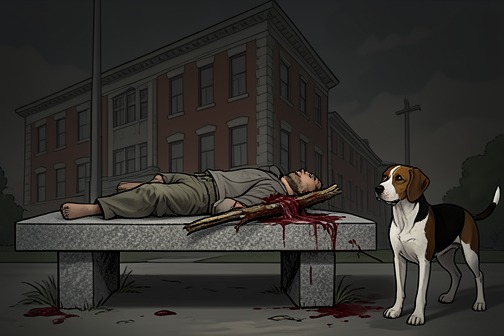
[Frank Peterson](entity:character-recall-character-frank-peterson-ec1f6e4fd21e)’s murder is the crime at the center of a case that turns apparent certainty into a devastating mistake. The investigation initially points to [Terry Maitland](entity:character-recall-character-terry-maitland-416bbab8ede5) through physical evidence, witnesses, and a public arrest, but a recording and corroborating testimony place him elsewhere at the time. The eventual official statement clears Maitland after his death and reopens the investigation, exposing the human cost of treating a persuasive case as a settled one before testing its contradictions.
## Discovery and Evidence
On the evening of [July 10](entity:time-recall-time-july-10-3e75b0e15f36), a witness following his beagle through [Figgis Park](entity:location-recall-location-figgis-park-b2334810bce1) came upon a clearing with a granite bench and Frank’s body beside it. The witness recalled a large amount of blood and a branch at the scene, with a visible handprint on its stripped section. The discovery was not merely a report of a missing child or an unexplained death: it supplied the investigators with a horrific scene and an apparent physical link to a perpetrator.
The branch became a central piece of the case. It was approximately 22 inches long and three inches in diameter; a section of bark had been stripped away, and fingerprints were recovered from the smooth area. Investigators reported that the evidence had passed through an intact chain of custody. Testing identified Frank’s blood on the branch and a second, rarer blood type, which the examiner believed could belong to the perpetrator. The apparently concrete findings gave the case against Maitland considerable force, even though their interpretation would later be challenged.
The medical findings added a further, disturbing dimension to the investigation. The medical examiner identified massive blood loss as the immediate cause of death and documented extensive injuries. In a confidential addendum, she warned that some parts of Frank’s body were missing and that the explanation might involve the perpetrator taking them as trophies or consuming them. She urged that these details be withheld from the press and, unless necessary, from trial, anticipating sensational coverage and emphasizing the family’s exposure to further pain.
## The Case Against Maitland
Investigators assembled a chain of witnesses who placed Maitland in circumstances they regarded as incriminating: he was reportedly seen confronting Frank in the [Gerald’s Fine Groceries](entity:location-recall-location-gerald-s-fine-grocer-fc9032fd42d1) parking lot, putting the boy’s bicycle into a van, and leaving the woods after the murder covered in blood. One witness knew Maitland as a neighbor, while another knew him because he had returned her lost dog. The familiarity behind these identifications seemed to strengthen them, and the fingerprints appeared to supply physical confirmation.
The decision to arrest was also driven by fear of another attack. [Ralph Anderson](entity:character-recall-character-ralph-anderson-40c042967493) knew that Maitland worked with children and worried that delay could leave another child at risk. [Flint City](entity:location-recall-location-flint-city-aa88b90b28ad)’s police force had only three full-time detectives; Jack Hoskins was away, and [Betsy Riggins](entity:character-recall-character-betsy-riggins-ecbc292a6072) was assigned to other work. Ralph recognized that the investigation had unresolved edges and that Maitland would claim an alibi, yet he proceeded before checking his movements. He later understood that the force of the evidence and the urgency of protecting children had narrowed his judgment rather than excused the missing inquiry.
At the baseball game, Terry Maitland did not understand the accusation when the arresting officer named Frank Peterson’s murder. He could only ask whether the officer was joking. A newspaper photographer captured that moment, and the next day the image appeared on the front page, showing Maitland in a way that could be read as both bewildered and guilty. His arrest thus became a public spectacle before his alibi had been investigated.
The consequences spread quickly to the Maitland family. When Marcy returned to their [Barnum Court](entity:location-recall-location-barnum-court-b7619c045355) home, police vehicles, a [State Police](entity:organization-recall-organization-state-police-f1fda5cf27fd) mobile crime unit, and troopers were already there, while neighbors watched from their lawns. The official search was visible to the community, and Marcy anticipated that cell phones had already carried the news. Later, outside the courthouse, cameras recorded her trying to reach Terry as the crowd jeered and someone threw a book that struck her shoulder. The case’s public narrative was not confined to evidence in police files; it followed the family into their home and into the media’s frame.
## The Alibi and the Collapse of Certainty
The contradiction emerged through the [Cap City](entity:location-recall-location-cap-city-6ff1f145c0a0) teachers’ conference. A [Channel 81](entity:organization-recall-organization-channel-81-18d2e6390fa5) recording showed Maitland attending the event, and colleagues who accompanied him supported his presence there. Investigators also found his fingerprints at the hotel. These findings placed him at the conference during the period when Frank was abducted and murdered in Flint City, challenging the prosecution’s account with evidence that the initial inquiry had not collected before the arrest.
Ralph and the other investigators had chosen not to ask about Maitland’s movements beforehand, fearing that inquiries might alert a dangerous suspect; the weight of the existing case had made that precaution seem unnecessary. Once the recording surfaced, Ralph recognized the cost of that choice. He revisited details that now appeared inconsistent with Maitland’s identity and habits, but he could not resolve whether the evidence indicated guilt or a deliberate attempt to frame him. His conclusion to Jeannie was not certainty in either direction, but an admission that he did not know.
The video also altered the legal and evidentiary picture. At his public statement, district attorney [William Samuels](entity:character-recall-character-william-samuels-8eb8e11db82a) said the recording’s authenticity was beyond doubt and cited the conference attendees’ testimony and the timing of Maitland’s hotel fingerprints. He further announced that forensic examination now led the office to regard fingerprints found in the van and at Figgis Park as planted. The apparent strength of the original case had not simply met a competing theory; key evidence had been reinterpreted as part of a possible effort to implicate Maitland.
## Death, Public Record, and Reopening
Maitland did not live to see the investigation corrected. During the courthouse shooting, news cameras captured him bleeding and pushing Marcy out of the line of fire before he collapsed after a fatal shot. The broadcast record was itself incomplete: the CBS image went blank before his death because Ralph’s bullet had struck the camera and injured its operator. The footage therefore preserved both a consequential act by Maitland and the limits of what the public could see.
Samuels eventually acknowledged that, with more time to assess the evidence, his office almost certainly would have dropped the charges and that Maitland would have been found innocent at trial. He stated that Maitland was innocent under the law at the time of his death and that suspicion still hung over the family. Samuels publicly declared that Maitland had nothing to do with Frank’s death and announced that the investigation was reopened, with work continuing in Flint City, [Flint County](entity:location-recall-location-flint-county-35bae5808102), and [Canning Township](entity:location-recall-location-canning-township-040a8fdd6a78) as well as in [Texas](entity:location-recall-location-22116bb34b58).
The case’s ending does not restore what the arrest and death took from the Maitlands, nor does the public exoneration itself identify the actual murderer. Instead, the reopening marks a shift in the official account: evidence once treated as conclusive is shown to have been incomplete or misleading, and the investigation resumes without the certainty that had driven the original prosecution. Frank’s murder remains the initiating crime, while the wrongful accusation becomes a second, irreversible consequence of the effort to solve it.
Event 27
Terry Maitland public arrest
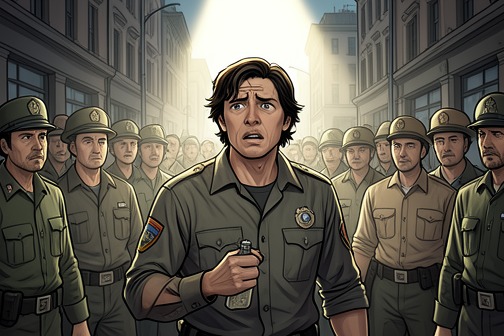
[Terry Maitland public arrest](entity:event-recall-event-terry-maitland-13cf0fa4f1f2) marks the point at which the investigation’s certainty becomes a public fact before it has been adequately tested. [Ralph Anderson](entity:character-recall-character-ralph-anderson-40c042967493) and [Bill Samuels](entity:character-recall-character-bill-samuels-593e2a14dfb1) act on evidence they consider overwhelming, but their decision to move quickly leaves a crucial alibi unchecked. The arrest is made before a crowd, and Terry’s baffled response becomes the image through which the city first sees him as a suspect. Later evidence challenges the case, but the consequences of that public judgment cannot be recalled.
## Background and Decision
The decision grows out of both investigative conviction and urgency. Ralph believes they have the right man, yet recognizes that the case still has rough edges and that Terry will claim an alibi. He would rather investigate further—identify weaknesses in the account and establish them before making an arrest—but accepts that this case is different. The prospect that Terry might harm another child weighs on the decision, as does Ralph’s later recognition that his fear and sense of responsibility shaped his judgment.
Ralph’s misgivings are not the same as doubt that Terry is guilty. Before the arrest, he remains convinced the evidence points to him, while wishing the team had more background and a firmer understanding of the alibi. That distinction matters: the failure is not that the investigators never perceived a risk of error, but that confidence and urgency outweighed the work needed to test the case before acting.
## The Arrest in Public
At the baseball game, the arrest unfolds before spectators and cameras. When Terry is told he is being arrested for [Frank Peterson](entity:character-recall-character-frank-peterson-ec1f6e4fd21e)’s murder, he does not appear to understand the accusation’s significance. He asks whether the officers are joking, and a sports photographer captures the moment. The image is published on the front page the following day; its composition makes Terry look both weak and guilty, converting a moment of bewilderment into a lasting public impression.
The arrest’s setting also exposes Terry’s family to immediate scrutiny. Afterward, Marcy arrives at the family home to find police vehicles, a mobile crime-unit truck, and troopers outside. Neighbors watch from their lawns, and she expects the news to spread through cell phones. At the later arraignment, cameras record the crowd and Terry’s family; Marcy breaks away and runs toward her husband as onlookers shout. The proceedings extend the arrest’s public humiliation rather than containing it within the legal process.
## Evidence and Reversal
The case’s central weakness becomes visible when Terry’s claimed whereabouts are checked. A station surveillance report places the subject under investigation at the [Vogel Transportation Center](entity:location-recall-location-vogel-transportation-fd798ba6648e) at 9:33 p.m. on [July 10](entity:time-recall-time-july-10-3e75b0e15f36), with a clear view of his face; he buys a paperback at 9:35 and leaves through the south portal at 9:39. Separately, witnesses and the recording of Harlan Coben’s talk place Terry at the [Cap City Sheraton](entity:location-recall-location-cap-city-sheraton-f54e81c8038f), where he appears on camera. Ralph later recognizes that the team should have checked Terry’s movements in advance, but they had agreed that inquiries might alert a dangerous suspect and had considered the evidence against him sufficient.
Even after the contradictions emerge, Ralph struggles to decide what they mean. He recalls details that seem to support the accusation—the cab passenger’s unfamiliar manner, the request for directions from a man supposedly local to [Flint City](entity:location-recall-location-flint-city-aa88b90b28ad), and fingerprints on a book—alongside witnesses and footage placing Terry elsewhere. The juxtaposition leaves him unable to give a sure answer about Terry’s guilt. His later account of the decision is more direct: the investigators did not have all the relevant facts when they arrested Terry, and the DNA evidence that had seemed to match him came from mixed samples containing material from both perpetrator and victim.
## Consequences and Significance
The arrest’s most irreversible consequence is Terry’s death during the courthouse shooting. News footage shows him trying to move Marcy out of danger before he collapses; one network’s footage goes blank when Ralph’s bullet strikes its camera. The images document the event, but they cannot undo the public accusation that preceded it or restore Terry’s life.
After the investigation uncovers the outsider and the truth about the case, Ralph’s earlier decision remains a source of shame. Jeannie tells Marcy that the account [Holly Gibney](entity:character-recall-character-holly-gibney-b39cdab3f007) gave them was true: the outsider was not a man, and it was found and killed in a cave. She says that the group may be able to clear Terry’s name if they tell the same story. At the public review of the case, Samuels acknowledges that the authorities proceeded without all the facts and that the apparent DNA match was compromised by mixed samples. The arrest is thus both a procedural failure with fatal consequences and the beginning of Ralph’s prolonged effort to confront what his certainty helped set in motion.
Event 28
Terry Maitland fatal shooting
[Terry Maitland fatal shooting](entity:event-recall-event-terry-maitland-1558a24f2144) is both a death and an injustice that outlasts the immediate investigation. The outsider’s mismatched features recall Terry’s death to [Ralph Anderson](entity:character-recall-character-ralph-anderson-40c042967493), while later revelations confirm that the real culprit was something other than a man. Yet Terry died before he could stand trial, leaving his family to seek an exoneration after the fact.
## Recognition at the Cave
During the confrontation at the cave, Ralph sees the outsider in a form that resembles [Claude Bolton](entity:character-recall-character-claude-bolton-f1f539b446d0) but has not finished changing. One of its eyes is blue, and that detail recalls the eye of [Terry Maitland](entity:character-recall-character-terry-maitland-416bbab8ede5) as its light went out when Terry died in the street on a hot July morning. Ralph recognizes other features as well, including the cleft chin, long jaw, and reddish-brown hair.
The resemblance does not mean that the outsider is Terry. Rather, the sight links the creature’s changing appearance to the earlier killing: the outsider has taken on aspects associated with Terry while presenting itself in Claude’s likeness. Ralph concludes that it is still changing and has not fully become the person it is imitating.
## What the Death Leaves Behind
After the cave confrontation, [Jeannie Anderson](entity:character-recall-character-jeannie-anderson-f2fa14383bf4) tells [Marcy Maitland](entity:character-recall-character-marcy-maitland-94a7409c8791) that [Holly Gibney](entity:character-recall-character-holly-gibney-b39cdab3f007)’s account was true: an outsider, not a man, had been found and killed in a cave. She relays Ralph’s report that the creature looked like Claude even though the real Claude was elsewhere. This establishes the supernatural explanation for the impossible appearances that had surrounded the case, but it does not undo Terry’s death or immediately resolve its legal consequences.
Jeannie has spoken with [Bill Samuels](entity:character-recall-character-bill-samuels-593e2a14dfb1), who believes that if those involved tell the same account, Terry’s name may be cleared. Marcy accepts the prospect of telling that story, and hope returns to her, but she asks what the story is. The exchange makes clear that a shared account must still be assembled and presented before the family can obtain recognition of Terry’s innocence.
## The Unfinished Exoneration
Marcy later insists that the matter is not over for her and the girls unless Terry is cleared. Her central objection is the timing: he was killed before he had his day in court. Samuels answers that they are working on it, indicating that efforts to address the case continue after the creature’s death.
The shooting therefore closes Terry’s life without closing the question of his name. The truth about the outsider offers a route toward clearing him, but the family remains caught between what the investigators now know and what can still be established publicly. The death’s consequence is not only grief; it is the enduring need to correct an accusation Terry never had the chance to contest at trial.
Event 29
Marysville Hole Cave Disaster and the Jamieson Twins’ Disappearance
The [Marysville Hole Cave Disaster and the Jamieson Twins’ Disappearance](entity:event-recall-event-marysville-hole-54c65d69ae34) is the fatal rescue attempt that left two eleven-year-old boys and their rescuers lost beneath [Marysville](entity:location-recall-location-marysville-854d67eaf694). A gunshot in the cave was followed by a collapse; later accounts and the ruin itself make the disaster both a human tragedy and a warning about the dangers of entering its unstable passages.
## The Cave and the Lost Twins
[Marysville Hole](entity:location-recall-location-marysville-hole-7d42feab3262) was described as the largest cave in [Texas](entity:location-recall-location-22116bb34b58), with a popular main chamber known as the [Chamber of Sound](entity:location-recall-location-chamber-of-sound-01d83d2605d2). Its acoustics carried a guide’s whispered words hundreds of feet from the chamber floor to visitors above, while pictographs and stalactites made the cavern a destination for tourists. An iron spiral staircase descended more than four hundred steps to the bottom.
The disaster began when the [Jamieson twins](entity:character-recall-character-jamieson-73591933fd92), both eleven, became lost underground. A rescue party went in after them, but neither the boys nor the rescuers came out. The episode is recalled through the stark contrast with the familiar cave adventure in which Tom and Becky eventually find their way out: the real children did not.
## The Rescue Attempt and Collapse
[Lovie Bolton](entity:character-recall-character-lovie-bolton-ee44fb680a18) recounts that Roger Bolton knew the less-public Ahiga side of the cave from exploring it. After hearing what seemed to be the boys’ cries, the group collected ropes and lights from the equipment building and entered in an attempt to rescue them. The cave’s maze-like passages made the search perilous. Ev Brinkley stayed behind to pay out rope and attach more as needed; he was the only person from the group described as surviving, and later left town for Austin.
When Ev was down to his last hundred feet of free rope, he heard a sound he compared to a firecracker going off in a closed toilet. Lovie believed that someone in the rescue party had fired a pistol in hopes of guiding the boys toward them, bringing down part of the cave roof. She specifically doubted that Roger had fired it. [Alec Pelley](entity:character-recall-character-alec-pelley-74702c4c2094) adds that a gunshot could have caused a ceiling collapse through its sound and impact, like a blast setting off an avalanche. The precise sequence remains an inference in the characters’ reconstruction, but the collapse and the deaths are established features of the disaster.
## A Cave Closed to the Public
Search parties continued to enter Marysville Hole over the years, until the [2007 earthquake](entity:time-recall-time-2007-earthquake-d23d9564f5cc) led authorities to consider it too dangerous. Although the quake measured only three or four on the Richter scale, it dislodged stalactites in the Chamber of Sound and collapsed other passages, including one called the Art Gallery. The cave was then closed: the main entrance was cemented over, and the [Ahiga entrance](entity:location-recall-location-ahiga-ecb93178e218) was boarded up.
The distinction between those entrances becomes important later. The Ahiga entrance connected directly to the Chamber of Sound, served as a route for supplies, and could function as an emergency exit. [Holly Gibney](entity:character-recall-character-holly-gibney-b39cdab3f007) notes that accounts say the main entrance was cemented shut but do not establish whether the Ahiga entrance was also sealed with cement. That gap in the historical record leaves open a possible route into the closed cave, though it does not prove that the passage remained accessible.
## The Disaster’s Return to the Present
During the later investigation, the old collapse is not merely background: it determines the risks of the underground search. In the passage, [Ralph Anderson](entity:character-recall-character-ralph-anderson-40c042967493) finds rubble beneath a cavity in the roof and recognizes it as the site where the ceiling gave way. He and Holly Gibney encounter the debris that rescuers had apparently pushed aside after removing the largest pieces. The physical remains of the collapse mark the route as dangerous even before the confrontation ahead.
The outsider exploits the disaster’s history to discourage Ralph from firing his weapon. It identifies the earlier collapse as having occurred in the Devil’s Slide passage, where the gunshot’s sound would have been dampened, and warns that a shot in the Chamber of Sound could bring down stalactites or trigger a larger collapse. It also reveals that Roger Bolton and his sons, along with the Jamieson twins and other victims, remain buried below. The disaster’s unresolved dead thus bind the cave’s past to the outsider’s present hiding place, while its unstable roof turns the rescue tragedy into an immediate constraint on the investigators’ choices.
Event 30
Terry Maitland’s Posthumous Exoneration Announcement
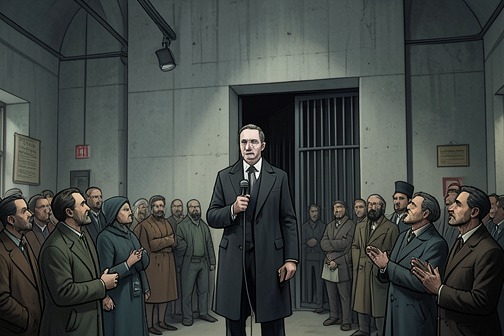
[Terry Maitland’s Posthumous Exoneration Announcement](entity:event-recall-event-terry-maitland-2dbd31e0cad4) is [William Samuels](entity:character-recall-character-william-samuels-8eb8e11db82a)’s public reversal of the murder case against [Terry Maitland](entity:character-recall-character-terry-maitland-416bbab8ede5), delivered on [August 10](entity:time-recall-time-august-10-09dba9a08a13) at a press conference in the courthouse. It formally declares that Maitland had nothing to do with [Frank Peterson](entity:character-recall-character-frank-peterson-ec1f6e4fd21e)’s death, explains why key evidence can no longer sustain the accusation, and reopens the investigation. The announcement offers a measure of public vindication, but it arrives after Maitland’s death and after the accusation has already damaged his family and helped drive a fatal chain of events.
## Background and the Cost of the Arrest
The announcement answers a case built on confident accusation before the defense had been fully checked. [Ralph Anderson](entity:character-recall-character-ralph-anderson-40c042967493) knew that Maitland would claim an alibi, but he and Samuels proceeded with the arrest before investigating it. Anderson believed they had the right man and feared that Maitland might harm another child; he also recognized that the investigation was incomplete and would have preferred to test the alibi before acting. Once evidence began to contradict the case, Anderson described the failure to check Maitland’s movements in advance as a grave mistake. The press statement thus reverses not only a conclusion about guilt but a public judgment made while the inquiry was still unfinished.
The accusation became visible and personal. At the baseball game, Maitland did not understand why he was being arrested for Peterson’s murder and could only ask whether the officers were joking. A photographer’s image of his startled face appeared on the front page, where the expression could be read as guilt as readily as bewilderment. After the arrest, police and news crews gathered outside the Maitland home, while neighbors watched and the family anticipated that the news would spread by phone. At the courthouse, cameras recorded the shooting that killed Maitland; Marcy ran toward her husband as reporters filmed, and a book thrown from the crowd struck her shoulder. By the time Samuels spoke, the suspicion he would formally dispel had already been broadcast through photographs, television footage, and public spectacle.
## The August 10 Statement
Samuels delivered the announcement from the courthouse conference room, standing behind microphones with a slim folder as television lights came on. He told reporters that a videotape showed Maitland attending a [Cap City](entity:location-recall-location-cap-city-6ff1f145c0a0) conference at the same time Peterson was abducted and murdered in [Flint City](entity:location-recall-location-flint-city-aa88b90b28ad). The recording’s authenticity, he said, was beyond doubt. Maitland’s colleagues had accompanied him and confirmed his presence, while testimony about his hotel fingerprints established that the prints were made too close to the time of the crime for him to be the perpetrator.
Samuels addressed the apparent contradiction between that account and the fingerprints found in the van used to abduct Peterson and at [Figgis Park](entity:location-recall-location-figgis-park-b2334810bce1). After further examination, his office now believed those prints had been planted. He noted that planting false fingerprints was uncommon but possible, and that methods for doing so could be found online. This explanation recast evidence once treated as incriminating as deliberate falsification, rather than proof that Maitland had been at the crime scene.
He also withdrew the force of the DNA evidence. The samples from Figgis Park contained DNA from both the perpetrator and the victim, and had been exposed to ultraviolet light during an unrelated testing procedure. In his department’s view, the material was degraded to the point that it would be inadmissible in court; in plain terms, Samuels said, the samples were worthless. The statement therefore did more than present a new alibi: it identified serious limitations in the physical evidence on which the original accusation had relied.
## [Texas](entity:location-recall-location-22116bb34b58), Loss, and the Reopened Investigation
Samuels connected the Flint City case to events in [Marysville](entity:location-recall-location-marysville-854d67eaf694), Texas, where he said Detective John Hoskins had acted in a criminal partnership with Peterson’s killer, helping that person hide and possibly planning another crime. He credited Ralph Anderson and the others with preventing that plan from coming to fruition. He also publicly named [Howard Gold](entity:character-recall-character-howard-gold-87119fd79519) and [Alec Pelley](entity:character-recall-character-alec-pelley-74702c4c2094) among those who died in Marysville, and offered the possibility that a child had been spared as a source of consolation for their families. The statement’s account recognizes that the effort to stop the killer carried its own deaths and losses.
Samuels then acknowledged the delay and the consequences of the earlier decision. He said that, given more time to evaluate the evidence, his office almost certainly would have dropped the charges; had the case gone to trial, he was sure Maitland would have been found innocent. He added that Maitland was innocent under the law at the time of his death. Because suspicion still clouded Maitland and his family, Samuels announced that he was reopening the investigation. It would remain concentrated in Texas while continuing in Flint City, [Flint County](entity:location-recall-location-flint-county-35bae5808102), and [Canning Township](entity:location-recall-location-canning-township-040a8fdd6a78).
## Significance and Limits of Vindication
The announcement is both a correction and an institutional admission. Samuels states the conclusion plainly: the district attorney’s office, and he personally, believe that Maitland had nothing whatsoever to do with Peterson’s death. Yet the correction cannot undo the arrest, the televised exposure, or the fatal shooting. Nor does it resolve the mystery by identifying Peterson’s killer; it reopens the inquiry and redirects it toward Texas while preserving investigative work in the places where the original case unfolded.
The press conference also contrasts official confidence with the uncertainty that had been suppressed at the start. Maitland’s colleagues, conference video, and the limitations of the forensic samples eventually compelled the prosecution to revise its position, but only after the arrest and death had made that revision irreversible in personal terms. Samuels’s public statement seeks to clear Maitland’s name and his family’s, while making clear that exoneration and justice are not the same as recovering what the case has already taken.