David Mitchell’s introduction
The Missing Editors
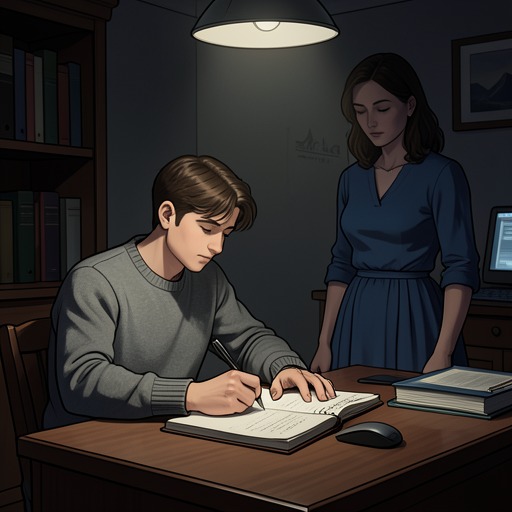
David Mitchell asks readers to imagine losing speech, then losing the inner editors that organize thought and filter sensation. Without them, memories and impulses crowd the mind while sound, light, touch, balance, and time become overwhelming. The image offers a way into the book’s account of autism, though it is Mitchell’s framing rather than a scene in [Naoki Higashida](entity:character-recall-character-naoki-higashida-062eaa51577f)’s life.
He describes how autistic people must learn to simulate functions others take for granted, and how misunderstanding can turn distress into apparent defiance. His central plea is that readers recognize the person inside the behaviors and keep faith in that person’s capacities.
David Mitchell’s introduction, before the translation
A Search for Answers
Mitchell recalls the confusion and helplessness he felt as a parent trying to understand his young autistic son’s distress. Existing advice and memoirs offered theories but could not tell him what his child might be experiencing from within. The need was not another diagnosis but an account that could make baffling behaviors intelligible.
He encountered [Naoki Higashida](entity:character-recall-character-naoki-higashida-062eaa51577f)’s book and found in it explanations that seemed to speak to the questions he and his wife had been carrying. The discovery became a turning point in his understanding of his son and the reason he wanted the book translated for other families and carers.
Before the book’s publication
A Young Author’s Method
[Naoki Higashida](entity:character-recall-character-naoki-higashida-062eaa51577f) was born in 1992 and diagnosed with autistic tendencies in 1998. Spoken communication remained extremely difficult, but with instruction from Ms Suzuki at [Hagukumi School](entity:organization-recall-organization-hagukumi-school-62ec11f7d3f7) and support from his mother, he learned to communicate by writing and pointing to letters.
Mitchell explains that Naoki used an [Alphabet grid](entity:object-recall-object-alphabet-grid-20c65181ad39), a low-distraction means of spelling out words with a helper transcribing them. It gave the young writer a way to form sentences and stories, and became the means through which he could address questions about the inner life of autism.
At the close of the introduction
The Book’s Invitation
Mitchell argues that Naoki’s writing refutes the assumption that autistic people are necessarily indifferent to others or eager to be alone. The author repeatedly expresses a wish for company and worries about causing distress; his story-writing also shows a close attention to other people’s feelings.
Mitchell presents the book as an invitation to replace judgments based on outward behavior with patience and curiosity. The essays that follow, he says, can restore faith in the intelligence and emotional complexity of a person whose speech may not reveal what is happening inside.
Naoki’s childhood and adolescence
A Life Seen as Different
Naoki recalls that as a small child he did not know he had special needs. Other people’s remarks taught him that he was different and that this difference was treated as a problem. He found speech unreliable, struggled to answer requests, and sometimes ran off when nervous, making even ordinary activities difficult.
He imagines how much easier life might be if autism were regarded simply as a personality type. Although his actions can create difficulties for others, he wants a future in which autistic people are understood rather than defined by the trouble they seem to cause.
During Naoki’s school years
Learning to Express Himself
With his mother’s help and training from Ms Suzuki, Naoki learned to communicate through writing. He describes this achievement as a way to share thoughts that had otherwise remained inaccessible to other people, including those closest to him.
Knowing that many autistic children lack a reliable means of expression, he hopes his explanations can help others understand what may be happening in their minds. The book begins from that purpose: to ask readers to look beyond appearances and listen to an autistic person’s account.
Early in Naoki’s development of communication
Writing as a Handrail
Naoki explains that spoken language could not reliably carry his intentions. At first, writing seemed beyond him, but on the day his mother supported his hand as he wrote, he began to discover another way of interacting with people.
His mother then devised the [Alphabet grid](entity:object-recall-object-alphabet-grid-20c65181ad39), allowing him to point to letters rather than write each one by hand. The method helped anchor words that otherwise seemed to vanish as he tried to speak, and gave him a practical route toward communicating independently.
Naoki’s explanation of speech, during the question essays
Voices Beyond Control
Naoki says that his voice can be unexpectedly loud, very soft, or strange in tone, and that these sounds are not always deliberate. Some vocalizations arise as reflexes to what he sees or to old memories; suppressing them can feel painful, as if he were strangling his throat.
He also explains that words he can access in the moment do not always match the thoughts he wants to convey. Even reading aloud can demand so much effort that he cannot simultaneously imagine the story. Practice may help, but ridicule only adds to the burden.
Naoki’s explanation of repetition, during the question essays
Questions as Memory Clues
Naoki says he repeats familiar questions not because he has failed to understand the answers, but because he quickly loses hold of what he has just heard. His memories do not feel like a continuous line; they are more like scattered dots, and asking again helps him find the recollection he needs.
Echoing a question can also buy time while he searches for a matching memory and a response that worked before. Familiar phrases offer pleasure through their sound and rhythm, but a remembered conversational pattern can mislead him when the present situation differs from the one it recalls.
Naoki’s reflections on conversation and relationships
The Cost of Being Misread
Naoki describes how spoken words can emerge that do not express what he means, while a useful reply may disappear before he can say it. When others assume every spoken word is intentional, misunderstandings become difficult to repair, leaving him ashamed and silent.
He insists that autistic people are not refusing to communicate or choosing isolation. Conversation is hard, attention may fail to register someone speaking nearby, and eye contact can interfere with listening. He wants others to use his name to gain his attention and to recognize that the wish for friendship remains even when communication repeatedly goes wrong.
Naoki’s reflections on how others address him
A Voice for Respect
Naoki objects to being treated like a baby merely because his behavior appears younger than his age. Simplifying language is not the same as respecting someone, and being talked down to leaves him feeling that others have denied him a future.
He asks people to speak to autistic individuals in a way suited to their actual age. For Naoki, compassion includes protecting another person’s self-respect rather than assuming that visible disability means childish understanding.
Naoki’s example of a classroom conversation
The Missing Words
Naoki illustrates how a short phrase from an autistic speaker can leave out the words that would explain its purpose. A girl says “all of us,” and her classmates speculate that she wants to join them, though she is actually trying to ask when the class will go to the park, echoing a teacher’s earlier statement.
The gap between what she means and what she can say sends listeners down mistaken paths. The example makes communication a shared responsibility: an incomplete utterance may be a fragment of a real question, not a meaningless sound.
Naoki’s reflections on movement and daily tasks
A Body That Will Not Obey
Naoki describes bodies that can feel unfamiliar and difficult to direct. Even when he wants to begin a straightforward task, he may need to think through it, visualize each step, and encourage himself before he can move; at times, his body still seems beyond his control.
Imitating movements, judging where limbs are, and gauging distance can also be difficult. He compares his limbs to a rubbery mermaid’s tail and notes that some children use another person’s hand to reach for an object because their own reach is hard to judge. The struggle helps explain why a delay or awkward movement should not automatically be read as unwillingness.
Naoki’s reflections on support
The Need to Be Watched Over
Naoki asks carers not to give up when an autistic person fails to act after an instruction or cannot reproduce a demonstrated task. A person may understand what is being said yet still lack a dependable way to turn that understanding into action.
Being watched with care can make him feel stronger, while the impression that others have abandoned him deepens misery. His request is not to be left without guidance but to receive continued help and the chance to do his best.
Naoki’s reflections on the worst part of autism
The Burden of Causing Grief
Naoki describes the despair that follows being scolded or laughed at when he cannot explain himself or apologize. Repeated failures can make him wonder why he was born into the world at all, while carers may not realize how deeply he is suffering.
The hardest burden, he says, is believing that his life makes other people unhappy. He asks those around him not to become consumed by stress over him, because their despair can feel like a denial of his life’s value and weaken the spirit he needs to continue.
Naoki’s later reflection on being normal
Questioning Normality
For much of his life, Naoki wanted to be normal because the relentless difficulty of living with special needs made him feel that an ordinary life would be easier. He imagines that parents and teachers might celebrate an offered cure, but says his own view has changed.
He has come to think that every person, disabled or not, must strive for happiness, and that autism is normal from the perspective of those born with it. If he can learn to love himself, the distinction between normal and autistic may matter less than other people assume.
After Naoki’s flight to Hokkaido
The Autisman’s Gravity
On a family trip to Hokkaido, Naoki is surprised to find the pull of gravity pleasant. The sensation inspires a miniature dialogue between an Earthling and an Autisman: gravity weighs down the Earthling, while the visitor from another world feels weightless on [Earth](entity:location-recall-location-dd4e41a8f628).
The exchange imagines that people with autism might move freely on a planet whose gravity suited them. It gives a playful, speculative form to Naoki’s recurring sense that the ordinary world does not fit his body and perceptions.
Naoki’s explanation of jumping, during the question essays
Why Naoki Jumps
Naoki describes jumping and clapping as a way to feel his body clearly and to send his emotions upward, as if he might be swallowed by the sky. Happiness or sadness can make his body seize up, leaving him unable to move as freely as he wants.
Jumping loosens that felt restraint and makes him feel lighter. He imagines that the movement might turn him into a bird, though the body and surroundings that confine him leave him hopping like one in a cage. The action is not empty excitement but a physical expression of feeling and a release from bodily constraint.
Naoki’s reflections on self-stimulation and memory
Letters in the Air
When Naoki writes letters in the air, he is often trying to confirm what he wants to remember. He recalls what he has seen not only as scenes but as letters, signs, and symbols, which remain fixed in memory when spoken words do not.
Letters also provide companionship during loneliness and happiness. Like silently humming a song, forming them lets him focus on something stable and reassuring, a private refuge from the shifting demands of speech.
Naoki’s reflections on sensory distress
Noise and Lost Bearings
Naoki says that some sounds barely noticed by other people can make an autistic person feel that the ground is shaking and the surrounding landscape is advancing. The fear is not merely irritation; continued listening can threaten the person’s sense of where they are.
Cupping the ears becomes a way to protect that sense of place and regain security. Naoki says that some people gradually adjust to difficult noises, but the crucial need is to feel safe when the sounds arrive.
Naoki’s reflections on perception and sensation
A World of Details
Naoki explains that details may strike an autistic person before the whole scene comes into focus. A vivid color or striking shape can seize attention so completely that other parts of the environment disappear from awareness.
He rejects the idea that every unusual response is simply a malfunctioning sense, suggesting that distress and emotion can make bodily sensations confusing and intense. Yet he also describes perception as a source of beauty: individual things can become cherished companions, helping a person feel less alone.
Naoki’s reflections on flashbacks and mistakes
Memories That Return as Storms
Naoki describes memories as scattered rather than orderly. When an old episode returns as if it were happening in the present, its original feelings surge back with it; these flashback memories can bring sudden distress, tears, or panic even when the remembered event happened long ago.
A small mistake can produce a similar overwhelming rush. Naoki compares the shock to a tsunami that destroys his ability to think clearly, driving him to cry, scream, throw things, or strike out just to escape the moment. When it passes, he sees the wreckage and hates himself, making patient companionship especially important.
Naoki’s reflections on pain, during the question essays
Pain and Puzzled Memories
Naoki considers why one person with autism may be distressed by hair or nail trimming while another shows little reaction to an obvious injury. He suggests that some apparent sensitivity may be connected to negative memories associated with an action, memories that cannot easily be retrieved in a clear sequence.
He also proposes that a person who hides signs of pain may find it easier to act as if the pain has passed than to communicate it. The explanation remains his own conjecture, but it underscores how little outward expression can reveal about an autistic person’s inner experience.
Naoki’s reflections on eating
Food and Familiarity
Naoki says that some autistic people restrict their diets because unfamiliar food may not register as food at all. Taste, color, and shape can make a new item difficult to accept, while the familiar foods remain predictable and recognizable.
He argues that meals offer more than nutrition and that new foods can be introduced gradually, while acknowledging that he does not personally share the difficulty to the same degree. His account frames pickiness as a struggle with unfamiliarity, not simply stubbornness.
Naoki’s reflections on clothing and routine
Clothing as an Outer Skin
Naoki says that it can be difficult to notice when clothing should be added or removed, even when a person understands that the weather is hot or cold. The need to adapt to a changing situation may simply slip from attention.
Clothes can feel like an extension of the body, so wearing a familiar outfit every day may provide reassurance against uncertainty. What looks like an irrational refusal to dress for the season can therefore be connected to comfort and the effort to stay secure.
Naoki’s reflections on time
Time Without Boundaries
Naoki describes time as continuous and difficult to grasp because a clock can show that it has passed without making its passage feel tangible. A second may seem endless, while a whole day can disappear in a flash.
Because the future is hard to picture and bodily control feels uncertain, each coming moment can bring anxiety about what will happen and how he will respond. The difficulty is not simply telling time; it is living without a stable sense of its flow.
Naoki’s reflections on restlessness and sleep
The Cicadas’ Summer
Naoki recalls that he sometimes could not fall asleep as a child and cautions against scolding autistic children who remain awake night after night. He says the difficulty may ease with time, even while a child appears outwardly fine and is exhausted inside.
In a separate image, he compares autistic restlessness to cicadas racing through an endless summer, unable to relax because time feels unstable. Their cries and hurried movement suggest an ongoing struggle against a flow of time from which they feel partly detached.
Naoki’s reflections on spinning and lining things up
The Comfort of Repetition
Naoki says spinning objects or watching them turn can be comforting because their motion follows a reliable pattern. Familiarity and regularity offer relief in a world where much else changes without warning.
He also describes lining up toys and attending to the order and surfaces of things as satisfying in itself. These activities can refresh his mind, while imaginative pretend play may hold little appeal; the arrangement is not merely a row of toys but a source of clarity and calm.
Naoki’s reflections on being in water
Water Beyond Time
Naoki imagines autistic people longing to return to an ancient aquatic past, before life on land became subject to the demands of time. In water he feels quiet, free, and unhurried, less besieged by the stimulation of sights and sounds.
The image expresses his sense that autistic people are born with primeval ways of feeling that do not fit ordinary civilization. Water becomes a place where he can feel at one with time rather than struggling to measure it.
Naoki’s reflections on television
Familiar Screens
Naoki explains that familiar television adverts can excite and soothe him because he knows what will happen and knows they will soon end. Their repetition makes them feel like visits from old friends, even though he is not especially interested in advertising itself.
He also enjoys simple children’s programs because their stories are easier to follow and often repeat recognizable scenes. Predictability lets him remain relaxed and engaged, and familiar moments can prompt visible happiness that others might rarely see.
Naoki’s reflections on timetables and learning
Numbers That Stay Fixed
Naoki says that numbers, calendars, and train timetables appeal because their rules are stable and their meanings do not shift from one reader to another. By contrast, ambiguous expressions and human relationships are difficult to interpret.
He is eager to learn, but patience and alternative strategies are needed because long sentences can exhaust his attention and make him lose track. He also writes stories about situations he has observed, hoping to preserve what he has learned about how people are expected to feel.
Naoki’s reflections on races and walking
Running Without Competition
Naoki can run freely when he is simply playing, but the demand to run fast can make him think so intently about moving his arms and legs that his body freezes. He also finds little pleasure in defeating others, so a school race may become an occasion to enjoy being present rather than to compete.
Walking offers a different kind of relief. The greenness of nature makes Naoki feel accepted and recharged, as though the natural world embraces him even when people ignore or reject him.
Naoki’s reflections on enjoyment and solitude
Nature as a Friend
Naoki says that familiar books and toys are often things he can do, not necessarily the activities he most wants. He would rather tackle a difficult book or debate an issue, but free time can be hard to navigate when no obvious action presents itself.
He describes nature as a friend that glows, sways, bubbles, and rustles without demanding the right words or social responses. In moments of attention to the natural world, he feels himself dissolve into something older and larger than his difficulties, and he asks readers to understand the person behind his habits.
During Naoki’s visit to Kamakura
Tears Before the Buddha
On a visit to [Kamakura](entity:location-recall-location-ac61316d498c), Naoki sees the great statue of Buddha and begins to cry. Its dignity and the accumulated hopes, prayers, and thoughts of generations move him profoundly, although he cannot stop the tears or readily explain them to others.
The episode challenges the assumption that visible crying necessarily means sadness or a meltdown. Naoki asks readers to remember that people can be moved by joy, beauty, or history even when they cannot give an immediate account of the feeling.
Naoki’s childhood, before he stopped wandering from home
The Pull of the Road
Naoki recalls leaving home as a young child without a specific destination or plan. Something outside seemed to lure his body onward, and he felt that staying indoors would make him cease to exist; roads seemed to invite him forward without end.
He says the impulse stopped after he nearly was hit by a car, when the fear left a powerful mark on his memory. Until then, he could keep walking without understanding what he had done, and he asks others to keep a watchful eye on people who may wander away.
Naoki’s reflections on running off and getting lost
An Unsettled Search
Naoki distinguishes the impulse to dash toward something interesting from the deeper unease that can make autistic people feel they do not belong where they are. They may wander in search of a place where they feel at ease, without considering how they will get back.
He says that he is slowly learning to control the urge to run off, while walking or jogging can restore his sense of gravity and help him feel at home in himself. The imagined refuge may be unreachable, but movement offers a temporary return to steadiness.
Naoki’s reflections on repeated actions and obsessions
The Action Loop
Naoki says repetitive actions can feel as though the brain keeps issuing the same command rather than the person freely choosing to repeat them. Performing the action brings comfort, while resisting it can provoke a feeling of horror.
He describes a loop in which forbidden behavior, its consequence, and the ensuing reprimand become linked, making the sequence itself compelling. Obsessions can eventually stop on their own, like a game reaching its end; when behavior harms others, carers may need to intervene, but he asks them to do so with patience and confidence that change is possible.
Naoki’s reflections on cues and starting actions
Waiting for the Prompt
Naoki explains that he may know what to do next yet remain unable to begin until someone gives a verbal cue. The prompt functions like a green light: without it, starting can feel terrifying, as though the action cannot be switched on.
He says that learning to proceed without prompts is possible but cannot be managed easily alone. During the transition, distress may come out as crying, screaming, hitting, or breaking things. He asks helpers to keep working alongside the person rather than mistaking the struggle for refusal.
Naoki’s reflections on fidgeting
Motion Against Entrapment
Naoki says that staying still can make him feel as if his soul is separating from his body, intensifying the sense that he is trapped inside it. Moving around provides some relief, even though he may be searching for an exit he cannot find.
Other people’s commands to calm down initially make little sense because motion is what calms him. He has gradually learned that there are times when stillness is expected, but learning to manage it requires practice in small steps.
Naoki’s reflections on visual schedules
Plans That Become Traps
Naoki says visual schedules can make a plan so vivid and fixed that a change becomes deeply upsetting. Rather than reassuring him, the schedule may turn the day into a series of preprogrammed actions and prompt repeated checking of the time.
He prefers to hear the day’s plan beforehand, even if he asks the same questions repeatedly while learning it. Visual aids can still help with the order of practical steps, but pictures of places on an upcoming outing may spoil the experience by making the plan too strongly fixed in advance.
Naoki’s reflections on panic and meltdowns
The Helplessness Beneath Meltdowns
Naoki says panic attacks can still occur even in an ideal environment, because their sources are not always visible or removable. He argues that autistic people have emotions as subtle and complex as anyone else’s, and that difficulties speaking can make them especially vulnerable to feeling trapped with unexpressed feelings.
When helplessness becomes unbearable, panic or a meltdown may follow. Naoki asks others to let the person cry or yell while staying nearby, gently preventing injury to that person or anyone else. The response should be care rather than the assumption that the distress is childish misbehavior.
At the end of Naoki’s question essays
Travellers Before Civilization
Naoki offers a deliberately speculative account of autism as something that emerged from humanity’s violence and destruction of the planet. He imagines autistic people as travellers from a distant past, physically similar to others but oriented toward a different way of being.
If their presence could help the world remember what matters to the [Earth](entity:location-recall-location-dd4e41a8f628), he says, that would bring quiet pleasure. The idea gathers his recurring images of nature, time, and an older human condition into a closing meditation rather than a scientific explanation.
In one of Naoki’s short stories
The Hare and Tortoise Race
A [Hare](entity:creature-recall-creature-hare-eac8b931638a) insists that he is faster than everyone else and challenges a [Tortoise](entity:creature-recall-creature-tortoise-b2af7946118c) to another race. When the race begins, the Hare bolts ahead, but the Tortoise slips and falls onto his back.
The other animals rush to help the injured Tortoise and carry him home, leaving the Hare to reach the finish line with nobody waiting. The story turns an expected contest into a quiet reversal, drawing attention away from winning and toward care.
In a story Naoki remembers hearing
The Red-Shoes Dancer
A girl in red shoes loves dancing so much that she keeps at it through the night and for a week, even as she grows exhausted. Her dancing seems to offer an almost complete happiness, and she is sure she wants to continue.
On the eighth day a handsome young man asks her to dance, but she declines, saying that she has discovered something more precious. She then lives happily with him, a brief fairy-tale turn from solitary absorption toward a shared life.
In Naoki’s story about the path to happiness
The Crow and the Dove
A black [Crow](entity:creature-recall-creature-crow-d6427d224130) is troubled by stories and songs that cast crows as villains. He meets a lost white [Dove](entity:creature-recall-creature-dove-0d2ac0d7b52c), who confesses that she cannot find the path to happiness despite being celebrated as a bird of peace.
The Crow tells her that all paths are one connected path. The Dove realizes that she is already on the road she has been seeking and flies away in renewed spirits; the Crow follows, no less beautiful against the sky.
The opening evening of “I’m Right Here”
A Boy in an Icy Stare
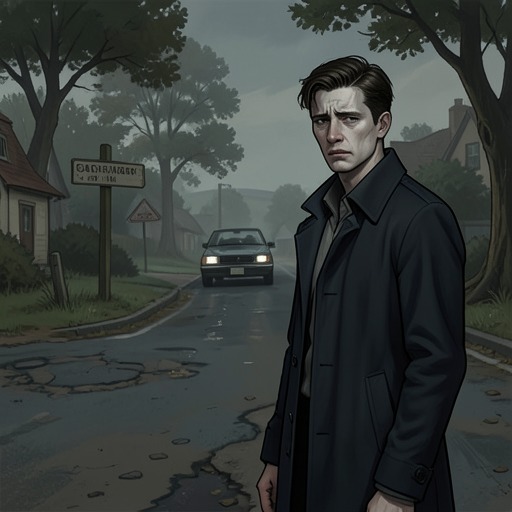
[Shun](entity:character-recall-character-shun-caf73883aca9) leaves a local supermarket and is stopped by an old man in a red hat, who asks what he is doing there. As Shun hurries away, he notices that people are staring at him with an icy, unsettling look, and he runs home.
His mother is preparing supper, but when he tries to speak to her, she seems to stare at him in the same strange way. Shun feels his body lock and flees outside, unable to understand why the familiar world has suddenly become hostile.
That evening, shortly after Shun returns home
A Missing Day
[Shun](entity:character-recall-character-shun-caf73883aca9) finds himself in a park without remembering how he got there. Exhausted, he tries to reconstruct the day: he woke, went to school, and came home, but the events that followed have vanished from his mind like the hole in a doughnut.
As darkness falls, he feels both desperate to act and strangely resigned to whatever happens. He walks back toward home, still unable to understand the staring faces or the missing stretch of time.
That night, outside Shun’s home
The Parents Who Cannot See
[Shun](entity:character-recall-character-shun-caf73883aca9) waits for his parents in front of the dark house and feels relieved when he thinks they are returning. He apologizes as he runs toward them, but something is wrong: when he reaches for his mother, her arm is not there, and his parents pass him without recognizing him.
Crouched on the ground, Shun begs for help. The old man from the supermarket appears again, speaks gently, and tells him that he no longer belongs to this world. The familiar household has become the first unmistakable sign that Shun is dead.
That night, as the old man explains what happened
The Fatal Collision Revealed
The old man tells [Shun](entity:character-recall-character-shun-caf73883aca9) that a car ran a red light and struck him on his way to the supermarket. The memory returns: Shun had tried to dodge the vehicle but froze, and then believed he had somehow come round outside the store.
The realization breaks through his confusion. Shun begins to cry because he does not want to be dead, while the old man waits until the tears have run their course. The accident explains the missing memories, the strangers’ stares, and his parents’ inability to see him.
That night, after Shun learns he is dead
The Road to Heaven
The old man tells [Shun](entity:character-recall-character-shun-caf73883aca9) that they are going to [Heaven](entity:location-recall-location-cf8e3b544421), and Shun follows him westward despite his fear. Their path looks ordinary rather than like the glorious way Shun remembers from books, and the plainness briefly lets him laugh with the old man.
The old man says that the Path to Heaven begins where they stand and raises his hands toward the sky. Shun, still frightened of what comes next, is reassured that he will be gone only for an instant before the scene dissolves around him.
Immediately after Shun’s passage to Heaven
A Bodyless Heaven
[Shun](entity:character-recall-character-shun-caf73883aca9) wakes before an ancient figure in white robes whom he recognizes as [God](entity:character-recall-character-god-28f937b98b12), then discovers that his body has disappeared. He panics, only for God to tell him that a body is no longer needed and that the things which held him back have fallen away.
He looks out at the stars and the blue [Earth](entity:location-recall-location-dd4e41a8f628) below, uncertain how to live without a body or a destination. [Heaven](entity:location-recall-location-cf8e3b544421) is not the comfortable place he had imagined, but God tells him to do what he wishes and trust that understanding will come with time.
Early in Shun’s time in Heaven
The Return to His Home
[Shun](entity:character-recall-character-shun-caf73883aca9) calls out for someone to take him home, and in an instant finds himself back at his house. He searches for his mother, but she cannot see or hear him, confirming that death has cut off ordinary contact between them.
He watches her grieve and apologizes in his thoughts. When she touches the space where his body would have been, Shun feels the warmth of an old childhood embrace, a moment that makes their bond seem present even though he cannot speak to her.
Soon after Shun returns to Heaven
Kazuo’s Welcome
Alone in [Heaven](entity:location-recall-location-cf8e3b544421), [Shun](entity:character-recall-character-shun-caf73883aca9) wishes for someone to talk to and hears a boy introduce himself as [Kazuo](entity:character-recall-character-kazuo-ec247c6e0a4a). Kazuo tells him that countless people are nearby, even if Shun cannot yet perceive them, and that he may speak with any of them if he wishes.
Kazuo describes a world beyond time and space, but Shun protests that freedom feels like having nothing to do. Kazuo advises him to try the things he could not do while alive, then slips away, leaving Shun to consider what that freedom might mean.
Over the following period in Heaven
Learning Life in Heaven
[Shun](entity:character-recall-character-shun-caf73883aca9) gradually becomes accustomed to [Heaven](entity:location-recall-location-cf8e3b544421) and makes many friends. Language, ethnicity, and historical era no longer divide people, and the peacefulness of this world contrasts with the fighting and quarrels they experienced while alive.
He travels around [Earth](entity:location-recall-location-dd4e41a8f628) and speaks with people in Heaven, enjoying new experiences and the freedom to own nothing. He also visits his parents, taking comfort in seeing them and hearing them speak about him, even though he cannot address them directly.
After Shun has spent some time in Heaven
His Mother’s Despair
During a visit to his family home, [Shun](entity:character-recall-character-shun-caf73883aca9) sees his mother staring at his photograph and weeping. She says she cannot go on living without him and wants to be where he is, revealing a grief that Shun had hoped would ease.
He cries and gently embraces her shoulders, knowing she cannot see him. The sight makes his own life in [Heaven](entity:location-recall-location-cf8e3b544421) unbearable: although he can remain beside her, he cannot comfort her in any way she can recognize.
After Shun asks God for help
A Second Birth Offered
[Shun](entity:character-recall-character-shun-caf73883aca9) returns to [Heaven](entity:location-recall-location-cf8e3b544421) and pleads with [God](entity:character-recall-character-god-28f937b98b12) to help his parents, unable to accept that their grief may last for the rest of their lives. God acknowledges the difficulty and offers him an unexpected way to help: he can be born to his parents again.
The offer brings Shun immediate hope, but God explains its cost. If he returns as their child, he will no longer be Shun and will lose every memory of having been himself. The possibility of reunion is inseparable from the disappearance of his present identity.
The month after God’s offer
The Choice to Remain
[Shun](entity:character-recall-character-shun-caf73883aca9) hesitates over the offer of rebirth. If his memories and identity will vanish, he wonders what the point is of being born again; meanwhile, the life he has built in [Heaven](entity:location-recall-location-cf8e3b544421) is peaceful and the promise of seeing his parents there someday offers some comfort.
A month passes without a decision, and Shun does not visit his family home. He begins to believe that time may settle everything, but the thought does not resolve what his parents’ continuing grief demands of him.
About one year after Shun’s death
His Mother’s Collapse
When [Shun](entity:character-recall-character-shun-caf73883aca9) returns to his former home after a long absence, his mother is not there. He follows his father to a hospital and finds her pale and depleted, while his father looks exhausted; a doctor warns that she may not survive.
Shun calls to her, but she cannot hear him. In delirium, she repeats his name and longs to see him. He realizes that the grief he hoped would heal has stripped her of the will to live, and he can no longer accept waiting for a future reunion in [Heaven](entity:location-recall-location-cf8e3b544421).
At the hospital, about one year after Shun’s death
The Decision to Return
[Shun](entity:character-recall-character-shun-caf73883aca9) concludes that he must act while his mother is still alive. He believes the grief is connected to him and that he has to do what he can to help her; with all his courage, he asks [God](entity:character-recall-character-god-28f937b98b12) to return him to his mother.
The decision accepts the cost God has described: Shun will be reborn without retaining his former identity or memories. His choice marks a turn from the safety of his own afterlife toward the uncertain future of his family.
Immediately after Shun’s request for rebirth
The Snowfall Sign
Many-colored orbs appear in the air, each containing a tiny golden sphere, and one by one they burst with a chiming sound. [Shun](entity:character-recall-character-shun-caf73883aca9) recognizes the bell-like notes as something from a distant part of his life, though he cannot hold on to the memory.
In the hospital room, his mother wakes and tells his father that Shun visited her in a dream. She remembers him saying that he is always there and asking her not to cry, and she begins to gather herself and imagine putting the pieces of life back together.
The first snow after Shun’s decision
Beginning Again
[Shun](entity:character-recall-character-shun-caf73883aca9)'s parents said he has been protecting them all along and decided to start over. Outside the hospital, the first snowflakes gently fell. The story portrays the snowflakes as formed by Shun's tears and also as a proof of his former life. This picture turns sorrow into a
Five years after Shun’s death
Nozomi’s New Life
Five years have passed. The second year after Tsubasa made his decision, his family welcomed a baby girl. Her parents named her Moe, meaning hope. Now, she is about to start kindergarten
Five years after Shun’s death, on Nozomi’s way to the supermarket
The Angel’s Question
Moumi told the old man that she was living happily. Then she turned around and found that he was gone. Her mother came up and warned her not to talk to strangers. But thinking that the person was really just a stranger, Moumi felt a strange joy in her heart
Later that day, five years after Shun’s death
The Cherry Blossoms
On the way back from the supermarket, Aoi asked her mother to visit the cherry blossom tree that her brother used to like. She thought that things her brother liked were also things she liked, but she was also curious about who her brother really was. The mother thought that one day she would see
At the book’s close
A Future Made of Hope
In the afterword, Tatsuya Higuchi recalls his childhood fears: autism would prevent him from living like a normal person. The various obstacles and constant apologies in daily life drained his hope, but he asks readers to understand that the behavior of people with autism is not simply out of selfishness