Seven days and seven nights
The Rime of the Ancient MarinerSeven days and seven nights is the duration for which the Ancient Mariner sees the curse in a dead man’s eye without being able to die. The span turns the curse into sustained exposure rather than a momentary shock, binding the dead man’s gaze to the Mariner’s continuing life.
The Duration of the Curse
The Ancient Mariner describes the dead man’s eye as more horrible than the other sights surrounding him. For seven days and seven nights he sees its curse, while death—which might end his suffering—does not come. The fixed duration gives the horror a relentless measure: night follows day, but neither passage of time nor the dead man’s gaze releases him.
Time and the Moving Moon
The account places the seven-day ordeal beneath a moving Moon that rises and travels across the sky without abiding anywhere. Against that visible motion, the Ancient Mariner remains held in the same condition, seeing the curse and unable to die. The contrast makes the passing days palpable while emphasizing that elapsed time brings no escape.
A Larger Voyage of Extremes
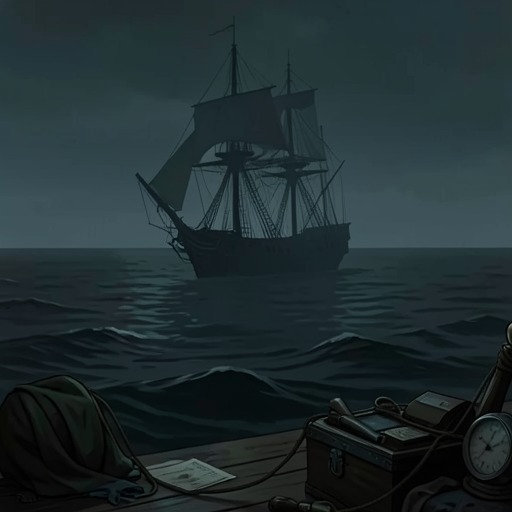
The phrase belongs to a voyage measured by sharp changes in circumstance. The ship first leaves harbour with its crew aboard; a tyrannical, powerful storm then drives it onward. Later, a good south wind rises behind the ship, while the Ancient Mariner’s ordeal unfolds amid supernatural events. The seven days and nights thus register not an ordinary interval at sea but a sustained stage of the voyage’s passage from motion and weather into a more intimate confinement.
After the Ordeal
The poem gives this interval a further contrast with the later movement of the ship. Although no breeze blows, the helmsman steers and the ship moves on, as the mariners work the ropes. The Ancient Mariner’s experience of being unable to die therefore belongs to a narrative in which bodily endurance and the ship’s motion do not depend on ordinary wind or uncomplicated passage of time.
Narrative Significance
The repeated reckoning of days and nights makes duration itself part of the punishment. The Ancient Mariner is not merely confronted with death in the dead man’s eye; he is made to witness its curse across a full measured span while remaining alive. By setting this persistence beside the Moon’s movement and the ship’s strange continuation, the poem turns time from a neutral backdrop into a means of emphasizing his helpless endurance.