
The Duty to Protect and the Right to Choose
The Tenant of Wildfell HallHelen’s decisions about care, marriage, and escape show how duty can protect the vulnerable but can also be misused to demand obedience.
increasing Bearing strength in each event
 decreasing
Bearing strength in each eventdecreasingDuties Assigned by Others

Duties Assigned by Others
The wife’s prescribed role
Those around Helen describe her duty as staying with Arthur Huntingdon and tending to his comfort. They rarely ask whether his conduct has released him from reciprocal obligations.
A child’s needs overlooked
The prescribed role also puts Arthur Graham at risk by prioritizing the appearance of a complete household. Helen begins to see that duty must be judged by whom it protects.
A Mother’s Duty Chosen

A Mother’s Duty Chosen
Protecting the child
Helen decides to leave because she fears her son’s character and health are being harmed. She does not wait for a public authority to confirm a danger she sees at home.
A costly choice
The decision requires secrecy, financial risk, and separation from familiar friends. Helen accepts those costs because her understanding of parental duty places the child’s welfare first.
Care for a Former Husband
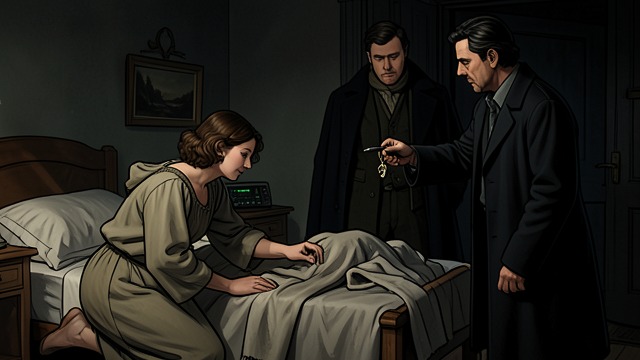
Care for a Former Husband
Duty renewed by compassion
Helen returns to nurse Arthur Huntingdon when he is seriously ill. She does so without denying his earlier betrayals or pretending to love him as a husband.
A line maintained
She makes him sign an agreement concerning their son before allowing a reunion. The act shows that compassion and self-protection can coexist, even when others expect a wife to choose only one.
A Husband’s Duty to Reform
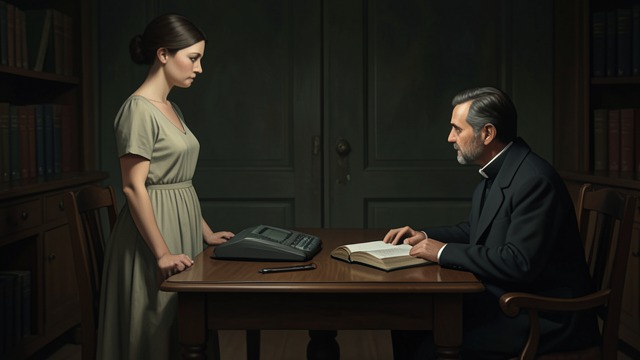
A Husband’s Duty to Reform
A chance presented
Helen urges Arthur Huntingdon to consider his approaching death and the life he has led. Hattersley also suggests that a clergyman might help him face the crisis.
A choice not transferred
Arthur cannot rely on Helen’s prayers or care as substitutes for his own repentance. The scene distinguishes support from responsibility: another person may help, but cannot perform the moral work for him.
A Marriage Freely Entered
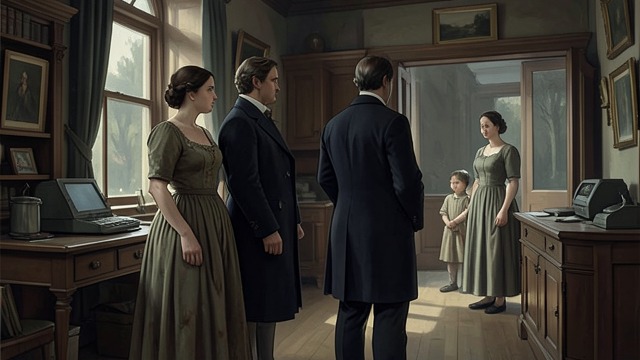
A Marriage Freely Entered
The choice revisited
Helen considers her future with Gilbert after her previous marriage has ended and her circumstances have changed. She can refuse, delay, or consent without the coercion that shaped her first decision.
Duty made reciprocal
The couple plan their marriage with regard for each other and for Mrs. Maxwell. Their union offers a model of duty that grows from mutual choice instead of enforcing one-sided submission.
Before Helen’s escape
Late 1826
Late 1827
During Arthur’s illness
After the reunion at Staningley
