Event 1
V-Day 1998
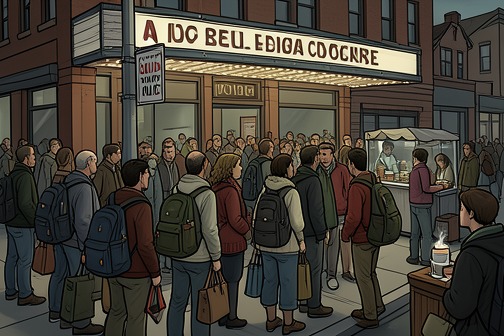
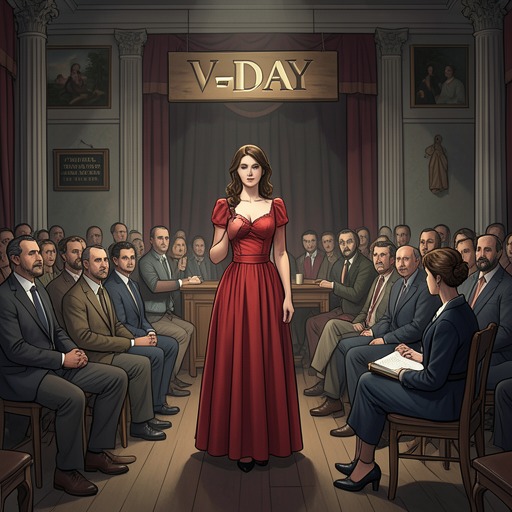
[V-Day 1998](entity:event-recall-event-v-day-1998-f55c642dafa3) was the inaugural benefit performance that launched [V-Day](entity:organization-recall-organization-v-day-ab715028908b) as a movement against violence against women. On February 14, [1998](entity:time-recall-time-1998-2941ef657188), a sold-out performance of The Vagina Monologues at [New York City](entity:location-recall-location-new-york-city-65df0a129d4c)’s [Hammerstein Ballroom](entity:location-recall-location-hammerstein-ballroom-c64743c38211) brought together performers and a crowd that stretched into the street; the event raised more than $100,000 and made the play’s public naming of women’s bodily experience the basis for an expanding campaign of performance, fundraising, and awareness.
## Origins and Purpose
V-Day 1998 grew from a wider effort to confront the silences surrounding women’s bodies and the violence directed against them. The book’s account links that silence to a childhood vocabulary in which the word “clitoris” was never spoken and one area of the body remained unmentionable. In that account, the absence of accurate language left women vulnerable to shame, schoolyard jokes, and the assumption that male lovers or physicians knew more about women’s bodies than women themselves. The benefit’s public performance therefore carried more than theatrical significance: it placed women’s accounts of their bodies before a large audience and connected speech with organized action.
The event followed the formation of V-Day by activist women in [1997](entity:time-recall-time-1997-83fe85347f22). The [V-Day Benefit Committee](entity:organization-recall-organization-v-day-benefit-co-51867fe7d7ab) expanded through a chain of personal invitations, with members bringing in others, and its first project was designed to launch a movement through a benefit performance of [Eve Ensler](entity:character-recall-character-eve-ensler-74b23b4236ca)’s play. Its stated purpose was to raise both money and awareness to stop violence against women. The structure joined a familiar public occasion—Valentine’s Day—to a subject often forced into silence, using the visibility of a theatrical event to gather people and resources around that purpose.
## The Benefit Performance
On February 14, 1998, twenty-five hundred people lined up outside the Hammerstein Ballroom in New York City. The performance had sold out, yet hundreds more remained on the street, clamoring to get inside. The crowd’s size made the event’s reach visible before the performance began: participation exceeded the number of seats, and the desire to be present became part of the launch itself.
The Vagina Monologues was performed by a large group of well-known actors, artists, musicians, and activists. Whoopi Goldberg, Susan Sarandon, Glenn Close, Winona Ryder, Marisa Tomei, Shirley Knight, Lois Smith, Kathy Najimy, Calista Flockhart, Lily Tomlin, Hazelle Goodman, Margaret Cho, Hannah Ensler-Rivel, BETTY, Klezmer Women, Ulali, Phoebe Snow, [Gloria Steinem](entity:character-recall-character-gloria-steinem-cd922488f737), Soraya Mire, and Rosie Perez joined the event. The range of participants gave the benefit the character of a collective undertaking rather than a single performer’s appearance. Their performance raised more than $100,000 and launched the V-Day movement.
The audience, too, responded as a varied public. Men and women, students and businesspeople, mothers and activists filled the theater. They laughed, gasped, fell silent, cried, and cheered as the performances unfolded. Those successive reactions show how the event moved between humor and pain without separating the play’s bodily subject matter from its political stakes. The audience’s visible engagement was part of the occasion’s force: the work was not only presented but received in a room where people responded together.
## Consequences and Development
The benefit’s immediate consequence was to establish the first of many V-Day events intended to raise money and awareness against violence toward women. Its fundraising result gave the movement a concrete resource, while the packed venue and the people unable to enter demonstrated a public appetite for participation. In the book’s account, the evening was transforming not simply because the play was performed, but because a performance became the starting point for continued collective activity.
The model did not remain confined to the 1998 benefit. Subsequent campus performances used the same play but took distinct forms: some were intimate staged readings, while others became elaborate theatrical and social events. Schools added activities and resources, including post-performance Vagina Dialogues, sexual-assault counselors, fundraisers, parties, music, art, and dance. This later variation clarifies what the first benefit set in motion: a repeatable event centered on the play, adaptable to local settings and capable of linking performance to services, conversation, and fundraising.
## Significance of the Event
V-Day 1998 joined language, performance, and material support in a single public occasion. The play’s subject challenged the shame and misinformation associated with women’s bodies; the benefit directed the energy gathered in the theater toward a movement whose purpose was to stop violence against women. The contrast between the sold-out room and the hundreds waiting outside gave that combination a striking physical form: the audience was larger than the venue could contain.
The event’s significance also lies in the way it made participation visible and collective. A network of women had assembled the benefit through the V-Day Benefit Committee; performers carried the play to the stage; audiences answered with laughter, silence, tears, and cheers; and the money raised supported the movement’s work. V-Day 1998 thus stands as both a specific Valentine’s Day performance and the launching occasion for a continuing series of benefits. Its legacy in the book is not an isolated night of celebrity theater, but the creation of a public framework in which speaking about women’s bodies could lead directly to organized action against violence.
Event 2
V-Day 1999 College Initiative
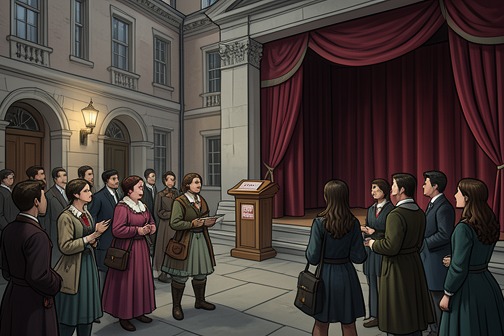
[V-Day 1999 College Initiative](entity:event-recall-event-v-day-1999-college-init-635fe51af1cb) turned the momentum of a benefit performance into a decentralized campus campaign: colleges and universities were invited to stage The Vagina Monologues on Valentine’s Day, then return the proceeds to community organizations working to stop violence against women. The initiative joined public performance to local organizing, making awareness not merely an audience response but a route toward funding and action in the places where students lived and studied.
## From benefit to campus campaign
The plan followed the first [V-Day](entity:organization-recall-organization-v-day-ab715028908b) event, a celebrity benefit performance of [Eve Ensler](entity:character-recall-character-eve-ensler-74b23b4236ca)’s The Vagina Monologues at [New York City](entity:location-recall-location-new-york-city-65df0a129d4c)’s [Hammerstein Ballroom](entity:location-recall-location-hammerstein-ballroom-c64743c38211). The sold-out show had drawn a crowd so large that hundreds of people still clamored to enter from the street. Its reception helped demonstrate that audiences would gather around the play’s message, and the [V-Day Benefit Committee](entity:organization-recall-organization-v-day-benefit-co-51867fe7d7ab) set a new objective for [1999](entity:time-recall-time-1999-f4275b8076e3): get that message out at the local level.
The College Initiative translated that objective into a practical model. Colleges and universities would mount productions on Valentine’s Day, with proceeds going back into their communities through organizations working to stop violence against women. The arrangement linked a shared text and a common date to different local beneficiaries; participation could therefore make the national campaign visible while directing resources toward work in each school’s own community. A project organizer volunteered to direct the initiative, hoping to extend the reach of the first event beyond its large central venue.
## Recruitment and reach
Recruitment depended on targeted letters, the V-Day website, and word of mouth. Together, those channels brought more than sixty-five schools in the United States and Canada into the 1999 initiative. The final number initially disappointed the organizer, who had hoped for more, but that reaction gave way to a different measure of scale: persuading any schools to participate had required substantial commitment, and the participating schools’ achievement came to seem monumental.
The result was not only a count of productions. Extensive media coverage introduced more than 20,000 people in North America to V-Day and The Vagina Monologues. In the week after Valentine’s Day, an extraordinary number of the organizer’s contacts asked when they could begin work on the following year’s effort. That immediate demand suggested that the initiative had created a continuing invitation to participate, rather than an isolated annual observance.
## A shared play, distinct events
Every participating school presented The Vagina Monologues, but the performances did not take one uniform form. Some were intimate staged readings; others became elaborate theatrical and social events. Schools also built additional activities around the production: post-show “Vagina Dialogues,” sexual-assault counselors on site, fundraisers and parties, and music, art, and dance. The common play supplied a recognizable center, while local choices shaped what each gathering offered its audience and community.
That range made the initiative more than a touring performance replicated on campus. In some places, the event opened space for discussion after the show; in others, counselors and community resources were available alongside the performance. The production could thus join artistic presentation to conversation, support, and fundraising, with each school determining how those parts met its local circumstances.
## Resistance and public participation
The campaign’s public visibility could bring opposition as well as support. During the [2000](entity:time-recall-time-2000-ac3288bc32bf) initiative at Washington University in St. Louis, fraternity members posted antagonistic flyers and threatened to disrupt the V-Day event. The student director responded by inviting the men to the production. Rather than meet intimidation with a cancellation or a purely defensive posture, she brought the potential disruptors into the audience, turning a threatening situation toward constructive engagement.
Other campus accounts show how participation could make an abstract statistic physically visible. At one event, the organizers distributed stickers to every third person entering the theater; during the opening announcement, a third of the audience stood to represent the statistic that one in three women is raped by age eighteen. The gesture made the audience part of the presentation, placing the scale of sexual violence in the room rather than leaving it as a number heard from the stage. The response could also be celebratory: the account describes a standing ovation at the 4 P.M. show and a total of $3,332 to be divided among three Arizona organizations, including the state’s only bilingual domestic-violence shelter.
## Significance and continuation
The initiative’s central design joined several kinds of work without making them interchangeable. The play made violence against women publicly speakable; campus performances gathered audiences; local organizations received proceeds; and conversations, counseling, and accompanying activities extended the event beyond the stage. The same piece could therefore anchor different combinations of performance and community response, while the proceeds remained directed toward local efforts.
Its early scale was modest beside the organizer’s initial hopes, but the more than sixty-five participating schools, extensive coverage, and over 20,000 people reached gave that first campus campaign a concrete public footprint. The questions arriving after Valentine’s Day pointed forward: participants and contacts were already asking when the next effort would begin. In this way, V-Day 1999 College Initiative established the campus production not simply as a one-day fundraiser, but as a repeatable means of carrying V-Day into local communities.
Event 3
V-Day 2000 College Initiative
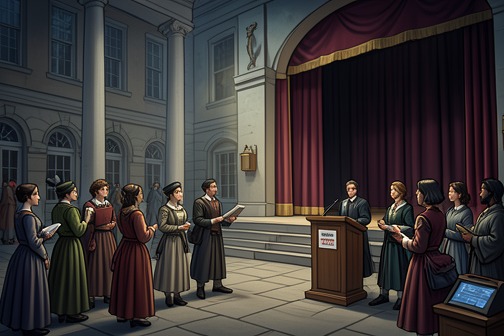
The [V-Day 2000 College Initiative](entity:event-recall-event-v-day-2000-college-init-1bed7dbd7b43) transformed a college performance campaign into a broad network of campus events, workshops, and public outreach. Planned Parenthood Federation of America became its primary sponsor, 150 schools took part, and an estimated 65,000 people attended events; associated publicity introduced more than 15 million people to The Vagina Monologues. Its scale mattered, but so did its local character: schools staged the same play in different ways, connected performances to dialogue and resources, and navigated distinct campus communities and conflicts.
## Development and Sponsorship
The initiative differed from its predecessor in three respects, although the available account specifies only one: its sponsors. Planned Parenthood Federation of America joined as the primary sponsor of the [2000](entity:time-recall-time-2000-ac3288bc32bf) initiative’s special event, the Empowerment Workshop. The partnership placed a major reproductive-health organization at the center of a program that used campus performance as a means of bringing attention to violence against women.
The workshop also gave the initiative a shared point of contact across participating schools. On November 6, [1999](entity:time-recall-time-1999-f4275b8076e3), students representing one hundred schools traveled to [New York City](entity:location-recall-location-new-york-city-65df0a129d4c) for an event led by [Eve Ensler](entity:character-recall-character-eve-ensler-74b23b4236ca). The date and scale show that preparation began before the 2000 campus events themselves: students gathered as participants in a coordinated program, rather than each school acting entirely alone.
## Workshops and Campus Reach
At the New York workshop, Eve Ensler taught the students. The account identifies this as part of the Empowerment Workshop but does not detail its curriculum, so its importance is best understood through the role it played in the initiative: it brought representatives from a large group of campuses together around a common program before events spread locally.
The initiative ultimately included 150 schools, expanding [V-Day](entity:organization-recall-organization-v-day-ab715028908b)’s reach. An estimated 65,000 people attended its events, while the events and related publicity introduced more than 15 million people to The Vagina Monologues. These figures describe different forms of participation: attendance at campus events was substantial, while publicity extended awareness much further beyond the rooms where performances took place.
## Performance and Local Variation
Every participating event used The Vagina Monologues, yet the repeated text did not make the events interchangeable. Some schools held intimate staged readings; others took different approaches to the presentation. The initiative therefore combined a common work with locally shaped performance, allowing the event’s form to vary from campus to campus.
Some organizers supplemented performances with resources, and some held “Vagina Dialogues” afterward. The post-performance conversations extended the event beyond the play itself: the performance could lead into discussion, while accompanying resources connected that discussion to further information or support. The account presents these as possibilities across the initiative, not as features that every school necessarily shared.
## Communities, Conflict, and Significance
The campus settings brought the initiative into contact with varied student populations. At one institution, an educator noted that 45 percent of its students were Black and that many women students had annual incomes below $35,000. She described the women’s response to the play as powerful, while also observing that her students generally had not been exposed to it. This account locates the initiative’s significance not only in its audience totals but in encounters with particular communities for whom the work was new.
The initiative also met resistance. During the 2000 program in St. Louis, fraternity members posted antagonistic flyers and made threats. The evidence does not describe a further outcome, but the incident makes clear that campus events could become contested public actions rather than routine performances. Taken together, the workshops, locally varied productions, dialogue, outreach, and opposition show how the initiative carried a shared theatrical project into distinct institutional settings—and how its reach depended on both collective coordination and local response.
Event 4
《阴道独白》外百老汇首演
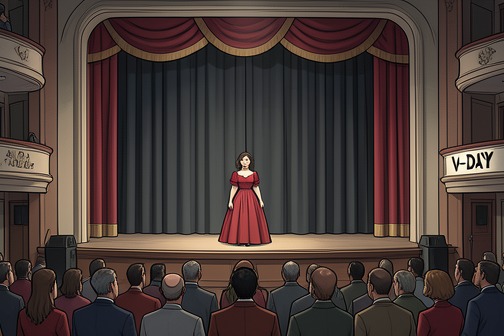
The Vagina Monologues’ Off-Broadway opening on October 3, [1999](entity:time-recall-time-1999-f4275b8076e3), marked a new public life for [Eve Ensler](entity:character-recall-character-eve-ensler-74b23b4236ca)’s play. At the [Westside Arts Theatre](entity:location-recall-location-westside-arts-theatr-b7abd49b3430), a production led by David Stone did more than extend the play’s theatrical run: it offered a way to channel ticket sales into [V-Day](entity:organization-recall-organization-v-day-ab715028908b), joining the circulation of a performance to a movement against violence against women.
## From Benefit Event to New Production
The play had already served as the centerpiece of [V-Day 1998](entity:event-recall-event-v-day-1998-f55c642dafa3), a celebrity benefit at [New York City](entity:location-recall-location-new-york-city-65df0a129d4c)’s [Hammerstein Ballroom](entity:location-recall-location-hammerstein-ballroom-c64743c38211) Theatre. That sold-out performance launched the V-Day movement and its fundraising and awareness-raising events; people continued to clamor outside for admission even after the house was full. The Off-Broadway opening the following year therefore followed an initial public event that had already demonstrated how the play could gather audiences around a cause.
The 1999 production opened at the Westside Arts Theatre on October 3. Ensler describes it as the play’s “second life,” distinguishing this production from the earlier benefit performance while presenting it as a renewal rather than a departure. The work could now reach audiences through a sustained theatrical production as well as through special events organized around V-Day.
## Production and Movement
David Stone, the production’s lead producer, was central to that transition. Ensler credits his vision, tenacity, and faith in the play with helping bring it into the world. His contribution also had a practical consequence for the movement: he found a way for ticket sales to support V-Day. The production’s commercial mechanism thus became a means of sustaining activism, connecting each audience’s attendance to resources for the larger campaign.
Stone’s involvement extended beyond producing the show. Ensler specifically thanks him for committing himself to the V-Day movement, describing his participation as wholehearted. In her account, the Off-Broadway production and the movement are not parallel projects: theatrical production supplied a route through which the movement could gain support, while the movement gave the play’s public presence a purpose beyond performance alone.
## Performance and Audience
The play’s earlier benefit performance offers a vivid account of how its words worked in a room. At the [1998](entity:time-recall-time-1998-2941ef657188) event, the audience included men and women, students and businesspeople, mothers and activists. Their responses moved between laughter, gasps, silence, tears, and cheers. The varied reactions register the performance as a live encounter: the audience did not receive the play in a single emotional mode, but responded to it through successive shifts in attention and feeling.
That collective reception helps clarify what the later Off-Broadway production extended. The play’s public force depended not only on its written stories but also on their performance before audiences who could recognize, react, and gather together. At the same time, the wider V-Day project did not require every presentation to reproduce one fixed theatrical format. Participating schools staged the same play in forms ranging from intimate readings to elaborate theatrical and social events; some added post-performance “Vagina Dialogues,” counselors, fundraisers, parties, music, art, or dance. The contrast between a dedicated Off-Broadway run and varied community productions shows how the text could travel through distinct settings while remaining attached to a shared cause.
## Significance and Legacy
The opening’s significance lies in the convergence it made possible: a play that had launched V-Day as a benefit could acquire a second theatrical life while its ticket revenue supported the movement it helped inspire. The movement’s message was carried both through performance and through the practical organization surrounding it. In this account, theatre was not simply a platform for speaking about violence against women; its production and sales could also help finance organized action.
That convergence unfolded against the silence the play sought to unsettle. Ensler recalls growing up without ever hearing the word “clitoris,” leaving an area of the body unnamed and her vulnerable to shame, dirty jokes, and the assumption that men—whether lovers or physicians—knew more about women’s bodies than women did. Her interviews with more than two hundred women became the basis for monologues, while a workshop exercise asking participants to examine themselves with hand mirrors exposed how much of her own knowledge had rested on hearsay or invention. The play’s movement from such intimate gaps in bodily knowledge to public stages and organized events makes the Off-Broadway production part of a larger effort to bring women’s speech into view and give it material reach.
The opening did not stand apart from V-Day’s later, locally varied work. At participating schools, performances could be followed by conversations and access to sexual-assault counselors; one university’s production was threatened by antagonistic flyers and a possible disruption, which its student director answered by inviting the men responsible to attend. In another documented event, organizers raised $3,332 for three Arizona groups working against domestic violence and sexual assault, and used audience members standing at the show’s beginning to make a statistic visible. These examples are not details of the Westside Arts Theatre production, but they show the kind of community action to which the play’s movement-linked theatrical life could contribute: performance made a gathering possible, while local organizers shaped that gathering into fundraising, dialogue, or direct engagement.