
The Bar That Must Not Be Crowded
The Wisdom of CrowdsThis thread explores how people coordinate under uncertainty through shared expectations, experience, focal points, and conventions.
increasing Bearing strength in each event
 decreasing
Bearing strength in each eventdecreasingA Bar with a Threshold
The Attendance Puzzle
Everyone Wants the Same Thing
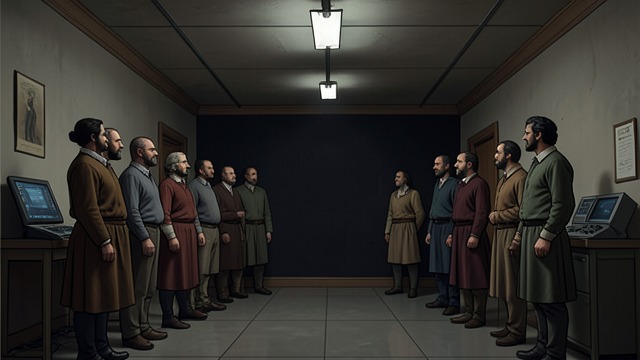
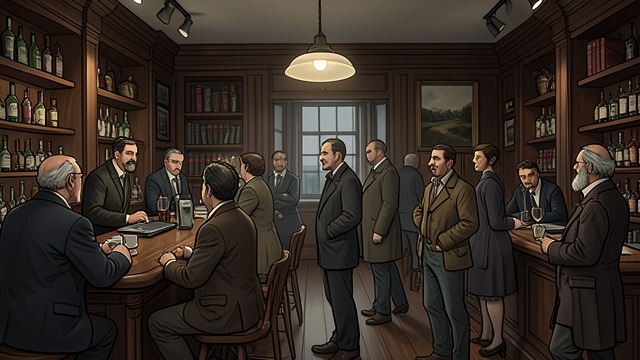
At El Farol, patrons enjoy themselves only when the bar is not too crowded. If everyone expects a quiet night and goes, the bar becomes unpleasant; if everyone expects a crowd and stays home, those who go would have enjoyed it.
The decision depends on what each person thinks the others will do. There is no fixed answer outside the choices that the group itself makes.
The Coordination Problem
Brian Arthur formalized the dilemma around a capacity threshold. People may use different methods to forecast attendance, but no one can know whether a strategy will remain reliable as others adapt.
The problem differs from estimating an ox’s weight: people’s choices help create the reality they are trying to predict.
Strategies Compete

Predictions and Attendance
A Moving Target
In Brian Arthur’s computer simulation, different agents relied on different strategies: recent attendance, recent visits, or averages of prior weeks. No single strategy stayed successful because the group’s behavior changed.
Attendance fluctuated, sometimes leaving the bar overcrowded and sometimes empty. Participants could not simply adopt one permanent rule and expect it to work.
The Crowd Finds a Mean
Across one hundred simulated weeks, average attendance was exactly 60 percent of capacity, the level Arthur treated as ideal. The result emerged despite noisy week-to-week outcomes.
Collective success here is not a calm consensus or a perfect forecast. It is a useful long-run pattern produced by interacting expectations.
Learning from Experience
A Simpler Rule
Personal Enjoyment as a Signal
Ann M. Bell and William A. Sethares studied agents who went back when recent visits had been good and stayed away when they had been bad. They did not need to model everyone else’s strategy.
Over time, attendance settled just below the bar’s capacity threshold. The simple rule produced a stable, if imperfect, solution.
Regulars and Occasional Guests
The group divided into frequent patrons and people who rarely attended. That arrangement worked for many, but it left a substantial portion of the group with less access to the bar.
The result complicates the ideal of a single optimal solution: coordination can succeed while distributing benefits unevenly.
Finding a Meeting Point
Meeting Without Communication
A Shared Landmark
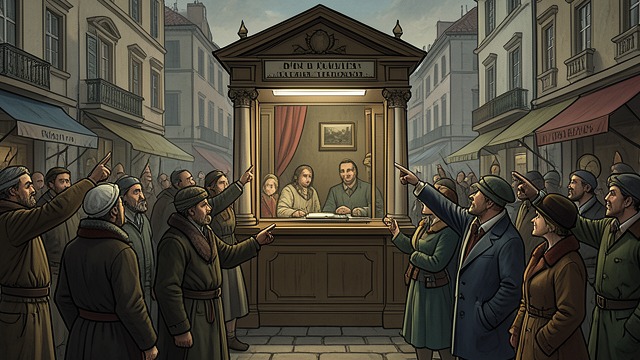
Asked where to meet someone in New York without prior communication, most students chose the information booth at Grand Central Station. Asked what time to arrive, most chose noon.
The answers relied on expectations about what another person would find salient, not on direct coordination or authority.
Focal Points
Thomas C. Schelling argued that shared landmarks can give people’s expectations a point at which to converge. Cultural familiarity makes these places meaningful to both sides of a coordination problem.
The experiments show that people can coordinate even when independent action, in the strict sense, is impossible or beside the point.
Norms Make Movement Possible

Rules Without a Director
Everyday Coordination
Pedestrians adjust speed and direction as they pass; queues allocate service by arrival; drivers generally follow common traffic conventions. These arrangements let strangers coordinate without negotiating every action.
Some norms are explicit, such as driving on the right. Others are sustained by habit and informal enforcement.
Effort Saved by Convention
First-come, first-served seating is not always an ideal allocation, but it is easy to understand and requires little strategic calculation. A convention can be useful even when it is not perfect for every individual.
The thread resolves by showing that social order often rests on shared rules and expectations rather than a central decision-maker.
The chapter 5 introduction to the El Farol problem
Arthur’s simulated hundred-week experiment
The later Sethares and Bell simulation
Thomas C. Schelling’s 1958 student experiment
The chapter 5 examples of streets and queues
