the narrator and Jennie's relationship
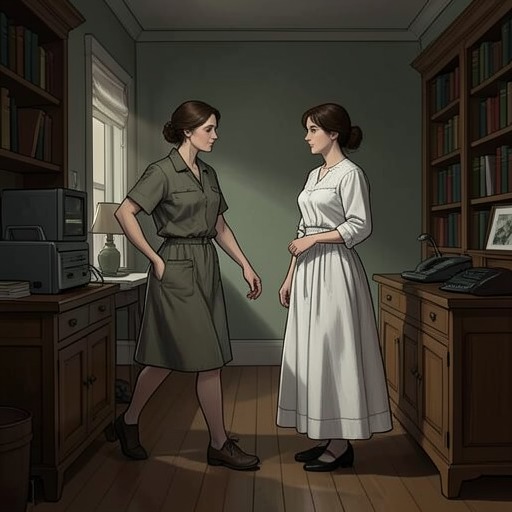
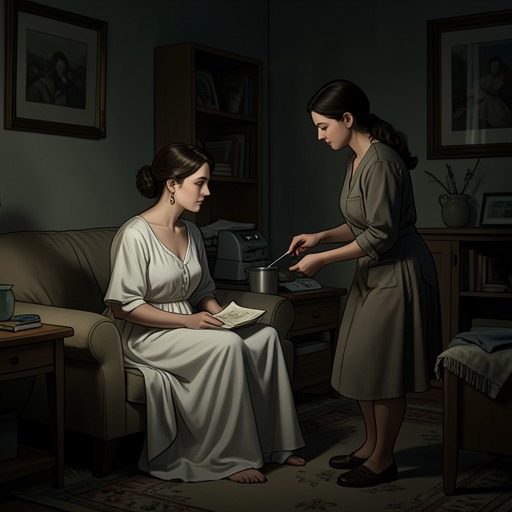
The Yellow Wall PaperThe narrator and Jennie's relationship is a close but increasingly divided bond shaped by domestic care, the narrator’s concealed writing, and her fixation on the yellow wallpaper. Jennie looks after the household and gives the narrator space when she wants it; the narrator, in turn, increasingly treats her attention to the wallpaper as a secret to defend. Their relationship culminates in the narrator arranging to be alone on the final night so she can tear down the paper, then interpreting Jennie’s response to the damage as confirmation that Jennie has betrayed her own interest in the pattern.
Care and Domestic Work
Jennie enters the narrator’s account as John’s sister and a conscientious caretaker. The narrator calls her dear and careful, but immediately notes that she must not let Jennie discover her writing. Jennie’s identity as an enthusiastic housekeeper makes their difference in interests especially visible: she hopes for no better profession, while the narrator experiences writing as a needed outlet for her ideas and regrets having no advice or companionship about her work. The narrator even suspects that Jennie believes writing made her ill. She therefore writes when Jennie is out and watches for her from the windows, converting an ordinary household routine into a condition for keeping her work private.
After the Fourth of July company leaves, the narrator says that she did nothing because Jennie took care of everything. The visit had exhausted her despite her inactivity, and Jennie’s labor marks the practical arrangement through which the narrator is relieved of household duties. Later, when John is often kept in town by serious cases, the narrator says Jennie is good and leaves her alone when she wants solitude. She spends time in the garden, the lane, or the upstairs nursery; Jennie’s restraint affords her privacy, but it also makes possible the narrator’s increasingly private attention to the wallpaper.
Secrecy and Suspicion
The narrator’s concealment changes the meaning of Jennie’s attentiveness. She catches John and Jennie looking at the paper and once finds Jennie with her hand on it. When questioned, Jennie appears startled and angry, then explains that the wallpaper stains the clothes of both the narrator and John, leaving yellow marks, and that the household should be more careful. The narrator considers this explanation innocent on its face but decides that Jennie was studying the pattern. She resolves that nobody but herself should discover it.
This interpretation is not an objective account of Jennie’s motives: it is the narrator’s conclusion, formed as her preoccupation with the pattern intensifies. The narrator treats Jennie’s ordinary contact with the wallpaper as a concealed act of investigation and her explanation about stains as an evasion. The resulting secrecy is reciprocal only in the narrator’s imagination: Jennie has a practical reason to touch the paper, while the narrator assigns that gesture a private significance and guards what she believes she has uncovered.
The Final Night and the Torn Paper
As the departure approaches, the narrator says John will stay in town overnight and that Jennie wants to sleep with her. The narrator declines, claiming that she will rest better alone; she calls the choice clever because, in her understanding, she will not truly be alone. When moonlight appears to animate the wallpaper and the woman she believes is behind it begins to crawl and shake the pattern, the narrator gets up to help. She describes pulling as the woman shakes and shakes as the woman pulls; together, in the narrator’s account, they peel off yards of paper before morning.
The next day the narrator intends to finish removing it. Jennie looks at the wall in amazement, but the narrator merrily tells her that she did the damage out of spite toward the paper. Jennie laughs that she would not mind doing it herself, while warning the narrator not to tire herself. The narrator takes this remark as a betrayal, reading Jennie’s willingness to help as proof of the interest she had suspected all along. The exchange leaves the relationship unresolved: Jennie offers practical concern, while the narrator hears confirmation of a secret alliance with the wallpaper’s pattern.
Relationship and Narrative Significance
Care and authority do not fall neatly into opposing roles in this relationship. Jennie performs the household work and gives the narrator solitude, but the narrator does not trust her with the writing or with her interpretation of the wallpaper. Because the story is told through the narrator’s private account, Jennie’s motives remain less certain than the narrator’s suspicions: her explanation for touching the paper and her warning against exhaustion are reported, while the meaning the narrator assigns to them comes from her own increasingly fixed perspective.
The contrast between Jennie’s practical care and the narrator’s secret writing gives their interactions particular force. The narrator needs privacy to write and later to tear down the wallpaper, yet interprets the person who provides domestic support as a watcher and potential rival in deciphering it. By the final night, solitude is not simply rest: the narrator secures it by refusing Jennie’s company, then uses it to enact the removal she has planned. Jennie’s startled response and concern for the narrator’s strength show the visible domestic aftermath, but the account supplies no independent confirmation of the narrator’s theory about what Jennie knows.