Lost-N-Found Gazette
Thirteen Reasons WhyThe Lost-N-Found Gazette is the student magazine edited by Ryan Shaver, a semiannual collection of objects and papers supposedly found around campus. Its informal method—reproducing fragments, removing identifying details, and leaving copies for strangers to discover—makes it a small schoolwide circulation system. That system becomes consequential when Ryan takes Hannah Baker’s poem: what he treats as found material becomes an unauthorized public text, inviting classrooms to interpret and ridicule words whose writer is still among them.
Identity and Format
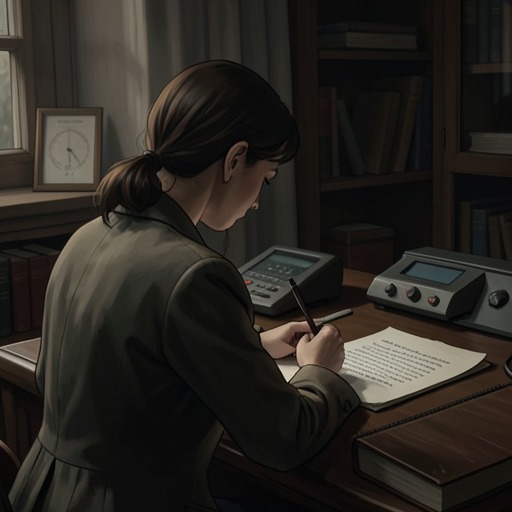
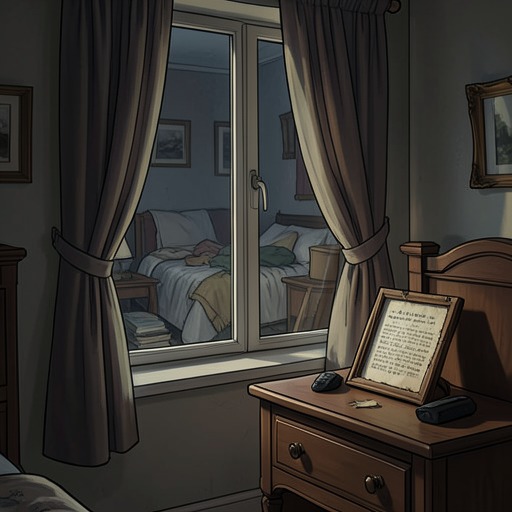
The magazine gathers things left lying around the school and presents them as curiosities. Ryan produces five or six pages of material, prints fifty copies, staples them together, and leaves them at varied locations, including restrooms, locker rooms, and the track. He avoids using the same drop-off spot twice, a distribution choice he considers fitting for a magazine made from items that people happen upon.
Its contents range from the intimate to the mundane. Ryan might reproduce a love letter left beneath a desk, photographs that have fallen from binders, or class notes decorated with doodles. He removes names and phone numbers from items when necessary, and says photographs should not be too embarrassing. The magazine’s playful premise depends on treating accidental exposure as a source of entertainment, while its handling of personal material makes that premise ethically unstable.
Collection and Editorial Practice
Ryan describes most of the magazine’s contents as things he has found by chance. Hannah questions whether he really discovers every item or sometimes takes them. Ryan insists that the printed material is genuinely found, but acknowledges that people sometimes slip things into his locker. He cannot fully vouch for those contributions, which complicates the Gazette’s implied assurance that its contents have simply surfaced without anyone’s deliberate intervention.
The distinction matters because the magazine does not merely preserve lost objects: it selects, reproduces, and circulates them. Ryan’s editorial process converts an item’s accidental presence on campus into a deliberate public appearance. Removing names and numbers may obscure direct identification, but it does not necessarily protect the meaning or ownership of what is reproduced. The Gazette’s format thus makes circulation seem casual even when the act of publishing is consequential.
Hannah’s Poem and Its Circulation
Ryan and Hannah meet through poetry. After their poetry-group meetings, they sit together on the library steps and talk; in the first week, they laugh about the poems the other participants have written and read. Hannah’s poem, however, is not a lost paper waiting to be claimed. She tells Ryan that he stole it, directly rejecting the premise that finding a text gives him the right to include it in the Gazette.
Once printed, the poem travels beyond the relationship in which it was written and discussed. Teachers encounter it before poetry lectures, and whole classrooms take it apart in search of its meaning. In Hannah’s account, the readers do not understand it; even Mr. Porter does not get it right. What began as her work is treated as a found object available for public interpretation, while its author’s presence and perspective fail to secure her control over it.
The episode gives the Gazette’s title an irony. A found item can be mistaken for an unowned one, but Hannah insists that her poem was never lost and that Ryan never found it. The magazine’s ordinary process therefore becomes a vehicle for taking a private expression into public circulation. The consequential act is not simply that the poem is read; it is that Ryan’s publication makes other people feel entitled to dissect it without knowing the writer’s meaning.
Interpretation and Significance
Before distributing the poem, Ryan’s collection is described as a source of material for readers who stumble across it. Afterward, classrooms search Hannah’s writing for meaning, and their confidence in their interpretations contrasts with their failure to understand it. The magazine’s culture of discovery gives the readers the sensation of uncovering something, but discovery does not guarantee knowledge—especially when the person who could clarify the poem is present yet effectively unheard.
Mr. Porter frames the interpretive problem by comparing a poem by an unknown student to a classic by a dead poet: in either case, he says, readers cannot ask the author about its true meaning. The comparison makes Hannah’s situation sharper. She is not dead, and the poem is not authorless; its removal from her control merely allows others to treat her as if she were unavailable. The Gazette’s circulation produces that distance, turning a living student’s words into an object whose intended meaning is presumed inaccessible.
As an organization within the school, the Lost-N-Found Gazette is small in scale but revealing in effect. Its fifty-copy runs and random drop-offs make private fragments widely available without requiring a formal institution or a fixed audience. Ryan’s stated care in obscuring names exists alongside the more basic failure to distinguish lost property from writing that was never offered for publication. Through Hannah’s poem, the magazine’s cheerful premise is exposed as a question of who has the authority to make another person’s words public—and who gets to decide what those words mean.