James–Beatrix Greigh Relationship
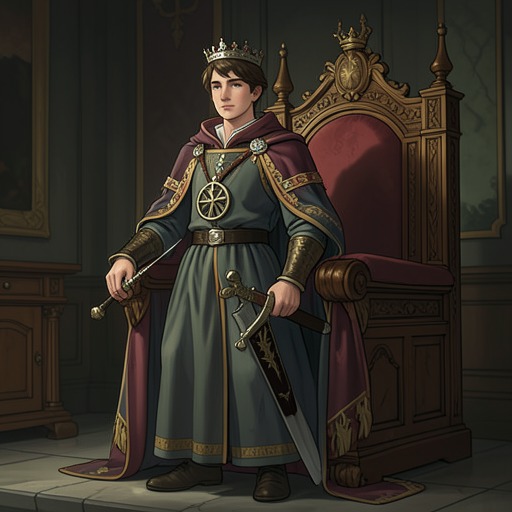
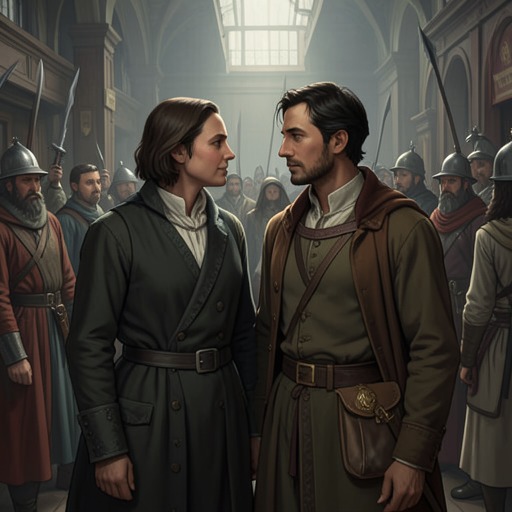
TideKing James and Lady Beatrix Greigh’s relationship is both an enduring love story and a partnership formed around the duties of the Mhuirlan crown. They have loved one another since they were fifteen, and a history of friendship and mutual support precedes their marriage. When James becomes king, he turns to Beatrix not only as the person he cannot bear to lose, but as the companion he wants beside him in governing the kingdom.
A Friendship Formed Early
The relationship rests on a bond that long predates the royal wedding. Lady Beatrix Greigh is introduced at court as King James’s oldest comrade, and she recognizes Galahad Stormcrane through his earlier rescue of her father. Her familiarity with the people and history around James marks her as someone already woven into his life, rather than a new acquaintance brought forward by his accession.
The history behind that closeness is made explicit at the gathering where James asks Beatrix to marry him: they have been in love since they were both fifteen. Their relationship has also endured grief and hardship. James recalls that Beatrix stood by him through the stillborn death of his brother, his days at academy, a broken leg, and the loss of his father. In turn, he supported her when her sister, Valentine, died. The reciprocal pattern matters: their bond is not presented only as youthful attraction, but as companionship tested by separate losses and sustained across the years.
Love in the New King’s Life
James’s accession changes the circumstances of the relationship. After King Leonardo dies, the succession rules make James king; at twenty-five, he is already four years beyond the proper age to ascend. Galahad Stormcrane explains the consequence to Little Emblyn and Meira: James’s kingdom must now come before his own heart. The remark establishes the pressure placed on a king’s private wishes, even as James’s later decision shows that he hopes to bring love and duty into partnership rather than treat them as incompatible.
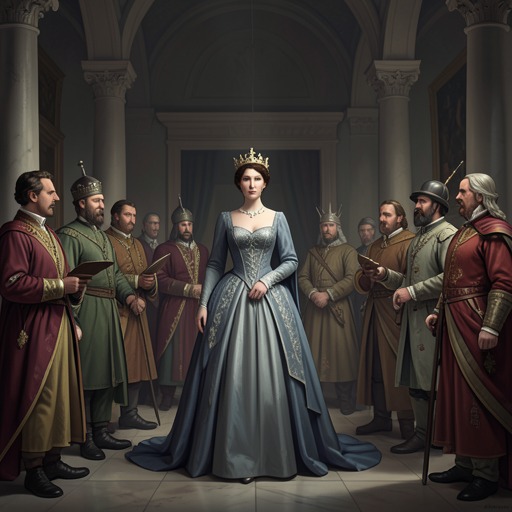
The public announcement of the coronation gives that change a ceremonial form. A herald proclaims that James will be crowned King of all Mhuirlan three days later and invites the people of Metern to the royal festivities. Beatrix’s relationship with the newly crowned king will therefore unfold in view of the kingdom, under the expectations attached to his office. James describes her as the person he wants beside him to share both the burdens and the joys of ruling.
The Proposal
At a gathering of friends, James presents his proposal as a declaration rooted in their shared past. He speaks of friendship as a source of strength, purpose, and honesty, then names Lady Beatrix Greigh of Arsa Coill as the dearest of his friendships. As he recalls the experiences they have faced together, his voice trembles. Beatrix listens with her attention fixed on him; when he remembers her sister’s death, she gasps and tears begin to fall.
James’s request is direct and personal: now that he is king, he can imagine no one else at his side, and he cannot bear the thought of being without her. He asks Beatrix to be his queen. Her tears and response make the proposal an emotional exchange between two people with a long history, while the title he offers also gives their union a public and political dimension. Beatrix has not previously visited Metern, and James plans a day trip onto the moors with her and the knights and their ladies, a small glimpse of their life together beyond formal ceremony.
Marriage and Public Partnership
The wedding preparations are sudden, but the relationship itself is not. When Sir Lancelot asks Beatrix’s parents whether the speed of the wedding surprised them, Lord Arnaud says it did not, given that the couple have been in love since fifteen. Lady Astrid notes instead the practical rush: there has been no time to make wedding clothes. Beatrix wears her mother’s wedding gown, while James wears his father’s wedding clothes. Their marriage thus enters the royal family through garments inherited from the previous generation, even as the ceremony establishes a new royal pair.
The wedding ritual makes their mutual commitment visible. Beatrix repeats the vows without hesitation, takes a ring from the priest, and places it on James’s left hand; James then gives her a ring in turn. The priest presents them as the bonded pair, King James and Queen Beatrix of the royal house of Mhuirlan. James kisses Beatrix before the priest has finished the sentence granting permission, and she drops her rose and draws him close. Their family and friends rise in applause and cheers. The exchange of rings and the public presentation confirm the marriage formally, while the unhurried history behind it gives the ceremony its personal weight.
Significance
The relationship’s decisive turn is not that James discovers love, but that kingship makes his existing attachment a matter of public responsibility. His proposal names Beatrix as his chosen companion in rule, and their marriage makes her queen. The personal and political dimensions meet in his stated wish to share the work of governing Mhuirlan with the woman who has shared his grief and stood beside him since youth.
The contrast between the short wedding preparations and the long-established love emphasizes that the haste belongs to circumstance, not to their feelings. In a story where Meira’s survival is tied to the possibility of marrying James, his marriage to Beatrix also closes off that path for Meira; the relationship’s fulfillment therefore carries consequences beyond the couple. Yet the book presents James and Beatrix’s union on its own terms as an established love becoming a royal partnership: private loyalty is not set aside by the crown, but given a place beside its duties.