Slattery’s rule for penance at first confession
TrespassesSlattery’s rule for penance at first confession makes the duration of a child’s kneeling penance a visible measure of sinfulness. When Davy McGeown is made to kneel far longer than the other children, the rule becomes more than religious instruction: it is an exercise of authority that provokes Tommy McGeown to pull his brother away and challenge Slattery.
The Rule and Its Threat
Before the children’s First Confession, Cushla Lavery had told them they were too young to have sins and suggested they confess minor misdeeds, such as fighting with siblings, answering their mothers back, or forgetting their prayers. Slattery instead instructed them about original sin, Adam and Eve, temptation, remorse, guilt, and sorrow. He announced that their confessions would take place on Saturday and promised no leniency.
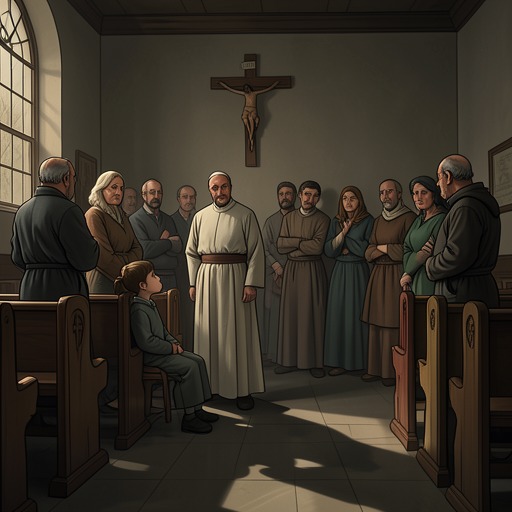
Slattery then explained how the penance would be judged: people would know the extent of a child’s sinfulness from how long that child knelt in the pew. The rule thus made an inward religious judgment legible to others through a bodily ordeal. Rather than leaving the seriousness of a confession between child and priest, it attached a public, observable consequence to the child’s time on their knees.
Davy’s Penance and Tommy’s Intervention
At the First Confession, the children went one by one to kneel before Slattery. Davy was first, but his penance lasted so long that the others came and went while he remained kneeling. Cushla considered appealing to Bradley, who was standing by the entrance to the crying chapel, but remembered that Bradley had retaliated against the McGeowns after her own insolence. She said nothing.
Tommy eventually strode up the aisle, pulled Davy off his knees, and marched him towards the door with a hand between his shoulder blades. Slattery had left the confessional and joined Bradley. Tommy stopped in front of them and objected that whatever point they were trying to make was not right. His action directly challenged the authority behind the rule: he ended the penance himself when its exceptional duration had made the injustice visible.
Consequences and Significance
Cushla followed Tommy and Davy outside. As Tommy began walking, Davy ran back to Cushla and said that he had not done anything really bad. His words connect the severity of the penance to a child’s understanding of his own supposed guilt: the punishment has not persuaded him that he committed a grave wrong, but it has left him needing reassurance.
The episode also clarifies the pressure surrounding Cushla’s silence. She recognizes that the treatment of Davy calls for intervention, yet fears that challenging school authority may bring further consequences for the McGeown family. Tommy’s refusal to accept the prolonged kneeling shifts the confrontation from the private confessional into a direct dispute with Slattery and Bradley, exposing the human cost of a rule that presents severity as a measure of sin.