Ash Wednesday 1975
Ash Wednesday at the Bar
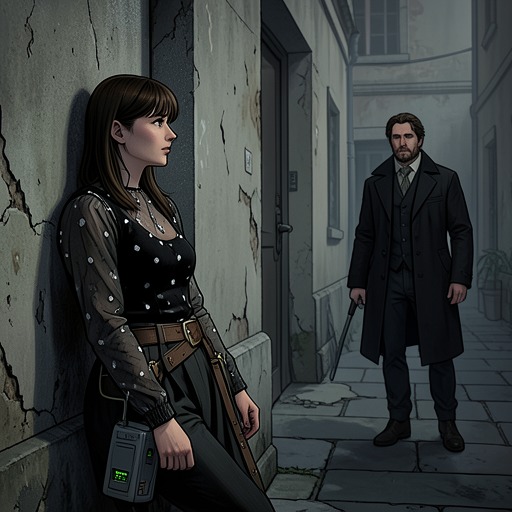
[Cushla Lavery](entity:character-recall-character-cushla-lavery-a6a282d810f4) wipes the ashes from her forehead before taking her place behind the family bar. The largely Protestant regulars dislike being served by a woman visibly marked as Catholic, and her brother [Eamonn Lavery](entity:character-recall-character-eamonn-lavery-2b271c7babf2) quietly urges her to hurry.
That evening on Ash Wednesday 1975
Michael Stops the Soldiers
After a soldier gropes Cushla while she clears glasses, [Eamonn](entity:character-recall-character-eamonn-742441714894) says he cannot do anything. [Michael Agnew](entity:character-recall-character-michael-agnew-c49349beb88c), a barrister drinking alone, intervenes and calmly makes the soldier retreat, offering Cushla a rare moment of protection in a town where everyone knows the risks of taking sides.
Later that Ash Wednesday
A Nighttime Escort
Cushla and Michael talk over drinks until closing. He recognizes the ashes she tried to remove, speaks easily about theatre and television, and leaves her intrigued by his attention and his polished manner.
The night after Ash Wednesday
Gina Names the Barrister
At home, Cushla tells her mother, [Gina Lavery](entity:character-recall-character-gina-lavery-2a9970fb9a88), about the older man from the bar. [Gina](entity:character-recall-character-gina-e29e7661b6b9) recognizes him as [Michael Agnew](entity:character-recall-character-michael-agnew-c49349beb88c), recalls that he was once handsome and close to Cushla’s father, and describes his wife as a troubled woman from a grand Protestant family.
The next morning
Davy Arrives Without a Coat
On her way to [St Dallan’s School](entity:location-recall-location-458901c653a2), Cushla accidentally drenches [Davy McGeown](entity:character-recall-character-davy-mcgeown-aaac76c5a5dd) with her car. She helps dry him at school, where the headmaster, [Bradley](entity:character-recall-character-bradley-a56327643250), questions the boy about his missing coat and regards his family’s mixed marriage with suspicion.
The next morning
Slattery Terrorizes the Class
[Father Slattery](entity:character-recall-character-father-slattery-53d58f9db80a) interrupts Cushla’s class and uses a lurid story of sectarian sexual violence to frighten the children. He singles out Davy, insisting that Protestants hate Catholics; Cushla dismisses the class before his intimidation can go further.
That school day
Gerry Invites Cushla Out
At break, fellow teacher [Gerry Devlin](entity:character-recall-character-gerry-devlin-070590cc6bcf) invites Cushla to a party. She accepts, glad of a chance to leave her routines at home and work, even though she suspects that the other teachers will read more into the invitation than she intends.
That afternoon
The McGeown Family at Home
Cushla gives Davy a lift and discovers that [Gina](entity:character-recall-character-gina-e29e7661b6b9) is too drunk to be left alone. She takes care of her mother, then drives Davy home, where his mother, [Betty McGeown](entity:character-recall-character-betty-mcgeown-87952b8eda30), and older brother, [Tommy McGeown](entity:character-recall-character-tommy-mcgeown-d6b440103e45), receive him.
That afternoon
Tommy Is Bullied
Outside the McGeown estate, Cushla sees local youths shove Tommy into the road. He refuses her offer of a lift, holding on to his pride, while Davy treats the incident as something ordinary and tells Cushla not to worry.
That evening
Cushla Cancels Her Shift
Cushla returns home to find [Gina](entity:character-recall-character-gina-e29e7661b6b9) unconscious from drink and cannot leave her to work at the bar. [Eamonn](entity:character-recall-character-eamonn-742441714894) is furious, but Cushla finally tells him how bad their mother’s drinking has become, abandoning her usual efforts to conceal it.
That weekend
A Party Under Curfew
Gerry takes Cushla to a party in [Belfast](entity:location-recall-location-belfast-8a60016bc9a1). Their car is stopped at a military checkpoint, where soldiers search it, intimidate Gerry, and subject Cushla to sexualized taunts before letting them leave.
That night
The Outsider at the Singalong
At the party, Cushla finds herself an outsider among Gerry’s friends, who see her quieter town as insulated from [Belfast](entity:location-recall-location-belfast-8a60016bc9a1)’s violence. Their singalong to a song about [Derry](entity:location-recall-location-7242cbb9d528) deepens her sense that she belongs fully neither among them nor in the mixed community where she grew up.
Soon after Ash Wednesday
Michael at the Theatre
Cushla goes to the theatre with Gerry and unexpectedly encounters Michael among his influential friends, [Jim](entity:character-recall-character-jim-a57755302556) and [Penny](entity:character-recall-character-penny-20f5e0e3e7bd). Their conversation during the interval—about the play, Irish, and Cushla’s father—makes her feel seen, while Gerry notices the charge between them.
The following week
The Irish Conversation Night
Michael invites Cushla to a gathering where he and his friends are learning Irish. In the company of [Victor](entity:character-recall-character-victor-046c8bf7b3bc) and the others, she feels scrutinized and out of place as their discussion of the Irish word for no turns into a test of language and identity.
After the Irish gathering
Michael Gives Her Betsy Gray
On the drive home, Michael gives Cushla an old book about the 1798 rebellion and speaks hopefully about liberal traditions and workers’ unity. His politics appeal to her, but his faith in reconciliation feels remote from the discrimination and violence she sees around her.
That night
The First Kiss
Outside Cushla’s home, Michael admits that his circumstances are complicated and that he cannot always get away. Cushla understands that he is married and accepts the limited promise of future meetings, then kisses him.
The following days
Davy’s News and the Assault
Davy tells Cushla that his father, Seamie McGeown, has been attacked. The news reports initially suggest a dead body may be his; the family later learn that Seamie survived a savage beating that leaves him grievously injured.
After the assault
A Peace Song at Assembly
At a school assembly about Seamie’s injuries, [Father Slattery](entity:character-recall-character-father-slattery-53d58f9db80a) turns the moment into another sectarian warning, invoking so-called loyalist romper rooms. Gerry interrupts him with one of his peace songs, and Cushla joins in rather than let the priest control the children’s fear.
The days after the attack
Cushla Supports the McGeowns
Cushla and [Gina](entity:character-recall-character-gina-e29e7661b6b9) bring food to the McGeown household. The family endure harassment from neighbours, who throw dirt into their garden and target their washing, while Davy and [Mandy](entity:character-recall-character-mandy-e8f20ab4a559) try to keep the household going during their father’s hospitalization.
During the visit
Gina Confronts the Youths
When local youths taunt the McGeowns outside their home, [Gina](entity:character-recall-character-gina-e29e7661b6b9) steps forward and forces them to back away. Her courage is sharpened by the knowledge that Betty’s Protestant background makes the family especially isolated in the neighbourhood.
That evening
Michael Calls Cushla Out
Michael phones Cushla from a public call box and collects her for a drive into the hills. She tells him about Seamie’s assault and the children’s daily humiliations; he understands that the violence is directed at what a person is, not simply what they do.
That evening
Gorse on the Hillside
Looking across [Belfast Lough](entity:location-recall-location-e6de6cc7d4f2), Michael explains how the sound of bombs can carry into the hills. He gives Cushla gorse flowers and shares the superstition that the gift brings bad luck to giver and receiver; their desire turns the flowers into an intimate, uneasy token.
Around Easter
Cushla Learns of Michael’s Politics
At home, Cushla discovers that Michael has publicly criticized the Diplock court system. [Gina](entity:character-recall-character-gina-e29e7661b6b9) explains that he and Cushla’s uncle once took part in civil-rights work, giving Cushla a fuller sense of his history and the risks attached to his legal principles.
Good Friday
The First Night at the Flat
Michael summons Cushla to his flat, where they begin their sexual relationship. Their intimacy is intense but unequal: she is drawn to him, while his married life and unpredictable availability leave her unsure what their relationship means.
The morning after
Cushla Finds Siobhán’s Name
At Michael’s flat, Cushla notices that his copy of [Dúil](entity:object-recall-object-d-il-05e82080f036) belongs to [Siobhán de Buitléar](entity:character-recall-character-siobh-n-de-buitl-ar-e73fd9027576), the woman who became his wife. Michael sidesteps her question, and the inscription gives his absent marriage a more immediate presence in their affair.
Late March 1975
Cushla and Michael Grow Closer
Michael shares the story of a boy who died by suicide at his boarding school, exposing a vulnerability beneath his cultivated manners. Cushla begins leaving belongings at his flat, and their meetings become a private domestic routine even as she knows he returns to his wife.
The days before First Communion
The First Confession Threat
[Father Slattery](entity:character-recall-character-father-slattery-53d58f9db80a) threatens Cushla’s young pupils with a harsh first confession and uses religious authority to make children fear their own supposed sinfulness. He singles out Davy again, deepening Cushla’s alarm about the priest’s access to her class.
Before Easter
Betty Faces a Social Worker
After Cushla tells [Bradley](entity:character-recall-character-bradley-a56327643250) that Betty is struggling, hoping to secure help and school meals for Davy, Bradley reports her to social services. A social worker visits the home, and Betty believes Cushla has accused her of neglect, damaging their trust.
The same period
Gina’s Hidden Bottles
Cushla finds [Gina](entity:character-recall-character-gina-e29e7661b6b9) injured and drunk in the bath, then searches the house and uncovers bottles hidden throughout it. She calls [Eamonn](entity:character-recall-character-eamonn-742441714894) for help, but he dismisses her, leaving Cushla to confront both her mother’s dependence and her brother’s refusal to share responsibility.
Around Easter
Cushla Visits Michael’s Family Home
Unable to reach Michael at his flat, Cushla drives to his family home but cannot bring herself to knock. The house and its signs of settled domestic life intensify her awareness that she is an outsider in a relationship whose boundaries Michael controls.
Easter Sunday 1975
Easter Mass and the McGeowns
Cushla and [Gina](entity:character-recall-character-gina-e29e7661b6b9) attend Mass, where [Father Slattery](entity:character-recall-character-father-slattery-53d58f9db80a) preaches a sermon of sectarian fear. Cushla gives the McGeown children [Easter](entity:time-recall-time-8441fe9013cc) eggs and offers them a lift home, while Tommy responds to her kindness with wary questions about what happened to his father.
Easter Sunday
The Family Lunch Turns Sour
At a strained [Easter](entity:time-recall-time-8441fe9013cc) lunch, [Eamonn](entity:character-recall-character-eamonn-742441714894) and [Marian](entity:character-recall-character-marian-1f8d5a5584eb) announce that they are expecting a third child. [Gina](entity:character-recall-character-gina-e29e7661b6b9) feels excluded and retaliates by revealing Cushla’s late nights to the family, prompting Eamonn to shame her and leaving Cushla angry and exposed.
Easter Sunday evening
Tommy Thanks Cushla
Tommy phones to apologize for his anger and thank Cushla for the [Easter](entity:time-recall-time-8441fe9013cc) gifts. He asks whether he is allowed to call her, and she tells him he can; the exchange gives her a feeling of purpose, though she remains preoccupied with Michael.
After Easter
Tommy Leaves School
Cushla visits the McGeowns and talks with Tommy about books and his A-level studies. He says he cannot return to school while his father is so badly injured and the family needs money; despite her encouragement, he has begun to imagine no future beyond work and anger.
After the visit
Michael and Cushla Discuss Politics
At an Irish-language gathering, [Victor](entity:character-recall-character-victor-046c8bf7b3bc) provokes Michael over the defendants he represents and asks Cushla to translate politically charged words. She feels reduced to a Catholic token and later argues with Michael about his friends’ contempt and the burden of being reminded which side she belongs to.
Early spring 1975
Michael Takes the Case
Michael tells Cushla that he is defending three boys accused of murdering a police officer, after a witness identified them in a questionable lineup. [Victor](entity:character-recall-character-victor-046c8bf7b3bc) disapproves because he covered [Bloody Friday](entity:event-recall-event-bloody-friday-a9adac883a82) and believes Michael’s willingness to defend Republican suspects is naïve.
Late April 1975
Michael and Cushla Spend a Weekend in Dublin
Cushla and Michael secretly travel to [Dublin](entity:location-recall-location-d7ee455b2147), where they see a play, visit the [National Gallery of Ireland](entity:location-recall-location-a38f18836982), and share meals and nights together. Their closeness feels almost like a life they might have, but Michael admits that he omits things rather than lies, and Cushla knows he will return to his family.
Before First Communion
Davy’s First Confession
After Davy’s first confession, [Slattery](entity:character-recall-character-slattery-6174db576370) keeps him kneeling for an excessive penance. Tommy pulls his younger brother away and challenges the priest and [Bradley](entity:character-recall-character-bradley-a56327643250), while Cushla later gives Davy religious items she bought in [Dublin](entity:location-recall-location-d7ee455b2147), hoping to comfort him.
Around First Communion
Cushla Meets Michael’s Family
At a seaside restaurant, Cushla unexpectedly meets Michael’s wife, Joanna, and their son, Dermot. Joanna is beautiful and visibly unwell; Michael appears ashamed, while Cushla realizes how thoroughly she had invented an unappealing rival to make her affair easier to bear.
After the restaurant encounter
The Affair’s Terms
Cushla confronts Michael about his other affairs and learns that Joanna has alcoholism and depression and has been hospitalized for treatment. He says he does not consider Cushla their affair to be an affair, a distinction she distrusts even as she cannot bring herself to leave him.
Late spring 1975
Sports Day Triumph
At school sports day, Davy runs the final leg of a relay and wins two medals, briefly receiving the admiration of his classmates. Cushla takes photographs of his joy, aware that his place among the boys may be temporary and hard-won.
Late spring 1975
Cushla Finds the Torture Files
At Michael’s flat, Cushla discovers photographs and statements documenting beatings and torture suffered by the three young men in his case. The evidence makes the work behind his political convictions concrete and horrifying, while revealing how much of his life remains hidden from her.
Soon afterward
Michael Says He Loves Cushla
When Cushla visits Michael after a difficult day with the McGeowns, he explains what first attracted him to her and tells her that he loves her. She refuses to say it back immediately, believing she has been doing too much of the emotional running.
Late spring 1975
The Lyric Bomb
A car bomb explodes near the [Lyric Theatre](entity:location-recall-location-3f004c24763a) while Michael is attending a play. Cushla, alone in his flat, fears he has been caught in the blast; when he returns, she is relieved and angry that he treats the danger as ordinary.
That evening
Cushla Reads Michael’s Evidence
Waiting for Michael after the bombing, Cushla reads papers in his case files and sees the physical evidence of police torture. The documents explain why Michael believes the justice system is rotten, while leaving Cushla frightened by how closely his work brings him to danger.
Late spring 1975
Gerry’s Wedding Is Raided
At Gerry’s wedding reception, British soldiers sweep through the hall beneath a circling helicopter, interrupting the celebration and terrifying the guests. Cushla sees a young soldier’s fear as he passes, a moment that complicates the familiar image of uniformed power.
After Gerry’s wedding
Cushla Waits at Michael’s Flat
Cushla uses the key Michael gave her to let herself into his flat while he is away. She examines his case files, drinks his whiskey, and listens to records, increasingly frightened by the threat around him and by how little she can know about his work.
Early summer 1975
The Affair at Jim’s Party
At [Jim](entity:character-recall-character-jim-a57755302556)’s birthday party, Cushla meets [Mrs Coyle](entity:character-recall-character-mrs-coyle-5b52bed3c58d), whose son is among the boys in Michael’s murder case. She also faces the condescension of a guest who treats her as a barmaid, then finds an unexpected ally in Mrs Coyle, who has learned to endure the same privileged crowd.
That night
Mrs Coyle’s Son Needs a Lawyer
Cushla learns that [Mrs Coyle](entity:character-recall-character-mrs-coyle-5b52bed3c58d)’s son has been charged with murder but refuses to recognize the court. Michael says he can help if the young man accepts a solicitor, and quietly promises Mrs Coyle that he will look for a way to defend him.
That night
Michael’s Song
Michael sings a hymn at the party, and Cushla feels a sudden, troubling tenderness as she hears a plaintive side of him she has not known. The song gives the chapter its image of moving toward death and salvation, though neither promise offers her certainty.
After the party
The Wedding Night at the Flat
Cushla and Michael leave early and return to his flat, where their intimacy is tangled with jealousy and talk of other lovers. He tells her more about the case against [Mrs Coyle](entity:character-recall-character-mrs-coyle-5b52bed3c58d)’s son, a young man identified in a lineup who may have been radicalized after imprisonment.
Early summer 1975
A School Picnic
Cushla and Gerry take their classes to the park. Davy walks with them, and Cushla helps him feel included; the children encounter signs of violence and rumors of satanism, reminders that even their games and stories are shaped by the conflict surrounding them.
During the picnic
The Bluebell Promise
Cushla tells Davy the folklore about bluebells, including the belief that turning one inside out can bring the person one loves. Davy hopes the charm will work for her, making her embarrassed by his perceptiveness and briefly hopeful despite the warning signs in her relationship.
Early summer 1975
Michael Warns He May Disappear
At the bar, Michael warns Cushla that he may be unable to contact her for several days. He says he loves her, but his secrecy and unease suggest mounting danger; she lets him go without asking what he cannot tell her.
Soon afterward
Cushla and Gina at the Seaside
Cushla takes [Gina](entity:character-recall-character-gina-e29e7661b6b9) to a seaside hotel, where they unexpectedly see [Eamonn](entity:character-recall-character-eamonn-742441714894) and [Marian](entity:character-recall-character-marian-1f8d5a5584eb) celebrating Marian’s family occasion. Gina feels excluded and drinks heavily, while Cushla watches her brother’s new family life from a separate table.
At the seaside hotel
Joanna and Dermot Reappear
As Cushla and [Gina](entity:character-recall-character-gina-e29e7661b6b9) leave the dining room, Gina greets Michael and introduces Cushla to Joanna and Dermot. Joanna’s beauty and evident fragility overturn Cushla’s imagined portrait, and Michael’s shameful expression makes Cushla see the ordinary family life she has been kept outside.
The drive home
Cushla Understands the Pattern
Cushla recognizes that Michael has had other affairs and has controlled the pace of their relationship, drawing her closer when she is about to give up. She realizes she is not the first woman and probably will not be the last, even though she still cannot let him go.
Early summer 1975
The RUC Tracks Michael
Cushla learns that the police have been following Michael, and she worries that their surveillance may have placed her in danger. Michael’s late arrivals, heavy drinking, and watchfulness now seem connected to a pressure she had mistaken for marital strain.
Days before the assassination
Michael and Cushla in the Pub
Michael comes to the family bar while Cushla is there with Gerry. His jealousy is visible, but he and Cushla manage a brief exchange and arrange to meet the next day. The ease of their private routine is already overshadowed by his warning that he may vanish.
The following morning
Michael Agnew Is Assassinated
Michael is shot dead in his bed at home, in front of Joanna. The news reaches Cushla while she is working at the bar; she learns of his death from [Eamonn](entity:character-recall-character-eamonn-742441714894) and collapses into grief, unable to reconcile the report with her expectation of seeing him that day.
Immediately after the news
Cushla Breaks Down by the Lough
Cushla leaves the bar and tells [Eamonn](entity:character-recall-character-eamonn-742441714894) she had been on her way to see Michael. Eamonn realizes that they were lovers, but insists she return to work and conceal the relationship, fearing that the community will punish the family for it.
That day
The News Shows Michael’s Body
Television footage shows Michael’s body being carried from his house in a disorderly position. Cushla fixates on his injured shoulder, recognizing a detail the news treats as incidental and feeling once more how little care the world gives the dead.
The morning after the assassination
Cushla Grieves at Home
[Gina](entity:character-recall-character-gina-e29e7661b6b9) brings Cushla food, but Cushla is sick and cannot face breakfast. Gina tells stories about Michael from years earlier, trying to comfort her; the memories now feel indecent, and Cushla struggles to accept that he is gone.
The day after Michael’s death
Cushla Visits the Crime Scene
Cushla drives to Michael’s village and finds police around his family home. She is turned away as a stranger, then stops at the lay-by where they once shared gorse and clutches the fence until it cuts her hand, trying to make physical pain contain her grief.
After the assassination
Gerry Offers Shelter
Gerry visits Cushla and recognizes that Michael was her lover. She admits she loved him but cannot speak the words aloud; Gerry listens without demanding anything and later lets her stay with him when the house becomes unbearable.
The days after Michael’s death
Cushla Returns to the McGeowns
Cushla visits the McGeown family and finds Seamie still severely disabled and Tommy withdrawn from school and home. Davy and [Mandy](entity:character-recall-character-mandy-e8f20ab4a559)’s affection gives her comfort, while Tommy’s anger and closeness unsettle her; she leaves without knowing that the boy will soon be accused of murder.
The same visit
Tommy Asks to Meet Cushla
Tommy suggests that he and Cushla meet now that she is no longer his brother’s teacher. She gives a noncommittal answer and leaves with a sense of unease, unaware that the police will later use his notebook to frame their connection as suspicious.
A few days after Michael’s death
Cushla Is Questioned by the RUC
[Disco Peeler](entity:character-recall-character-disco-peeler-ec0ec2eed3a5) summons Cushla to the police station and confronts her with surveillance photographs of her and Michael. He probes her relationship with Tommy and uses Tommy’s notebook to suggest that she had encouraged the teenager, then threatens to keep her for days before dismissing her without charge.
The day of the interrogation
Cushla Is Driven from Teaching
After Cushla returns home, [Bradley](entity:character-recall-character-bradley-a56327643250) and [Father Slattery](entity:character-recall-character-father-slattery-53d58f9db80a) tell her that her position at school is untenable because she sheltered the McGeown family and has become associated with a murder suspect. They pressure her to take a year away from teaching, stripping her of work and standing.
Weeks after the interrogation
Davy’s Letter Arrives
Confined to her room, Cushla receives a letter from Davy. He and [Mandy](entity:character-recall-character-mandy-e8f20ab4a559) have been placed in separate foster homes, and Cushla blames herself for the chain of events, including the social-services visit she had hoped would help Betty.
Later that summer
Gina Acknowledges the Affair
[Gina](entity:character-recall-character-gina-e29e7661b6b9) tells Cushla that she knew about Michael because she saw her getting into his car. She had hoped the affair would end on its own, but now admits she should have gone with Cushla when the police questioned her and urges her to stop living in bed.
Near the end of summer
Cushla Visits the Beach
Cushla finally leaves the house and walks beside the sea, still imagining that she is being followed. She sees a young couple together in the grass and feels an aching longing for ordinary intimacy, then continues toward a small waterfall, uncertain whether she can return to life.
Late summer 1975
The Trial Explains Tommy’s Crime
A newspaper account reveals that Tommy had been working at a house opposite Michael’s. Michael invited the boy in for tea, and Tommy apparently mistook a photograph of Michael in legal robes for proof that he was a judge; the chance encounter gave a furious teenager access to his victim.
After the trial
Tommy Is Sentenced to Life
Tommy refuses to recognize the court and offers no defense. He is convicted of murdering Michael and sentenced to life imprisonment, leaving Cushla to recognize that his rage and the prosecution’s evidence have fixed the course of two lives.
After Tommy’s sentencing
The Lavery Pub Is Bombed
A bomb hidden in a beer keg damages the family pub, though an anonymous warning allows it to be evacuated before the blast. [Eamonn](entity:character-recall-character-eamonn-742441714894) decides to sell and leave town; he tells Cushla she will go with him so he can keep watch over her.
After the pub bombing
Victor Tells Cushla Michael Was Happy
[Victor](entity:character-recall-character-victor-046c8bf7b3bc) visits the damaged bar and admits that he had warned Michael he was attracting dangerous attention. He tells Cushla that Michael had been happy in his final months, and that she made him happy, giving her a rare acknowledgment that their love was real.
After Victor leaves
Cushla Keeps the Last Photograph
Cushla looks through the photographs from the school picnic and the pub. The final image shows Michael reaching toward her wrist as she sets down his drink; for a moment, the photograph restores the small, ordinary closeness they had shared.
Soon after Michael’s funeral
The McGeown Home Burns
A mob attacks the McGeown home with a firebomb while the family is inside. Cushla runs into the burning house and brings Davy out; he has gone back for his schoolbag, and the crowd’s hostility makes the rescue only the beginning of the family’s danger.
The night of the fire
Tommy Is Arrested
The family tells Cushla that police have arrested Tommy for Michael’s murder. The sudden accusation helps explain the crowd’s fury, but Cushla cannot understand how Tommy could have known Michael, and fears that her own affair has somehow connected the two men.
The night of the fire
Cushla Shelters the McGeowns
Cushla takes the displaced family to her home and gives them food and beds. [Eamonn](entity:character-recall-character-eamonn-742441714894) orders them out the next morning, fearing the consequences for the pub and family; Cushla drives the McGeowns to relatives near [Short Strand](entity:location-recall-location-short-strand-6fcf65397304), separating Davy from the teacher he trusts.
The morning after the family leaves
Davy Leaves Cushla a Letter
Cushla finds Davy’s schoolbag in the spare room. Inside is his unfinished letter asking God to make his father better, bring Tommy home, and let Miss Lavery get the person she loves; the child’s simple hopes bring her guilt and grief together.
Several days later
Cushla Is Followed and Dismissed
The [RUC](entity:organization-recall-organization-4648e0aa489f) brings Cushla back for questioning and shows her photographs of her meetings with Michael. She realizes she had been surveilled for months, then learns that the school’s governors are likely to remove her; the town’s suspicion now limits both her work and her freedom.
Later that summer
Davy and Mandy Enter Foster Care
A letter from Davy confirms that he and [Mandy](entity:character-recall-character-mandy-e8f20ab4a559) have been placed with different foster families. Cushla cannot repair the losses caused by the fire, Seamie’s injuries, Tommy’s imprisonment, and her own inability to protect the children from the adults and institutions around them.
After the summer holidays
Cushla Leaves the Town
Cut off from teaching and the pub, Cushla begins to consider leaving. She develops the film she took at the picnic, preserving pictures of Davy and the children among the few things that still connect her to the life she has lost.
After Tommy’s conviction
A Conditional Clause
Cushla revisits the path of events that connected her to Michael and the McGeowns. She wonders whether she herself was the condition that led Tommy to Michael, though the account of the crime eventually shows that their connection was a terrible coincidence rather than a conspiracy.
2015
The Memorial Sculpture
At an exhibition, Cushla encounters a shrouded sculpture made in Michael’s memory and recognizes the details of his body beneath the artist’s interpretation. A man touches her arm and asks whether she remembers him; it is Davy, grown into a middle-aged man.
2015
Cushla and Davy Reunite
Cushla and Davy clasp hands beside the sculpture. He introduces her to Ellen, his young partner, and tells Cushla he has a daughter with whom he is slowly rebuilding a relationship; she explains that Gerry remains her best friend and that she has a family of her own.
2015
The John Lavery Paintings
Davy invites Cushla to look at the John Lavery works with him. She touches the cold, hollow sculpture one last time, feeling the absence of the man whose body it represents, then accepts Davy’s invitation and leaves the memorial with a living connection restored.