Michiel's cigarette case and his sister's photograph
UpMichiel's cigarette case and his sister's photograph form a single, guarded object: a worn cigarette packet that holds a small portrait he keeps close and a family history he has struggled to tell. When Emma accidentally finds the packet among rubbish, Michiel's frantic search ends in violence; later, the photograph becomes the focus of a disclosure about his sister's death, his parents, and the burden he assumed after her suicide.
Physical Form and Private Use
The object is not a new or valuable-looking case but an old cigarette packet, so worn that its brand name has nearly faded. Michiel has kept it long after the last cigarette: it is not merely disposable packaging, but a container for something he cannot afford to lose. Emma eventually sees the photograph tucked inside. It has been cut down to fit the packet and is creased by old fold lines; the paper has become soft from handling. Its small size and battered condition register how thoroughly the image has been made to travel with him, always close at hand.
The case's significance is initially invisible to Emma. While she is tidying the sitting area, she sees rubbish and an apparently empty packet among candy wrappers, old newspaper, bits of wool, and a dirty ashtray. The packet looks like something anyone would throw away after finishing the cigarettes. But Michiel recognizes it as his and reacts as if its ownership has been violated. The contrast between its unremarkable appearance and his intense attachment is central to the object: what looks like trash to Emma is a protected container for a private keepsake.
Loss, Search, and Violence
Michiel's panic begins when he announces that he is leaving and then discovers the packet is missing. He searches his pockets, moves chairs, throws the television guide aside, and demands to know where his cigarettes and case have gone. His anger sharpens when Dimitri suggests buying another pack. To Michiel, the issue is not replaceable cigarettes; it is that something belonging to him may have been handled or taken. He checks the kitchen cupboards, pushes dishes aside, searches the coffee trolley, and looks out toward the rain-dark terrace, where a chair has slipped to the ground beside a clean ashtray.
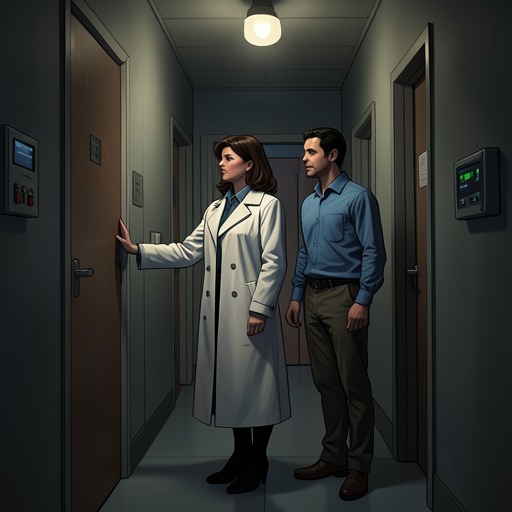
Emma then recognizes the packet she saw earlier in the sitting area. She opens the rubbish bag and digs through empty milk cartons and wrappers until she finds it beneath a piece of kitchen paper. When she holds it up, Michiel falls silent. He takes the worn packet from her, opens its flap, and removes something before she can see what it is, slipping it into his pocket. He is breathing heavily when he hurls a chair through the garden door. The glass breaks and the chair catches against the doorframe; after the abrupt burst of destruction, the room is left in a long, stunned silence. The scene turns on a sharp reversal: the search for a seemingly ordinary possession exposes how much is hidden inside it, but Emma does not yet know what that is.
The Photograph and the Family Secret
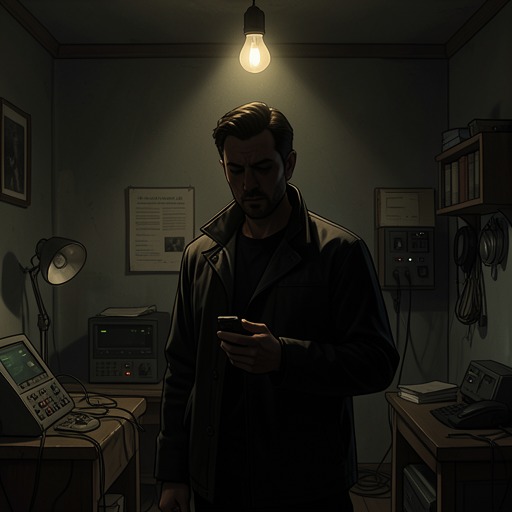
Afterward, Michiel explains that he has reported himself and that isolation is not permitted as punishment. He sits with the cigarette packet, carefully unwraps its foil, and opens it. Instead of taking out a cigarette, he retrieves a crumpled piece of paper, puts it back into the case, and uses a red marker to write a warning on the cardboard. The case has become a boundary as well as a hiding place: its contents are not to be casually handled. When Emma is distracted by a puzzle box, Michiel sits at the other side of the table, and the object remains between his privacy and the rest of the ward.
Later, as Emma asks why he sometimes speaks with her and sometimes withdraws, Michiel takes the packet from the table and studies it before removing the photograph and handing it to her. The portrait shows a young woman with long, curly hair and bright green eyes, smiling toward the camera. The image gives Emma a first, direct view of the person behind Michiel's fierce protectiveness. She assumes the woman might be his girlfriend; Michiel tells her that she is his sister. He eventually takes the photograph back and stores it carefully in the cigarette case.
The portrait accompanies Michiel's account of his adoption and family. His adoptive parents had been unable to have children before he joined their family, and his mother later gave birth to his sister. He describes her as charming and says that she was diagnosed with manic-depressive illness, but only after her condition had become severe. A year later, she jumped to her death. He remembers her as manic and intensely high, and admits to Emma that, despite loving her and wanting to keep her alive, he has sometimes wondered whether her death was the only outcome that could have followed.
What the Case Keeps
The photograph is bound up with the aftermath of that death. Michiel says that his sister had pills, but after the funeral he discovered she had also carried a loaded gun and had been one of the area's major drug dealers. When people came after her business, he took it over to protect his parents and his father's company. His parents did not know the truth about their daughter. After an autopsy revealed drugs in her system, they believed Michiel had supplied them; a customer later told his father that Michiel was a dealer, confirming their suspicion that he had caused her death. He never corrected their account, reasoning that he would not destroy the consoling story in which their daughter had been a victim rather than a perpetrator.
The case therefore holds more than a likeness. The picture is a cherished remnant of the sister Michiel loved, while the packet also protects the memory of the secret he kept and the guilt attached to the false blame his parents placed on him. His care for the photograph—cut to size, folded, carried, retrieved, and returned to its container—contrasts with the violence of the scene in which Emma first uncovers it. That contrast makes the case a concrete measure of a grief Michiel cannot readily explain. When he finally tells Emma his story, he links her talk about flying with memories of his sister and the feelings surrounding her illness. The object has not resolved his loss, but it gives him a way to show Emma what his guardedness has been protecting.