When Emma was twelve
The Childhood Balcony Crisis
During a severe depressive crisis, [Emma](entity:character-recall-character-emma-0b5c09f9ac66) stood at the edge of a balcony and considered ending her life. She stopped when she saw [Siem](entity:character-recall-character-siem-a1e58fa48bda) in the field below and realized that the pony had witnessed her.
Several years before the novel
The First PAAZ Admission
After depression and suicidal thoughts overwhelmed her, [Emma](entity:character-recall-character-emma-0b5c09f9ac66) was admitted to the [PAAZ](entity:location-recall-location-paaz-f28d8765aed7) for five months. Treatment, day care, and repeated psychiatric appointments followed, but she experienced the admission as both rescue and a profound loss of control.
In the years before the readmission
A Life of Unrecognized Swings
[Emma](entity:character-recall-character-emma-0b5c09f9ac66)’s mood repeatedly shifted between depression and unusually energetic periods. During some of the latter she threw herself into projects, including an ambition to fold a thousand origami cranes, while the pattern went unrecognized by her clinicians and by Emma herself.
About a year before the novel
The Music in Vienna
On a trip to [Vienna](entity:location-recall-location-8daae28d814e), [Emma](entity:character-recall-character-emma-0b5c09f9ac66) heard what seemed to be a large string orchestra. [Sergei](entity:character-recall-character-sergei-f2643d5f6958) could hear no music; when Emma concentrated, the sound resolved into passing traffic, then returned whenever her attention loosened.
Years before the novel
Michiel’s Sister
[Michiel](entity:character-recall-character-michiel-1c5869e1cdac)’s sister received a bipolar diagnosis after a period of severe illness, but by then her family had little understanding of the danger she was in. While manic, she persuaded those around her that everything was fine and died by suicide the following year.
After his sister’s death and before the novel
Michiel Takes Her Place
After his sister died, [Michiel](entity:character-recall-character-michiel-1c5869e1cdac) discovered that she had dealt drugs and that dangerous people were looking for those connected to her. He took over her role to shield his adoptive parents, allowing them to believe a kinder version of what had happened, though the secret later damaged their trust in him.
Before Michiel’s current PAAZ stay
A Failed Attempt and Rehabilitation
[Michiel](entity:character-recall-character-michiel-1c5869e1cdac)’s drug use escalated, and during an earlier stay in rehabilitation he attempted suicide. He later entered the [PAAZ](entity:location-recall-location-paaz-f28d8765aed7) while waiting for a place in a treatment program, presenting his situation as a need to cut back rather than fully confront his addiction.
Before Emma’s current admission
The Family’s Loss
[Beatrice](entity:character-recall-character-beatrice-e4ab17cea47e)’s youngest child died half an hour after birth. She went on to build her life around her family, but decades later she still introduced herself as someone who had three children, including the child she lost.
Friday morning
The Friday She Expects to Leave
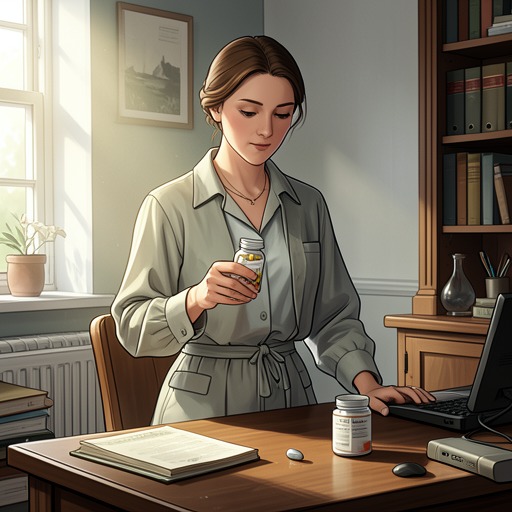
[Emma](entity:character-recall-character-emma-0b5c09f9ac66) arrives at the hospital convinced that this is her final psychiatric appointment. She has been depressed for months, but now feels extraordinarily happy and certain that her illness is behind her; after collecting prescriptions, she expects to be free of psychiatric care.
Friday morning
The Missing Lithium
The hospital pharmacy can provide only a small supply of [Emma](entity:character-recall-character-emma-0b5c09f9ac66)’s lithium and offers a repeat prescription for the remainder. As she leaves, she asks whether the pharmacy sells a mortar, an ordinary-sounding question that gains a darker meaning once her plan emerges.
Friday morning
A Dog in the Rain
[Emma](entity:character-recall-character-emma-0b5c09f9ac66) sees a small dog in the hospital hall and briefly interprets its red harness as evidence of a therapy animal. She then notices rain and puddles that she had failed to register, brushing aside the discrepancy as an ordinary failure of attention.
Friday morning
The Appointment Changes
On the way to see [Doctor Visser](entity:character-recall-character-visser-cf1d5774e08a), [Emma](entity:character-recall-character-emma-0b5c09f9ac66) learns that her appointment has been reassigned to [Rajid Panjani](entity:character-recall-character-rajid-panjani-512efd275d4d) because Doctor Visser’s husband has died. The secretary’s distress and the sudden change unsettle Emma, though she insists that the identity of the psychiatrist should not matter.
Friday morning
The Overdose Plan
In their first conversation, [Rajid](entity:character-recall-character-rajid-8e4d66a10f19) learns that [Emma](entity:character-recall-character-emma-0b5c09f9ac66) has saved roughly two hundred pills and intends to grind them up and swallow them with breakfast the next morning. Emma does not experience the plan as a suicidal act: she believes it will permanently remove her depression and allow her to keep living productively.
Friday morning
Admission to the PAAZ
[Rajid](entity:character-recall-character-rajid-8e4d66a10f19) tells [Emma](entity:character-recall-character-emma-0b5c09f9ac66) to surrender her medication or be admitted. She refuses to give up the pills, and he arranges her readmission to protect her while the team investigates her sharply changed state.
Friday morning
Sergei Arrives Without the Pills
[Sergei](entity:character-recall-character-sergei-f2643d5f6958) brings [Emma](entity:character-recall-character-emma-0b5c09f9ac66) clothes and her laptop, but not the medication [Rajid](entity:character-recall-character-rajid-8e4d66a10f19) has asked him to remove from her home. Emma is disturbed by the omission, while Sergei agrees in principle to clear the supply and discusses her situation with Rajid.
Friday afternoon
A Conditional Stay
During intake, [Emma](entity:character-recall-character-emma-0b5c09f9ac66) learns that the locked ward is full and that she will be on the open ward without leave privileges. She refuses group therapy, explaining that years of talking have exhausted her, and [Rajid](entity:character-recall-character-rajid-8e4d66a10f19) agrees to make a workable plan rather than force her into every scheduled activity.
Friday afternoon
The Familiar Ward
The ward’s new division and its altered rooms make [Emma](entity:character-recall-character-emma-0b5c09f9ac66) feel both at home and disoriented. She interprets the reversed layout of her bedroom as a fitting counterpart to her changed mood, then tries to hold onto the idea that this admission will be brief.
Friday evening
The First Evening
[Emma](entity:character-recall-character-emma-0b5c09f9ac66) joins the patients for dinner on the locked side, where she is unnerved by a man with a walker before he quietly pours her milk. The moment complicates her fear of the ward’s boundaries: the door can separate people, but a small act of care can cross that divide.
Friday evening
The Medication Bag
[Bas](entity:character-recall-character-bas-7a58c3cc433a) leaves a bag of medication on the ward’s windowsill. [Emma](entity:character-recall-character-emma-0b5c09f9ac66) lunges for it, seeing a possible return to her plan, but recognizes that the pills are not hers and calls Bas back to give them to him.
Friday night
A Quiet First Night
[Emma](entity:character-recall-character-emma-0b5c09f9ac66) lies awake expecting the ward’s nighttime checks and is surprised by how little she is overwhelmed. She tells herself that the routine and the work on her manuscript may even be helping, though her confidence rests on a dangerously incomplete understanding of her state.
Saturday morning
Restlessness on Saturday
[Emma](entity:character-recall-character-emma-0b5c09f9ac66) cannot settle into work and paces through the empty lounge. She finds the broken garden door and learns that repairs have stalled amid the coming merger and uncertainty over which department is responsible.
Saturday morning
The Walk with Karel
[Karel](entity:character-recall-character-karel-062a159d8198) checks [Emma](entity:character-recall-character-emma-0b5c09f9ac66)’s file and takes her for a supervised walk, even though the schedule and staffing are disorganized. When Emma mistakes a branch for a snake, she passes it off as a fleeting mistake, revealing how practiced she is at concealing her unusual perceptions.
Saturday morning
A Job She Fears Losing
On the walk, [Emma](entity:character-recall-character-emma-0b5c09f9ac66) tells [Karel](entity:character-recall-character-karel-062a159d8198) about her new secretarial job at a law office and admits that being readmitted may put it at risk. The possibility that her working life may again be interrupted pierces the certainty she has been maintaining about feeling well.
Monday morning
The Ward’s Fractured Group
At the delayed day opening, [Emma](entity:character-recall-character-emma-0b5c09f9ac66) meets [Beatrice](entity:character-recall-character-beatrice-e4ab17cea47e), [Iefke](entity:character-recall-character-iefke-64cb5d0692a0), [Linda](entity:character-recall-character-linda-d0962a858d4f), [Michiel](entity:character-recall-character-michiel-1c5869e1cdac), and the other patients. Their conflicts and the staff’s uneven responses make the group feel less like a therapeutic community than a collection of people sharing a failing ward.
Monday morning
The Baby in the Lounge
[Emma](entity:character-recall-character-emma-0b5c09f9ac66) discovers that [Lonneke](entity:character-recall-character-lonneke-748b570ab609)’s baby, Bor, is in the lounge while his father visits. The sight surprises her, but it also widens her sense of who is caught up in the ward’s daily life and how illness reaches beyond the patient.
Monday
Dimitri Returns
[Emma](entity:character-recall-character-emma-0b5c09f9ac66) reconnects with [Dimitri Kaminski](entity:character-recall-character-dimitri-kaminski-8f31c76eb249), a former fellow patient who has returned for a short stay. He tells her that the old treatment group is being phased out as the [PAAZ](entity:location-recall-location-paaz-f28d8765aed7) prepares to merge, confirming Emma’s sense that the ward itself is disappearing.
Monday
Dimitri’s Hidden Diagnosis
[Dimitri](entity:character-recall-character-dimitri-e75ab2e64c8b) explains that his previous apparent alcohol problem was connected to a benign brain tumor; drinking had been a form of self-medication. His account reminds [Emma](entity:character-recall-character-emma-0b5c09f9ac66) that a patient’s visible behavior can obscure a different underlying illness.
Monday
A Walk Emma Organizes
When the scheduled supervised walk is quietly dropped, [Emma](entity:character-recall-character-emma-0b5c09f9ac66) pushes the staff to provide one, insisting that the activity appears on the roster. She even goes upstairs to arrange an appointment herself, despite having no leave privileges, exposing the contradiction between her apparent competence and her restricted status.
Monday afternoon
The Bipolar Possibility
[Rajid](entity:character-recall-character-rajid-8e4d66a10f19) raises the possibility that [Emma](entity:character-recall-character-emma-0b5c09f9ac66) has bipolar disorder in addition to [Asperger syndrome](entity:state-recall-state-2c242415fde6). He gives her mood charts to complete and discusses how periods of unusually high energy, reduced need for sleep, and intense activity may have been mistaken for traits of her autism.
Monday afternoon
Medication and Risk
[Rajid](entity:character-recall-character-rajid-8e4d66a10f19) proposes [Tegretol](entity:object-recall-object-tegretol-fe3adbeaf8eb) alongside [Emma](entity:character-recall-character-emma-0b5c09f9ac66)’s lithium and explains why suicidal thoughts can become especially dangerous when paired with manic impulsivity. Emma objects that she had reported suicidal thoughts for months without being admitted, but the stockpile and immediate plan changed the risk.
Monday evening
The First Leave with Sergei
[Emma](entity:character-recall-character-emma-0b5c09f9ac66) receives permission to meet [Sergei](entity:character-recall-character-sergei-f2643d5f6958) in the hospital restaurant. She tells him about the possible diagnosis, but his calm response frustrates her because she wants him to understand the gravity of a condition that may make her moods and future feel newly uncertain.
Monday evening
The Pills Still at Home
[Emma](entity:character-recall-character-emma-0b5c09f9ac66) asks [Sergei](entity:character-recall-character-sergei-f2643d5f6958) whether he has removed her stored medication. His evasive answer reveals that he has not, because he thinks she may need the pills later. Emma knows [Rajid](entity:character-recall-character-rajid-8e4d66a10f19) expects them gone but cannot yet explain the emotional force the supply still holds for her.
Tuesday night
The Balcony Memory Returns
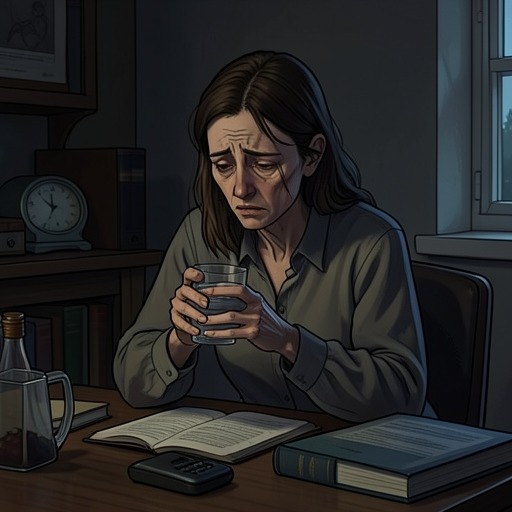
As the new medication and the prospect of diagnosis unsettle her, [Emma](entity:character-recall-character-emma-0b5c09f9ac66) remembers standing on a balcony at twelve, ready to die until [Siem](entity:character-recall-character-siem-a1e58fa48bda) caught her attention. She sees that her overdose plan came from a wish to make a recurring depression her final one, not from a passing impulse.
Tuesday night
The Ward Decides for Now
Overwhelmed by the memory and the prospect that depression will return, [Emma](entity:character-recall-character-emma-0b5c09f9ac66) finds temporary relief in the thought that she need not decide her future immediately. She is in the [PAAZ](entity:location-recall-location-paaz-f28d8765aed7); for now, the ward will keep her safe, and she will postpone the decision she has been trying to make alone.
Wednesday morning
The Doorway of Fear
Still foggy after starting [Tegretol](entity:object-recall-object-tegretol-fe3adbeaf8eb), [Emma](entity:character-recall-character-emma-0b5c09f9ac66) challenges [Iefke](entity:character-recall-character-iefke-64cb5d0692a0) about arriving late to activities. Iefke explains that she can freeze outside her bedroom door, unable to enter the group because of fear; the others offer to help her cross that threshold rather than leave her to manage alone.
Wednesday morning
Michiel Questions the Manuscript
[Michiel](entity:character-recall-character-michiel-1c5869e1cdac) notices [Emma](entity:character-recall-character-emma-0b5c09f9ac66)’s open laptop and challenges her to write about events when she may not be able to distinguish reality from delusion. His accusation strikes at the purpose of her manuscript and intensifies her fear that her account of her life cannot be trusted.
Wednesday
The Hospital Shop
Overwhelmed, [Emma](entity:character-recall-character-emma-0b5c09f9ac66) leaves the ward for the hospital shop, convinced she must avoid being seen. Ordinary shoppers and conversations seem transformed, and she follows a sequence of imagined rules through the aisles before losing track of why she came.
Wednesday
The Chapel Delusion
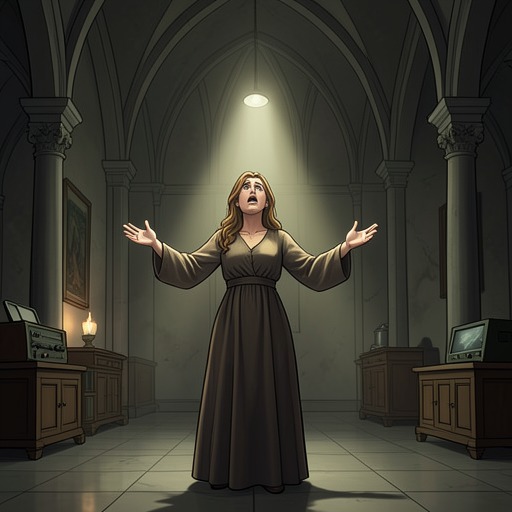
[Emma](entity:character-recall-character-emma-0b5c09f9ac66) enters the hospital chapel and experiences its stained glass as a revelation. She believes the room makes her invisible and that she has become part of a universal order, until the light fades and the vision collapses into fear and breathlessness.
Wednesday
Michiel Brings Her Back
[Michiel](entity:character-recall-character-michiel-1c5869e1cdac) finds [Emma](entity:character-recall-character-emma-0b5c09f9ac66) in the chapel and accompanies her back through the hospital. He does not ridicule her or leave her alone, and his presence becomes important when Emma later struggles to decide whether the episode was real or imagined.
Wednesday afternoon
A Medical Crisis
Back on the ward, [Emma](entity:character-recall-character-emma-0b5c09f9ac66) is weak, breathless, and in pain. Her blood pressure and heart rate are high, prompting [Rajid](entity:character-recall-character-rajid-8e4d66a10f19) to consider a pulmonary embolism and arrange an assessment at the emergency department.
Wednesday evening
The Emergency Assessment
With the ward occupied by another crisis, [Emma](entity:character-recall-character-emma-0b5c09f9ac66) makes the exhausting journey to the emergency department alone. Doctors find no reason to keep her there and suspect the newly introduced [Tegretol](entity:object-recall-object-tegretol-fe3adbeaf8eb) is causing the symptoms, advising that it be stopped.
Saturday
The Empty Puzzle Room
With other patients away for the weekend, [Emma](entity:character-recall-character-emma-0b5c09f9ac66) cannot concentrate on her work and tries to complete her mood charts. [Sandra](entity:character-recall-character-sandra-3771b19649a6) shows her a cramped, dark room intended for games and puzzles, a small example of the ward’s poor planning and neglect.
Saturday
A Conversation About Loneliness
[Emma](entity:character-recall-character-emma-0b5c09f9ac66) tells [Sandra](entity:character-recall-character-sandra-3771b19649a6) that patients gather on the locked side because staff are present there, not because the patients prefer confinement. She argues that leaving the open ward to manage itself may look like independence but often leaves people isolated.
The following week
Elise Learns the Truth
[Emma](entity:character-recall-character-emma-0b5c09f9ac66) finally calls [Elise](entity:character-recall-character-elise-910ceff1d907) and admits that she has been hospitalized for several days. Elise is hurt and angry that Emma concealed the admission, then agrees to inform their parents and promises to visit, making Emma confront the damage caused by trying to protect everyone from her illness.
The following week
Confiding in Rajid
[Emma](entity:character-recall-character-emma-0b5c09f9ac66) tells [Rajid](entity:character-recall-character-rajid-8e4d66a10f19) that she has seen snakes, dogs, and other things that were not there, and describes beliefs that felt completely true even when they contradicted reality. She explains how much energy she spends checking her perceptions and hiding the experiences from others.
During the same appointment
A Life of Hidden Flight
[Emma](entity:character-recall-character-emma-0b5c09f9ac66) describes a past manic belief that she could fly. She tested the belief by jumping from increasingly high objects, explaining that each failed attempt seemed to confirm the delusion rather than disprove it, until depression returned and ended the episode.
Soon after the disclosure
The Truth About the Chapel
[Emma](entity:character-recall-character-emma-0b5c09f9ac66) asks [Michiel](entity:character-recall-character-michiel-1c5869e1cdac) whether he was really present when she was lost in the chapel. He confirms that he followed her and tried to help, giving her relief that at least one person witnessed the episode and that she had not been entirely alone.
Tuesday, after Lars returns
Lars’s Cruel Conversation
[Emma](entity:character-recall-character-emma-0b5c09f9ac66) tells [Lars](entity:character-recall-character-lars-982c7d06e766) she has been readmitted, but he responds with anger about repeated admissions and warns that she may eventually be sent to long-term care. He dismisses the prospect of a new diagnosis and leaves Emma feeling that her last source of help has been taken away.
Immediately after the conversation with Lars
The Bridge Crisis
[Emma](entity:character-recall-character-emma-0b5c09f9ac66) leaves the ward and stands on a bridge, thinking of jumping. Remembering the harm her death would cause [Gwen](entity:character-recall-character-gwen-8bdbcc989492), she steps away, calls [Sergei](entity:character-recall-character-sergei-f2643d5f6958), then calls her mother and tells her what happened instead of keeping the crisis to herself.
The same day
A Mother’s Anger
[Emma](entity:character-recall-character-emma-0b5c09f9ac66)’s mother responds with anger on Emma’s behalf and offers to collect her from the hospital. Emma declines, deciding that she wants to remain in treatment and address the rupture with [Lars](entity:character-recall-character-lars-982c7d06e766) herself, while accepting her mother’s willingness to stand beside her.
The next day
Lars Apologizes
[Emma](entity:character-recall-character-emma-0b5c09f9ac66) confronts [Lars](entity:character-recall-character-lars-982c7d06e766) in the cramped puzzle room and repeats the words that hurt her. He apologizes and admits he had not read her file before their earlier meeting, wanting to hear her account first; Emma accepts the apology but remains uncertain about whether she can trust him.
Later that week
The Job Contract Ends
[Emma](entity:character-recall-character-emma-0b5c09f9ac66) learns that her temporary work contract will not be renewed because her return date is uncertain. She feels ashamed, even though her employer has tried to handle the situation kindly, and the news deepens her fear that illness keeps undoing the progress she has made.
Later that week
The Meaning of the Manuscript
A conversation with [Seb](entity:character-recall-character-seb-111c667c6f57) about [Lonneke](entity:character-recall-character-lonneke-748b570ab609)’s frightening postpartum experiences prompts [Emma](entity:character-recall-character-emma-0b5c09f9ac66) to question whether her manuscript still has a purpose. She sees her own work as increasingly small beside the suffering around her and wonders who she is to write about lives she may not fully understand.
During a later visit
Sergei and the Diagnosis
[Sergei](entity:character-recall-character-sergei-f2643d5f6958) remains calm when [Emma](entity:character-recall-character-emma-0b5c09f9ac66) explains that she may have bipolar disorder and hallucinations, partly because he has already seen her experience unusual perceptions. His steadiness comforts her, but it also frustrates her when she wants him to recognize how dangerous and frightening the situation can be.
During a group walk
Linda’s Private Life
[Emma](entity:character-recall-character-emma-0b5c09f9ac66) assumes that [Linda](entity:character-recall-character-linda-d0962a858d4f)’s hair loss comes from cancer treatment, but Linda explains that she has alopecia and works as a professional firefighter. She has kept her job private because she wants the ward to remain separate from her working life.
During a group walk
Beatrice’s Christmas Deadline
[Beatrice](entity:character-recall-character-beatrice-e4ab17cea47e) tells [Emma](entity:character-recall-character-emma-0b5c09f9ac66) that she has set Christmas as the deadline for ending her life if treatment has not relieved her depression. She insists that she is not currently suicidal, but her certainty and the approaching date alarm Emma, who recognizes how despair can make time feel unbearable.
Later that week
The Ward’s Recovery Class
[Pieter Voorn](entity:character-recall-character-pieter-voorn-522c1f54f19e) leads a recovery session about diagnosis, stigma, and identity. [Emma](entity:character-recall-character-emma-0b5c09f9ac66) challenges his assumptions that patients’ families and employers stigmatize them, arguing that people often make clumsy attempts to help without understanding what a psychiatric admission is like.
After the recovery session
The Ward Shares Its Stories
[Emma](entity:character-recall-character-emma-0b5c09f9ac66) tells [Iefke](entity:character-recall-character-iefke-64cb5d0692a0) and [Linda](entity:character-recall-character-linda-d0962a858d4f) that she has bipolar symptoms and sometimes sees or hears things that are not present. She describes the difference between a hallucination and a delusion, and [Dimitri](entity:character-recall-character-dimitri-e75ab2e64c8b) shares his own experiences, loosening Emma’s conviction that she is uniquely strange.
During the weeks on the ward
Amelie’s Relapse
[Michiel](entity:character-recall-character-michiel-1c5869e1cdac) spends a long time talking with [Amelie](entity:character-recall-character-amelie-f0c0837685b4) about drugs. Afterward, Amelie returns to the ward intoxicated and is sent away, separated from her child; [Iefke](entity:character-recall-character-iefke-64cb5d0692a0) blames Michiel, while [Emma](entity:character-recall-character-emma-0b5c09f9ac66) struggles to reconcile the incident with his claim that he protects vulnerable patients.
Soon after Amelie’s relapse
Michiel and Iefke Clash
[Iefke](entity:character-recall-character-iefke-64cb5d0692a0) confronts [Michiel](entity:character-recall-character-michiel-1c5869e1cdac) over [Amelie](entity:character-recall-character-amelie-f0c0837685b4)’s relapse and tells him that Amelie’s child may be taken away. She also attacks him for being adopted, provoking visible fury; Michiel leaves rather than strike back, but withdraws from the group afterward.
Several weeks into Emma’s stay
The Missing Medication
The ward discovers that eight boxes of medication have gone missing. [Emma](entity:character-recall-character-emma-0b5c09f9ac66) fears that the suspicion will fall on [Michiel](entity:character-recall-character-michiel-1c5869e1cdac), and when she fails to reassure him, he accuses her of seeing him only as an addict and storms around searching for his cigarette case.
That evening
The Garden Door Shatters
[Emma](entity:character-recall-character-emma-0b5c09f9ac66) finds [Michiel](entity:character-recall-character-michiel-1c5869e1cdac)’s old cigarette case in the rubbish, with a precious photograph hidden inside. In a sudden outburst, Michiel throws a chair through the glass door to the ward garden, terrifying the group and leaving the ward exposed to the weather.
Later that night
Beatrice Finds the Pills
[Emma](entity:character-recall-character-emma-0b5c09f9ac66) discovers [Beatrice](entity:character-recall-character-beatrice-e4ab17cea47e) sitting in her room with the missing medication, which [Celine](entity:character-recall-character-celine-8a078bab3501) had accidentally left there. Beatrice says she cannot bear her depression and wants the suffering to stop; Emma persuades her to return the pills and speak to staff, invoking the promise Beatrice made to wait until Christmas.
The same night
Michiel’s Happy Ending
[Michiel](entity:character-recall-character-michiel-1c5869e1cdac) returns and claims that breaking the door has achieved a happy ending because the broken fixture will finally be repaired. [Emma](entity:character-recall-character-emma-0b5c09f9ac66) challenges him for ignoring the danger to [Beatrice](entity:character-recall-character-beatrice-e4ab17cea47e) and for treating other people as collateral damage, while Michiel accuses her of having no right to judge him.
The following Monday
The Visit with Her Mother
[Emma](entity:character-recall-character-emma-0b5c09f9ac66)’s mother visits and explains that she stayed away during Emma’s first admission because the hospital was where she had suffered three miscarriages. She had felt that leaving Emma there meant losing another child, not that she was ashamed of her.
Several weeks before the conversation
David’s Hospitalization
[Emma](entity:character-recall-character-emma-0b5c09f9ac66) learns that [David](entity:character-recall-character-david-a0465b0b2f3d) was found neglected among bottles and pills after withdrawing from contact. He was hospitalized and then transferred to psychiatric care; their parents had hidden the crisis because they feared adding to Emma’s burden.
During the visit with her mother
A Promise to Visit David
[Emma](entity:character-recall-character-emma-0b5c09f9ac66)’s mother says [David](entity:character-recall-character-david-a0465b0b2f3d) cannot return to living independently and will need a supported home for autistic adults. Emma agrees to accompany her mother on a future visit, offering practical help and a new way to be present in a family crisis without pretending she can solve it.
After the Tegretol reaction
A New Trial of Depakine
Once [Emma](entity:character-recall-character-emma-0b5c09f9ac66)’s adverse reactions to [Tegretol](entity:object-recall-object-tegretol-fe3adbeaf8eb) subside, [Rajid](entity:character-recall-character-rajid-8e4d66a10f19) proposes [Depakine](entity:object-recall-object-depakine-9f12040bfc54) alongside lithium to reduce her manic and hypomanic episodes. He warns that the medication will require monitoring and may keep her in the ward for several more weeks.
Several weeks into treatment
Rapid Cycling
[Rajid](entity:character-recall-character-rajid-8e4d66a10f19) reviews [Emma](entity:character-recall-character-emma-0b5c09f9ac66)’s completed mood charts and recognizes rapid cycling, with mood changes much more frequent than average. Emma is angry that years of psychiatric care passed without anyone tracking the pattern, and Rajid acknowledges that the earlier treatment may not have been well matched to it.
During the same consultation
The Cost of Stability
[Rajid](entity:character-recall-character-rajid-8e4d66a10f19) explains that mood stabilizers may reduce dangerous highs without eliminating depression. [Emma](entity:character-recall-character-emma-0b5c09f9ac66) grieves the possibility of losing the exhilarating states that had once seemed like the only escape from despair, while Rajid insists that the risk of a full manic episode is too serious to ignore.
In the weeks before Emma leaves
Beatrice Finishes Her Scarf
[Emma](entity:character-recall-character-emma-0b5c09f9ac66) speaks with [Beatrice](entity:character-recall-character-beatrice-e4ab17cea47e) about the fear that medication has taken away her sense of God. She suggests that depression, rather than the pills alone, may have muted that feeling and encourages Beatrice to seek help with the grief she has carried since losing her child.
The week before discharge
The Case for Going Home
[Emma](entity:character-recall-character-emma-0b5c09f9ac66) tells [Rajid](entity:character-recall-character-rajid-8e4d66a10f19) she wants to leave while still depressed, arguing that her rapid cycling will not stop simply because she remains in the ward. She accepts that the [PAAZ](entity:location-recall-location-paaz-f28d8765aed7) cannot cure her and says the useful role of treatment is to intervene when she can no longer keep herself safe.
The week before discharge
Ending Therapy with Lars
[Emma](entity:character-recall-character-emma-0b5c09f9ac66) tells [Lars](entity:character-recall-character-lars-982c7d06e766) that she intends to stop psychotherapy after a gradual transition, though she will continue psychiatric care with [Rajid](entity:character-recall-character-rajid-8e4d66a10f19). When Lars tries to revisit his earlier conduct, Emma repeatedly says “stop” and holds the boundary; he finally recognizes the change in her ability to speak up.
The night before Emma’s discharge
Michiel’s Sister’s Photograph
[Michiel](entity:character-recall-character-michiel-1c5869e1cdac) explains that his sister was bipolar, died by suicide while manic, and had been involved in drug dealing. He took over her dangerous business to protect their parents, then concealed the truth after her death, believing that their version of events was the only happy ending he could leave them.
The night before Emma’s discharge
Michiel Chooses Aruba
[Michiel](entity:character-recall-character-michiel-1c5869e1cdac) tells [Emma](entity:character-recall-character-emma-0b5c09f9ac66) that he has been away completing assessments for a place in an addiction clinic in [Aruba](entity:location-recall-location-2426fd68418e). He admits that he visited his dealer and was tempted to use again, but says he intends to begin treatment and speak honestly with his parents before leaving.
The night before Emma’s discharge
The Farewell to Michiel
[Emma](entity:character-recall-character-emma-0b5c09f9ac66) and [Michiel](entity:character-recall-character-michiel-1c5869e1cdac) acknowledge how much they will miss one another despite their conflicts and the brevity of their friendship. They make a dark pact to rescue each other if either approaches suicide, and Michiel leaves with a promise to seek a good beginning rather than another manufactured happy ending.
Emma’s discharge day
The Final Talk with Doctor Visser
[Emma](entity:character-recall-character-emma-0b5c09f9ac66) unexpectedly encounters [Doctor Visser](entity:character-recall-character-visser-cf1d5774e08a), who has returned to work after her husband’s death. Doctor Visser cannot resume Emma’s care, but asks about the manuscript and encourages her; Emma gives the work the title [PAAZ](entity:location-recall-location-paaz-f28d8765aed7), making the private project feel real.
Emma’s discharge day
The Mortar Arrives
[Gwen](entity:character-recall-character-gwen-8bdbcc989492) gives [Emma](entity:character-recall-character-emma-0b5c09f9ac66) the pill crusher she had once requested, now delivered after a delay. Emma declines it, recognizing that she no longer needs the tool for the plan that brought her back to the ward.
Friday, five weeks after admission
Leaving the PAAZ
[Emma](entity:character-recall-character-emma-0b5c09f9ac66) leaves the ward with her laptop, clothes, and the owl scarf [Sergei](entity:character-recall-character-sergei-f2643d5f6958) gave her. She is still vulnerable and does not claim to be cured, but she has decided that she must try living beyond the [PAAZ](entity:location-recall-location-paaz-f28d8765aed7) rather than waiting for a perfect recovery.
Four months after discharge
The Old Ward Disappears
[Emma](entity:character-recall-character-emma-0b5c09f9ac66) returns with [Sergei](entity:character-recall-character-sergei-f2643d5f6958) and [Siem](entity:character-recall-character-siem-a1e58fa48bda) to the place where the old [PAAZ](entity:location-recall-location-paaz-f28d8765aed7) once stood. The building has been demolished, leaving only a sandy lot; Emma cannot summon its exact shape in memory and feels the loss of a place she never wanted to need again.
During the return to the former PAAZ site
Making Room for the Dog
[Emma](entity:character-recall-character-emma-0b5c09f9ac66) sees a large black dog in the shadows, recognizes it as one of her hallucinations, and does not treat its presence as proof that the world has become unsafe. She accepts that the dog can remain in her mind without controlling her actions, marking a more workable relationship with her symptoms.
At the novel’s close
The Couples Therapy Decision
[Emma](entity:character-recall-character-emma-0b5c09f9ac66) and [Sergei](entity:character-recall-character-sergei-f2643d5f6958) discuss [Rajid](entity:character-recall-character-rajid-8e4d66a10f19)’s suggestion of couples therapy and agree to try it, even as Emma jokes that therapy is not supposed to be interesting. Their decision leaves their relationship open to change rather than treating it as something already solved.
At the novel’s close
The Medication Secret
As [Emma](entity:character-recall-character-emma-0b5c09f9ac66) and [Sergei](entity:character-recall-character-sergei-f2643d5f6958) leave the demolished site, Emma discovers that Sergei kept the medication he had been asked to remove. She reproaches him, but the discovery becomes a dark joke between them as she realizes they still have difficult conversations ahead.
At the ending
Home with the Living
[Emma](entity:character-recall-character-emma-0b5c09f9ac66) rides with [Sergei](entity:character-recall-character-sergei-f2643d5f6958) toward her family and accepts that the [PAAZ](entity:location-recall-location-paaz-f28d8765aed7) is gone while her life continues. She is not promised a cure; instead, she has a diagnosis, people to rely on, and a growing ability to make room for illness without letting it define everything.