Refusal to pay the poll tax
WaldenThe refusal to pay the poll tax is Henry David Thoreau’s deliberate act of noncooperation with a government implicated in slavery and the invasion of Mexico. It makes conscience answerable not merely for private belief but for the support a citizen lends through allegiance: Thoreau withholds the demanded tax, accepts imprisonment, and argues that a just person must not become an agent of injustice. His refusal is selective rather than a withdrawal from every civic obligation; he continues to pay the highway tax and says he contributes to the education of his fellow citizens.
The tax as a direct encounter with government
Thoreau describes his encounter with the American government, or its representative, the State government, as an annual meeting in the person of the tax-gatherer. He presents this as the necessary, direct point of contact available to someone in his position: government asks to be recognized, and the simplest and most effective answer, given the political circumstances, is to deny it. The tax payment matters, then, not just as money changing hands but as a recurring act of acknowledgment. The tax-gatherer is not an abstraction or a piece of parchment; the dispute is with a person through whom the State makes its demand.
That face-to-face encounter gives the refusal its practical shape. Thoreau does not propose that he can trace each dollar from the tax bill to a purchase of a person or a weapon; he calls the dollar itself innocent. His concern is instead with the consequences of allegiance. The distinction directs the argument away from the imagined purity of a coin and toward the citizen’s own participation in a political relationship. Refusal is therefore addressed to the government’s demand for recognition, not offered as a claim that money can be tracked to a particular injustice.
Political grounds and moral threshold
The refusal is framed against two public wrongs: slavery in a country that calls itself a refuge of liberty, and the foreign invasion and conquest of Mexico. Thoreau argues that these conditions make resistance urgent. If oppression and robbery have become organized through the machinery of government, he says, honest people should rebel and revolutionize rather than continue sustaining that machinery. In this account, the issue is not simply disagreement with policy; it is whether citizens may remain cooperative when the State organizes injustice.
His moral test is sharply conditional. A wrong that is merely part of the unavoidable friction of government may be endured, he suggests, and an individual may consider whether a proposed remedy would be worse than the evil. But when the wrong requires a person to act as an agent of injustice toward another, the answer changes: the law must be broken, and one’s life must serve as counter-friction against the machine. The decisive boundary lies between suffering an imperfect system and being made its instrument. The tax refusal applies this principle to allegiance in ordinary civic life.
Thoreau presses the demand beyond private disapproval. He calls on those who identify as Abolitionists to withdraw their support, in person and property, from the government of Massachusetts. He also insists that reform cannot be reduced to opposing distant politicians: the opponents of reform in Massachusetts include merchants and farmers at home. The argument thus links a national crisis to local habits of consent and material support. A person can denounce injustice and still help sustain the institutions that perpetuate it; for Thoreau, conscientious objection must change that practical relation.
Refusal, imprisonment, and the limits of compliance
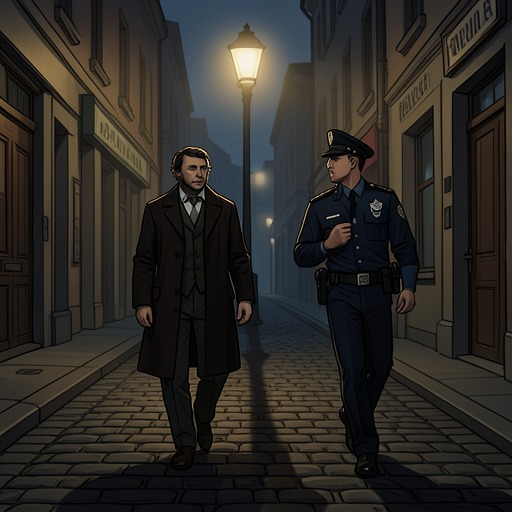
Thoreau reports that he paid no poll tax for six years and was imprisoned once on that account, for one night. He recalls the solid stone walls, two or three feet thick, the foot-thick door of wood and iron, and the iron grating that strained the light. The brief confinement makes the consequence of refusal tangible: the State’s demand is backed by a jail, while the dissenter’s protest takes the form of submitting to that penalty without conceding the justice of the demand.
His account does not make imprisonment an end in itself. It gives a bodily and institutional form to the principle that, under a government that imprisons people unjustly, the proper place for a just person may also be prison. At the same time, Thoreau distinguishes the poll tax from other payments. He has never refused the highway tax, because he wants to be a good neighbor even as he is a bad subject. He says he is doing his part to educate his fellow citizens, and he refuses the poll tax not because of a particular item on the bill but because he wishes to refuse allegiance to the State and stand aloof from it effectively.
This distinction keeps the act from being a simple rejection of public life or a bid to escape every obligation. Thoreau accepts shared benefits and retains neighborly responsibilities while contesting the political bond expressed by the poll tax. The target is allegiance, not the mere existence of taxes or the practical use of public arrangements. He says he will still make use of, and obtain what advantage he can from, the State; the refusal does not pretend that separation is complete. Instead, it identifies the point at which cooperation, in his judgment, would make him complicit.
The action’s political meaning
The refusal turns a small annual encounter into a test of political recognition. Thoreau’s claim that a person more right than the neighbors already constitutes a majority of one counters the idea that moral judgment must wait for collective approval. The poll-tax decision gives that claim a specific procedure: when the tax-gatherer arrives, deny recognition by withholding payment. The action is personal in execution but political in its declared meaning, because the object is to withdraw support from a government implicated in slavery and war.
Thoreau also warns against mistaking the refusal for a remedy that can be judged only by immediate convenience. In his discussion of injustice, he allows that some friction may be tolerated and that remedies can carry their own costs; but he rejects that calculation when the individual is required to become an instrument of injustice against another. His willingness to accept jail is part of the argument’s force: the penalty does not make the refusal disappear but exposes the conflict between law and conscience. In this account, conscientious resistance does not guarantee that the State will change at once. It establishes what the dissenter will not help it do.
The refusal’s significance therefore lies in its combination of withdrawal and continued responsibility. Thoreau does not claim innocence by standing outside every civic relation, nor does he make the payment of a tax an automatic measure of public virtue. He separates obligations he can honor as a neighbor from allegiance he believes he must deny. A night behind a thick door becomes the cost of maintaining that distinction: rather than let the machinery of government use his cooperation, he accepts its punishment and makes noncooperation itself the expression of conscience.