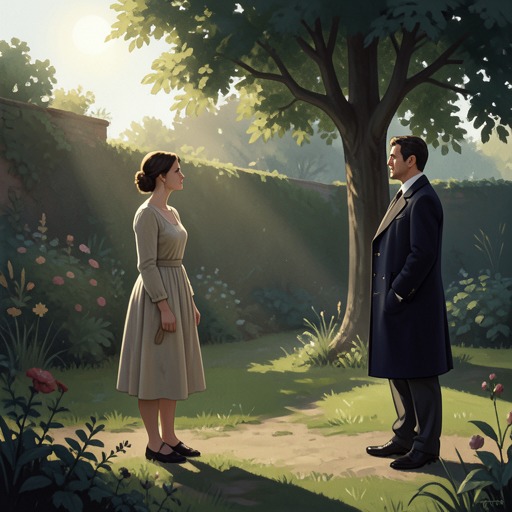
William Stafford
Wolf HallWilliam Stafford is the husband Mary Boleyn chooses for love, rather than for title or wealth. Though the novel gives little direct access to him, his marriage to Mary becomes a sharp test of the Boleyn family’s power: she is cast out for the choice, yet later declares that she would rather beg her bread with Stafford than be a queen.
Marriage and Courtly Conflict
When Mary’s marriage becomes known at court, Anne Boleyn refuses to believe Stafford is the child’s father and suspects that his willingness to marry Mary must be ambition. She says he will never return to court, and that Mary may crawl to her and starve; she disowns her sister, declaring that Mary is no longer a Boleyn. The reaction makes Stafford’s marriage more than a private matter: it exposes the queen’s fury at a sister who has chosen a man for herself while Anne is grieving the loss of her own child.
Mary answers that Stafford loves and cares for her, and that nobody else does. In her account, the marriage is founded on personal devotion rather than access to court. Jane Rochford remarks that Stafford has a farm or small manor in Kent, where Mary may have to sell her belongings. The novel does not establish further details of his land or household, but the contrast is clear: Mary accepts a reduced material position rather than return to the protection and privilege of her family.
Exile and Mary’s Letter
After Mary has gone into exile in Kent, her letter reaches Thomas Cromwell with the other correspondence at year’s end. She asks him for money and acknowledges that she acted hastily, saying that love overcame reason. But she does not retract her choice. She writes that other husbands might have offered her titles and riches, yet says that, if free to choose, she would rather beg her bread with Stafford than be the greatest queen christened.
Mary says she dares not write to Anne, her father, her uncle, or her brother because they have all been cruel to her; instead, she appeals to Cromwell. Her words make Stafford’s significance visible through Mary’s own priorities: his value is not a court office or a dynastic advantage, but the care she says she receives from him. She does not ask the family to approve the marriage; she asks for assistance while maintaining that she would choose the same husband again.
Narrative Significance
Stafford remains largely offstage, and the book supplies no extended account of his actions or private thoughts. His character is therefore defined chiefly by the contrast between Mary’s devotion and the court’s suspicions. Anne interprets the match as an ambitious move; Mary presents it as love, honesty, and mutual care. The disagreement reveals how a woman’s marriage can be treated as family property and political conduct, even when she insists it is a personal choice.
Mary’s willingness to accept poverty rather than a grander match also reverses the court’s measure of success. Her comparison with the greatest queen is especially pointed in a world reorganized around Anne’s queenship and the hoped-for royal heir. Stafford’s importance lies not in demonstrated influence at court, but in the choice Mary makes and continues to defend: she would prefer a life with him to rank without him.