High Johnny, wide Johnny
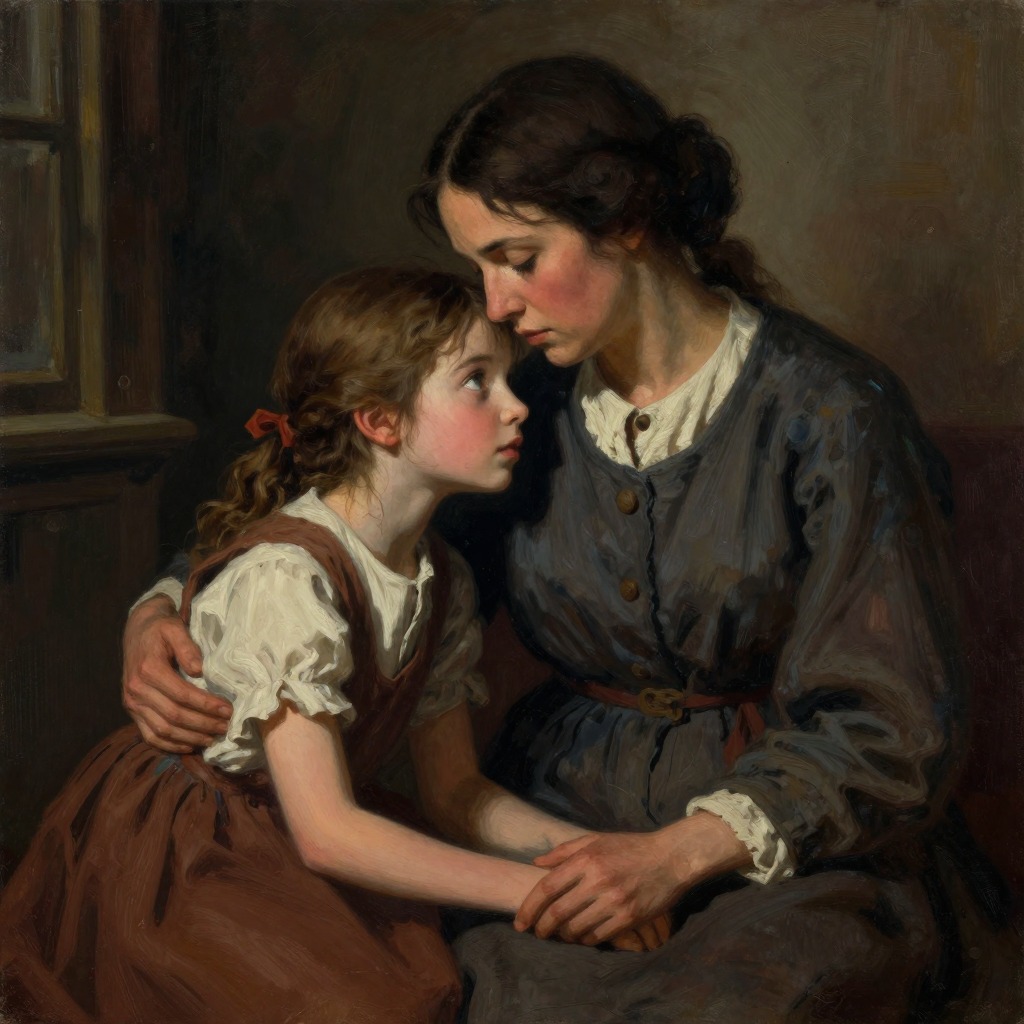
High Johnny, wide Johnny is a lullaby that Sethe sings to her children, a private melody that carries the weight of her maternal devotion and the trauma of her past. In Toni Morrison's Beloved, the song functions as a key to identity and memory, its recognition by the mysterious Beloved serving as a pivotal moment of revelation. The lullaby's recurrence—from Sethe's joyful singing to her children to its haunting echo in her final days—traces the arc of her love, loss, and the struggle to reclaim her sense of self.
Origins and Private Meaning
The lullaby is introduced as a song that Sethe made up and sang to her children, a fact she emphasizes when she tells Beloved, "I made that song up... Nobody knows that song but me and my children." This declaration establishes the song as a private, almost sacred possession, a thread connecting Sethe to her offspring in a world where so much has been taken from her. The song's lyrics, "High Johnny, wide Johnny, don't you leave my side, Johnny," express a plea for constancy and presence, reflecting Sethe's desperate need to keep her children close, both physically and emotionally. In the context of her escape from Sweet Home and the subsequent loss of her sons, the song becomes a repository of her hopes and fears, a way of holding onto the children she has lost.
Recognition and Revelation
The song's most significant moment occurs when Beloved, humming it after the ice-skating scene, triggers Sethe's recognition. Sethe recalls the "click"—the settling of pieces into place—and realizes that Beloved knows the song, a song only she and her children could know. This recognition confirms what Sethe has suspected: Beloved is the ghost of her dead daughter, returned in the flesh. The song thus becomes a proof of identity, a supernatural link that transcends death. Beloved's knowledge of the lullaby, along with her questions about Sethe's earrings and her physical resemblance, solidifies the bond between them, but it also sets the stage for the destructive relationship that follows. The song, once a source of comfort, becomes a tool of manipulation as Beloved uses her knowledge to bind Sethe to her.
The Song in Grief and Decline
As Sethe's relationship with Beloved deteriorates, the song takes on a darker tone. When Sethe is confined to bed, broken by Beloved's demands and the weight of her past, she sings the lullaby again, but now it is a lament. Paul D finds her humming "high Johnny, wide Johnny. Sweet William bend down low," a variation that suggests a plea for help and a recognition of her own decline. The song, once a celebration of maternal love, now reflects Sethe's exhaustion and her sense of being consumed by the very child she sought to protect. The lyrics "don't you leave my side" become ironic, as Beloved's presence has driven Sethe to the brink of death, and the song's repetition underscores the cyclical nature of her trauma.
Thematic Significance
The lullaby embodies the novel's central themes of memory, identity, and the power of the past. It is a tangible link between Sethe and her children, a marker of what has been lost and what remains. The song's recognition by Beloved demonstrates that the past is not easily buried; it returns, often in unexpected forms, demanding acknowledgment. Moreover, the song's evolution from a private comfort to a public lament reflects Sethe's journey from a woman who defined herself through her children to one who must learn to see herself as her own "best thing." In the end, the song remains a haunting reminder of the love that both sustained and destroyed Sethe, and its echoes linger long after Beloved's disappearance, a testament to the enduring power of maternal bonds.