This is not a story to pass on
This is not a story to pass on is the haunting refrain that closes Toni Morrison's Beloved, appearing three times in the novel's final pages. It serves as the novel's final meditation on the ethics of memory and storytelling, encapsulating the tension between the compulsion to bear witness and the impossibility of fully articulating or transmitting traumatic history. The phrase is both a warning and a lament, suggesting that some stories are too painful to be told yet too significant to be forgotten.
The Refrain's Placement and Repetition
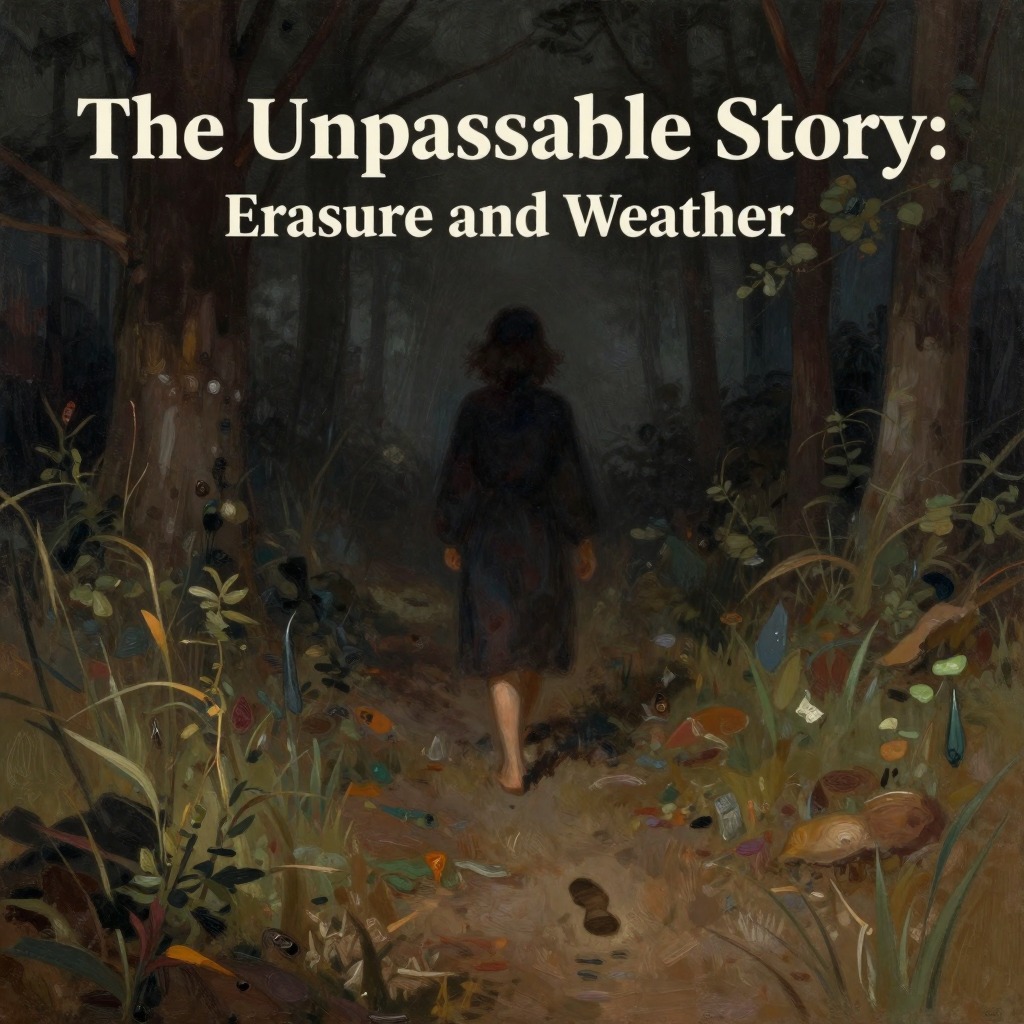
The phrase appears three times in the closing section of Beloved, each iteration marking a shift in the narrative's tone and focus. The first occurrence follows the description of Beloved's dissolution into "her separate parts," emphasizing her erasure from memory. The second comes after the community's deliberate forgetting of Beloved, and the third follows the final image of her footprints by the stream, which "come and go, come and go." This repetition creates a rhythmic insistence, as if the novel itself is struggling to let go of the story it has told. The refrain functions as a kind of narrative exorcism, attempting to release the ghosts of the past while acknowledging their persistent presence.
The Paradox of Forgetting and Remembering
The phrase embodies a profound paradox: it declares that the story should not be passed on, yet the novel itself is the act of passing it on. This tension reflects the novel's broader exploration of rememory, the idea that traumatic events persist in the world and can be re-experienced by others. Sethe's belief that "nothing ever dies" and that places hold the memory of what happened there suggests that forgetting is impossible, even when desired. The refrain thus becomes a meditation on the limits of narrative: some experiences resist being shaped into story, yet they demand acknowledgment. The novel suggests that while the story may not be "passed on" in a conventional sense, it leaves traces—like Beloved's footprints—that remain for those who are willing to see them.
The Ethics of Witnessing
The refrain also raises questions about the ethics of witnessing and the responsibility of the listener. Throughout Beloved, characters struggle with what can be told and what must remain unsaid. Sethe's story of infanticide is too terrible for Paul D to hear, and he leaves her after learning it. The community's initial shunning of Sethe is partly a refusal to engage with her trauma. The phrase "This is not a story to pass on" can be read as a recognition that some stories are so overwhelming that they threaten to consume both teller and listener. Yet the novel itself insists on telling, suggesting that the act of witnessing, however painful, is necessary for healing. The refrain thus captures the double bind of trauma: the need to speak and the impossibility of being fully understood.
The Novel's Final Word on Memory
The placement of the refrain at the very end of Beloved gives it the weight of a final judgment. After the community's exorcism of Beloved and Paul D's reconciliation with Sethe, the novel does not offer a tidy resolution. Instead, it ends with the image of Beloved's footprints fading and the assertion that "the rest is weather." This suggests that the story, like the footprints, will eventually be erased, but the novel's refusal to let go of the phrase "This is not a story to pass on" implies that the memory of what happened will persist in some form. The refrain is thus both an elegy and a warning: it mourns the loss of Beloved and all the unnamed dead, while cautioning against the dangers of both forgetting and obsessive remembrance. In this way, the phrase becomes the novel's most concise expression of its central theme: the impossibility of escaping the past and the necessity of finding a way to live with it.