Bertha Rheinfeldt
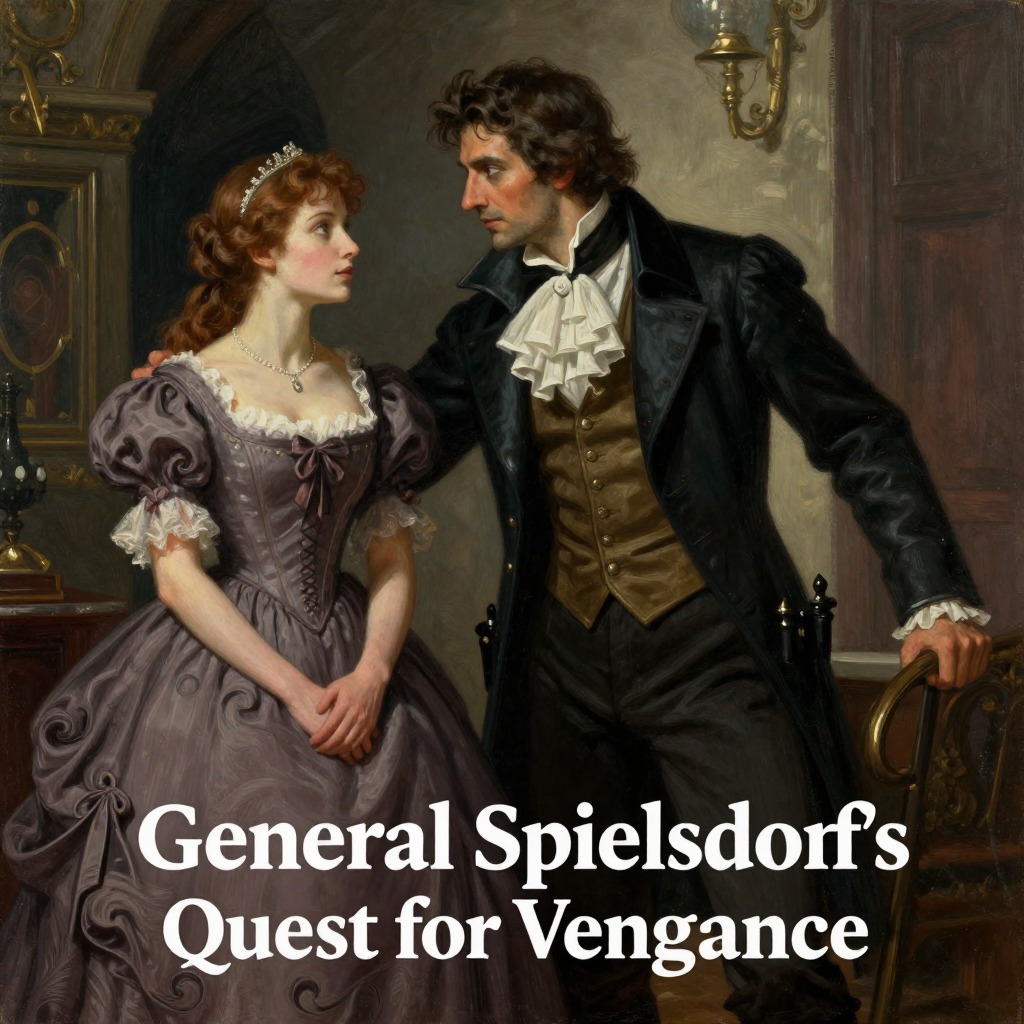
Bertha Rheinfeldt, the niece and ward of General Spielsdorf, never appears alive in the narrative, yet her death is the event that precipitates the story's central conflict. She is the first victim of the vampire Carmilla whose fate is fully disclosed, and her suffering and destruction establish the pattern that Laura will later recognize in her own experience. The General's anguished letter announcing her death arrives at the schloss on the very evening that Carmilla herself is brought to the castle, creating an immediate and ominous juxtaposition between the lost girl and the beautiful stranger who will soon take her place.
Identity and Background
Bertha Rheinfeldt was the beloved ward of General Spielsdorf, who regarded her as a daughter. She was expected to visit Laura at the schloss, and Laura had been looking forward to the new acquaintance for many weeks, filling her daydreams with the prospect of the visit. The General described her as a very charming girl, and Laura had heard her spoken of in those terms. She was young, beautiful, and, only three months before her death, blooming with health. The General, who was childless, had made her the object of very near interest, and she repaid his care with an affection that cheered his home and made his life happy.
Life and Plot Trajectory
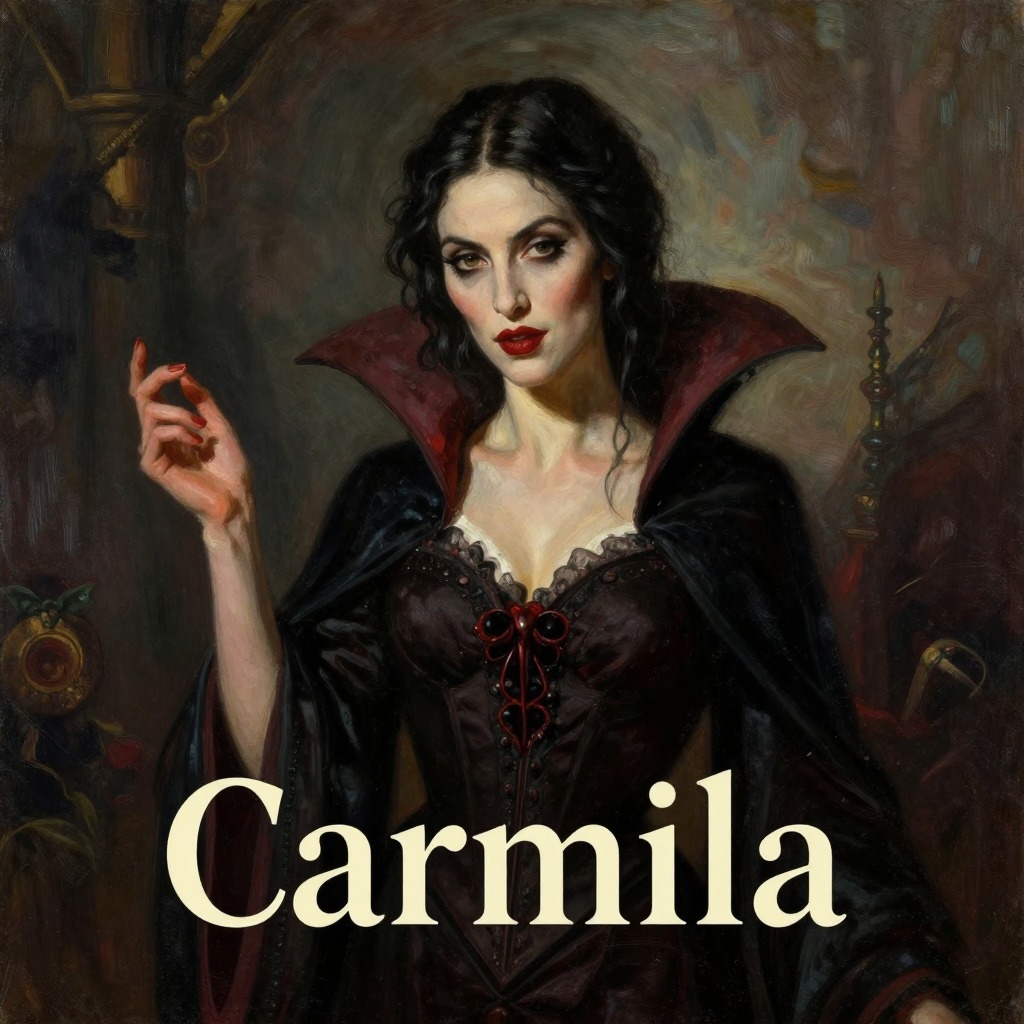
Bertha's story is told retrospectively by General Spielsdorf during the carriage ride to the ruins of Karnstein. She had been looking forward with great pleasure to the visit that had been arranged for her to Laura. Before that visit could take place, however, she and the General attended a series of magnificent fetes at Count Carlsfeld's schloss, held in honor of the Grand Duke Charles. At a masked ball there, a young lady named Millarca—who was in fact Carmilla under an anagrammatic alias—approached Bertha and, with remarkable ease and grace, entered into conversation with her. Millarca lowered her mask, displaying a remarkably beautiful face, and Bertha was taken with her at first sight. The General, persuaded by the young lady's engaging manner and by Bertha's own entreaties, agreed to take charge of Millarca during her mother's absence. Millarca came home with them that day.
Key Actions and Objectives
Bertha's role in the story is that of a victim, but her actions are significant because they mirror Laura's own vulnerability. She welcomed Millarca as a friend, just as Laura would later welcome Carmilla. She began to lose her looks and health in a mysterious and horrible manner. She was first visited by appalling dreams, then by a specter sometimes resembling Millarca and sometimes in the shape of a beast walking round the foot of her bed. She experienced a sensation like the flow of an icy stream against her breast, then felt something like a pair of large needles pierce her below the throat, followed by a gradual and convulsive sense of strangulation and then unconsciousness. These symptoms exactly matched those Laura would later suffer.
Relationships and Conflict
Bertha's central relationship is with her guardian, General Spielsdorf, who loved her as his own child and was devastated by her loss. Her relationship with Millarca is one of fatal attraction: the vampire, under her alias, insinuated herself into Bertha's confidence and affection, and Bertha was powerless to resist. The General, after witnessing the vampire attack his ward, struck at Millarca with his sword, but she escaped unscathed, and Bertha died before morning dawned. The General then devoted his remaining days to tracking and destroying the monster, a quest that leads him to the schloss and to the confrontation at the Chapel of Karnstein.
Change and Ending
Bertha's death is the catalyst for the entire second half of the narrative. Her suffering is described in detail by the General, and Laura, listening, recognizes her own symptoms with horror. Bertha's fate serves as a warning that Laura herself is in mortal danger. The General's grief transforms him from a cordial, serene old soldier into a man consumed by gloom, anxiety, and a thirst for vengeance. He describes his loss in a letter written nearly in distraction, calling the vampire "the fiend who betrayed our infatuated hospitality" and vowing to devote his remaining days to "extinguishing a monster." Bertha's death is thus not an end but a beginning: it sets in motion the hunt that will ultimately lead to Carmilla's destruction.
Narrative Role and Evaluation
Bertha Rheinfeldt functions as a narrative double for Laura. Her story, told in the General's own words, provides the reader with the knowledge that Laura herself lacks: that Carmilla is a vampire, that the symptoms Laura is experiencing are those of a vampire's attack, and that death is the inevitable outcome unless intervention occurs. The General's account is the story's turning point, the moment when the supernatural truth is explicitly named and the course of action becomes clear. Bertha herself remains a silent, absent figure, but her fate is the engine that drives the plot toward its resolution. Her death is the proof that the vampire is real, and her memory is the motive for the vengeance that finally ends the plague.