Tomb of Mircalla, Countess Karnstein
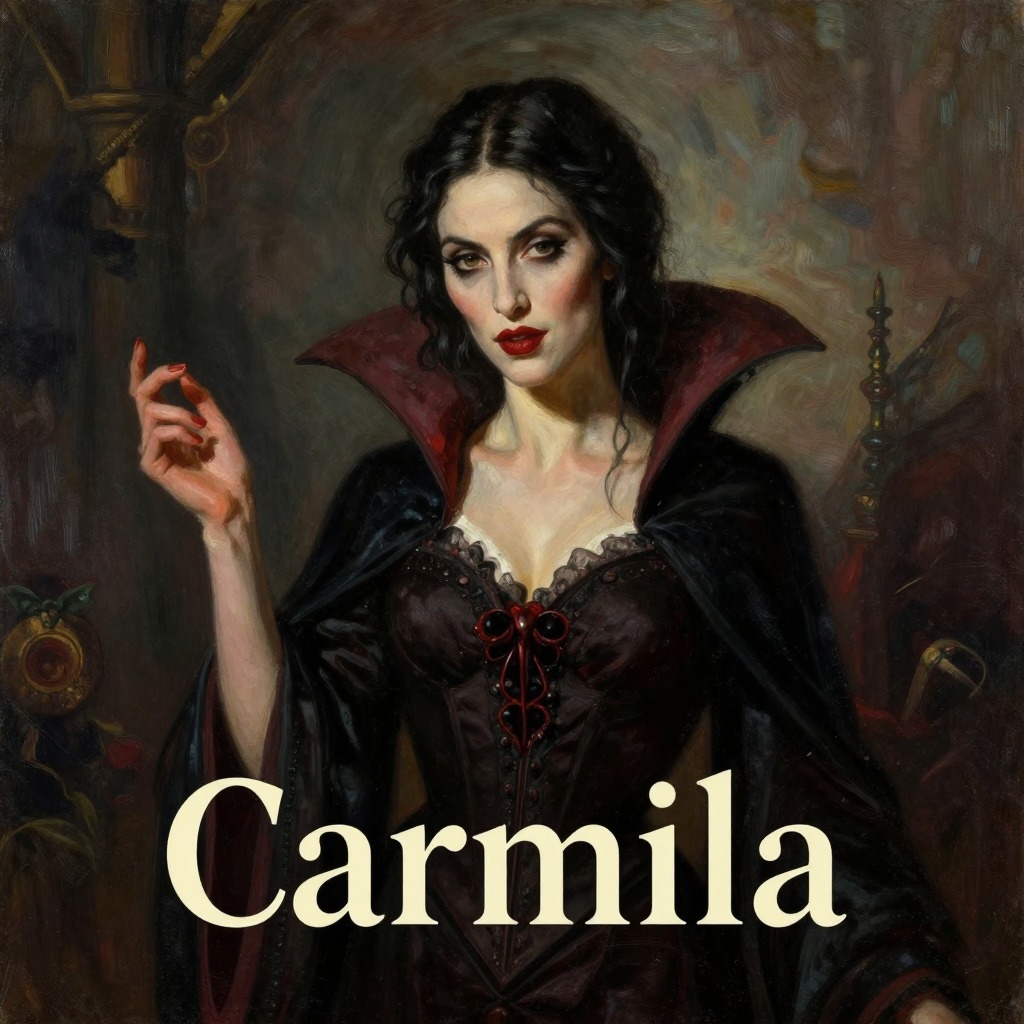
The Tomb of Mircalla, Countess Karnstein is the concealed resting place of the vampire who, under the anagrammatic names Carmilla and Millarca, terrorizes the Styrian countryside for more than a century. Its location, lost for generations, is rediscovered through the meticulous research of Baron Vordenburg, whose ancestor deliberately obliterated the monument to protect his former lover. The tomb's exposure triggers a formal inquisition and the legal execution of the vampire, finally freeing the region from its scourge.
Concealment and Obliteration
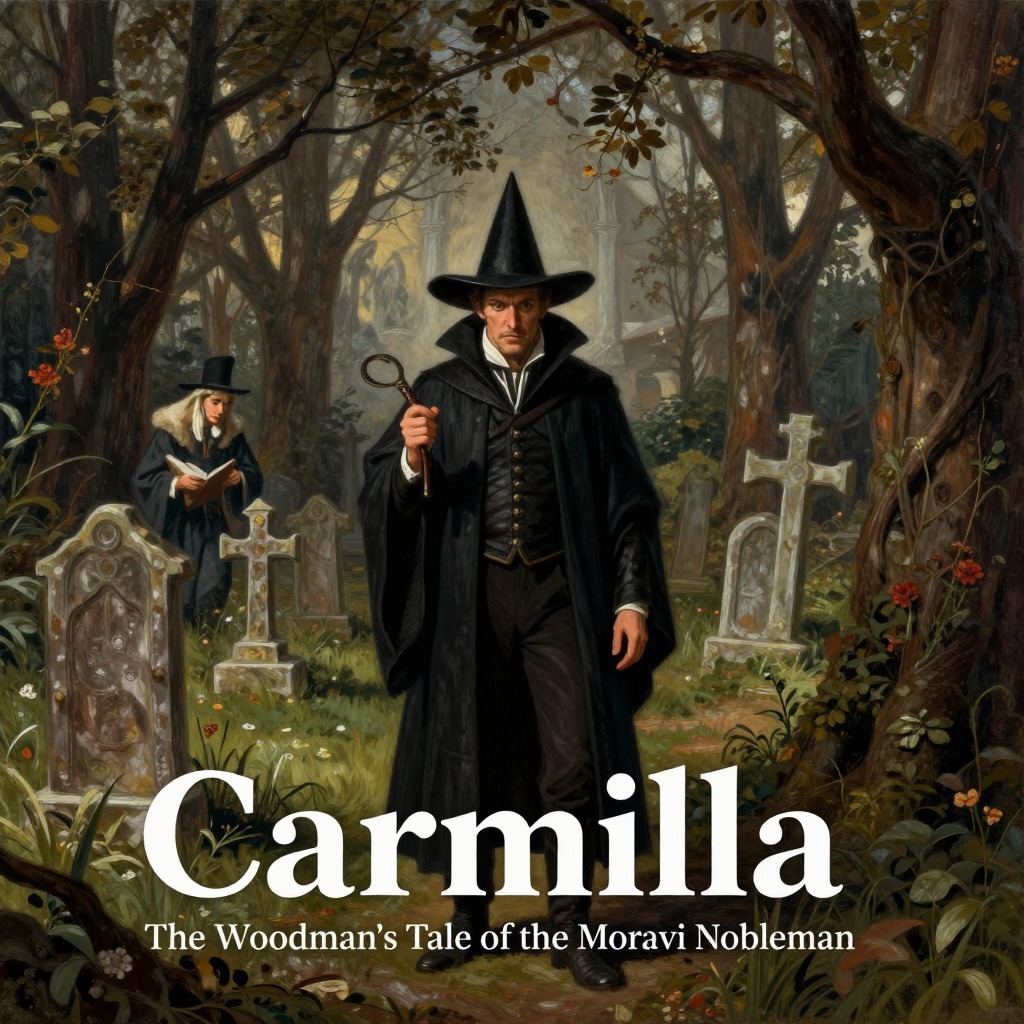
The tomb of Mircalla, Countess Karnstein, dated 1698, was deliberately hidden by a Moravian nobleman who was in truth a native of Upper Styria and had been, in his youth, a passionate and favored lover of the beautiful Countess. After her early death, which transformed her into a vampire, he conceived a horror of her remains being profaned by a posthumous execution. He adopted the stratagem of a journey to Karnstein, a pretended removal of her remains, and a real obliteration of her monument. The site was so effectively forgotten that, as the local woodman tells General Spielsdorf and Laura's father, not a soul living could point out where it stood, and even the tradition of its exact situation was lost.
Discovery Through Scholarly Research
Baron Vordenburg, a descendant of that Moravian nobleman, devoted himself to the minute and laborious investigation of vampirism, living on a pittance in Gratz and amassing a voluminous digest of all judicial cases. Among his inherited papers was a curious document in which his ancestor, looking back from the vale of years, considered in a different spirit what he had done. A horror took possession of him, and he drew up a confession of the deception he had practiced, along with tracings and notes that guided the Baron to the very spot. When the Baron arrives at the Chapel of Karnstein with a roll of paper and a dirty little book with yellow leaves, he and the General measure distances by paces, pull off the ivy, and rap the plaster until they ascertain the existence of a broad marble tablet with letters carved in relief. The monumental inscription and carved escutcheon prove to be those of the long-lost monument of Mircalla, Countess Karnstein.
Exhumation and Legal Execution
The next day, formal proceedings take place in the Chapel of Karnstein before the Imperial Commission. The grave of the Countess Mircalla is opened, and General Spielsdorf and Laura's father recognize each their perfidious and beautiful guest in the face now disclosed to view. Though a hundred and fifty years have passed since her funeral, the features are tinted with the warmth of life; her eyes are open, and no cadaverous smell exhales from the coffin. The two medical men attest that there is a faint but appreciable respiration and a corresponding action of the heart. The limbs are perfectly flexible, the flesh elastic, and the leaden coffin floats with blood in which, to a depth of seven inches, the body lies immersed. In accordance with ancient practice, the body is raised, and a sharp stake is driven through the heart of the vampire, who utters a piercing shriek at the moment, in all respects such as might escape from a living person in the last agony. The head is then struck off, and a torrent of blood flows from the severed neck. The body and head are placed on a pile of wood and reduced to ashes, which are thrown upon the river and borne away. That territory has never since been plagued by the visits of a vampire.
Narrative and Thematic Significance
The tomb functions as the story's central locus of hidden truth and deferred revelation. Its concealment by a lover who sought to protect the vampire from posthumous execution introduces a moral ambiguity that complicates the straightforward hunt-and-destroy narrative. The discovery of the tomb, made possible by the very papers of that former lover, enacts a delayed justice that spans generations. The exhumation scene provides the definitive proof of vampirism—the warm, flexible body, the open eyes, the coffin filled with blood—that confirms every symptom Laura and Bertha suffered. The legal formality of the proceedings, with the Imperial Commission report signed by all present, grounds the supernatural horror in documentary fact, lending the tale an air of judicial veracity. The tomb's obliteration and rediscovery also mirror the vampire's own anagrammatic name-play: just as Mircalla becomes Carmilla and Millarca through rearrangement of letters, the tomb itself is hidden and found, lost and recovered, its identity shifting across time.