Bath
Bath, the historic city in Somerset, functions in Emma as a geographical and social counterpoint to the rural, insular world of Highbury. It is a place where characters go to seek health, fortune, and marriage, and its mention consistently signals the intrusion of a wider, more fashionable, and often more mercenary society into the settled life of the novel's primary setting.
Definition and Social Significance
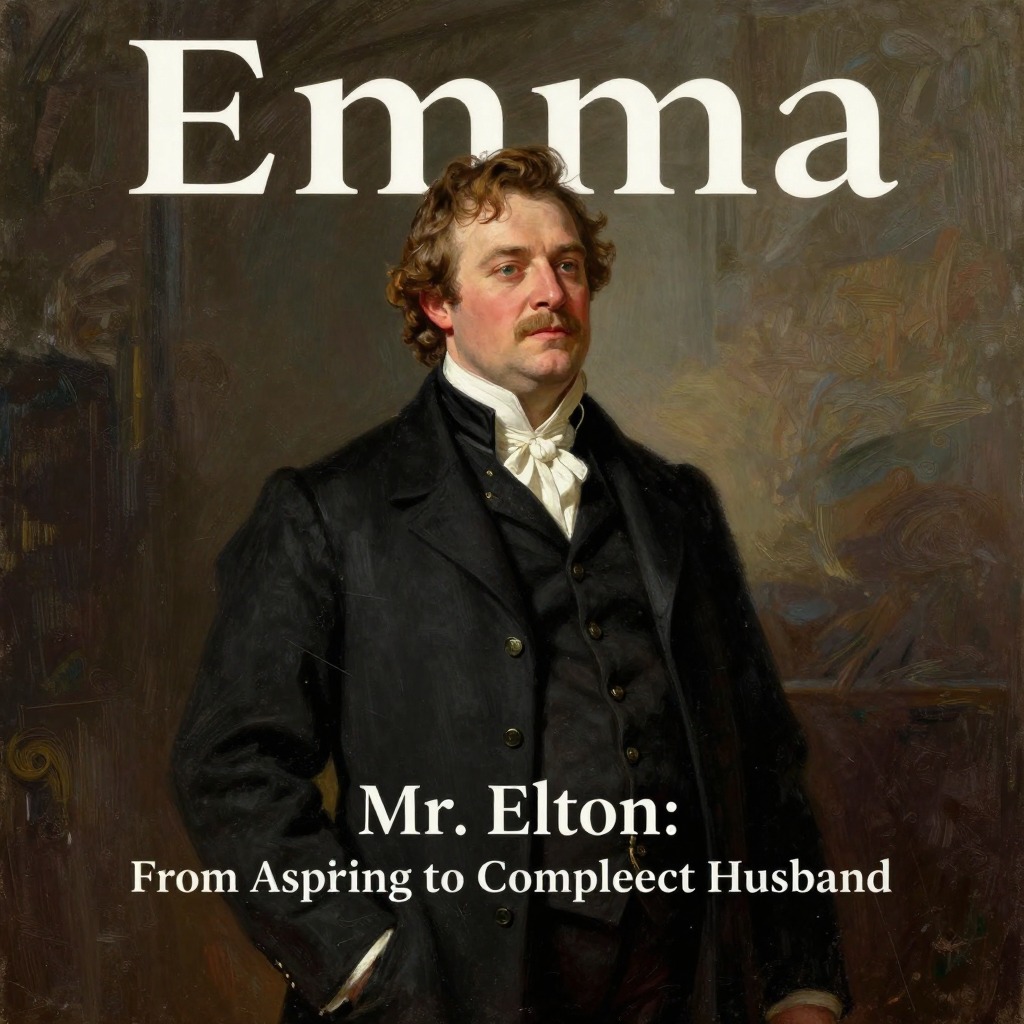
Bath is presented as a fashionable resort town, a place of public assembly and social display. It is where Mr. Elton, after his humiliating rejection by Emma, retreats to recover his spirits and, with remarkable speed, finds a bride. The city is the home of Miss Hawkins, the woman he marries, and the place where their acquaintance was formed. Mrs. Elton, in particular, constantly invokes Bath as a benchmark of social sophistication, contrasting its lively society with what she perceives as the provincial quiet of Highbury. She speaks of her "Bath life" and her acquaintance there, including a particular friend, Mrs. Partridge, with whom she resided, and she offers to introduce Emma to "the best society in the place." This offer is received by Emma with silent contempt, as she views Mrs. Elton's connections as vulgar and beneath the dignity of Hartfield.
A Place of Romantic and Economic Transactions
Bath is explicitly linked to the marriage market. Mr. Elton's engagement to Augusta Hawkins is described as having been achieved with "delightful rapidity," the acquaintance formed in a public place and quickly followed by a dinner and a party. The narrative notes that the lady had been "so very ready to have him," suggesting a transactional efficiency to the match. Emma, reflecting on the engagement, dismissively imagines Miss Hawkins's background: her father was a Bristol merchant, and she had been used to spending part of every winter in Bath. The city thus becomes a symbol of a certain kind of social climbing, where connections are made not through long-standing family ties but through the fleeting encounters of the season. Mr. Knightley, in a moment of dry commentary, observes that Mr. Elton, having gone away rejected and mortified, came back engaged to another, a woman who, in the logic of such transactions, was "as superior, of course, to the first, as under such circumstances what is gained always is to what is lost."
Contrast with Highbury and Hartfield
Bath stands in implicit contrast to the stable, hierarchical world of Highbury and, especially, Hartfield. While Highbury is a place of known families, long histories, and settled consequence, Bath represents a more fluid and anonymous social sphere. Emma's own refusal to consider Bath as a residence for her father—despite Mrs. Elton's enthusiastic recommendation—underscores this contrast. Mr. Woodhouse had tried Bath "more than once, formerly, but without receiving any benefit," and Mr. Perry does not conceive it would be useful now. Emma's cool dismissal of the idea is also a rejection of the kind of social life Bath represents, one where she would be indebted to the patronage of a woman like Mrs. Elton. The city is thus a foil, highlighting by its absence the values of home, family, and genuine, unpretentious society that Emma, for all her faults, ultimately holds dear.
Narrative and Thematic Role
Bath's role in the narrative is largely that of an off-stage location that drives key plot developments. It is the place where Mr. Elton's character is fully revealed as self-interested and calculating, and where his new wife's vulgarity is forged. It also serves as a point of reference for Mrs. Elton's constant, grating comparisons between Highbury and the superior world of Maple Grove and Bath, which she uses to assert her own imagined importance. Thematically, Bath embodies the tension between genuine social worth and mere fashionable display, a central concern of the novel. It is a place where marriages are made on the basis of fortune and appearance, in contrast to the more complex, morally grounded unions that conclude the novel at Hartfield and Donwell Abbey.