Box Hill
Box Hill, a scenic height in Surrey, serves as the setting for one of the most consequential episodes in Emma — a picnic that unravels the fragile social harmony of the party and forces the heroine to confront her own cruelty. The excursion, planned as a pleasure outing, becomes the stage for Emma's most serious lapse in judgment and the catalyst for her moral reformation.
The Party and Its Divisions
The Box Hill party was assembled from a mismatched group of Highbury residents, brought together by Mr. Weston's accommodating temper and Mrs. Elton's insistence on inclusion. The company included Emma, Mr. Knightley, Frank Churchill, Jane Fairfax, Harriet Smith, Mr. and Mrs. Weston, Mr. and Mrs. Elton, and Miss Bates with her niece. From the outset, the party lacked cohesion: the Eltons walked apart, Mr. Knightley attached himself to Miss Bates and Jane, and Emma and Harriet fell in with Frank Churchill. Mr. Weston's efforts to blend the group were unavailing, and a principle of separation persisted throughout the two hours spent on the hill. Emma found Frank Churchill initially silent and dull, but after they sat down he revived, directing all his gallantry toward her in a manner that observers could only describe as flirtation. Emma, though inwardly disappointed, accepted his attentions with a gaiety that masked her unease.
Emma's Cruelty to Miss Bates
The picnic's most damaging moment arose from a game Frank Churchill proposed: each person was to contribute something clever, moderately clever, or three things very dull. Miss Bates, with her characteristic good-humoured self-deprecation, declared that three dull things would suit her perfectly. Emma, unable to resist the opportunity for wit, replied, "Ah! ma'am, but there may be a difficulty. Pardon me — but you will be limited as to number — only three at once." The remark, delivered with mock ceremony, struck Miss Bates with full force. Though she attempted to laugh it off, a slight blush betrayed her pain. Mr. Knightley, who witnessed the exchange, was deeply offended. Later, as the carriages were called, he drew Emma aside and delivered a grave reproach: "How could you be so unfeeling to Miss Bates? How could you be so insolent in your wit to a woman of her character, age, and situation?" He reminded Emma that Miss Bates was poor, had sunk from the comforts she was born to, and that her situation should have secured compassion rather than ridicule. Emma, struck to the heart, could not reply. She entered the carriage in tears, and the drive home passed in miserable silence.
Consequences and Moral Awakening
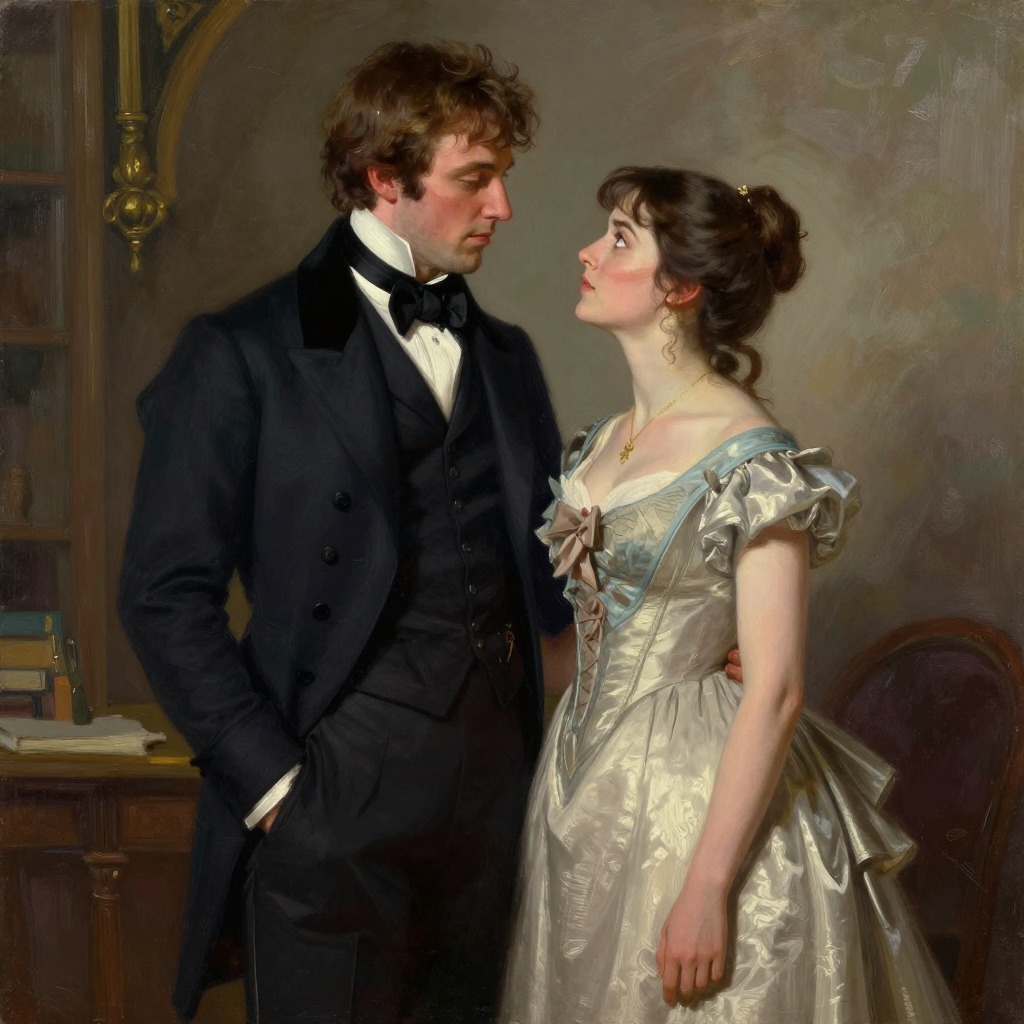
The Box Hill episode marks the turning point of Emma's moral education. The shame she felt at Mr. Knightley's rebuke was unprecedented: "Never had she felt so agitated, mortified, grieved, at any circumstance in her life." She resolved to reform her conduct, vowing that Miss Bates should never again suffer from her unkindness. The very next morning she went early to call on Miss Bates, determined to begin a regular, kindly intercourse. The visit was painful — Jane Fairfax was ill and avoiding visitors — but Emma persisted in her efforts at atonement. The episode also clarified her own heart. In the aftermath of the picnic, as she reflected on Mr. Knightley's anger and his subsequent departure for London, she began to recognize the depth of her feelings for him. The realization that she loved him, and that her flirtation with Frank Churchill had been a delusion, emerged directly from the crisis at Box Hill. The picnic thus functions as the novel's threshold moment: the point at which Emma's self-deception is shattered and her genuine growth begins.
Narrative and Thematic Significance
Box Hill operates as a chronotope of crisis — an open, exposed space where social masks slip and hidden truths emerge. Unlike the controlled interiors of Hartfield or the regulated sociability of the Crown Inn ball, the hill offers no shelter for pretence. The division of the party into separate groups mirrors the fragmentation of Emma's own certainties. The picnic's failure — its languor, its want of union, its culminating insult — exposes the limits of Emma's social power and the dangers of her unchecked wit. The episode also dramatizes the novel's central moral lesson: that true gentility consists not in cleverness or rank but in kindness to those who are vulnerable. Mr. Knightley's rebuke, delivered with the authority of long affection, becomes the voice of conscience that Emma must learn to internalize. Box Hill is thus not merely a scene of humiliation but the necessary prelude to Emma's transformation from a spoiled young woman into one capable of genuine love and moral seriousness.