Andreas Tangen
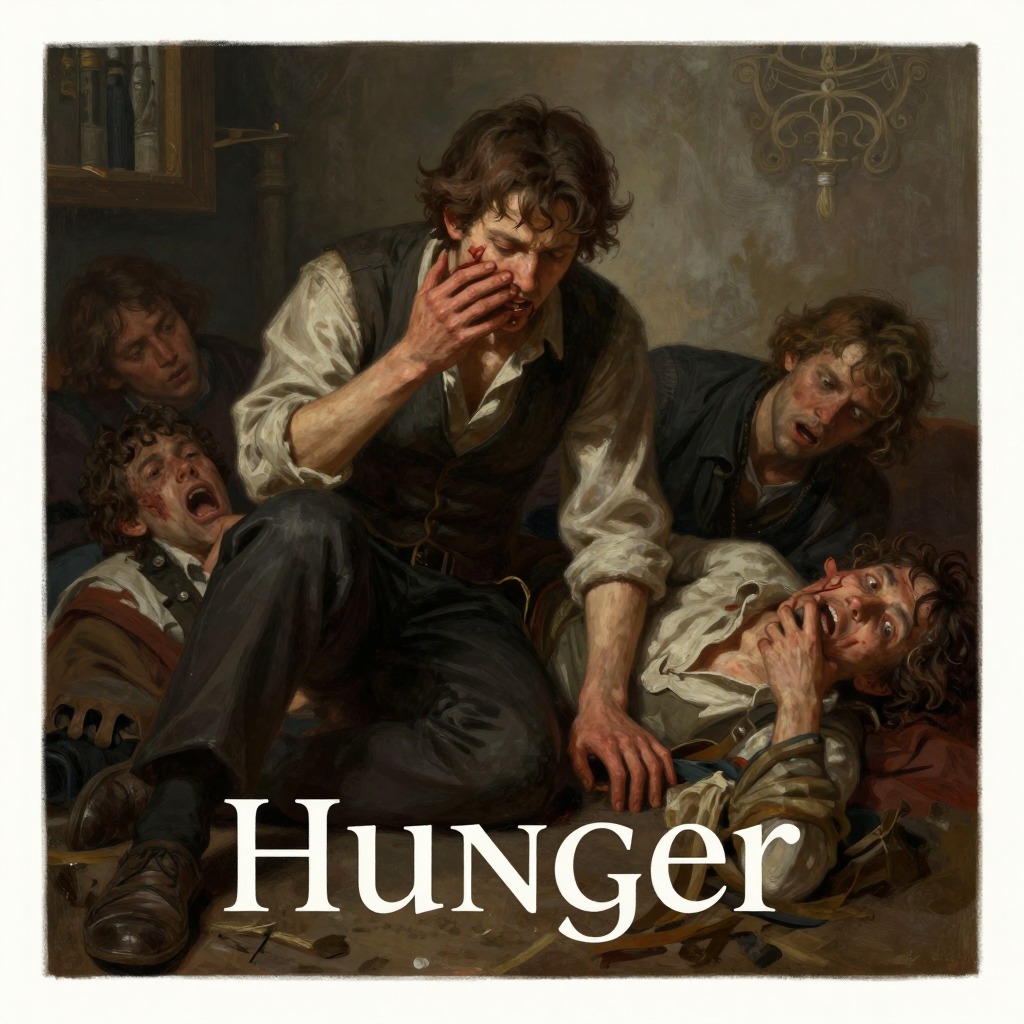
Andreas Tangen, the pseudonymous narrator of Knut Hamsun's Hunger, is a young, impoverished writer wandering the streets of Christiania. His story is one of extreme physical deprivation and psychological unraveling, a first-person account of a man reduced to a near-animal state by starvation, yet who clings to his identity as a writer and a man of principle. Tangen's journey through the city's underbelly is a harrowing exploration of poverty, madness, and the creative impulse, making him one of modern literature's most unforgettable anti-heroes.
Identity and Background
Tangen is a young man, a writer by aspiration, who has fallen into a state of desperate poverty. He lives in a bare attic room, the walls papered with old newspapers, and his belongings have been gradually pawned at his "Uncle's." He has no comb, no book, and his only diversion is a little red rocking-chair. He is nervous and irritable, and has kept to his bed with vertigo. His clothes are shabby; he sprinkles water on the shiny knees of his trousers to make them look newer. He has applied for work as a debt collector, but was too late and could not raise the fifty shillings security. He even tried to join the Fire Brigade, but was rejected on account of his sight. He has become so impoverished that he can no longer apply for a situation in the garb of a respectable man. He gives a false name, Andreas Tangen, to the police when he is homeless, and also uses the aliases Wedel-Jarlsberg and Pastor So-and-so in his encounters with others.
Life and Plot Trajectory
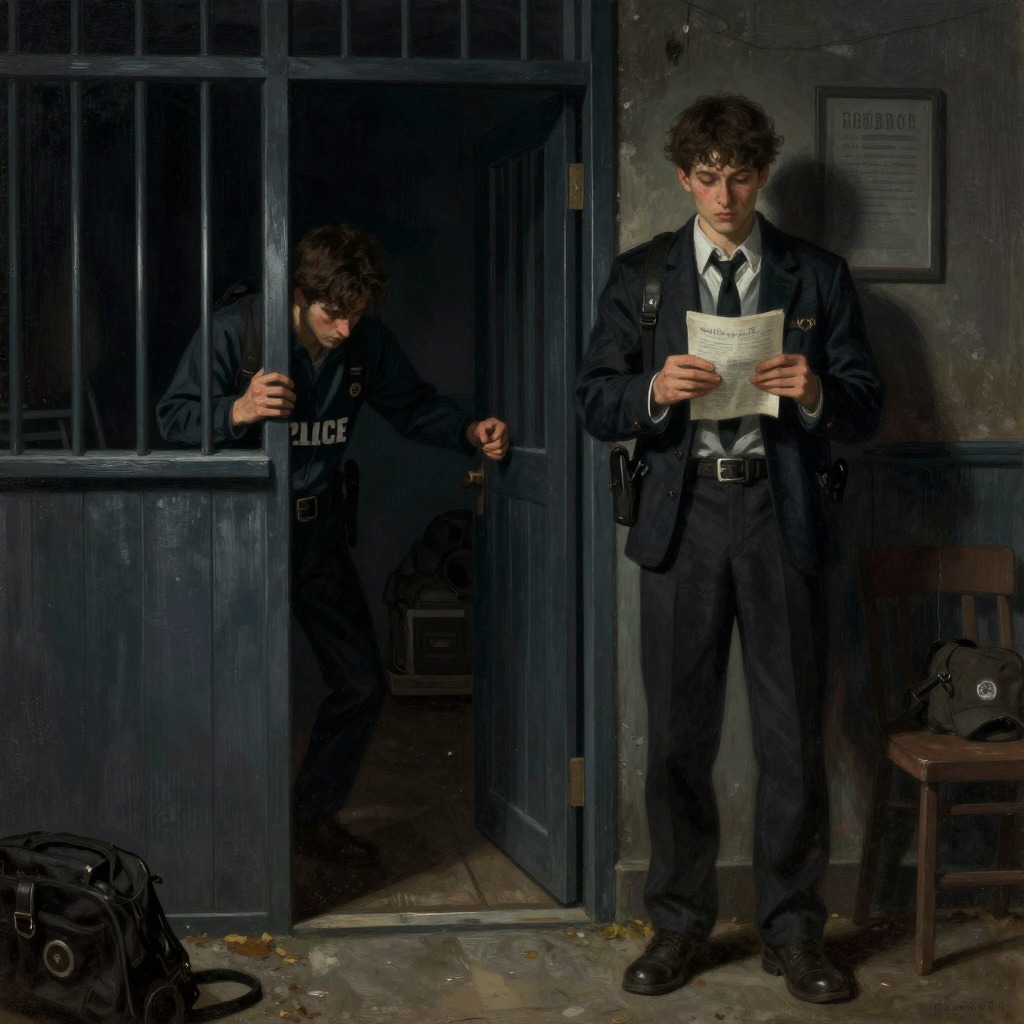
Tangen's life is a series of desperate, episodic struggles to survive. He wanders the city, trying to write articles for newspapers to earn a few shillings. He pawns his waistcoat for one-and-sixpence, then gives the money to a beggar. He writes a story that is accepted and earns him half-a-sovereign, but the money is soon gone. He sleeps in the woods, in a churchyard, and in a police cell, where he gives the false name Andreas Tangen and claims to be a journalist for the Morgenbladet. He is tormented by hunger, which causes him to experience visions, hallucinations, and fits of madness. He steals five shillings from a shopkeeper, but later gives the money to a cake vendor. He is eventually taken in by a landlady in Vaterland, but is turned out when he cannot pay. In the end, he signs on as a sailor on the barque Copégoro, bound for Leith, and leaves Christiania.
Key Actions and Objectives
Tangen's primary objective is to survive and to write. He is constantly seeking food, shelter, and a way to earn money. He writes articles on subjects like "The Crimes of Futurity" and "Philosophical Cognition," and later works on a drama called "The Sign of the Cross" and an allegory about a fire in a bookshop. He is driven by the hope of a breakthrough, a moment of inspiration that will save him. He pawns his belongings, begs from acquaintances, and even attempts to pawn Hans Pauli's blanket. He is also driven by a sense of honor, which he struggles to maintain. He confesses his theft to the shopkeeper, and he gives away the stolen money to a poor woman. He is also motivated by his infatuation with a woman he calls Ylajali, whom he first encounters on the street and later visits in her apartment.
Relationships and Conflict
Tangen's relationships are largely transactional and fraught with conflict. He is in debt to his landlady, Mrs. Gundersen, and avoids her. He borrows a blanket from Hans Pauli Pettersen, a theological student, but when he tries to find him to ask for help, he has gone home. He encounters a young artist, C. Zacharias Bartel, who turns him away because he has a girl inside. He is humiliated by the shop assistant "Scissors" at the newspaper office, and by the music-seller Cisler, who refuses him a shilling. He is also in conflict with the police, who move him on from benches and arrest him for being homeless. His most significant relationship is with Ylajali, a young woman he follows and later meets. Their encounter is intense and confusing, marked by her initial fear, her sudden kiss, and her eventual offer of half-a-sovereign, which he throws away in a fit of pride. He is also in conflict with himself, constantly battling his own hunger, his madness, and his sense of honor.
Change and Ending
Tangen undergoes a profound physical and psychological deterioration. He loses his hair, his teeth, and his strength. He experiences hallucinations, fits of madness, and a complete breakdown of his ability to write. He is reduced to begging for a bone from a butcher, and he tears up his own manuscript in despair. His sense of honor is repeatedly tested, and he succumbs to theft, though he later tries to atone for it. The novel ends with Tangen signing on as a sailor on the Copégoro, leaving Christiania behind. He is wet with fever and exhaustion, but he has made a decision to leave his old life behind. The ending is ambiguous, offering a possible escape from his cycle of poverty and madness, but also a departure into the unknown.
Narrative Role and Evaluation
Tangen is the sole narrator and focalizer of the novel, and his unreliable, first-person account is central to its power. The reader experiences his hunger, his madness, and his desperate thoughts directly. His narrative is marked by a heightened, almost hallucinatory quality, as he describes his sensations and perceptions with intense detail. He is a deeply sympathetic figure, despite his flaws, because his suffering is so vividly rendered. He is also a figure of profound irony, as his attempts to maintain his dignity and honor are constantly undermined by his physical needs. His story is a critique of a society that allows a talented young man to starve, and an exploration of the relationship between creativity, madness, and poverty. The novel's introduction notes that Hamsun's heroes are often slightly varied images of himself, and Tangen is no exception, embodying the author's own experiences of poverty and struggle in Christiania.