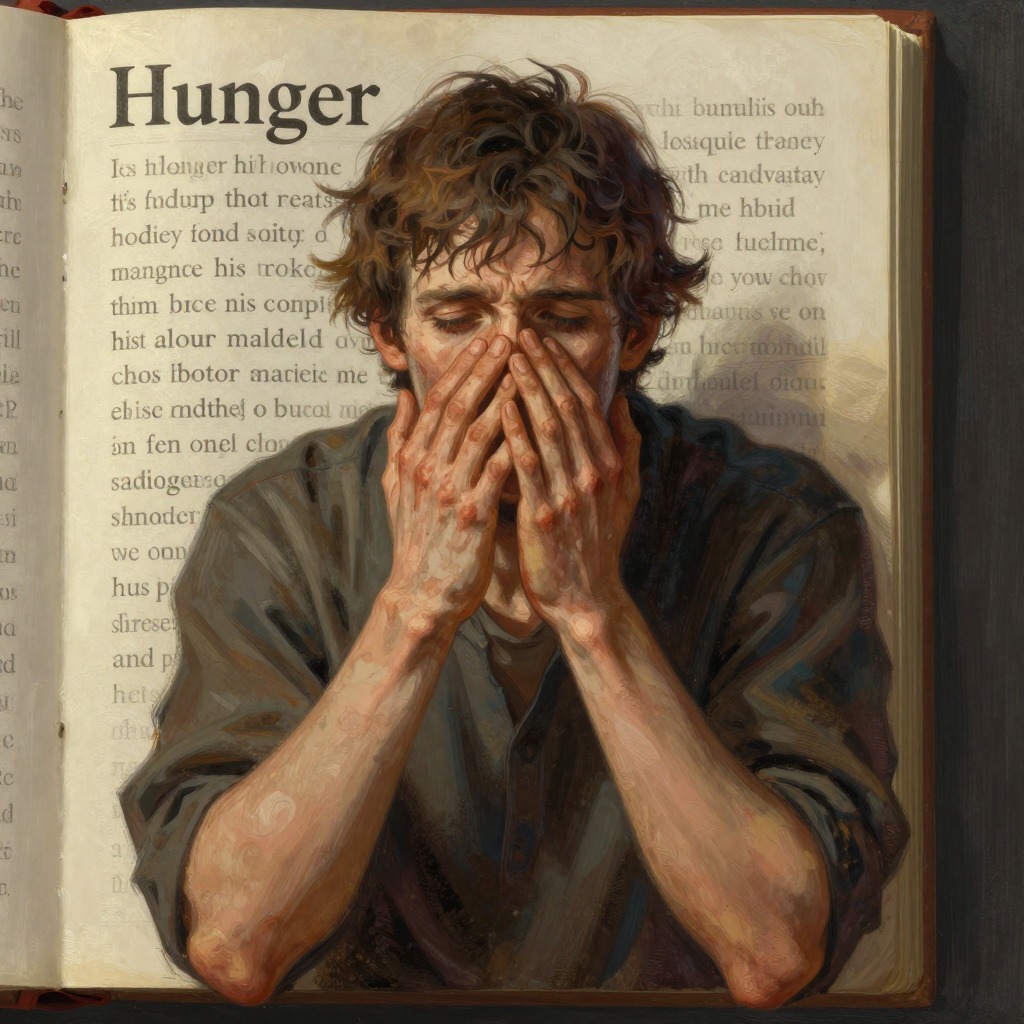
The Duke
The Duke is a minor but symbolically charged character in Knut Hamsun's Hunger, a well-known lady's doctor in Christiania whose brief appearances serve to crystallize the narrator's social humiliation and psychological disintegration. He is the man who casually suggests the narrator should be locked up, and later appears as the companion of Ylajali, the woman the narrator idealizes, thereby embodying the worldly success and sexual ease from which the starving protagonist is utterly excluded.
Identity and Role
The Duke is identified as a well-known lady's doctor, nicknamed "The Duke" by the people of Christiania. He is a figure of established social standing and professional authority, moving through the city with the ease of someone who belongs. The narrator knows him, has shaken his hand, yet the Duke never truly sees the narrator's condition; he is a representative of the comfortable, unthinking world that the protagonist has fallen out of.
Encounters and Their Significance
The Duke appears in two crucial scenes. In the first, during the narrator's desperate wandering in Part II, the Duke passes him on the street and remarks with a smile, "You ought to go and ask to be locked up." The narrator, already teetering on the edge of madness, takes this as a confirmation of his own fears: "Locked up? Yes, I was mad; he was right." The Duke's casual, professional verdict—delivered without malice but without understanding—becomes a turning point, pushing the narrator toward the guard-house and the night of terror that follows. In the second encounter, near the end of Part III, the narrator sees the Duke walking with Ylajali, the woman he has just visited and who has kissed him. The Duke is her companion, and the sight of them together—"the Duke" and the lady in a red dress—triggers a storm of jealousy, self-loathing, and defensive contempt in the narrator. He immediately assumes the worst about Ylajali, calling her "besmirched" and telling himself he no longer cares for her. The Duke, by his mere presence, shatters the fragile fantasy of connection the narrator had built.
Thematic Significance
The Duke functions as a foil to the narrator, representing everything the protagonist has lost: health, social position, sexual confidence, and the simple ability to be seen as a normal man. He is the voice of the established order that has no room for the starving, the eccentric, or the desperate. His diagnosis—"locked up"—is the society's answer to the narrator's suffering, and his effortless companionship with Ylajali is the final proof that the narrator's world of hunger and honor has no place in the world of the Duke. He is not a villain but a mirror, reflecting back the narrator's own sense of irrelevance and failure.